
Vintage Revolving Chair
A vintage revolving chair brings mechanical movement and period timber to a study, blending practical swivel action with traditional craftsmanship.
Vintage Revolving Chair
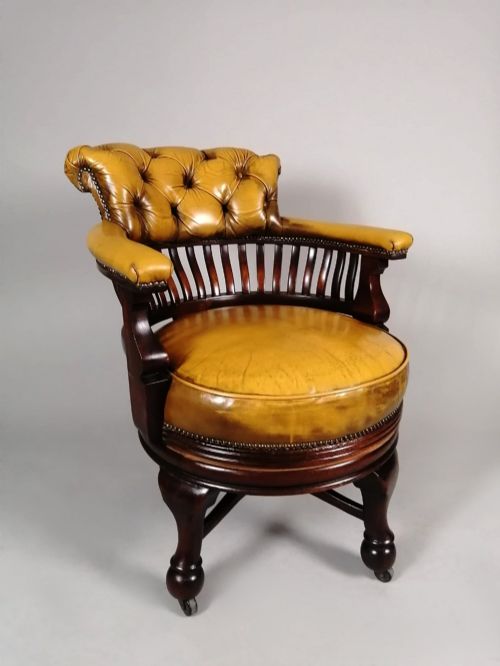
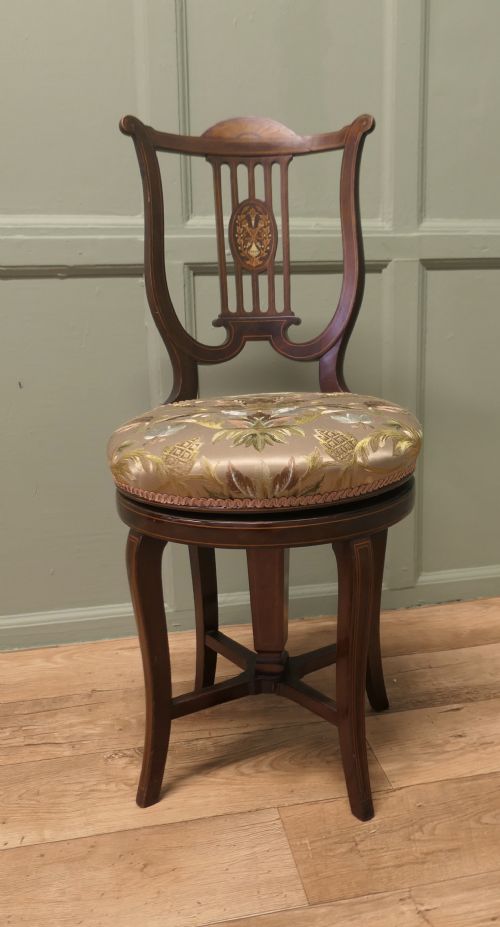
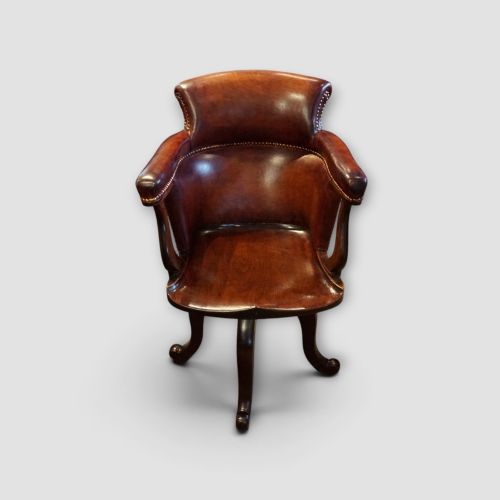
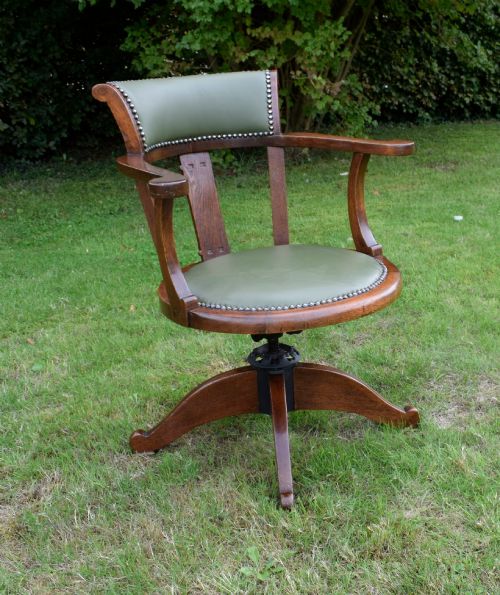
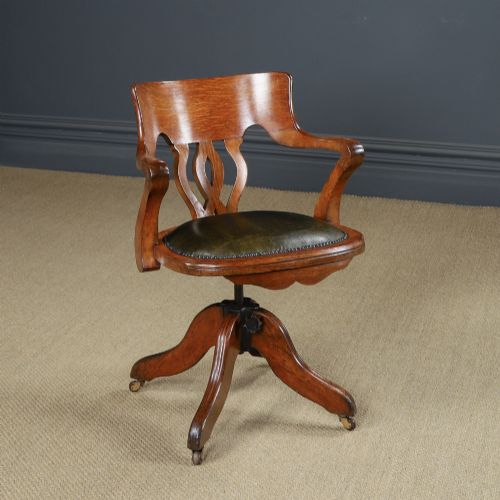
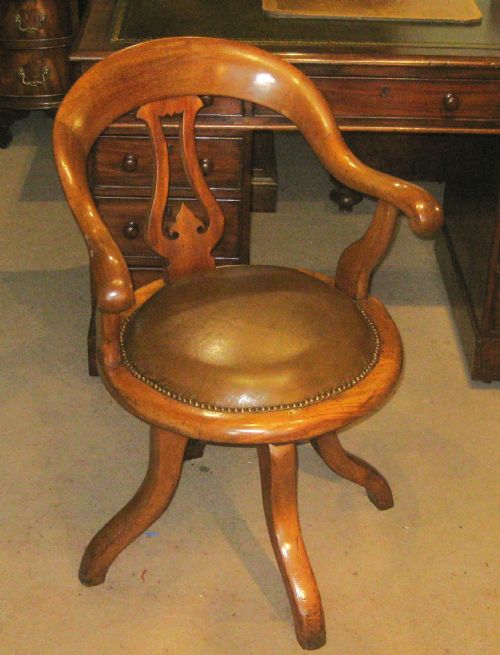
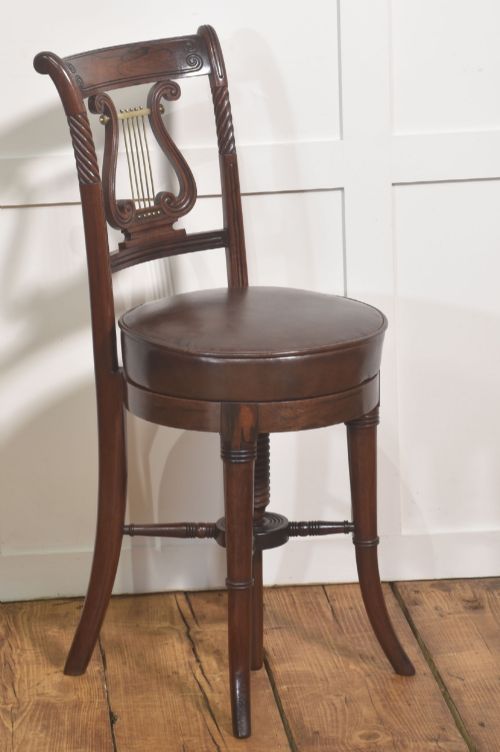
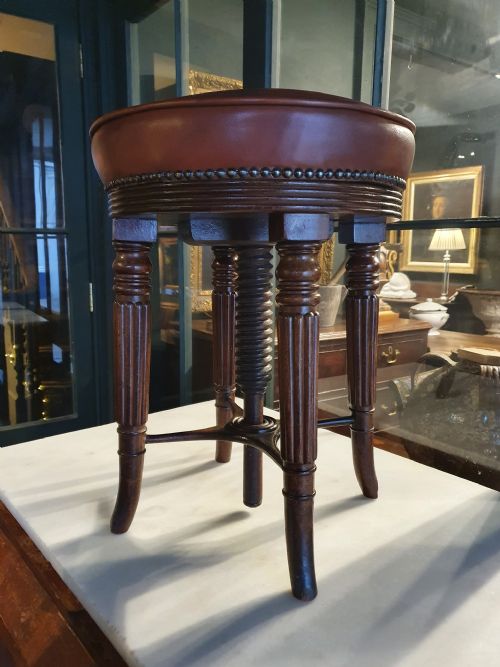
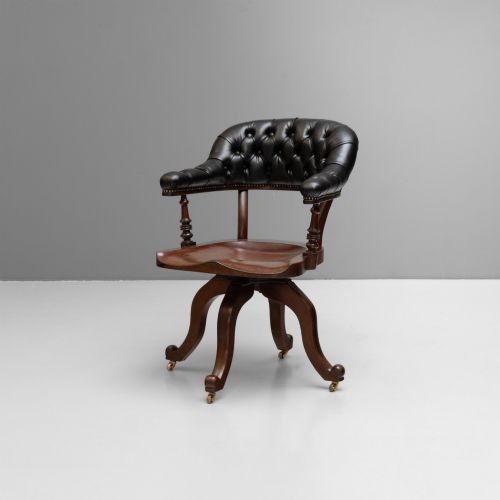
A vintage revolving chair spans desk chairs, piano stools, music chairs, and industrial workshop seating from the nineteenth and early twentieth centuries.
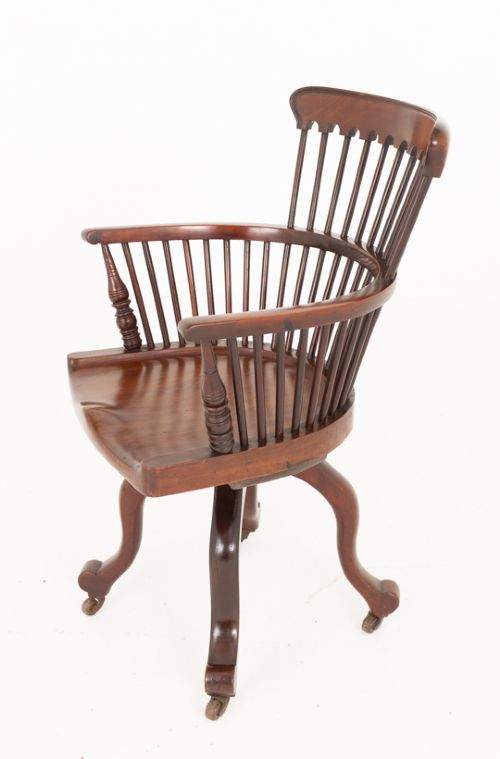
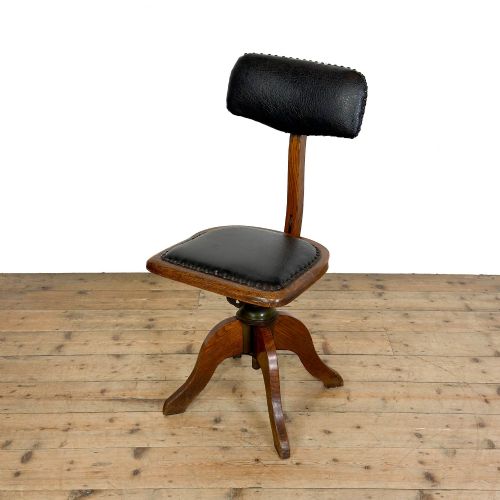
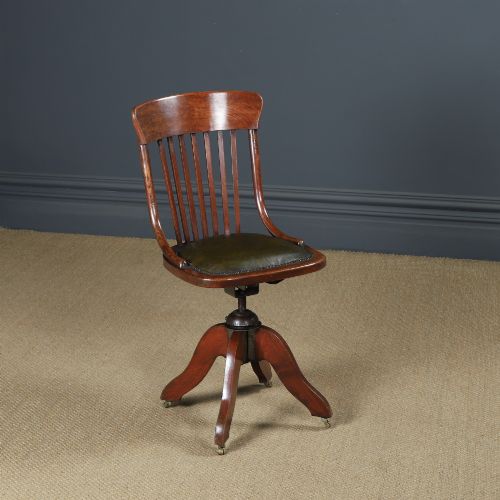
The selections on this page most commonly include mahogany and oak desk chairs alongside revolving piano stools dating from the Victorian and Edwardian eras.
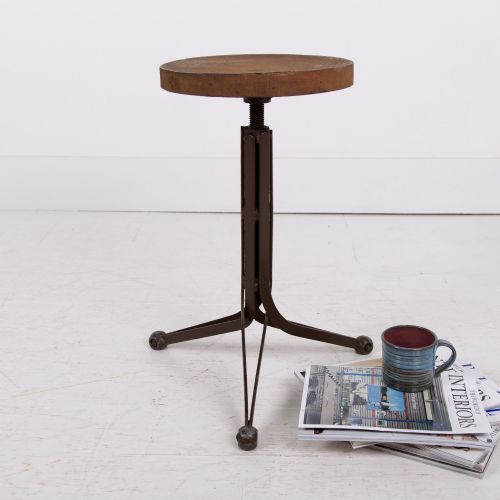
Buyers also encounter specialised forms such as ships chairs, dressing chairs, and machinist stools that incorporate swivel mechanisms.
Pieces range from simple adjustable stools to upholstered armchairs reflecting styles from Georgian to Arts and Crafts.
Materials and construction
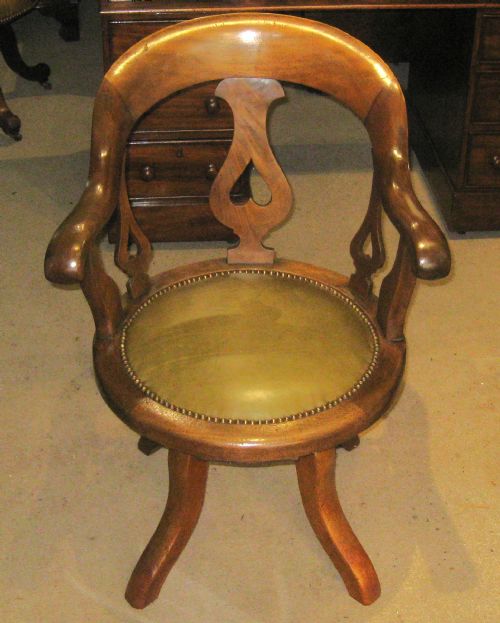
Frames are built predominantly from timbers such as mahogany, oak, walnut, and rosewood, paired with structural elements in brass, iron, and cast iron.
Upholstered versions frequently feature leather or fabric seat pads, sometimes complemented by bentwood components or canework like bergere.
Mechanisms utilise metal spindles and swivels to allow rotation, alongside adjustable height functions operated by screws or rise-and-fall actions.
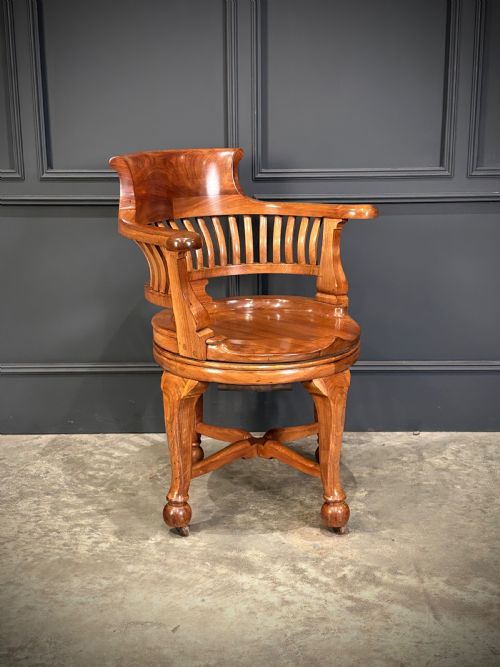
P & O liners required specialised revolving chairs so passengers could remain seated at tables while ships rolled at sea.
Assessing quality
Quality shows in the weight and integrity of the timber frame, where dense hardwoods like mahogany and rosewood hold up better than lighter softwoods over decades of movement.
The engineering of the revolving mechanism dictates daily performance, with smooth, solid brass or iron fixings outperforming loose or overly worn pivots.
Carpentry details such as secure joinery, well-fitted carved elements like lyre backs, and properly preserved leather or fabric upholstery mark out finer examples.
Gillows·Rubery Owen
The Vintage Revolving Chair Glossary
- Swivel
- A mechanical fitting that allows the upper seat portion to rotate independently of the base. This movement is central to the function of office and desk variants.
- Rise and fall
- An adjustable height mechanism typically operated by a threaded spindle or screw action. It allows the seated user to alter elevation.
- Bergere
- A type of upholstered seating featuring woven cane panels set into wooden frames. This technique appears on specific Edwardian examples.
- Bentwood
- Wood softened by steam and bent into curved structural forms. It provides lightweight strength for chair backs and frames.
- Gothic Revival
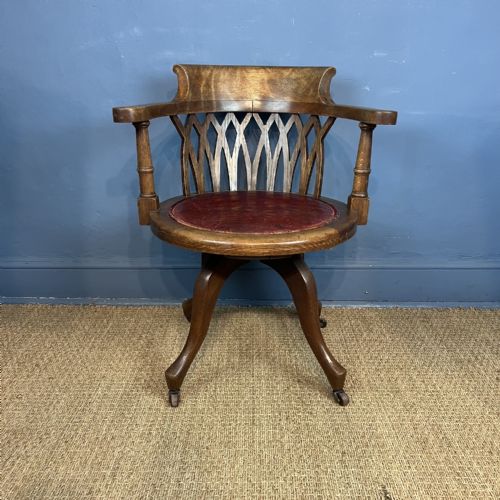
- A nineteenth-century design style drawing on medieval architectural motifs. Pieces in this taste often feature pointed arches and heavy carved details.
Vintage Revolving Chair: Frequently Asked Questions
How do I adjust the height on these chairs?
Many period swivel chairs use a threaded central spindle or a rise-and-fall screw mechanism beneath the seat. Turning the seat clockwise or anticlockwise raises or lowers the height.
Other industrial or workshop examples rely on clamping levers or pin adjustments. Check the mechanical action gently without forcing rusted or stuck threads.
Were these designed for offices or homes?
The selection covers both domestic and workspace environments. Heavy timber desk chairs and ship variants served maritime or study use, while piano stools and music chairs furnished drawing rooms.
Industrial workshop stools and machinist seating originated in factories and commercial environments. Each type retains construction traits suited to its original workspace.
How do I care for the leather upholstery?
Leather seat pads benefit from regular dusting and occasional treatment with appropriate conditioning balms to keep the hide supple. Avoid placing them near direct heat sources that dry out the material.
Distressed finishes require minimal intervention to preserve their historic character. Gentle cleaning prevents dust build-up in the grain and seams.
How can I tell Victorian from Edwardian chairs?
Victorian examples dating from the nineteenth century often feature dense mahogany, heavy carving, and rich golden tones. Styles range from plain office forms to elaborate Gothic Revival or Victorian Maritime designs.
Edwardian pieces from the early twentieth century frequently utilise lighter oak frames, Arts and Crafts influences, and simpler lines. They reflect a shift towards lighter domestic interiors.