

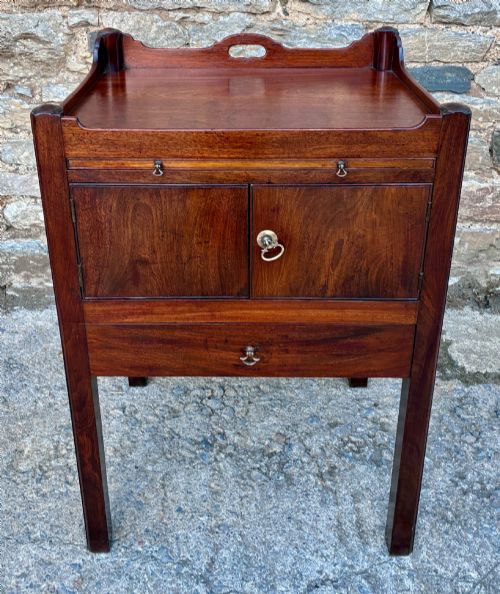
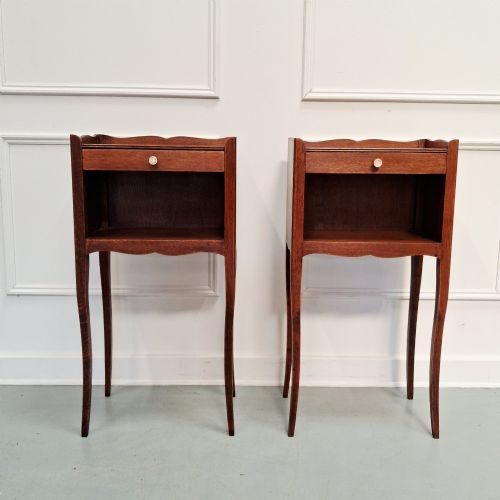
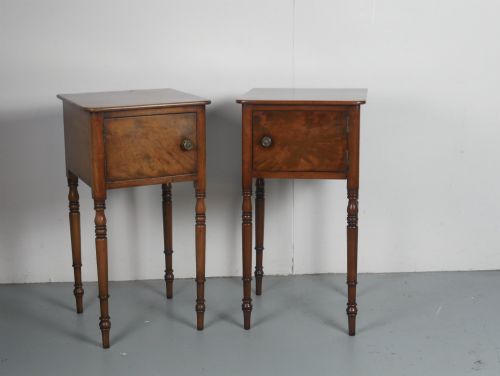
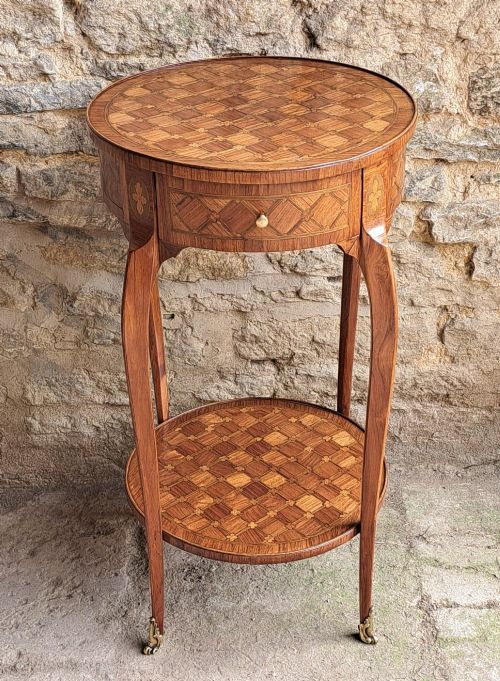
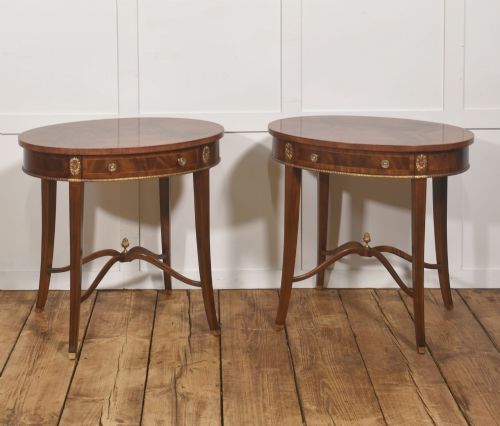
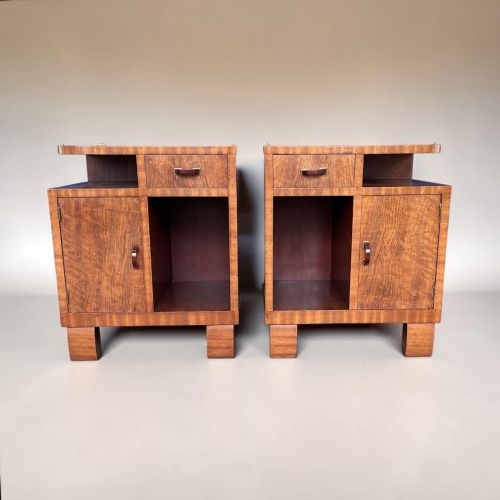
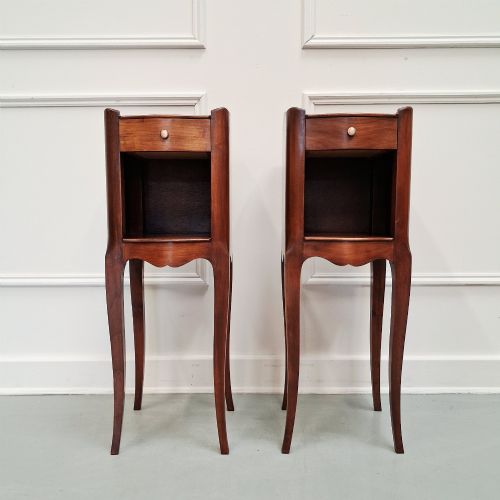
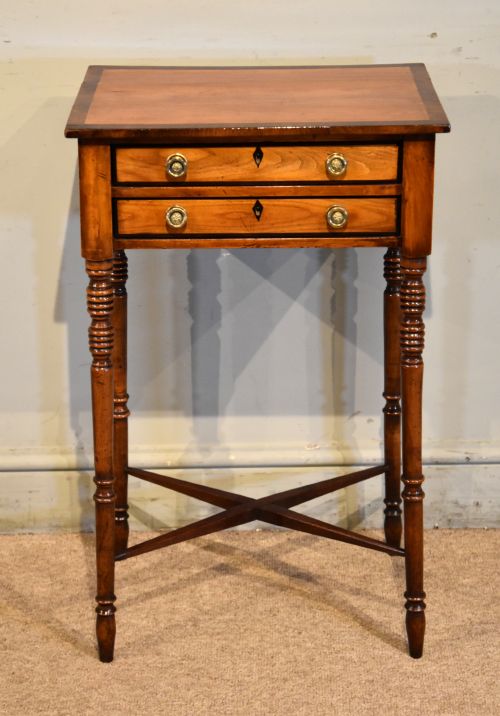

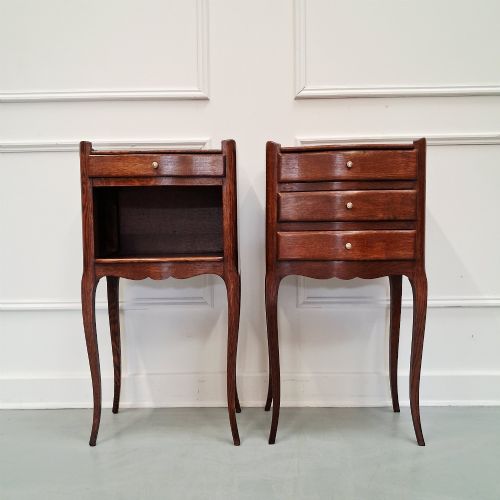
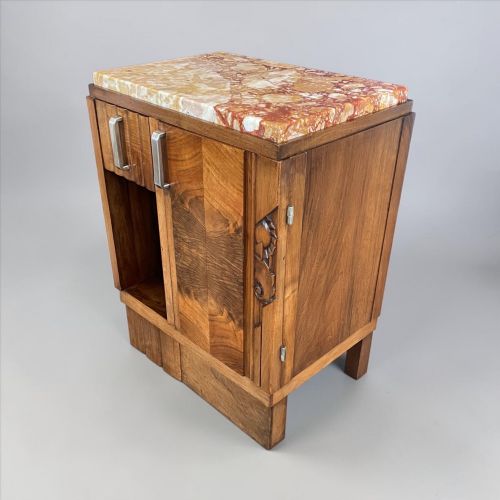
Brown Nightstand
A brown nightstand grounds the bedroom in warmth, offering practical bedside storage through centuries of cabinet-making skill.
Brown Nightstand
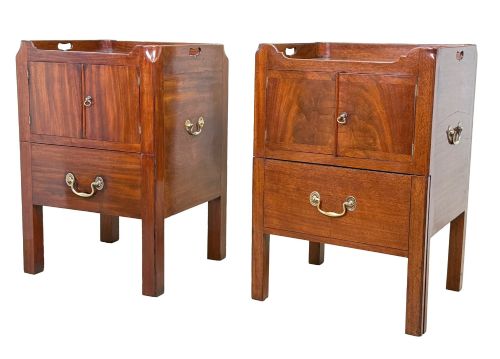
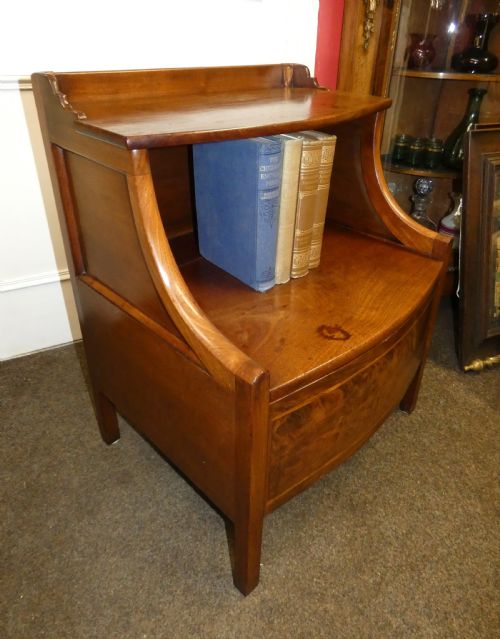
A brown nightstand spans practical bedside forms including cabinets, chests, commodes, and cupboards designed for nighttime storage. These pieces arrive from periods ranging from the Georgian era through Victorian, Edwardian, and Art Deco times.
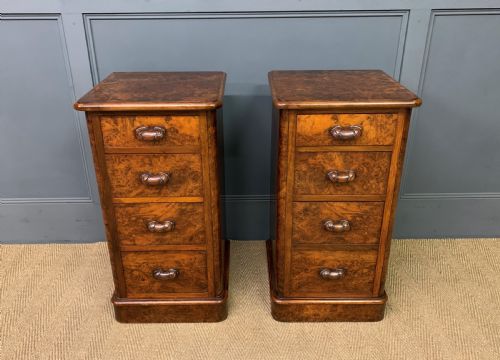
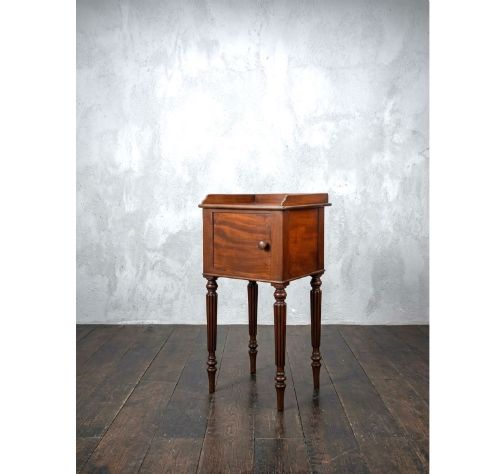
The most common examples on this page take the form of bedside cabinets and side tables in timber. Makers constructed these units to sit neatly beside a bed, holding essentials out of sight behind panelled doors or within small drawers.
Origins stretch from English workshops to French provincial makers, bringing regional variations in timber choice and decorative detail. Buyers meet everything from simple oak cupboards to refined marquetry cabinets.
Timbers and Construction Methods
Cabinet-makers relied heavily on rich hardwoods like mahogany, walnut, and oak to build these bedside pieces. Burr walnut and figured veneers added distinctive grain patterns to drawer fronts and tabletops.
Decorative techniques involved marquetry inlay, brass mounts, and occasional marble tops for durability and surface polish. Joinery traditions ensured structural strength in small furniture subjected to daily use.
Brown Nightstand Retail Price Guide 2026
Typical asking prices for brown nightstand among the pieces listed under this phrase on Sellingantiques today, from the lower quarter to the upper quarter. They describe what is for sale here now, not the wider market.
Surfaces vary from plain timber boards to intricate marquetry and cool marble tops.
Defining Quality in Bedside Furniture
Quality rests upon the selection of timber figures, such as matched burr walnut or finely grained mahogany. Superior pieces display crisp marquetry and thoughtful proportions rather than plain utility.
Internal construction reveals the standard of work, from hand-dovetailed drawer boxes to solid secondary woods. Finer examples retain original brass hardware and well-fitted doors that close true.
The Brown Nightstand Glossary
- Nightstand
- A low bedside table or small cabinet designed to hold lamps and night-time items. These pieces frequently feature enclosed cupboards or single drawers.
- Marquetry
- Decorative veneer work arranged in geometric or floral patterns across tabletops and doors. Craftsmen cut contrasting timbers to form these detailed surface pictures.
- Tray Top
- A tabletop finished with a raised moulded rim designed to prevent items from rolling off. This feature appears on Georgian and Victorian commodes.
- Pot Cupboard
- A traditional term for a small bedside cabinet enclosing a shelf or space once intended for a chamber pot. They function today as convenient bedside storage.
- Bow Front
- A convex curved front on a chest or cabinet that softens the rectangular lines of bedside furniture. This shape often appears on walnut and mahogany pieces.
Brown Nightstand: Frequently Asked Questions
What is a brown nightstand used for?
These pieces provide convenient bedside storage for lamps, books, and personal items. Enclosed cupboards and drawers keep the surface tidy.
Their compact size allows them to fit snugly beside various bed heights and room layouts.
How do I date a wooden nightstand?
Dating relies on observing timber choices, construction methods, and stylistic details like bracket feet or inlaid marquetry. Georgian pieces often display simpler lines, while Victorian examples lean toward heavier proportions.
Hardware styles and secondary wood types inside drawers offer further clues to the decade of manufacture.
Are marble top nightstands practical?
Marble tops provide a durable, heat-resistant surface that withstands spilled water or damp glasses easily. They add weight and a distinct decorative contrast to wooden bedside cabinets.
French provincial and Victorian makers frequently utilised this stone on bedside lockers.
How do I clean antique wood?
Dust regularly with a soft, dry cloth to prevent dirt accumulation on polished timber surfaces. Avoid modern silicone sprays that build up residue over time.
Apply occasional beeswax to nourish dry mahogany, walnut, or oak and maintain a gentle lustre.