


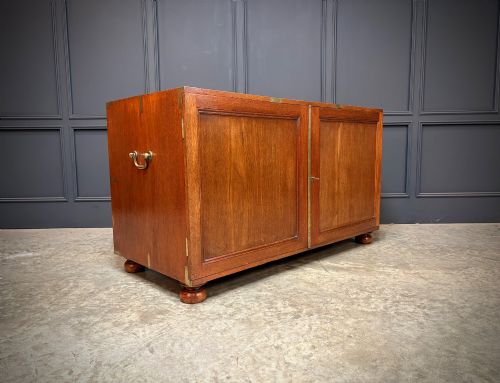

Brown Military Chest
A brown military chest brings portable practicality and rich timber grain to an interior, built in sections to travel across the empire.
Brown Military Chest
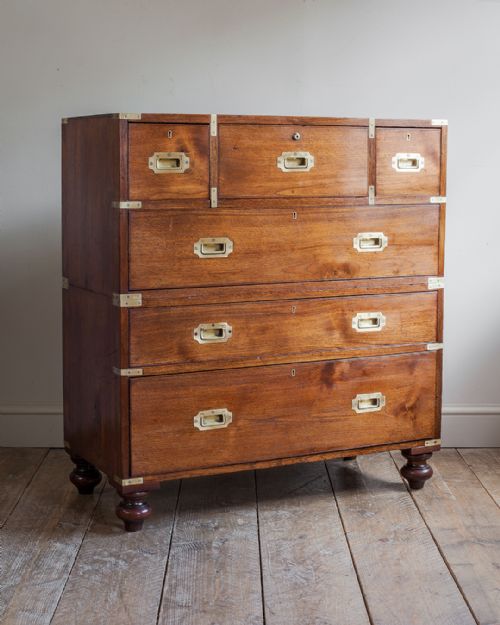
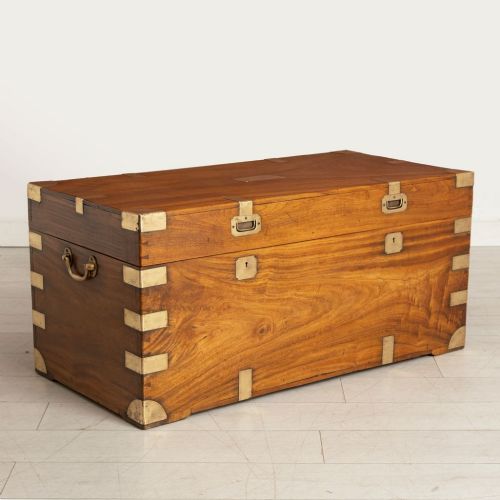
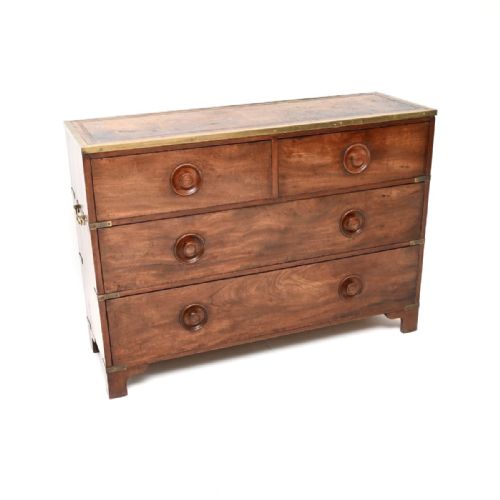
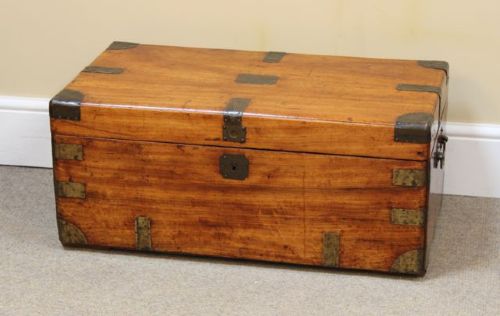
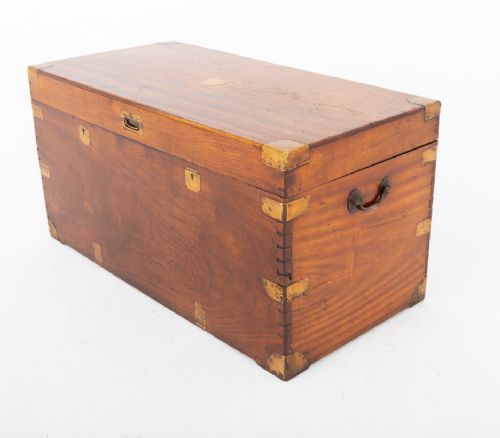
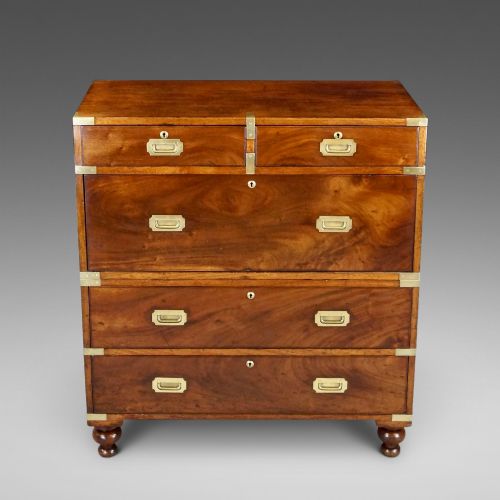
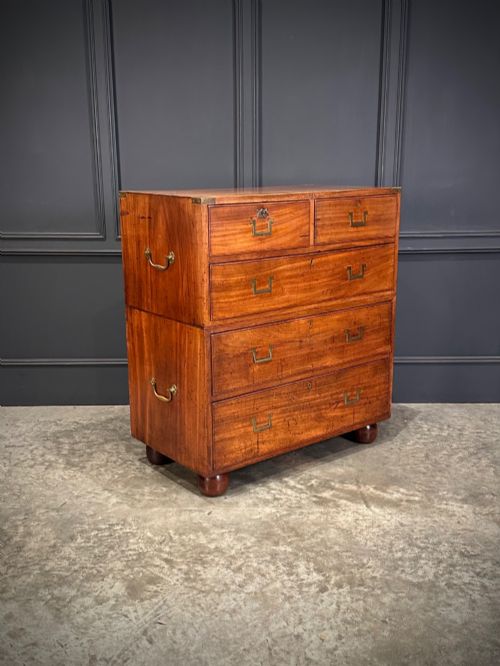
A brown military chest is a robust piece of modular furniture designed for officers on the move, separating into two or more stacked sections for ease of transport. When searching this phrase, a buyer encounters pieces primarily from the nineteenth century, including the Victorian and Georgian eras, spanning utilitarian trunks to fitted secretaire chests of drawers. These items are constructed to withstand long journeys while offering substantial storage.
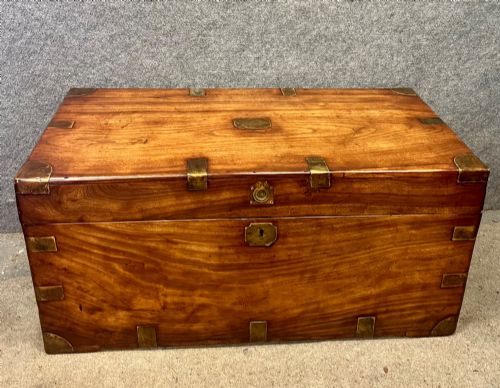
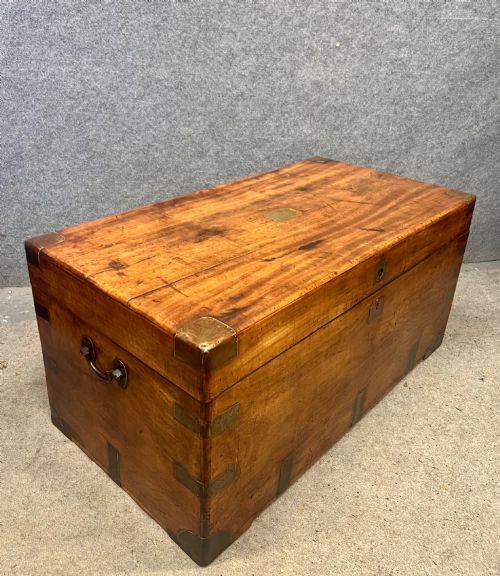
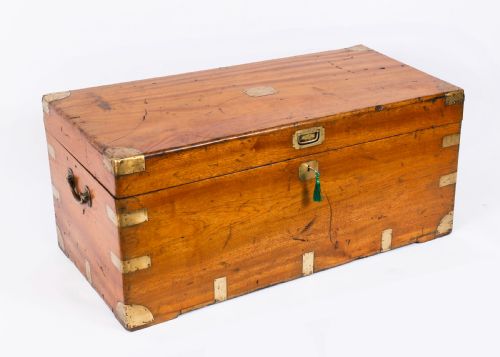
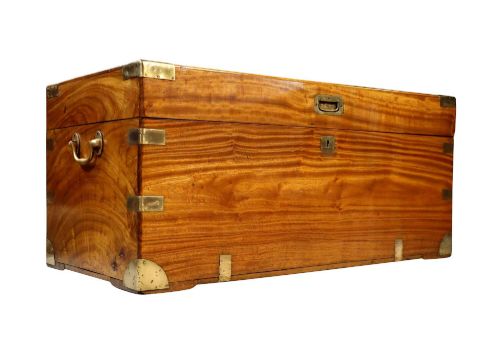
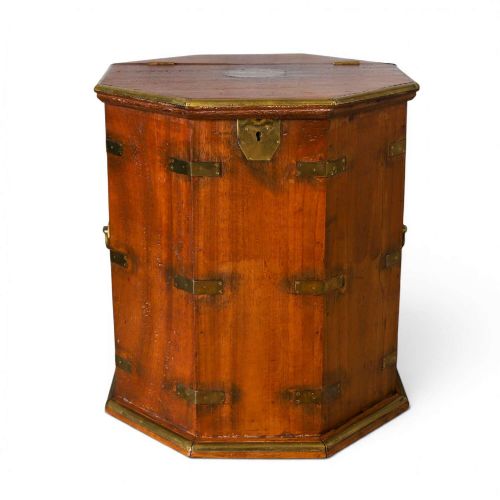
Camphor wood, mahogany, and teak dominate the selection, often reinforced with brass corners and flush handles to prevent snagging during transit. The configuration typically involves side carrying handles and removable feet, embodying the practical demands of military life. Side cabinets and tallboy variants also appear, demonstrating the diverse scale of these travelling units.
How they were made
Cabinet makers utilised dense, durable timbers such as camphor wood, teak, and mahogany to resist tropical climates and heavy handling. These woods were joined with tight dovetail joints and reinforced by heavy brass straps, corner brackets, and recessed hardware screwed firmly into the carcase. Such metalwork protected the vulnerable edges of the box and secured the separate modular sections together with iron or brass locking pins.
Secret compartments and drop-front writing surfaces appeared frequently within the secretaire variants, requiring precise internal joinery. Leather tops and iron bindings also supplemented the construction, depending on whether the item functioned as a storage trunk, a campaign desk, or an officer's chest of drawers.
Camphor wood chests retain their aromatic scent after two centuries, quietly deterring moths while guarding your jumpers.
What varies in quality
Quality rests upon the integrity of the timber selection and the completeness of the original brass hardware. Pieces featuring figured mahogany or well-grained camphor wood display a superior grade of material chosen by the maker. The weight and thickness of the brass strapping, alongside the smoothness of the drawer runners, separate standard regimental pieces from finer commissioned examples.
The refinement of internal fittings, such as secret drawers, pigeonholes, and original leather writing surfaces, elevates a piece. Retaining the original carrying handles, lock escutcheons, and stacking bolts preserves the functional authenticity that collectors prize.
The Brown Military Chest Glossary
- Campaign chest
- A modular chest of drawers built in two or more separate sections designed to be packed and transported easily during military campaigns. They feature recessed brass handles and corner brackets to endure rough handling.
- Secretaire chest
- A chest of drawers containing a fitted pull-out writing drawer with small internal compartments and a drop-front panel. This combination served officers as both storage and a field desk.
- Camphor wood
- An aromatic timber frequently used for campaign trunks because its natural scent repels insects. It provides a distinct reddish-brown grain.
- Flush handle
- A metal handle set into a recess in the wood so it does not project beyond the surface. This design prevents snagging during transit.
Brown Military Chest: Frequently Asked Questions
Why are these chests made in two sections?
Modular construction allowed officers to divide heavy furniture into manageable loads for mules, camels, or wagons during long overland journeys.
Once safely at a destination, the sections stacked securely on top of each other and locked into place with internal brass bolts.
How do I care for camphor wood furniture?
Camphor wood benefits from regular dusting with a dry cloth and occasional light conditioning to keep the timber from drying out.
Keep the chest away from direct heat sources and strong sunlight to preserve the rich natural tone of the wood.
Where were military chests originally used?
British officers and colonial administrators used these pieces in military tents, temporary barracks, and stations across the empire.
Their sturdy build ensured personal belongings survived damp conditions and rough transport.
How can I tell a Georgian chest from a Victorian one?
Georgian examples generally date from the late eighteenth or early nineteenth century, displaying simpler lines and darker mahogany tones.
Victorian pieces from the mid to late nineteenth century often utilise camphor wood or teak with heavier brass hardware.