


Victorian Military Desk
A victorian military desk offers sturdy, adaptable workspace designed for travel, combining functional compartments with resilient timbers for officers on the move.
Victorian Military Desk
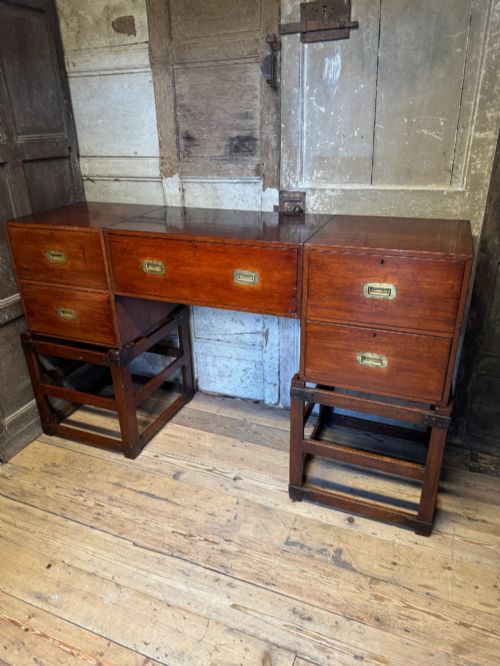
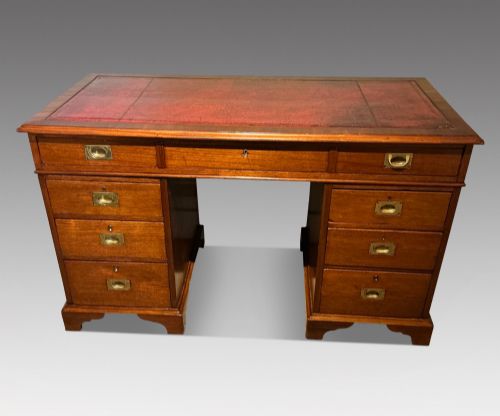
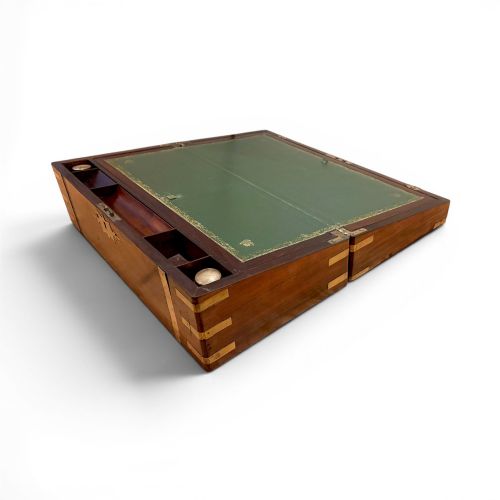
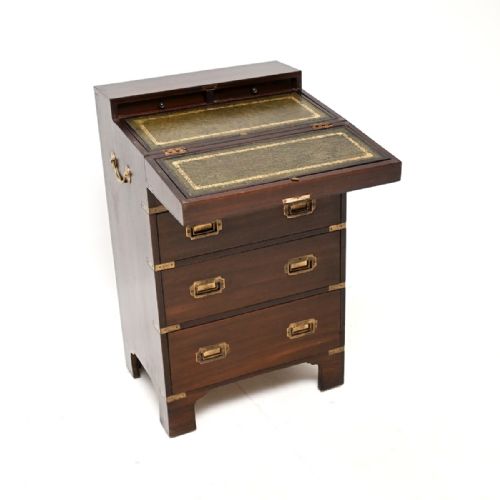
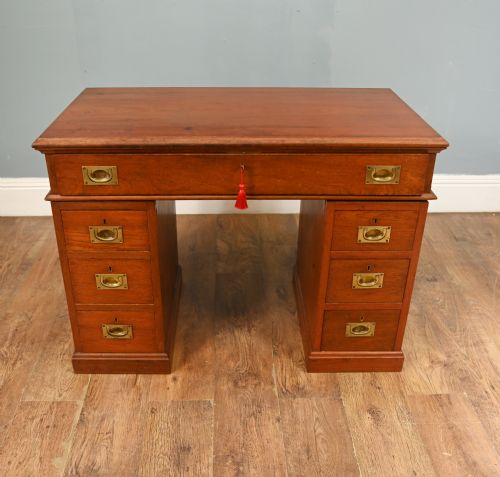
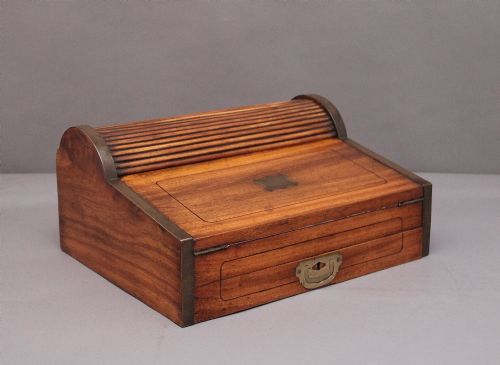
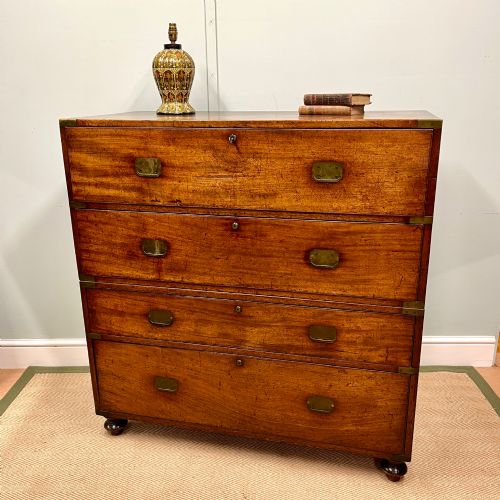
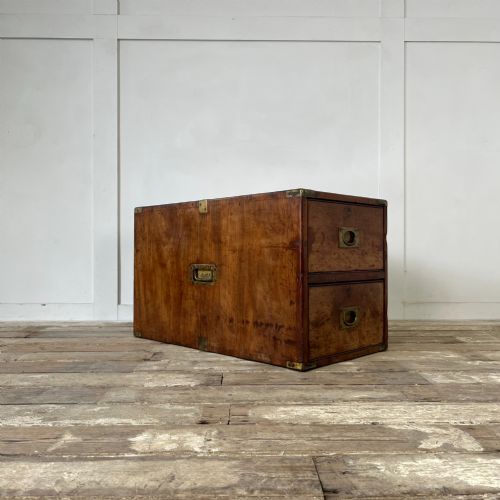
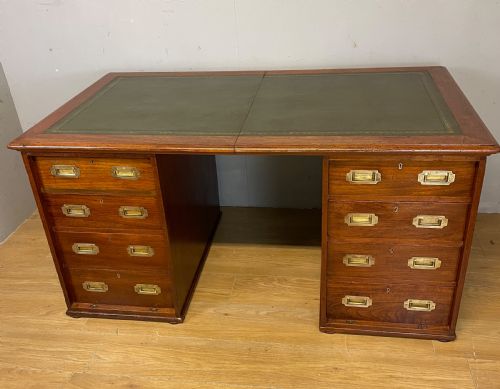
A victorian military desk primarily encompasses campaign furniture built during the nineteenth century for officers and officials requiring portable administration. These pieces span pedestal desks, secretaire chests with drop-down writing surfaces, and compact writing slopes designed to withstand rigorous transit.
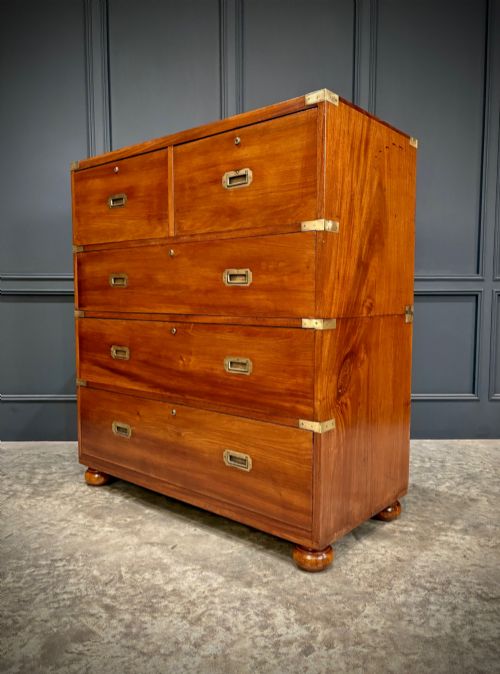
Mahogany, teak, and camphor wood dominate the selection, often partitioned into modular sections that dismantle easily. Buyers frequently encounter two-part secretaire chests and pedestal desks featuring inset writing surfaces.
Origins stretch across British colonial outposts and domestic workshops, yielding Anglo-Indian variations alongside standard British military forms. The overarching priority remains practical utility paired with robust construction.
Materials and Technique
Construction relies heavily on dense timbers such as mahogany, teak, and camphor wood, chosen for durability and resistance to climatic shifts during travel. Brass corners, binding, and recessed handles protect vulnerable edges and facilitate lifting without snagging.
Joinery is precise and reinforced to handle repeated assembly and disassembly without compromising structural integrity. Internal compartments often incorporate secret drawers and leather writing inserts secured within folding or sliding frameworks.
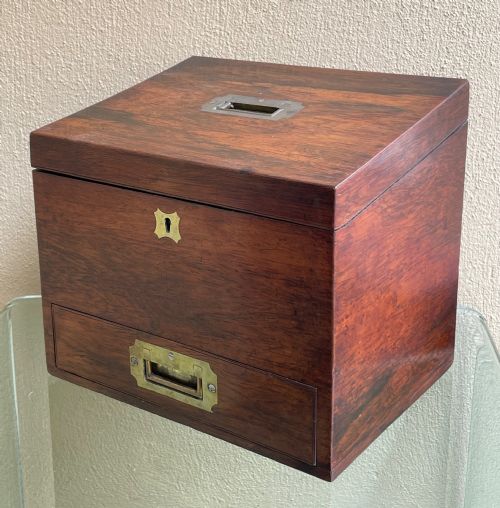
Several writing slopes still conceal tiny secret drawers operated by hidden wooden catches.
Gradations of Excellence
Quality rests in the precision of the brass hardware integration and the tightness of the sectional joins. Superior examples maintain smooth drawer operation and secure locking mechanisms across portable components.
Timber selection and secondary wood use reveal the maker's intent, with finely figured mahogany or solid teak marking out higher tiers of production. Original working keys and intact internal fittings elevate a piece above standard utilitarian output.
Ross of London
The Victorian Military Desk Glossary
- Secretaire chest
- A cabinet featuring a fitted writing drawer that drops down to reveal pigeonholes and small drawers. This form combines storage with a dedicated writing surface.
- Campaign furniture
- Portable furnishings designed to dismantle for transport by military officers. Brass binding and recessed handles are typical indicators of this category.
- Writing slope
- A portable box with a slanted lid that opens to provide a writing surface and document storage. Internal compartments often include inkwell recesses and secret drawers.
- Pedestal desk
- A heavy freestanding desk supported by two pedestals containing drawers. Campaign versions divide into separate modules for transit.
- Brass bound
- Edges and corners reinforced with brass strips and brackets to prevent impact damage. This technique protects timbers during frequent loading and unloading.
Victorian Military Desk: Frequently Asked Questions
What is a military desk?
A military desk is a portable writing station built to travel with officers during the nineteenth century. These items typically feature modular construction and protective brass hardware.
Such pieces allowed commanders to maintain paperwork and correspondence while on campaign. Their design prioritised resilience and compact storage.
How do campaign desks dismantle?
Campaign desks separate into two or three distinct sections, such as upper and lower chest modules or independent pedestals. This modularity permitted straightforward packing into crates or wagons.
Brass brackets and flush-fitting handles assisted in joining and lifting the components without adding protruding hazards.
Which woods were used?
Maker workshops utilised dense, stable timbers capable of enduring fluctuating climates during overseas service. Mahogany, teak, and camphor wood appear frequently across surviving examples.
Camphor wood offered the additional benefit of natural pest deterrence for stored documents and textiles.
How do I care for one?
Preserving these pieces involves maintaining stable indoor humidity to prevent timber movement and cracking. Regular dusting with a soft cloth protects polished surfaces and brass fittings.
Leather writing inserts benefit from occasional light conditioning to prevent drying and splitting over time.