

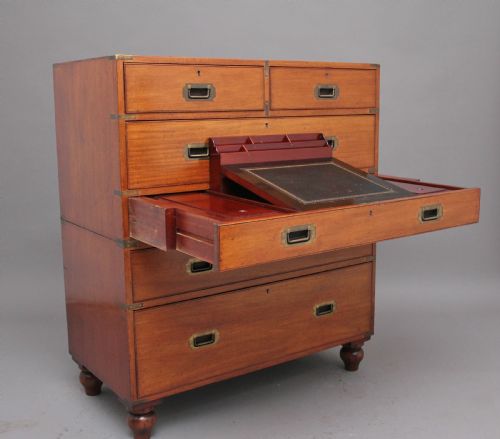


Victorian Mahogany Desk Chest
A victorian mahogany desk chest brings together the utility of a writing surface and the fitted drawers of a cabinet, serving buyers who value timber furniture with multiple functions.
Victorian Mahogany Desk Chest
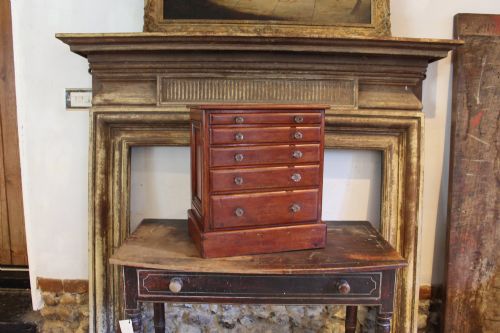
When you search for a victorian mahogany desk chest, you encounter pieces that blur the boundary between storage and writing furniture. The selection on this page centres on items built during the nineteenth century, ranging from compact miniature chests to robust campaign pieces.
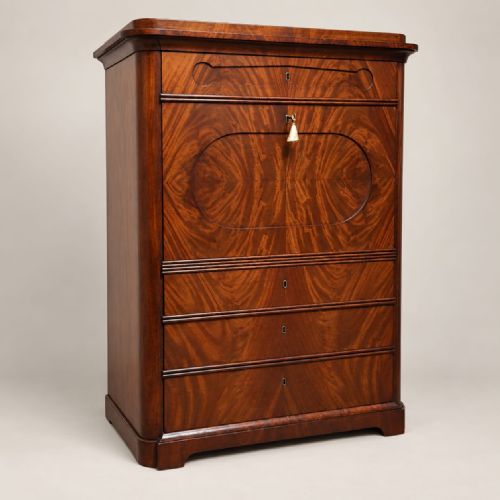
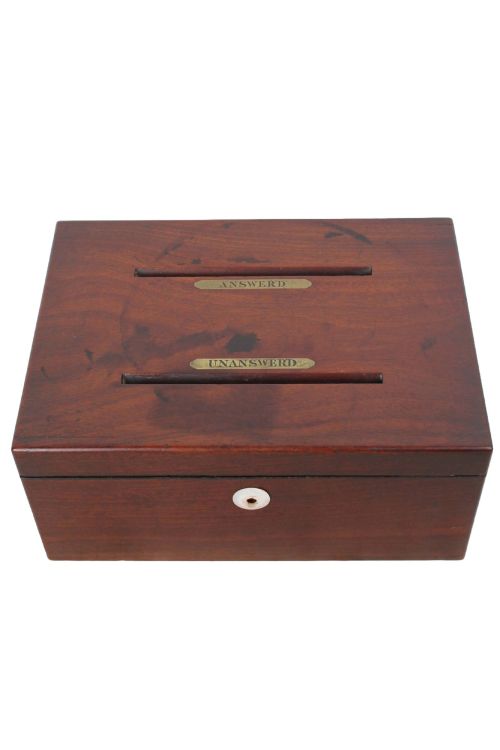
The most common formats include secretaire chests featuring drop-down writing flaps, tabletop stationery cabinets, and bureau configurations. Makers of the period engineered these forms to maximise storage within domestic or military quarters without occupying excessive floor space.
Originating largely from British workshops and colonial outposts, these items reflect the diverse requirements of nineteenth-century life. Whether designed for travelling officers or country house studies, each object provides compartmentalised organisation alongside a stable writing platform.
Timber and construction methods
Cabinet makers relied primarily on solid mahogany and flame mahogany veneers applied to secondary woods, achieving deep reddish-brown tones and striking grain patterns. Panels were selected with care to present balanced figures across drawer fronts and fall-front writing surfaces.
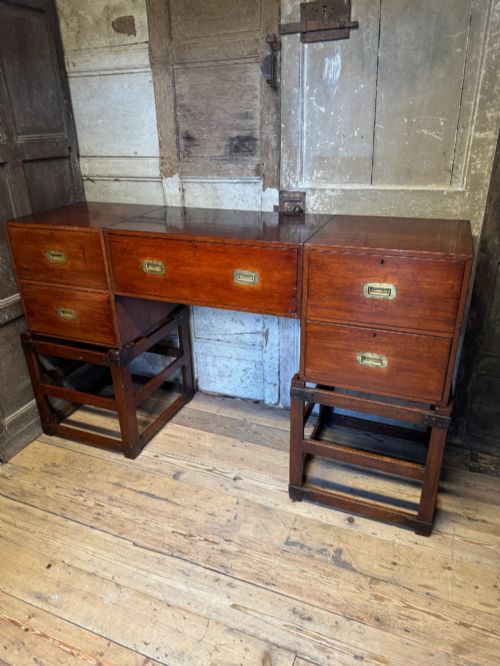
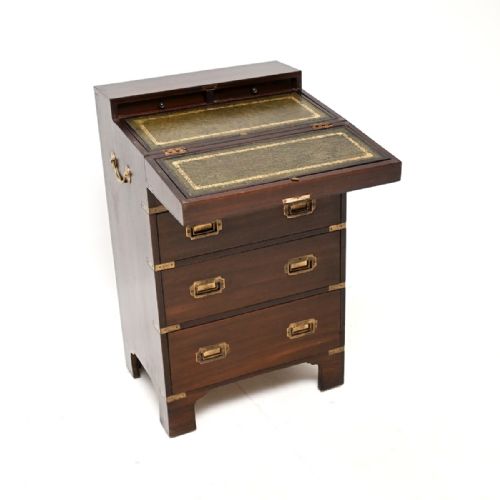
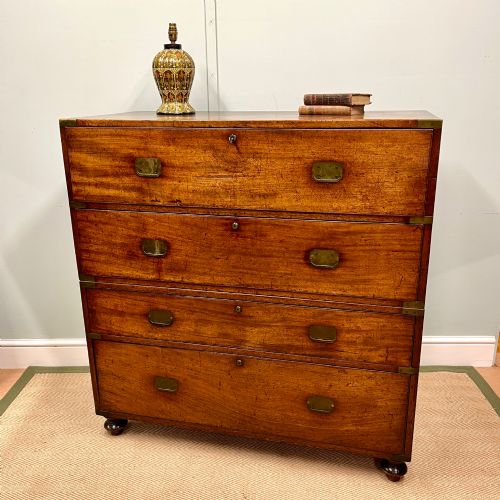
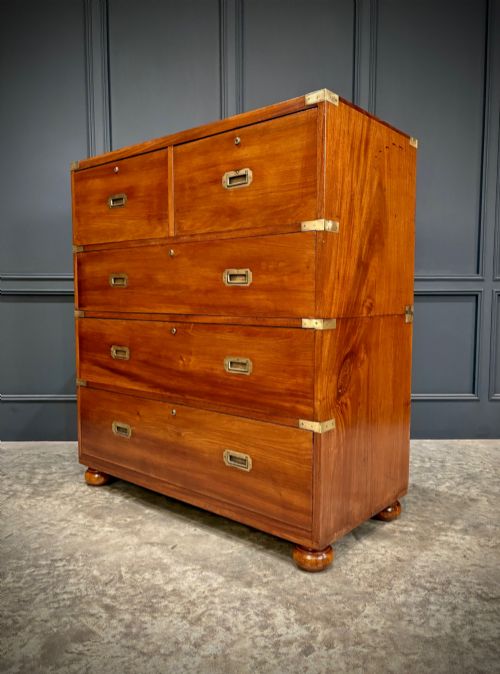
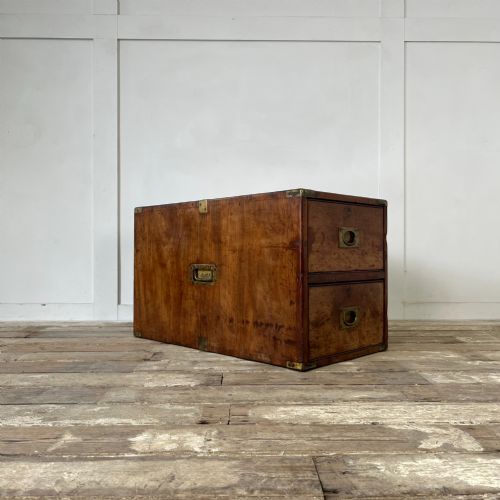
Brass hardware played a critical structural and decorative role, particularly on campaign and military pieces where flush handles, corner brackets, and binding protected the edges during transit. Internal compartments often integrated secondary materials such as glass, leather writing inserts, and bone handles or escutcheons.
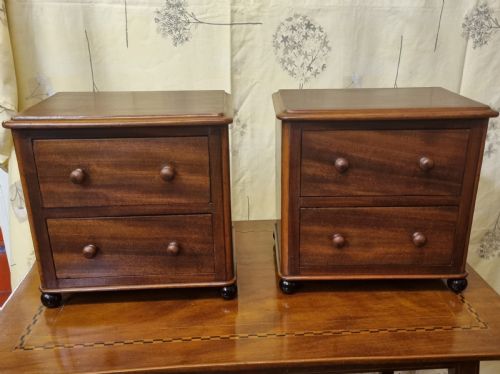
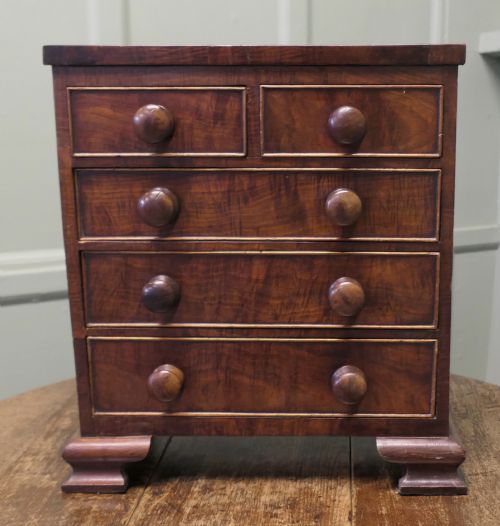
Miniature chests allowed travellers to practice their penmanship and store correspondence while crossing oceans.
Distinctions in construction and finish
The division between standard workshop production and superior output rests on the precision of the joinery and the selection of timber veneers. Higher-grade examples display seamless drawer linings, hand-cut dovetailing, and grain matching that flows continuously across multiple drawer tiers.
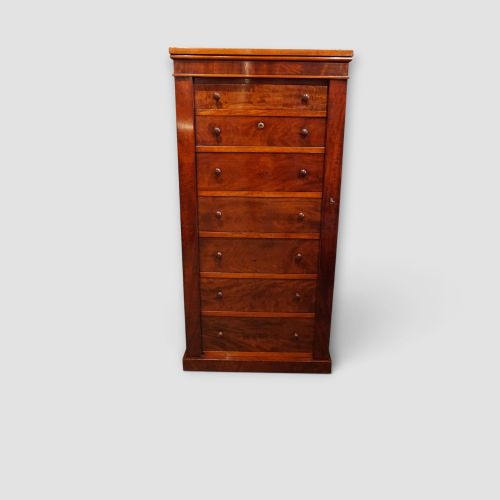
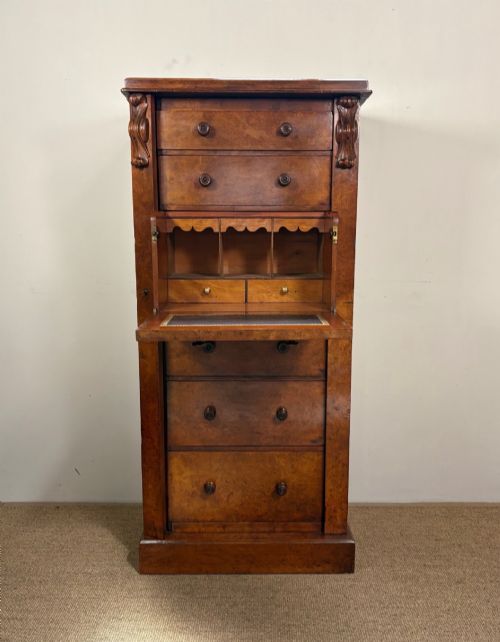
Hardware integration also defines the hierarchy of these pieces, with top-tier items featuring robust recessed brass mounts, working locks with original keys, and sophisticated internal mechanisms such as locking flaps on Wellington chests.
Edwards & Roberts·Gregory & Co of London·Druce & Co·James Lamb of Manchester
The Victorian Mahogany Desk Chest Glossary
- Secretaire chest
- A chest of drawers where the upper drawer pulls out and folds down to reveal a fitted writing surface and small pigeonholes. This hybrid form conceals a complete desk within standard case dimensions.
- Wellington chest
- A tall, narrow chest secured by a hinged vertical locking flap on one side that fastens with a single key. It typically comprises seven graduated drawers.
- Campaign style
- Furniture constructed in sections with recessed brass fittings and corner brackets designed for easy dismantling and transport by military officers. The pieces prioritise structural resilience and modular assembly.
- Flame mahogany
- A veneer cut from the fork of the mahogany tree where the branches join the trunk, producing a rippling, flame-like grain pattern. Cabinet makers used this figure on primary display surfaces.
Victorian Mahogany Desk Chest: Frequently Asked Questions
What is a secretaire chest?
A secretaire chest combines a set of drawers with a pull-out desk drawer containing small compartments and pigeonholes for writing materials.
The hinged front drops down to form a stable writing surface, allowing the piece to function as both a chest and a desk.
Why are some chests called apprentice pieces?
Apprentice pieces are smaller-scale models constructed by trainees to prove their skill to guild masters before entering the profession.
They utilise the same timber, dovetailing, and finishing techniques found on full-sized furniture of the period.
What is a Wellington chest?
A Wellington chest is a tall, narrow set of drawers secured by a locking side pilaster that swings or fastens in place.
This locking mechanism protected the contents of every drawer simultaneously with a single key turn.