
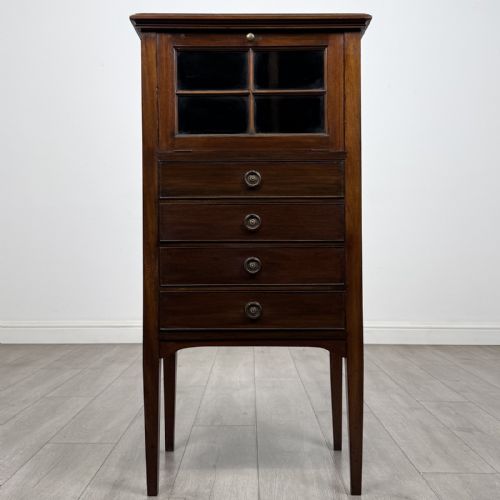
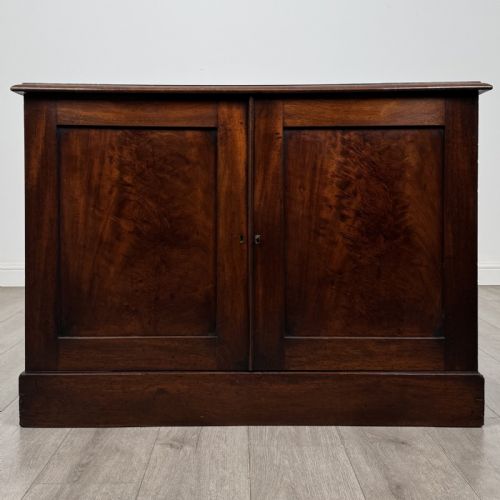
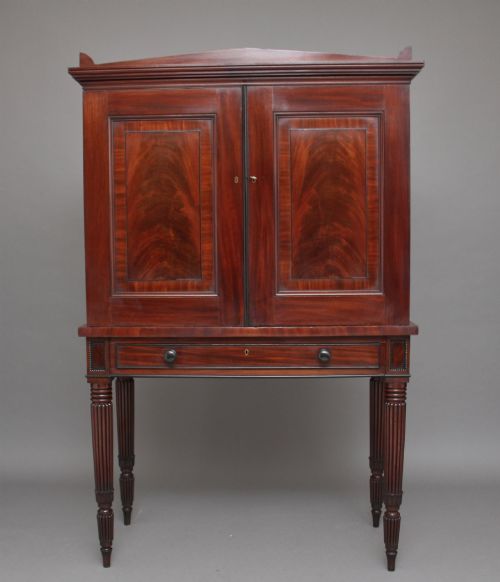
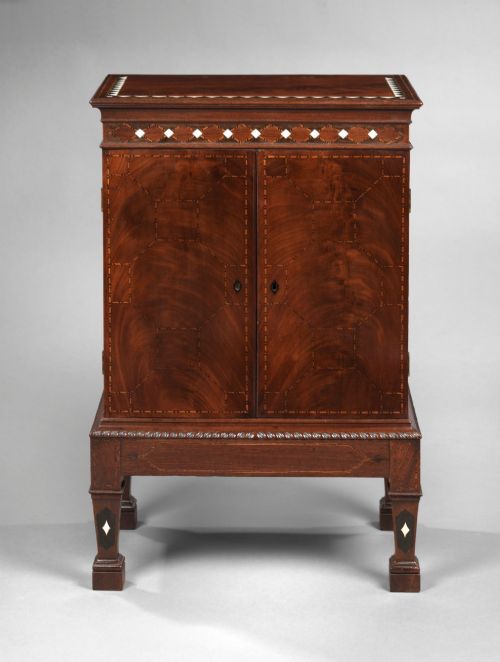



Dark Mahogany Specimen Chest
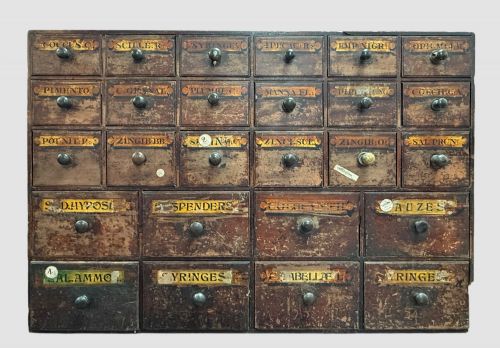
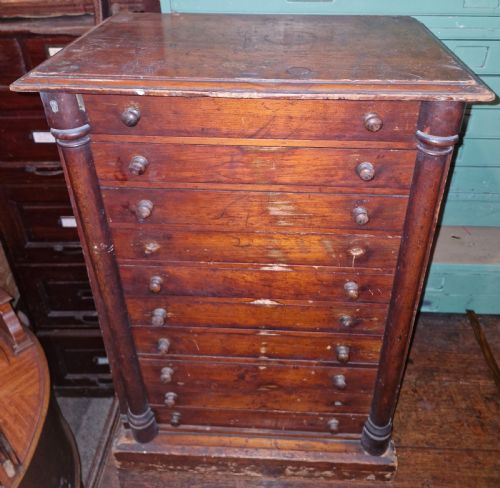
A dark mahogany specimen chest holds natural history objects, coins, or small instruments in closely fitted drawers.
Dark Mahogany Specimen Chest
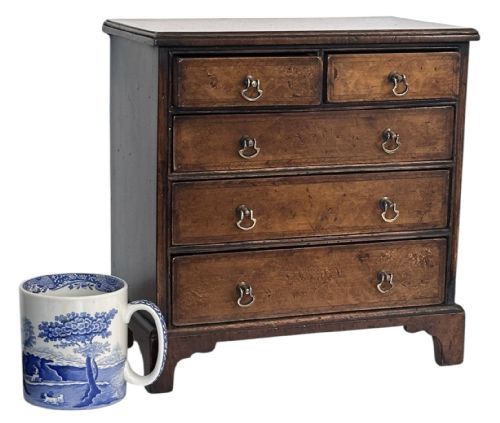
A dark mahogany specimen chest brings together functional storage for small items and the dense grain of traditional timber. These cabinets span Georgian, Victorian, and Edwardian periods, taking the form of multi-drawer banks, apothecary chests, miniature chests of drawers, and dedicated collectors cabinets.
Victorian examples dominate the selection, often containing numerous shallow drawers designed to house microscope slides, insects, or watch parts. Alongside these, earlier Georgian pieces and later Edwardian variations appear, each built to hold discrete collections safely away from light and dust.
The layout typically involves banks of small drawers fitted with brass drop handles or tiny pulls, sometimes protected behind glass-fronted doors. Buyers encounter everything from compact five-drawer bedside units to monumental forty-drawer scientific cabinets originating from workshops across England.
Distinctions in craftsmanship
Quality rests on the precision of the drawer fit and the thickness of the mahogany used throughout the carcass. Finer specimens display meticulous hand-cut dovetails, numbered drawers with original pulls, and secondary woods chosen for stability.
Design complexity separates standard storage from pieces made by known makers or specialised cabinet-makers. The presence of locking stiles, original glass, and integrated dust boards between drawers marks the upper tier of execution.
Cabinet configurations range from compact five-drawer apprentice chests up to monumental forty-drawer scientific storage units.
BRADY OF EDMONTON·CHARLES WILLIAM SCHOFIELD
The Dark Mahogany Specimen Chest Glossary
- Specimen chest
- A small multi-drawer cabinet built to store natural history samples, coins, or scientific slides. These units prioritize numerous shallow drawers over deep hanging space.
- Bank of drawers
- A chest containing a high density of small drawers arranged in vertical and horizontal grids. They were used in pharmacies, workshops, and studies for organised sorting.
- Dovetail joint
- An interlocking wood joinery technique using wedge-shaped fingers that resist being pulled apart. It appears extensively on the corners of drawers in quality cabinets.
- Wellington chest
- A tall, narrow chest of drawers secured by a hinged locking stile that fastens down the right side. This mechanism locks all drawers simultaneously with a single key.
Dark Mahogany Specimen Chest: Frequently Asked Questions
What were specimen chests originally used for?
These cabinets stored delicate items such as insect collections, botanical specimens, geological samples, and microscope slides. Naturalists and collectors relied on the shallow drawers to keep fragile objects organised and protected.
Over time, similar drawer configurations served watchmakers, apothecaries, and dentists for tools and small parts. Today, owners repurpose them to hold jewellery, stationery, or modern collections.
How do I date a mahogany specimen chest?
Dating relies on construction methods, secondary timbers, and hardware styles across the Georgian and Victorian eras. Earlier pieces often feature hand-sawn secondary woods and simpler brass pulls, while later Victorian versions frequently incorporate locking stiles and dust strips.
Maker signatures, stamps inside the drawers, or historical labels also help establish an exact decade of manufacture. Examining the dovetailing reveals whether the chest dates from the eighteenth or late nineteenth century.
How should I care for dark mahogany wood?
Keep mahogany furniture away from direct sunlight and strong heat sources to prevent the timber from fading and drying out. Natural waxes applied occasionally will maintain the deep lustre of the dark finish without building up heavy residues.
Avoid placing damp items directly onto the wood surfaces, especially inside unlined drawers. Gentle dusting with a dry, soft cloth is sufficient for routine maintenance.
Are all specimen drawers interchangeable?
Drawers in antique specimen chests are rarely interchangeable because makers fitted each one by hand to its specific slot. Slight variations in the internal runners mean mixing them up can cause jamming or uneven gaps.
Checking the numbering on the drawer edges or framing helps ensure each slide returns to its correct position. Keeping drawers in their original slots preserves the historical fit of the cabinet.