
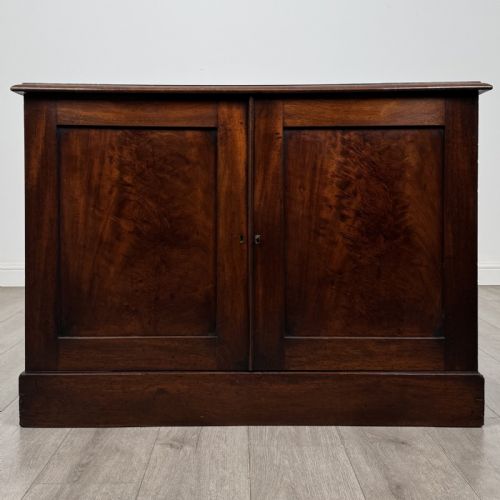
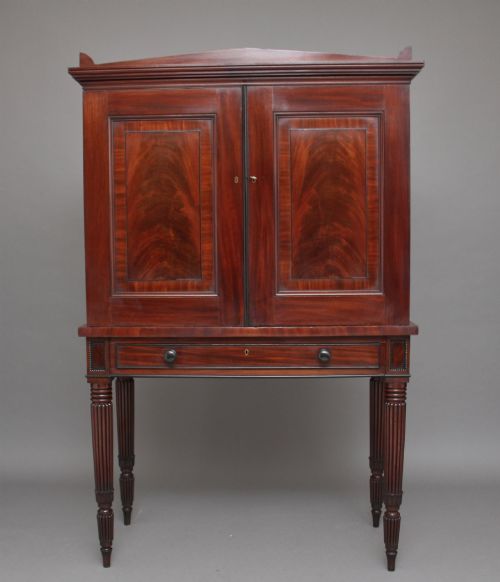


Flame Mahogany Collector Cabinet
A flame mahogany collector cabinet organises small treasures in timber selected for its fiery grain, bringing warmth and focus to a room.
Flame Mahogany Collector Cabinet
A flame mahogany collector cabinet is a piece designed to house specimens, miniatures, or small valuables in fitted drawers. When you search for this phrase, you find examples originating from the Georgian, Regency, and Victorian periods.
The most common forms on this page include tabletop cabinets, miniature chests of drawers, and tall specimen cabinets with multiple small drawers. These pieces range from compact bedside formats to large forty-drawer cabinets made for serious natural history collections.
Construction styles span formal Regency design, George III proportions, and heavier Victorian execution. Makers utilised timber figure to create striking visual movement on the primary surfaces.
Materials and construction
Makers applied flame mahogany veneer over solid secondary timbers to achieve rippled, fiery grain patterns across drawer fronts and doors. Satinwood inlay and contrasting ebony details frequently accent the primary mahogany surfaces.
Solid mahogany and brass hardware provide the structural integrity and functional handles required for daily use. Drawer interiors often retain original partitions or soft linings suited to delicate specimens.
Materials recur across the archive in solid mahogany, flame mahogany veneer, satinwood inlay, brass, and ebony.
Qualities of construction and timber
Superior pieces display exceptional balance in the flame figure across matching drawer fronts, showing careful timber selection by the cabinetmaker. The density and curl of the mahogany veneer separate high-end formal commissions from standard workshop production.
Joinery precision dictates longevity, particularly in the smooth operation of numerous small drawers within compact frames. Finer examples retain original brass locks, escutcheons, and subtle stringing details intact.
The Flame Mahogany Collector Cabinet Glossary
- Flame mahogany
- A veneer cut from timber where the branch meets the trunk, producing a rippled, flame-like grain pattern. This figure is highly decorative and commands attention on cabinet facades.
- Specimen cabinet
- A piece of furniture fitted with many shallow drawers intended for classifying natural history objects. These cabinets often feature dust lips on the drawers to protect fragile contents.
- Wellington chest
- A tall, narrow chest of drawers secured by a hinged locking stile on one side. This form appears frequently in nineteenth-century mahogany pieces.
- Satinwood inlay
- Contrasting light-coloured timber inserted into the mahogany surface in geometric or linear patterns. It provides crisp definition to Regency and Georgian furniture.
- Pedestal cabinet
- A compact storage unit standing on a fixed base or plinth. These examples often combine cupboard space with fitted internal drawers.
Flame Mahogany Collector Cabinet: Frequently Asked Questions
What were collector cabinets originally used for?
These cabinets served scholars and naturalists for housing shells, coins, minerals, and entomological specimens in shallow dust-tight drawers.
Over time, owners also used them to store jewellery, documents, and small household valuables securely out of sight.
How do I care for flame mahogany furniture?
Keep the wood away from direct sunlight and strong heat sources to prevent the veneer from drying out or lifting.
Apply a traditional beeswax polish occasionally and buff gently with a soft cloth to maintain the natural lustre of the grain.
How do I tell Regency from Victorian cabinets?
Regency pieces typically display restrained classical proportions, architectural cornices, and crisp satinwood or ebony stringing.
Victorian examples often feature heavier timber sections, bolder mouldings, and a greater number of internal drawers designed for specific collections.
Are miniature chests also collector cabinets?
Miniature chests share the exact same diminutive scale and fine cabinetmaking techniques as dedicated specimen storage.
Makers often built them as apprentice pieces, salesman samples, or luxury items for refined domestic interiors.