
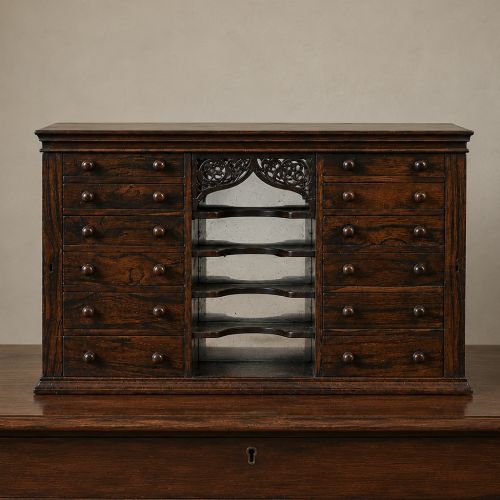
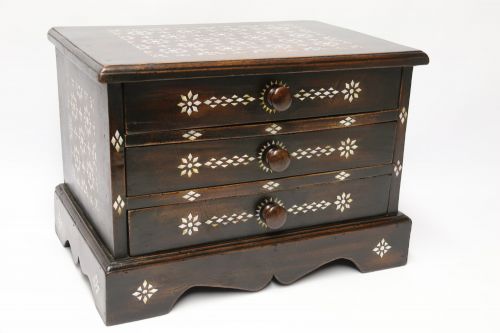
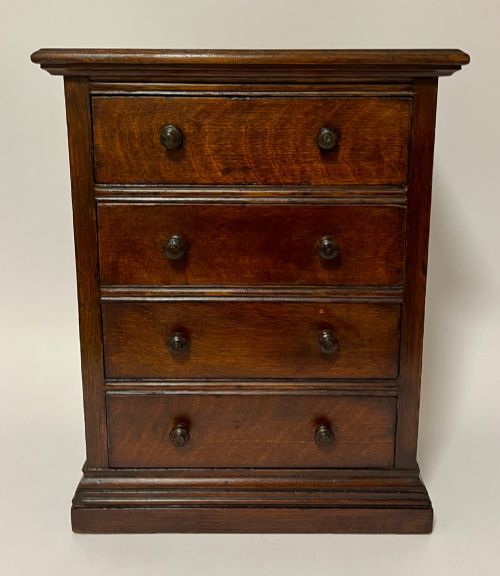
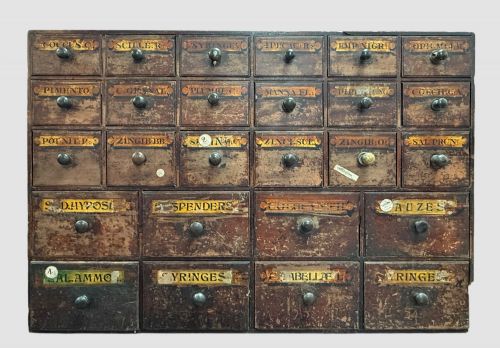
Wooden Specimen Drawer Cabinet
A wooden specimen drawer cabinet organises small treasures and natural history collections with understated architectural precision.
Wooden Specimen Drawer Cabinet
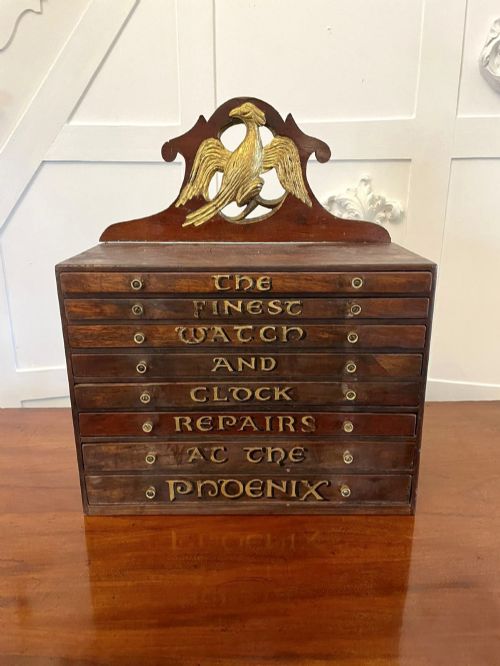
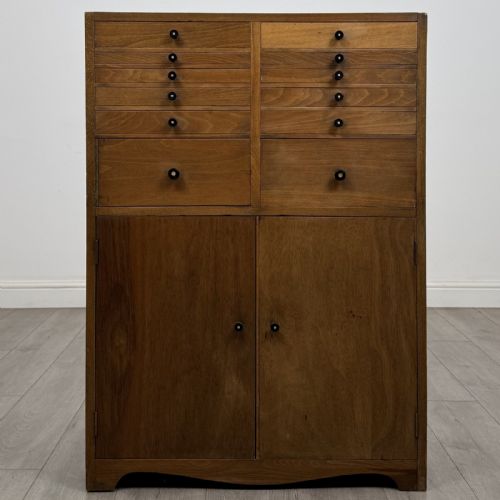
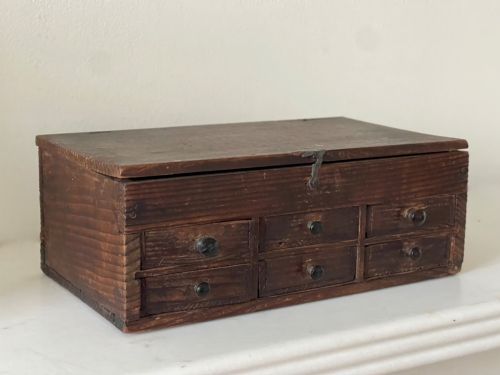
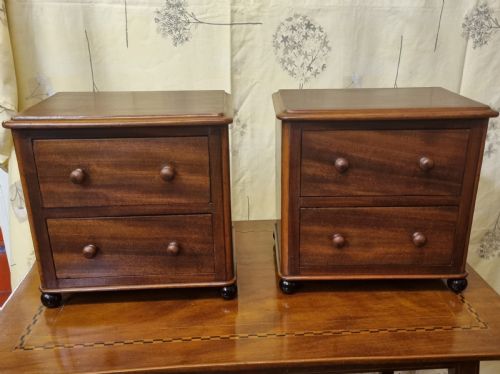
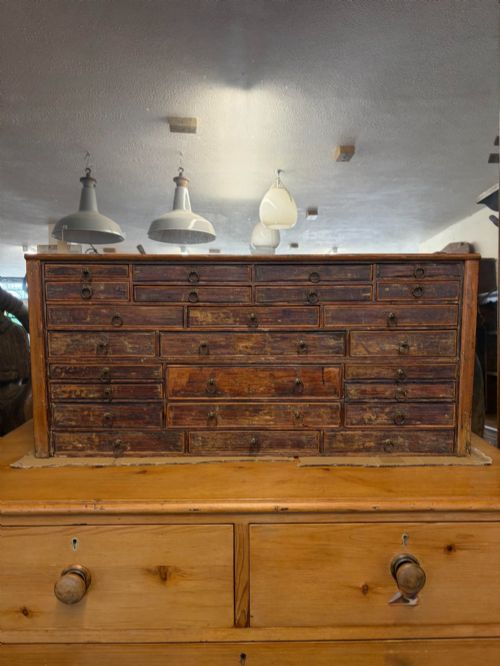
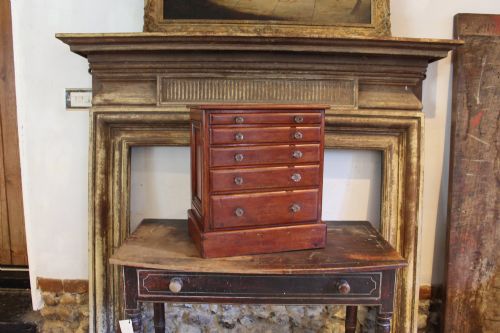
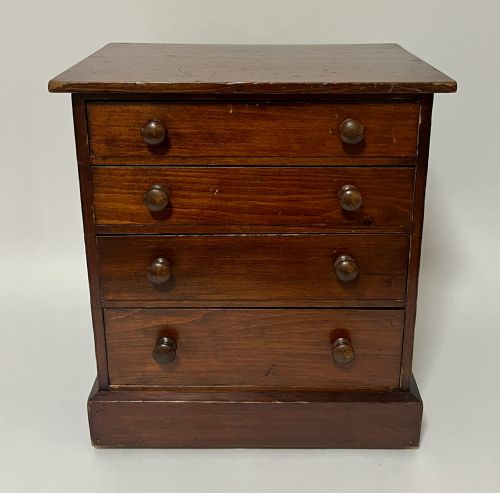
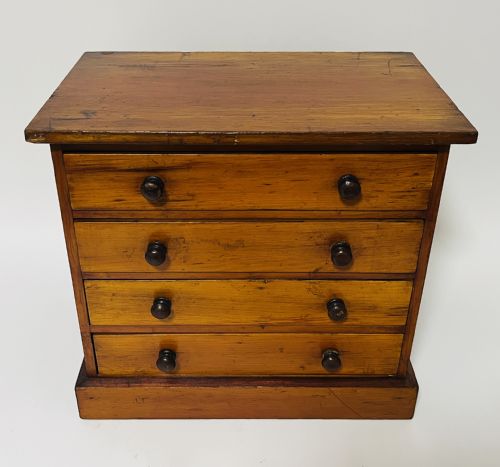
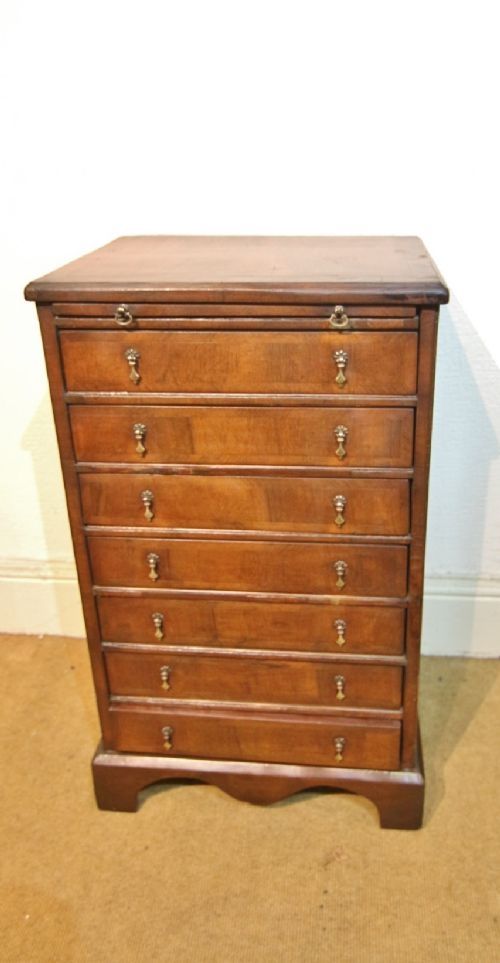
A wooden specimen drawer cabinet gathers multiple shallow tiers designed originally for butterflies, minerals, or medical samples. These pieces range from compact tabletop chests to substantial multi-drawer banks built for serious study.
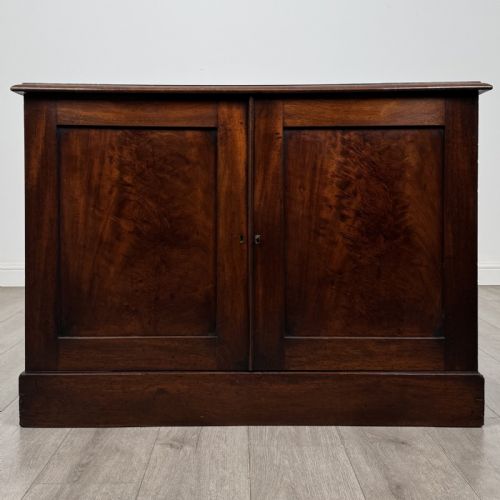
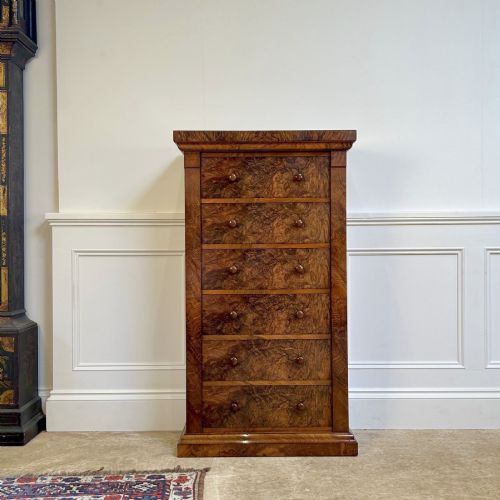
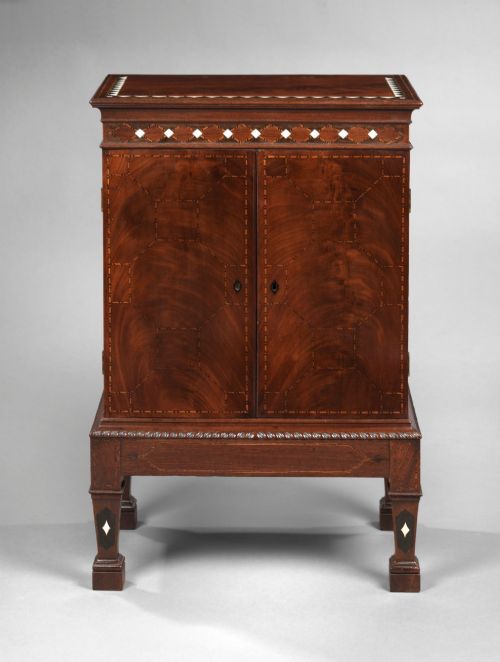
Victorian and nineteenth-century examples dominate the selection, frequently constructed as miniature Wellington chests, apothecary units, or dedicated collectors' cabinets. Walnut, mahogany, and pine provide the primary structural carcasses for these functional storage units.
Origins stretch from Georgian workshops to Edwardian institutional rooms, often incorporating locking mechanisms, brass pulls, and fitted glass panels. The internal architecture focuses entirely on protection, maintaining tight tolerances to keep dust and light away from delicate contents.
Materials and construction
Cabinet makers utilised dense hardwoods like mahogany and walnut alongside utilitarian softwoods such as pine and deal. Drawer runners required exact carpentry to ensure smooth operation across dozens of shallow compartments without binding.
Polished finishes and clear varnishes highlight natural grain patterns while protecting surfaces from handling wear. Joinery typically employs dovetail joints on drawer construction to withstand the daily pull and push of multiple tiers.
Listings feature periods spanning from the Georgian era through the Regency and Victorian periods up to the nineteen-twenties.
Assessing quality and craftsmanship
Superior examples demonstrate meticulous timber selection, using figured burr walnut, rosewood, or matched mahogany veneers across the facade. Poorer pieces rely on stained deal or plain pine with minimal attention to grain continuity.
The sophistication of the locking mechanism separates standard utility furniture from high-status pieces. Wellington chests use a locking stile that secures every drawer simultaneously, demanding precise alignment of internal stops.
Drawer construction reveals the maker's hand through fine dovetailing and thin, stable cedar or oak linings that minimise weight. Lesser versions use heavier, clumsier partitions that reduce the usable internal volume of each shallow tray.
Gillows·D Napier And Sons·Brady
The Wooden Specimen Drawer Cabinet Glossary
- Wellington chest
- A tall, narrow chest of drawers secured by a hinged locking bar on one side that fastens with a key. This style originates from the early nineteenth century and frequently serves collector purposes.
- Specimen cabinet
- A purpose-built piece of furniture containing numerous shallow drawers for organising natural history items, coins, or slides. Construction prioritises dust-tight seals and organised internal divisions.
- Apothecary chest
- A multi-drawer unit originally intended for pharmacies, herbalists, or medical practitioners to store remedies and powders. These units utilise numerous small compartments often labelled for specific contents.
- Dovetail
- An interlocking joint formed by wedge-shaped fingers that provides exceptional tensile strength for drawer corners. Fine, numerous pins indicate superior cabinet-making skill.
- Escutcheon
- A protective metal plate surrounding a keyhole that prevents the surrounding wood from wearing away through repeated use. Brass forms the most common material for these decorative plates.
Wooden Specimen Drawer Cabinet: Frequently Asked Questions
What did people store in these cabinets?
Original owners used these multi-drawer units for botanical specimens, geological samples, insect collections, and medical supplies. Apothecaries and doctors also relied on them for organising powders, pills, and instruments.
Collectors of coins, stamps, and watch repair parts later adopted these shallow-drawer formats because the shallow depth prevented items from burying one another.
How do I date a wooden specimen drawer cabinet?
Dating relies on timber choices, construction methods, and hardware styles across different periods. Georgian and Regency pieces favour solid mahogany with hand-cut dovetails, while Victorian variants often introduce locking stiles and walnut veneers.
Edwardian and later iterations from the early twentieth century frequently employ stained pine or oak with simpler manufacturing techniques. Inspecting the drawer linings and secondary woods provides further clues to the decade of origin.
Can I use these cabinets for modern jewellery?
The shallow drawers provide ideal storage for modern rings, necklaces, watches, and delicate accessories. The compartmentalised layouts keep pieces separated and prevent scratching.
Linings of felt or velvet can be added to protect sensitive metals and stones without altering the structural integrity of the historic wood.
Why do some cabinets have locking side bars?
Locking side bars on Wellington chests and specific collectors' cabinets secure every single drawer simultaneously with a single turn of a key. This design protected valuable natural history specimens or medical compounds from unauthorised access.
Operating the mechanism requires swinging or lifting the hinged stile before any individual drawer can be pulled outward.