
Antique Collector Storage
These antique collector storage pieces bring order to small treasures through fitted drawers and cabinets crafted in mahogany, oak, and pine.
Antique Collector Storage
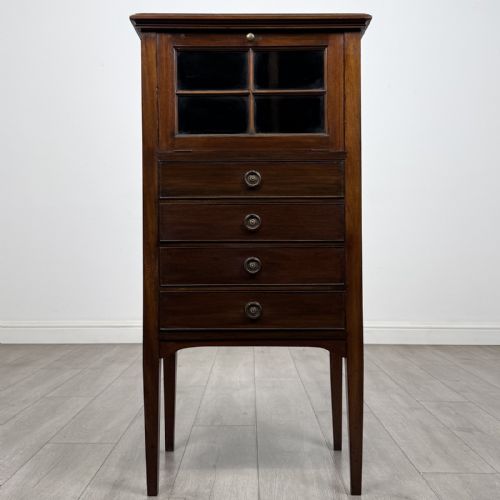
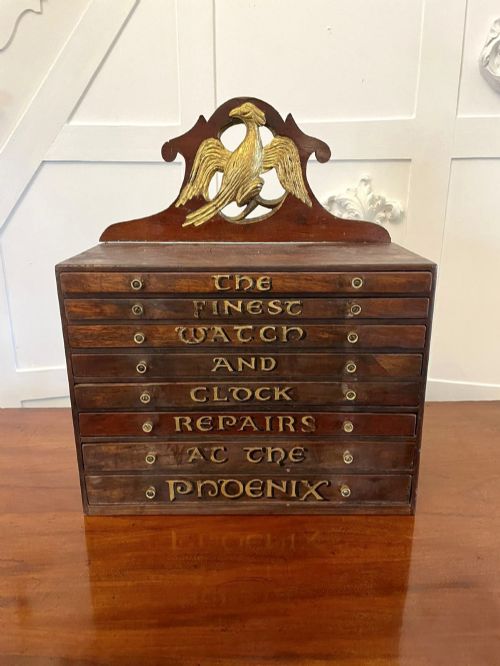
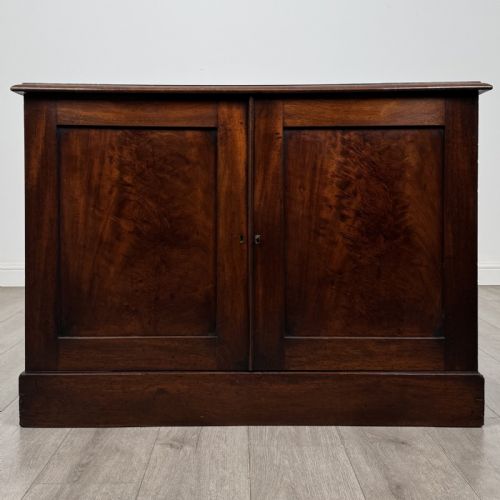
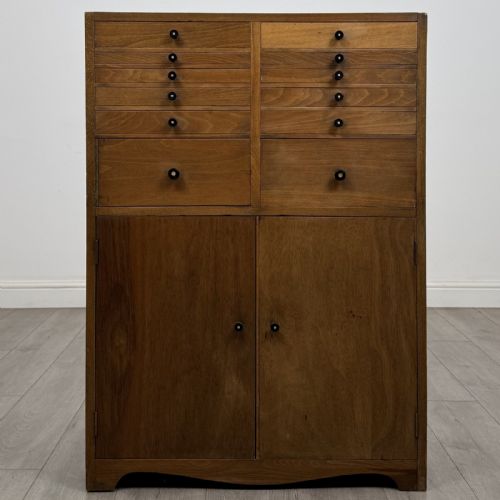
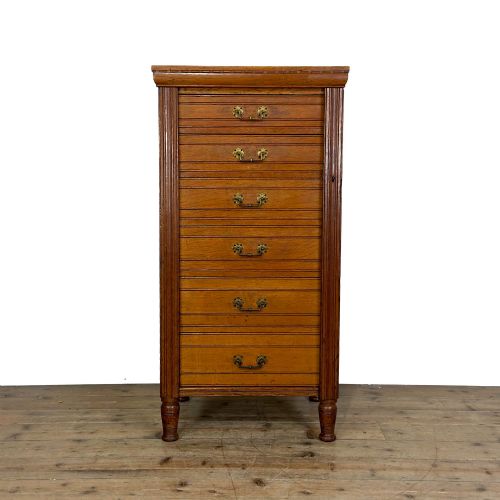
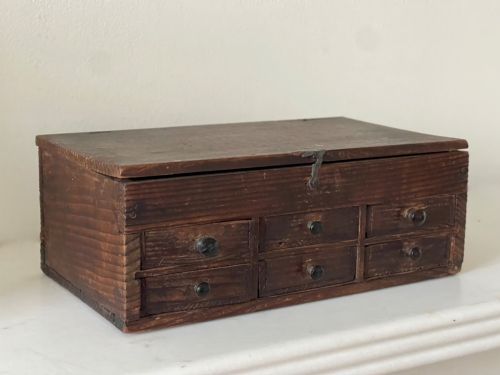
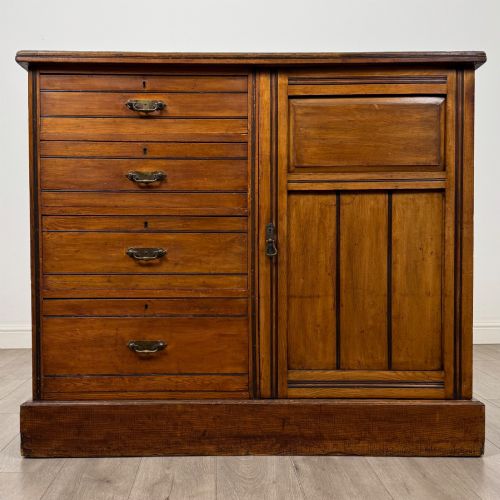
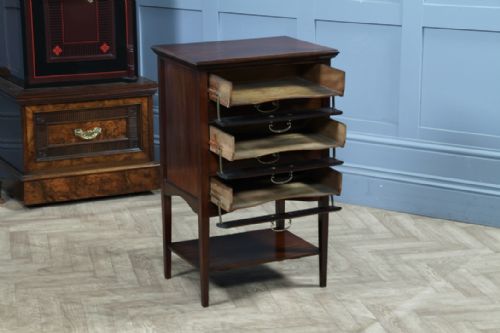
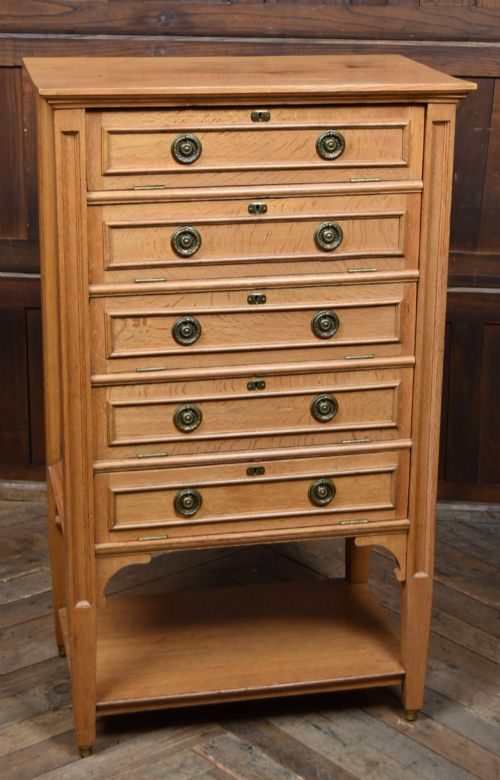
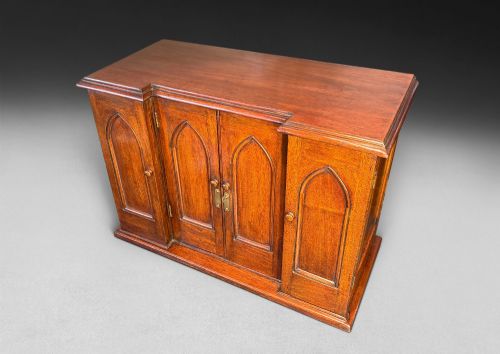
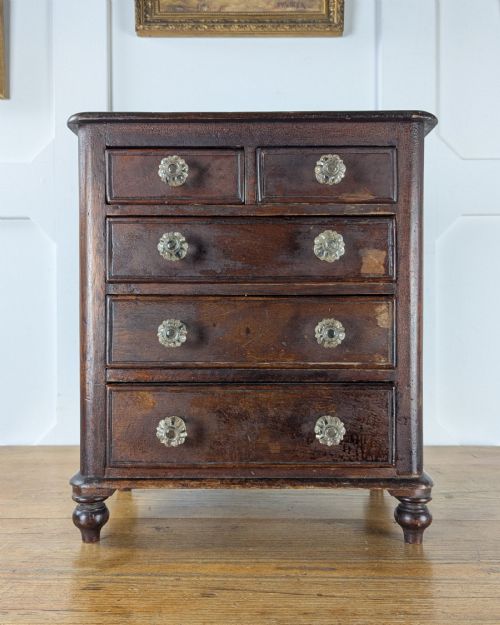
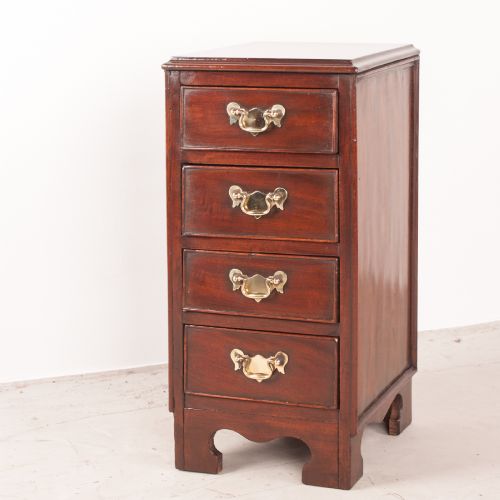
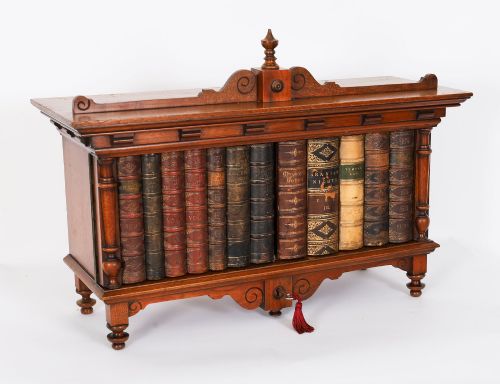
Buyers seeking antique collector storage will find specialised furniture designed to house small specimens, currency, tickets, and curiosities. The selection spans multi-drawer filing cabinets, miniature apprentice chests, tabletop collector cabinets, and apothecary banks.
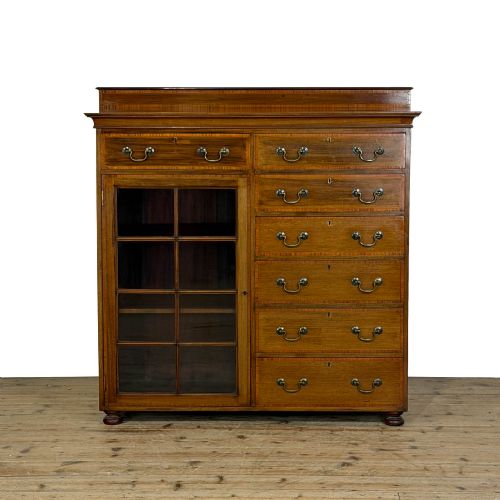
Most examples originate from the Victorian and Edwardian eras, alongside pieces dated across the nineteenth and early twentieth centuries. Forms range from utilitarian banks of shallow drawers to refined mahogany Wellington chests and glazed display cabinets.
Originating for specific trades, offices, and domestic hobbies, these items provide compartmentalized storage using modular arrangements of multiple drawers. Buyers encounter everything from railway ticket cupboards to insect cabinets built for rigorous sorting.
How they were made
Cabinet makers utilised dense hardwoods like mahogany, walnut, and oak alongside softer utility timbers such as pine, deal, and fruitwood. Construction relied on sturdy joinery to support heavy banks of small drawers filled with specimens or documents.
Hardware played a functional and structural role, incorporating brass handles, shell pulls, and metal label holders. Specialised pieces integrated glass panels for display or parquetry veneer for decorative surface finish.
Listings feature eighteenth-century parquetry veneered cabinets alongside nineteenth-century pine spice drawers and oak filing furniture.
What varies in quality
Quality rests upon the integrity of the timber framing and the precision fitting of numerous small drawers within a bank. Superior execution shows in the retention of original brass hardware, maker labels, and undisturbed internal partitions.
Workshop origin distinguishes standard utility office furniture from commissioned scientific and natural history cabinetry. Finer examples display careful timber selection, such as figured mahogany or satin walnut, matched across multiple drawer fronts.
Watkins and Doncaster·Brady of Edmonton·D Napier and Sons
The Antique Collector Storage Glossary
- Wellington chest
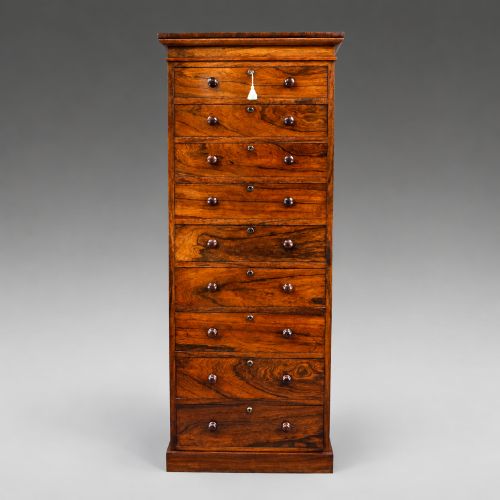
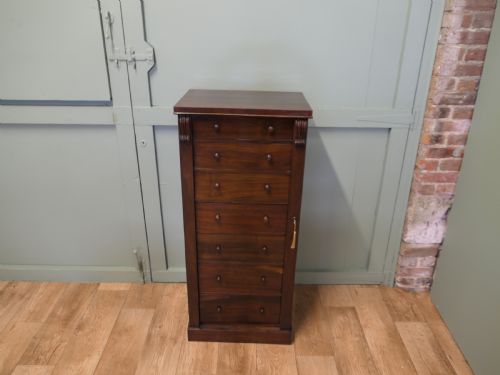
- A tall, slender chest of drawers featuring a hinged locking stile on one vertical edge that secures all drawers simultaneously. This form typically dates to the Victorian period.
- Apothecary chest
- A multi-drawer cabinet originally utilised by chemists and pharmacists to organise medicinal ingredients and dry goods. They feature numerous small compartments.
- Collector cabinet
- A specialised piece built with shallow drawers specifically designed to organise insects, coins, fossils, or botanical specimens. Interior trays often feature glass covers or soft linings.
- Shell pull
- A pressed metal handle shaped like an inverted shell, commonly found on nineteenth-century filing furniture and banks of drawers. It frequently incorporates a slot for a paper label holder.
Antique Collector Storage: Frequently Asked Questions
What were apothecary banks used for?
Apothecary banks stored dried herbs, powders, and medicinal compounds in pharmacies and dispensaries.
Their numerous small drawers kept ingredients separated and accessible for daily compounding.
How do I identify a Wellington chest?
A Wellington chest stands tall and narrow with a characteristic locking side flap that secures every drawer.
They generally feature six or seven graduated drawers framed in mahogany or walnut.
What is an apprentice chest?
Apprentice chests are small-scale models built by woodworkers to prove their technical proficiency.
They duplicate full-size furniture details using standard cabinet-making joints.
How were ticket boxes utilised?
Railway ticket dispensing boxes held pre-printed cardboard tickets in stacked columns for station staff.
Train personnel accessed them quickly during busy passenger rushes.