
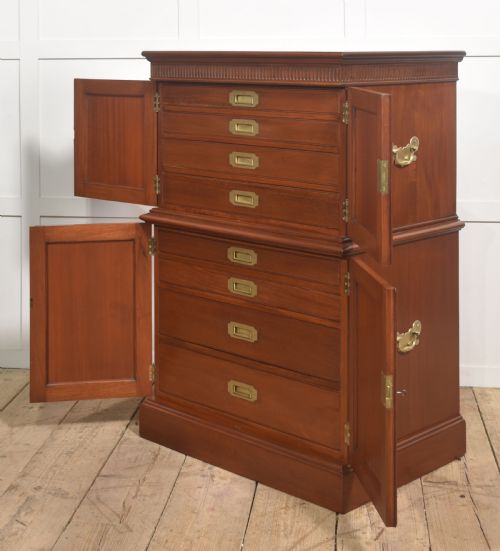


Victorian Plan Chest
A Victorian plan chest is a substantial, wide set of shallow drawers built to keep architectural maps, prints and drawings flat.
Victorian Plan Chest
A Victorian plan chest offers a wide, shallow bank of drawers designed to store large sheets of paper without curling them. When you search for a Victorian plan chest, you find forms that served architects, artists and mapmakers throughout the nineteenth century.
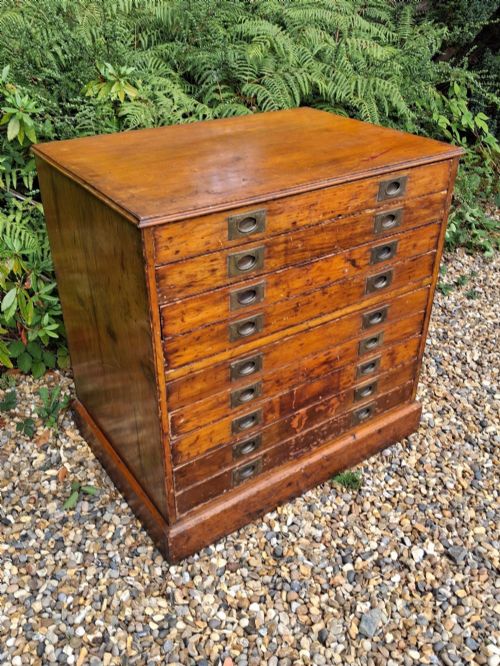
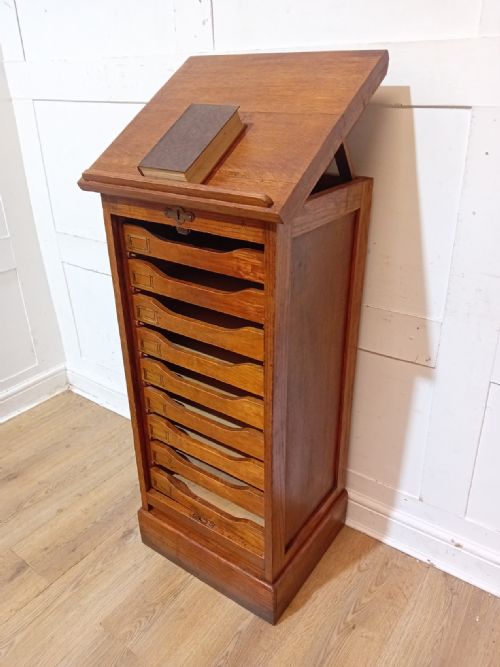
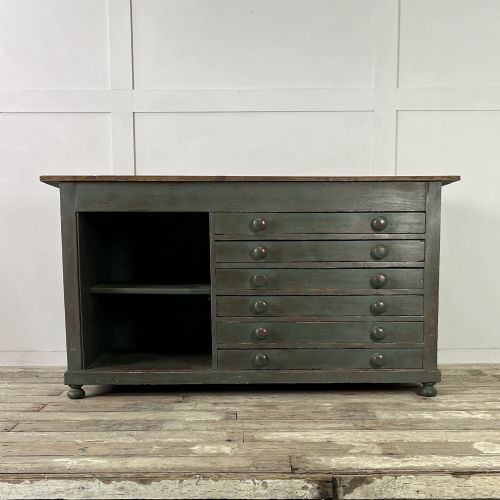
The pieces appearing here include oak, mahogany and pine variants, often built as large shop, specimen or filing cabinets with numerous wide drawers. Most examples span the Victorian and late Victorian periods, alongside related nineteenth century cabinets and banks of drawers.
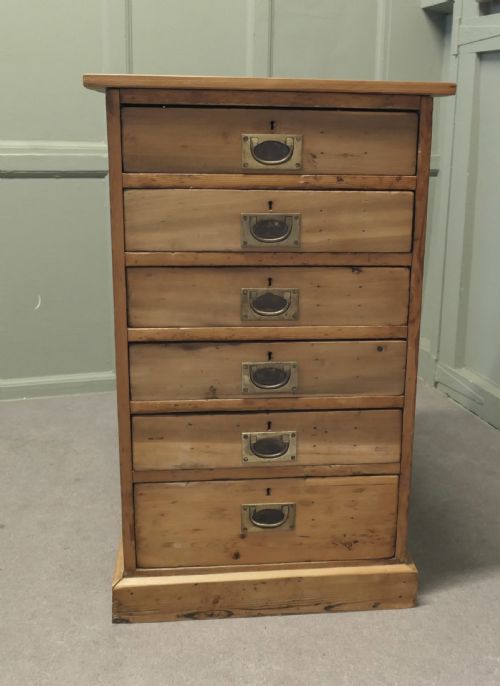
Buyers meet sturdy pine artists chests, substantial oak plan chests and mahogany solicitors or map chests. These heavy pieces functioned in offices and studios before moving into modern homes as storage furniture.
Construction and Materials
Cabinetmakers built these chests primarily in oak, mahogany and deal or pine, often pairing dense hardwoods with secondary timbers for internal drawer construction. Brass handles and card holders appear frequently on the drawer fronts to handle daily office or studio use.
Larger examples utilise solid oak or flame mahogany veneer, constructed in sections to allow transport up staircases and into rooms. Surfaces were polished, stained or waxed to protect the wood while revealing the natural grain.
Listings for this phrase include nineteenth century pine, oak and mahogany pieces, ranging from artist chests to solicitors cabinets.
Evaluating Quality
Quality rests on the choice of timber and the complexity of the internal drawer arrangement, with selected mahogany and figured oak sitting above standard pine workshop pieces. Original brass hardware and intact panelled sides elevate an example above altered pieces.
The smoothness of the wide drawers running on their wooden guides dictates practical value. Superior examples maintain structural integrity across wide spans without sagging frames or replaced drawer bottoms.
Edwards & Roberts
The Victorian Plan Chest Glossary
- Plan chest
- A wide, low cabinet with multiple shallow drawers built specifically for architectural plans, maps and large artworks. These pieces kept oversized papers flat and protected from light and dust.
- Deal
- A British term for softwood timber, typically fir or pine, commonly used for the carcases and internal drawer linings of nineteenth century furniture. It provides a lighter alternative to oak or mahogany.
- Specimen cabinet
- A specialised storage unit featuring many small, shallow drawers designed to hold natural history collections such as insects, fossils or eggs. They share the multi-drawer format of map chests.
- Haberdashery cabinet
- A shop display and storage unit containing numerous glass-fronted or shallow wooden drawers for small goods. These pieces function similarly to filing and plan cabinets.
- Folio cabinet
- A piece of furniture designed to store large portfolios of prints, drawings or loose book pages. They offer wide shelving or shallow compartments suited to works on paper.
Victorian Plan Chest: Frequently Asked Questions
What were plan chests originally used for?
Architects, cartographers and artists relied on these chests to store large blueprints, ordnance maps and watercolours flat and safe from creases. The shallow drawers ensured that delicate papers stacked neatly without damage.
Shops and offices later adopted them to file documents, ledgers and stock samples. Their robust construction handled heavy daily handling in busy Victorian workplaces.
How do I fit a plan chest in a home?
Plan chests provide exceptionally deep surfaces that work well as sideboards, kitchen islands or large console tables in living spaces. The broad top surface accommodates lamps, books and decorative objects easily.
Because these cabinets are exceptionally wide and heavy, measure your hallways and stairwells before bringing one home. Many examples divide into sections to simplify transport.
Why are the drawers so shallow?
Shallow drawers prevented large quantities of paper from accumulating in thick piles that could curl, tear or prove difficult to sort through. Architects stored single sheets or thin portfolios flat in each tier.
This design keeps contents visible and accessible when the drawer opens fully. Deep drawers would have allowed large sheets to slide and crumple.