




Entomology Cabinet Mahogany
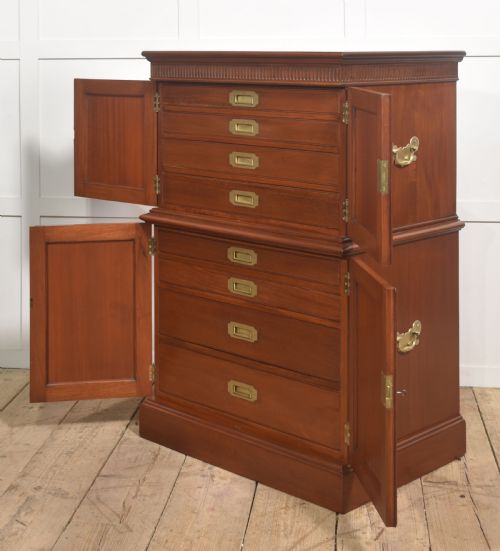
An entomology cabinet mahogany piece organises fragile specimens in shallow drawers, built for serious natural history collections.
Entomology Cabinet Mahogany
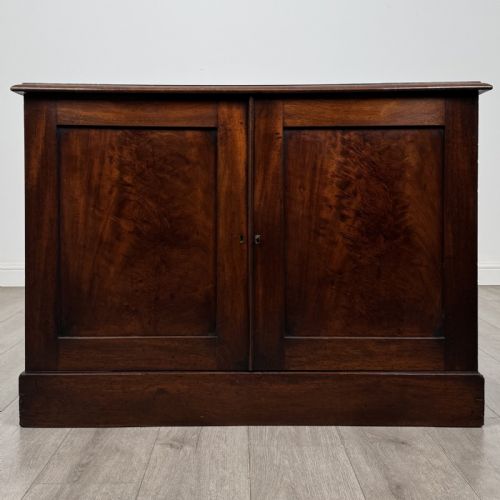
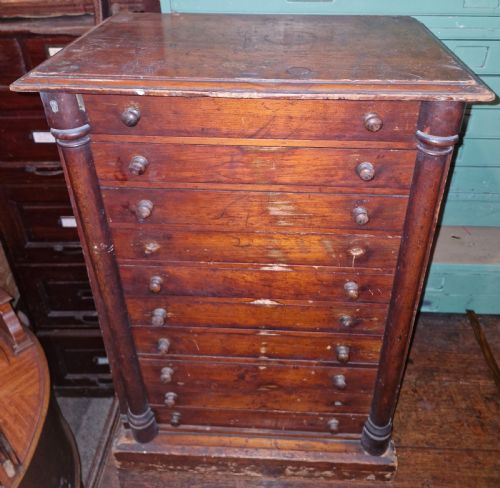
An entomology cabinet mahogany piece is a specialised chest designed to house natural history specimens, most frequently seen from the Victorian period through to the early twentieth century. These pieces typically take the form of large collectors cabinets, specimen chests, or multi-drawer display cases housing numerous shallow drawers. Origins span from Georgian and Regency eras up to Edwardian times, with Victorian examples dominating the selection.
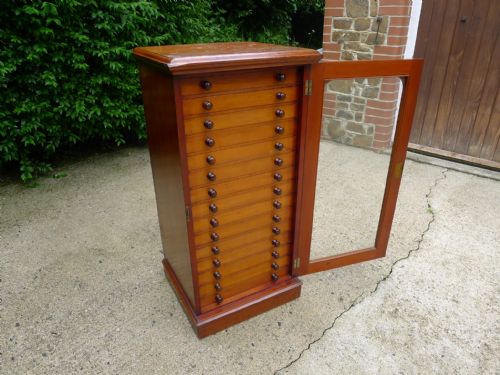
The primary function of an entomology cabinet mahogany piece is the secure storage of delicate items such as insects, eggs, and microscope slides. Common configurations range from compact five-drawer chests to substantial thirty or forty-drawer cabinets constructed by notable makers. Buyers encounter these forms used as both functional storage and striking focal furniture.
How they were made
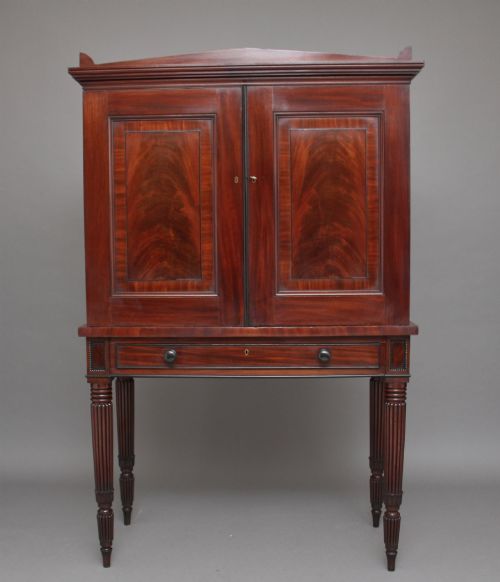
Construction relies heavily on solid mahogany and flame mahogany veneer, sometimes accented with boxwood inlay, satinwood, or burr walnut. Wood is selected for stability to ensure drawers slide smoothly without warping against sensitive collections.
Hardware incorporates brass drawer pulls, handles, and locking mechanisms, often paired with glass panel doors to permit viewing. Paper linings inside the drawers complete the traditional internal presentation.
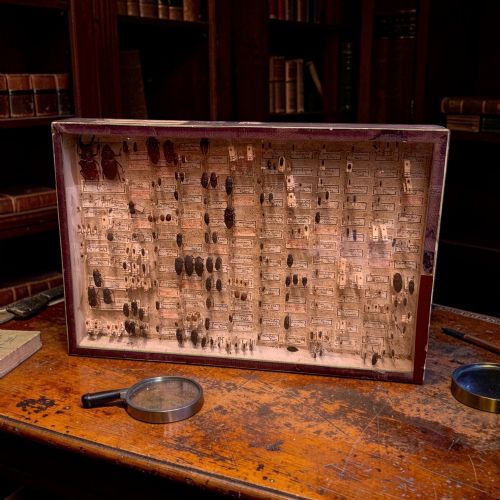
Some cabinets preserve handwritten specimen labels inside the drawers, recording field notes from nineteenth-century naturalists.
What varies in quality
Quality separates by the scale of the piece and the presence of named maker attribution, with larger multi-drawer cabinets commanding greater attention. The choice between solid Cuban mahogany, flame mahogany veneer, and secondary woods alters the visual depth of the exterior.
Internal execution distinguishes standard utility furniture from master workshop output. Precision in drawer fit, the complexity of internal configurations, and documented provenance elevate certain examples above standard production.
WATKINS & DONCASTER·BRADY OF EDMONTON·STANDISH·CHARLES WILLIAM SCHOFIELD
The Entomology Cabinet Mahogany Glossary
- Collectors Cabinet
- A multi-drawer case built for housing natural history objects. These pieces feature many shallow tiers designed specifically for classification.
- Specimen Chest
- A chest of drawers configured for displaying or storing scientific items. They range from small tabletop units to large floor-standing furniture.
- Flame Mahogany Veneer
- A figured wood grain applied to cabinet surfaces to create a patterned flame effect. This technique showcases the decorative potential of tropical hardwood.
- Boxwood Inlay
- Contrasting light wood inserted into darker timber surfaces in linear patterns. It provides delicate decorative framing around drawer fronts or cabinet doors.
- Microscope Slide Cabinet
- A specialised drawer chest built to hold glass slides rather than large insects or eggs. The drawers are exceptionally shallow to match the slide dimensions.
Entomology Cabinet Mahogany: Frequently Asked Questions
What fits inside an entomology cabinet mahogany?
These pieces house natural history specimens within shallow drawers designed to protect fragile items from dust and light.
Common contents include insect collections, bird eggs, and microscope slides arranged systematically by past naturalists.
How are periods identified?
Periods are determined through construction methods, timber choice, and hardware styles matching Georgian, Regency, or Victorian eras.
Maker signatures or labels affixed inside drawers often provide precise dates of manufacture.
Where should these cabinets be placed?
Cabinets require stable indoor environments away from direct sunlight and excessive humidity to protect the timber and veneers.
Placing them in studies or libraries allows the glass doors and polished mahogany to function as display furniture.
Why do drawer counts vary so much?
Drawer counts reflect the original purpose and scale ordered by collectors, ranging from compact five-drawer chests to forty-drawer upright monoliths.
Larger configurations accommodate extensive classification systems for professional researchers.