

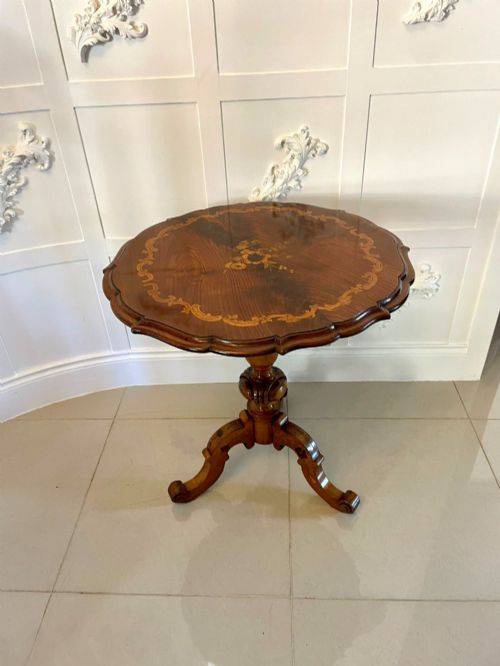
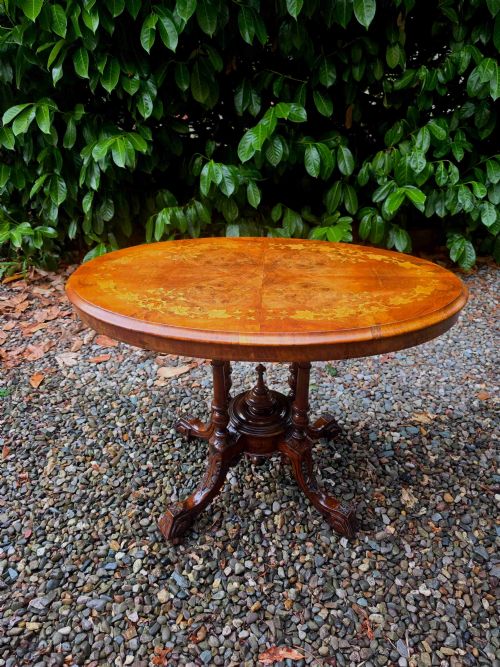
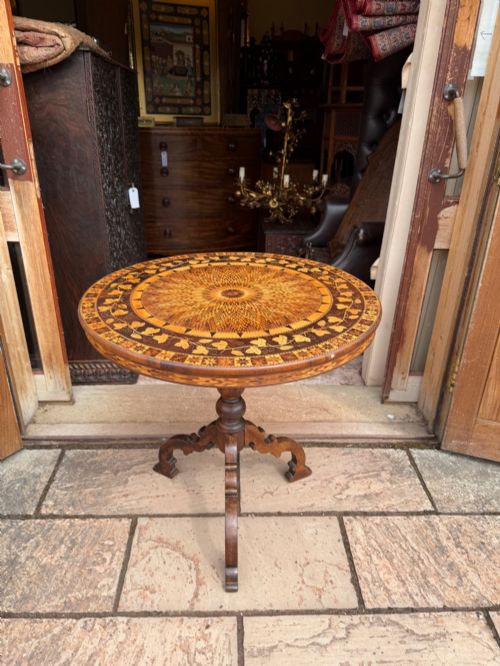
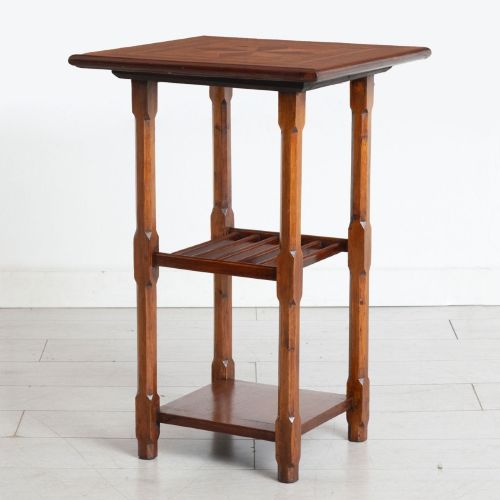
Brown Marquetry Occasional Table
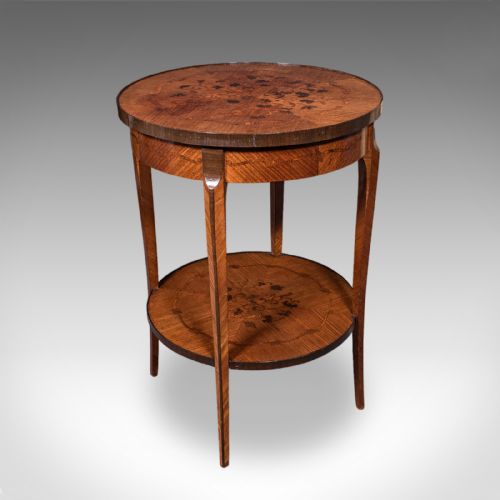
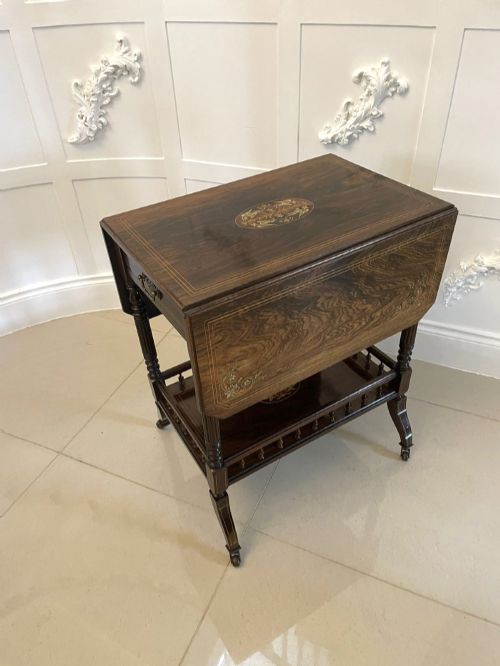
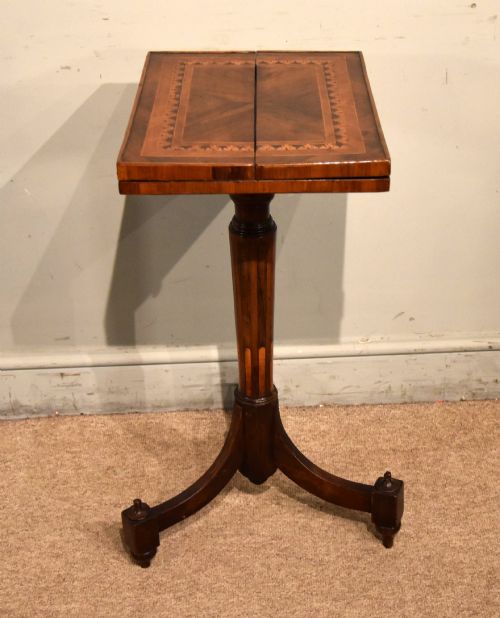
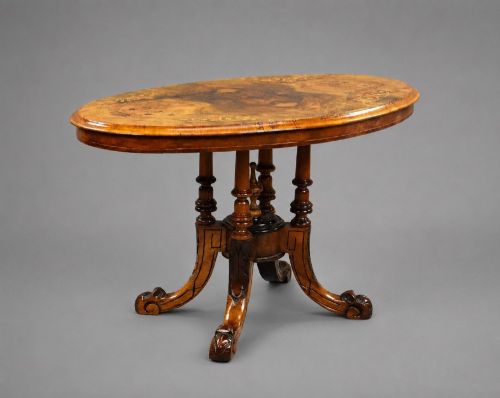
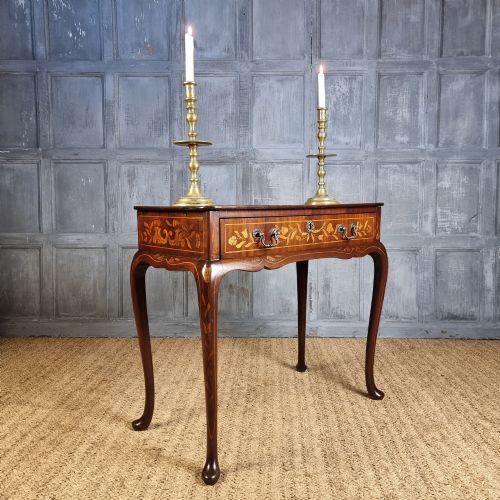
A brown marquetry occasional table brings patterned wood into a room, offering a small surface for lamps and books.

Brown Marquetry Occasional Table
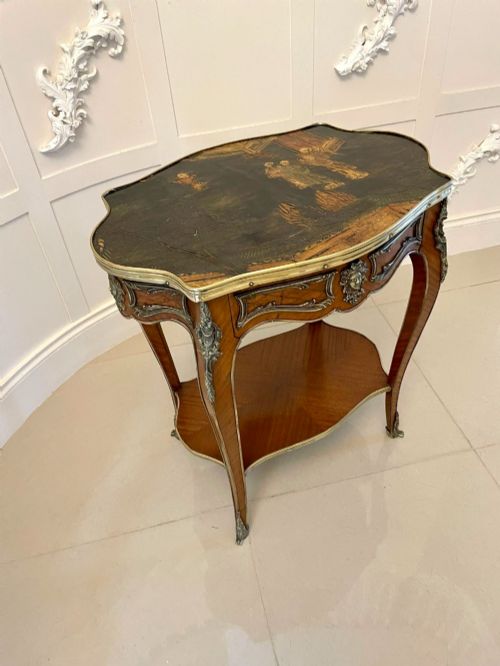
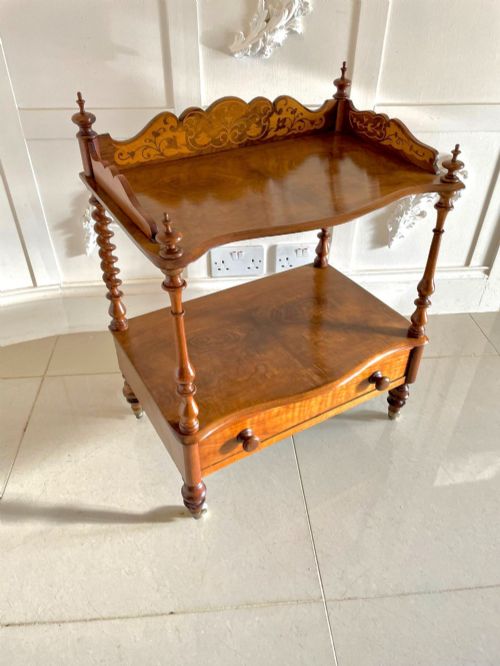
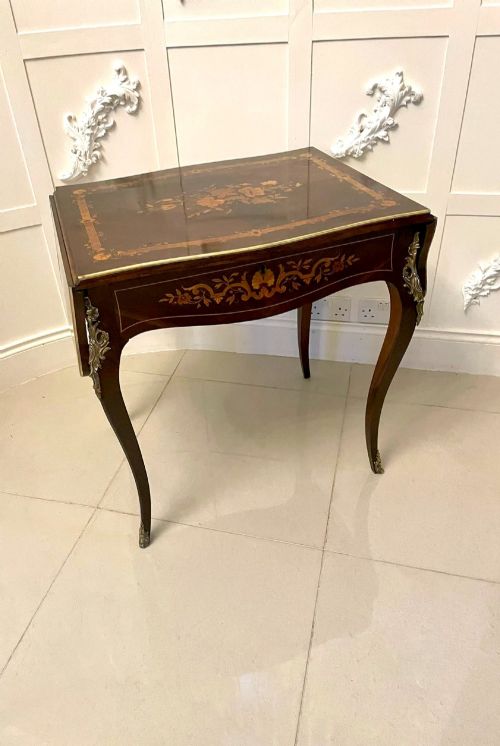
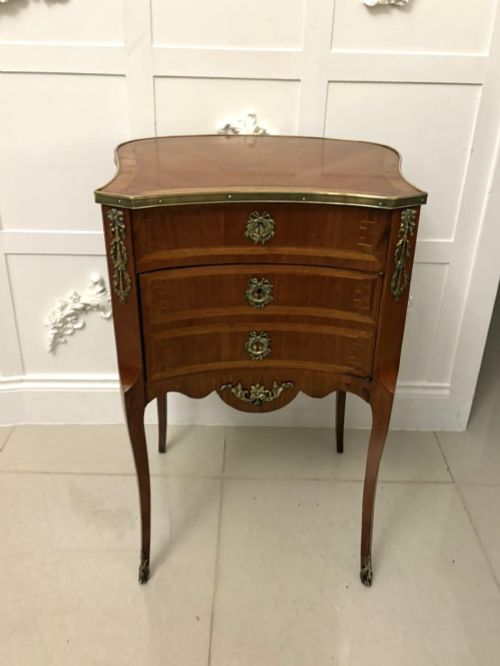
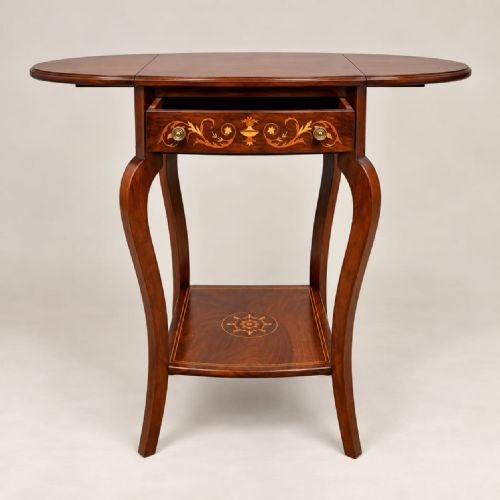
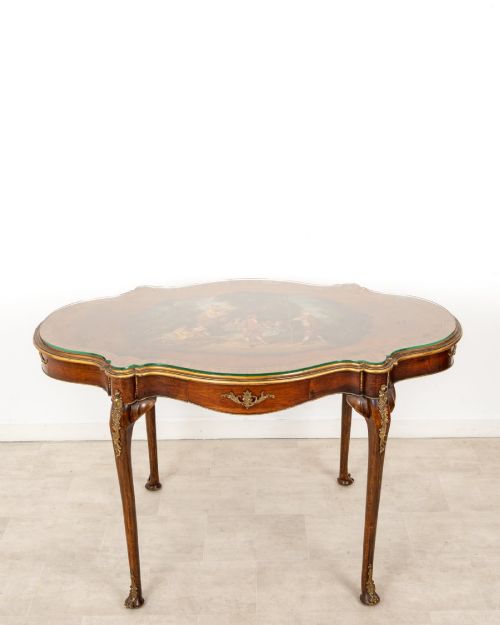
A brown marquetry occasional table is a small, decorative piece designed for specific rooms rather than formal dining, appearing in formats such as lamp tables, centre tables, and Pembroke tables. The most frequent examples on this page date from the Victorian and Edwardian periods, alongside continental pieces in French and Italian styles.
Makers shaped these surfaces in various geometric and floral patterns, using contrasting timbers to create detailed images on the top. Buyers encounter forms ranging from simple oval and octagonal lamp tables to larger freestanding centre tables with shaped aprons.
Materials and Construction
Craftsmen built these tables using foundational timbers like mahogany, walnut, and rosewood, applying fine veneers of satinwood, kingwood, and burr walnut over the core structure. Marquetry involves cutting thin slices of different coloured woods and fitting them together like a puzzle to form pictorial or geometric designs.
Many examples incorporate cast brass or ormolu mounts, edging, and sabots to protect and accent the legs and corners. French and Dutch workshops relied on hand-cut veneers adhered with animal glues, occasionally adding inlaid brass lines known as stringing.
A few tables feature games boards built straight into the top, ready for chess or patience when tea is finished.
Distinctions in Quality
The sophistication of the marquetry design separates standard production from finer workshop output, as demonstrated by the precision of the veneer joints and the range of natural wood tones employed. Simpler geometric banding indicates standard commercial work, while pictorial floral or landscape compositions demand greater skill from the cabinetmaker.
The choice of secondary woods and the weight of the cast ormolu mounts indicate the original cost and ambition of the piece. Tables attributed to prominent makers or exhibition quality standards display superior timber selection and more fluid carving in the legs and frame.
François Linke·Tehan
The Brown Marquetry Occasional Table Glossary
- Marquetry
- Decorative veneer applied to furniture in patterns or pictures using thin slices of wood. This technique relies on contrasting natural colours rather than paint.
- Ormolu
- Gilded bronze mounts applied to furniture for decoration and protection. Cabinetmakers used these heavily on nineteenth-century French pieces.
- Pembroke table
- A small drop-leaf table with hinged flaps on two opposing sides. These tables often include a single drawer.
- Kingwood
- A dense, richly figured Brazilian timber with dark violet-brown tones used extensively in fine cabinetmaking. It provides strong contrast in patterned table tops.
- Stringing
- Thin lines of contrasting wood inlaid into the surface of furniture. It creates neat borders around panels and table edges.
Brown Marquetry Occasional Table: Frequently Asked Questions
Where should I place an occasional table?
These small tables suit corners, beside seating, or in hallways where surface space is needed without blocking movement.
Their decorative tops mean they work well positioned where overhead light catches the wood grain.
How do I care for inlaid wood?
Keep wooden surfaces away from direct sunlight and steady heat sources to prevent the veneers from lifting.
Apply a traditional wax polish occasionally to nourish the timber and maintain the sheen.
What is the difference between a lamp table and a centre table?
Lamp tables are generally smaller and designed to stand against a wall or beside a chair to hold a light.
Centre tables are finished on all sides to stand freely in the middle of a room.
How do I identify a Victorian table?
Victorian examples often use heavy timbers like rosewood and burr walnut with dark, rich patination.
Construction details and traditional hand-cut joinery underneath help confirm the nineteenth-century origin.