
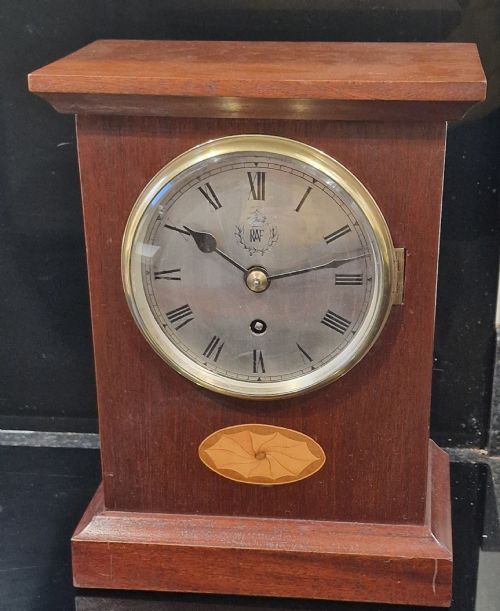
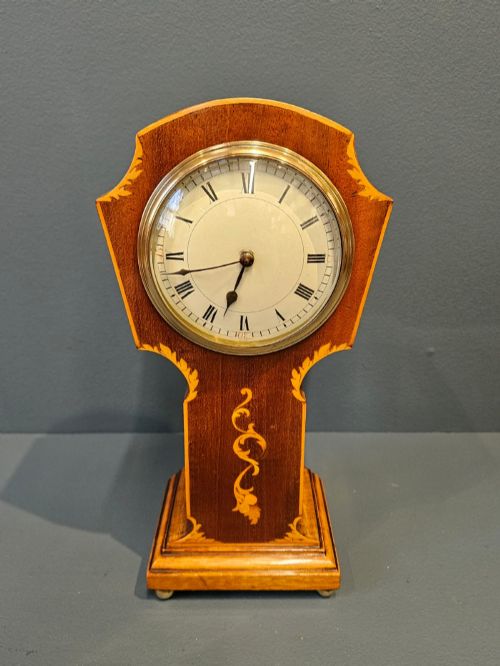


Brown Marquetry Mantel Clock
These brown marquetry mantel clocks bring timber craftsmanship and precise mechanical timekeeping to a desk or shelf.
Brown Marquetry Mantel Clock
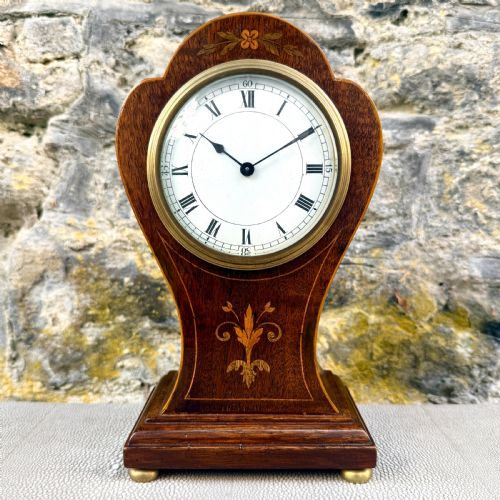
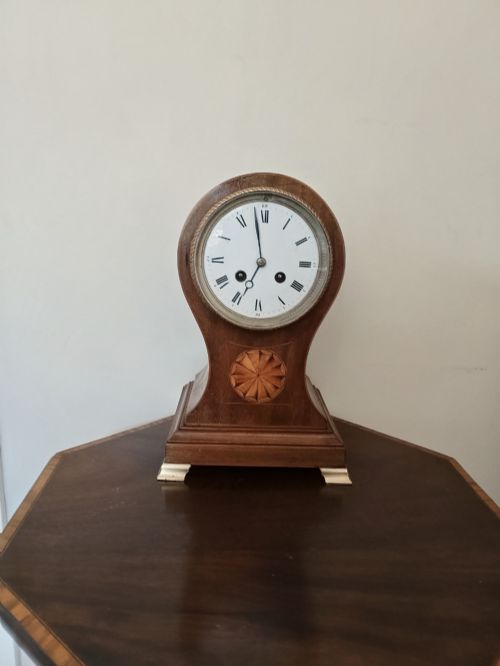
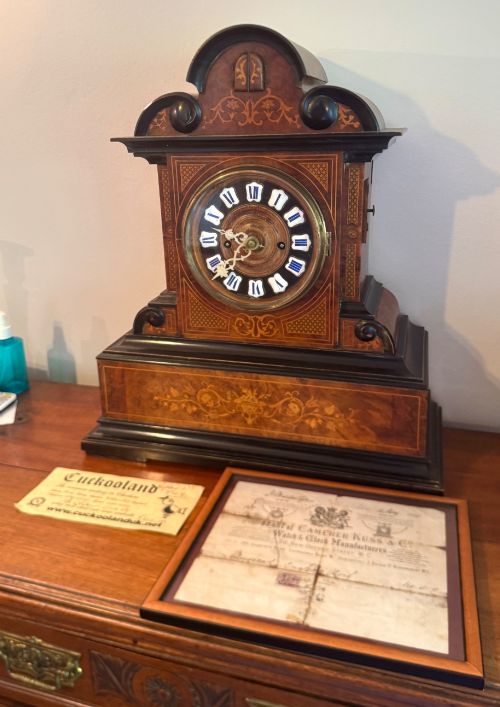
A brown marquetry mantel clock combines timber casework decorated with inlaid veneers with a mechanical clock movement designed to sit on a shelf, mantelpiece or bracket. These decorative timepieces emerge across several periods, most frequently appearing in Edwardian and nineteenth-century examples.
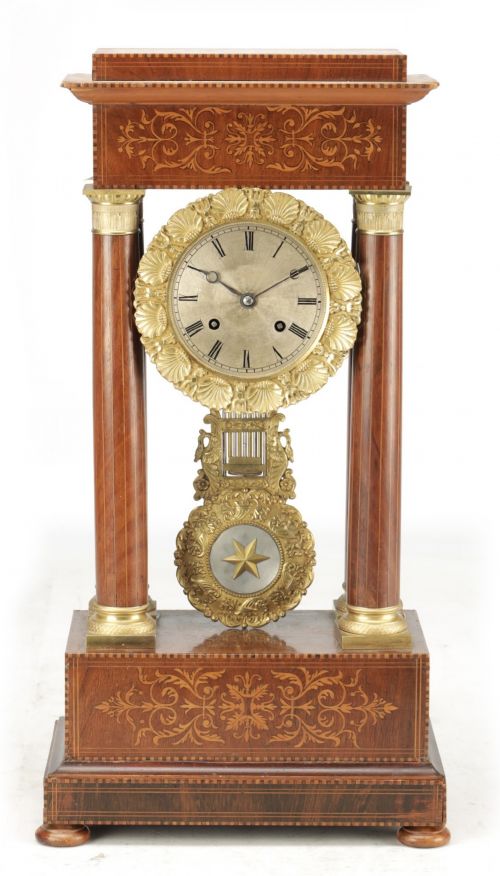
The objects span varied architectural and decorative forms, including balloon cases, dome top designs, portico shapes and bracket clock formats. Makers housed these mechanisms in rich wooden housings utilising contrasting timbers before the dial and bezel.
How they were made
Cabinetmakers constructed the wooden housings using foundational timbers such as mahogany, rosewood, oak and ebonised wood. They then applied decorative veneers, utilising boxwood, lemon wood and satinwood for contrasting floral, geometric or pictorial marquetry patterns.
The external woodwork incorporates brass fittings, ormolu mounts, enamel dials and protective glass bezels to enclose the mechanical movements. Internal movements rely on brass gears and springs, driven by single fusee or eight-day striking mechanisms.
Some timepieces concealed bovine cherub inlays or military mess histories behind their brass bezels.
What varies in quality
The precision and complexity of the timber inlay separates standard production from finer work, depending on the tightness of the veneer joints and the variety of contrasting woods employed. Richer combinations of boxwood, lemon wood and satinwood against dark mahogany or rosewood indicate higher craftsmanship.
The architectural ambition of the case also distinguishes examples, ranging from simple balloon and dome shapes to elaborate portico structures with ormolu and brass accents. Movement quality correlates with the sophistication of the striking mechanism and the finishing of the brass components.
W. Burton·Dumont·Seikosha Seiko
The Brown Marquetry Mantel Clock Glossary
- Marquetry
- Decorative veneer work forming pictures or patterns by fitting together small pieces of wood, brass or shell onto a structural carcass.
- Portico clock
- A tall, architectural clock style featuring supporting columns reminiscent of classical building facades, frequently executed in rosewood.
- Fusee
- A conical pulley inside a clock movement that equalises the declining power of the mainspring as it unwinds, ensuring steady timekeeping.
- Bracket clock
- A portable timekeeper originally designed to sit on a wall bracket or a furniture shelf, often featuring a handle on top.
- Bezel
- The metal ring that holds the glass protecting the dial of the clock face in position.
Brown Marquetry Mantel Clock: Frequently Asked Questions
What is a brown marquetry mantel clock?
A brown marquetry mantel clock is a mechanical timepiece housed in a wooden case decorated with detailed veneer patterns. These clocks were designed to sit flat on interior architectural shelves or furniture.
They combine functional horology with decorative cabinetmaking, utilising timbers like mahogany and rosewood alongside inlaid contrasting woods.
How do I wind an eight day mantel clock?
An eight-day clock movement requires winding approximately once a week using a specific key fitted to the arbors on the dial face. Care must be taken not to over-wind the mainspring.
Consulting the specific movement type helps determine the correct winding direction and tension limits for historical brass mechanisms.
How do I tell Edwardian clocks from Victorian ones?
Edwardian clocks, made after nineteen hundred, often feature lighter mahogany cases with refined Edwardian inlay styles and brighter finishes. Victorian examples tend to display heavier proportions, darker rosewood or walnut timbers, and earlier revival design influences. Nomenclature in listings usually reflects the period of manufacture based on case design and movement construction.
Where should I place a wooden mantel clock?
A wooden mantel clock belongs on a stable, level surface away from direct sunlight, dampness, and rapid temperature fluctuations. Placing it on a solid mantelpiece, shelf, or desk protects the delicate wood veneers and keeps the pendulum or balance wheel level.
Level placement ensures the mechanical escapement beats evenly and the clock keeps accurate time.