

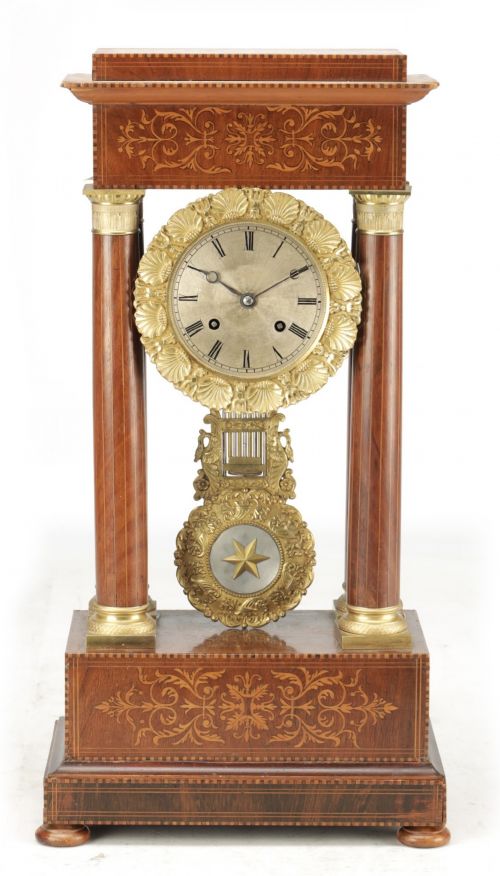


Floral Inlaid Table Clock
A floral inlaid table clock brings together fine woodwork and precision timekeeping, offering a handsome focal point for any mantelpiece or desk.
Floral Inlaid Table Clock
A floral inlaid table clock sits on mantels and surfaces, combining timekeeping with decorative wood craftsmanship. When you search for a floral inlaid table clock, you encounter pieces primarily from the nineteenth century and the Edwardian era, including works by continental makers.
Materials and construction methods
Cabinetmakers constructed the bodies of these timepieces from dense hardwoods such as rosewood and mahogany, often applying contrasting veneers of boxwood and satinwood. Artisans created intricate floral patterns using marquetry inlay techniques, fitting thin slices of varied timber into precise recesses.
The clock faces typically feature enamelled chapters protected behind glass doors, driven by mechanical movements such as eight-day trains. Gilt metal mounts and cast brass bezels frequently accent the timber cases, particularly on French revival models.
Floral Inlaid Table Clock Retail Price Guide 2026
Typical asking prices for floral inlaid table clock among the pieces listed under this phrase on Sellingantiques today, from the lower quarter to the upper quarter. They describe what is for sale here now, not the wider market.
Distinguishing quality in craftsmanship
The fineness of the marquetry sets superior examples apart, showing precise cutting and tight joints in the floral wood inlay. Richer contrast in the timbers, such as satinwood and boxwood set against rosewood or mahogany, signals greater care by the cabinetmaker.
The sophistication of the movement and the integration of auxiliary instruments like thermometers elevate certain pieces. Superior work also appears in the crispness of the gilt bronze mounts and the overall balance of the timber case proportions.
Henry Marc·Savory & Fils A Paris·Malecot of Paris
The Floral Inlaid Table Clock Glossary
- Marquetry Inlay
- A decorative technique where pieces of different coloured wood are fitted into a veneer to form floral or geometric patterns. This method transforms a plain timber surface into a picture.
- Mantel Clock
- A portable timepiece designed to sit on the shelf above a fireplace. These domestic clocks range from simple architectural boxes to ornate revival pieces.
- Bracket Clock
- A portable clock originally designed to sit upon a wall bracket, though frequently placed on furniture. They often feature architectural wooden cases with carrying handles.
- Portico Clock
- A symmetrical mantel clock styled after classical architecture with vertical pillars supporting the entablature. This French architectural style often utilised rich rosewood and gilt highlights.
- Enamel
- A glassy substance fused to a metal dial face through firing to create a durable, smooth surface for painted numerals. Enamelled dials resist tarnishing and maintain their clear appearance over centuries.
Floral Inlaid Table Clock: Frequently Asked Questions
What is a floral inlaid table clock?
A floral inlaid table clock is a domestic timepiece housed in a wooden case decorated with botanical marquetry designs. These pieces were built to sit on shelves or mantels in period homes.
They combine mechanical clockwork movements with ornamental cabinetmaking, using timbers like rosewood, mahogany, and satinwood.
How do I wind an antique clock?
Antique mechanical clocks require a winding key inserted into the dial holes to tension the mainsprings. Most traditional movements run for eight days between windings.
Care must be taken not to overwind the mechanism, stopping as soon as resistance is felt to protect the internal brass gears.
Where should I place my clock?
These timepieces suit stable flat surfaces away from direct sunlight, dampness, and severe temperature fluctuations. Placing them on a level mantel or sturdy table ensures the pendulum or balance wheel keeps proper time.
Avoid positioning them too close to active fireplaces where soot and extreme heat can damage the delicate wood polish.
How do I date these clocks?
Dating relies on stylistic clues, timber choices, dial construction, and maker signatures recorded on the movement or face. Pieces from the Victorian period often feature heavier rosewood cases, while Edwardian examples commonly utilise lighter mahogany.
French makers frequently stamped their brass movements with workshop medals and serial numbers, providing further chronological evidence.