

Brown Mahogany Vanity Mirror
A brown mahogany vanity mirror brings warmth and adjustable reflection to a dressing space, spanning Georgian toilet mirrors to Edwardian table designs.

Brown Mahogany Vanity Mirror
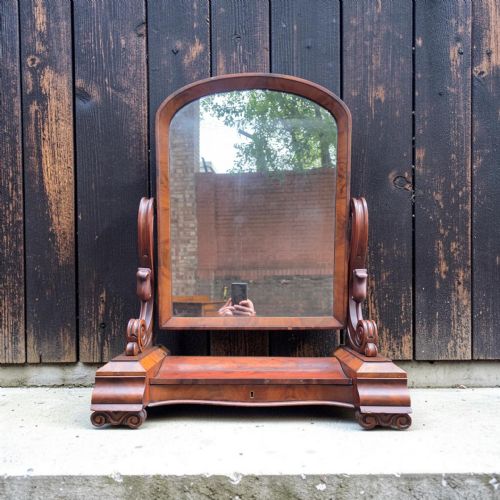
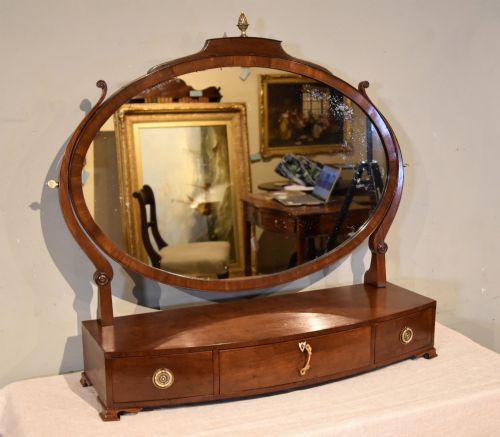
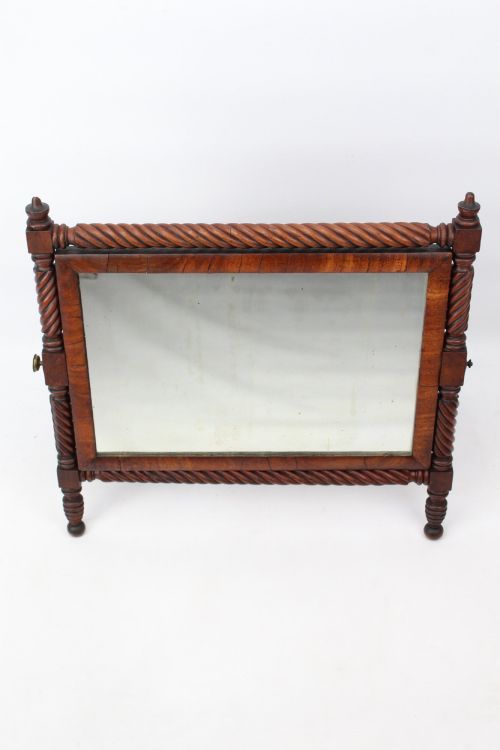
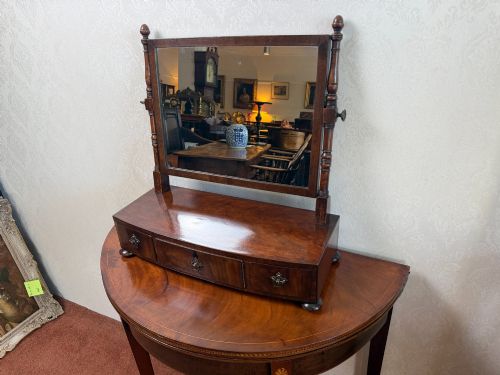
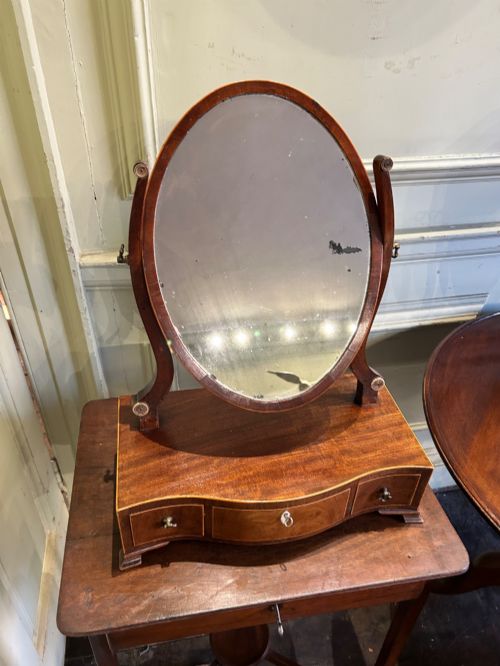
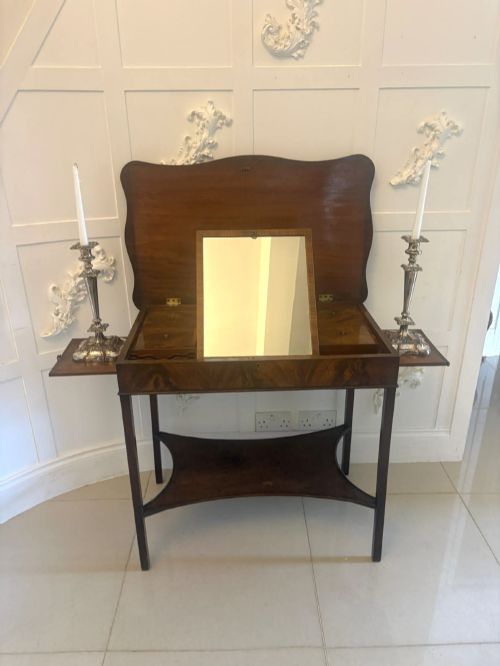
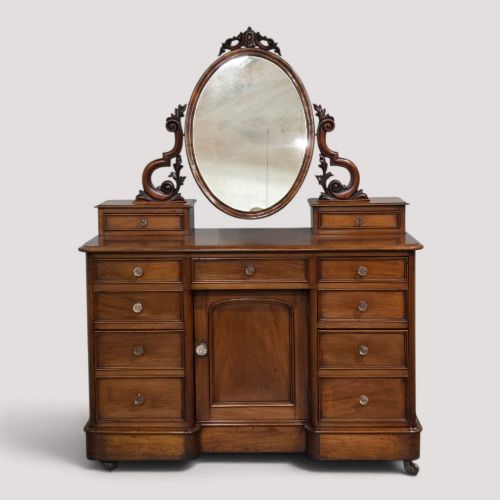
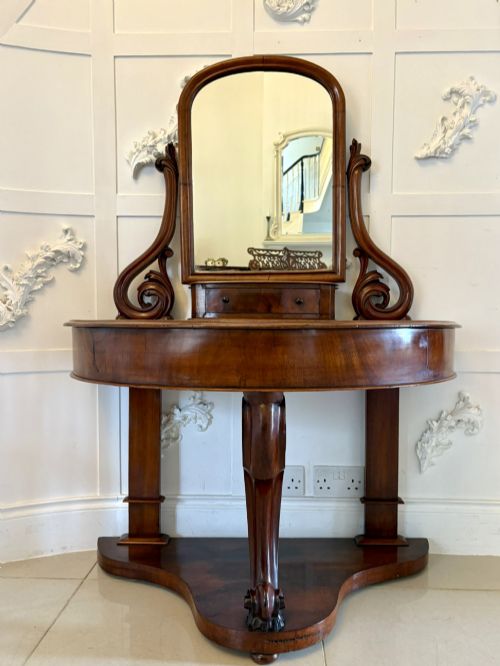
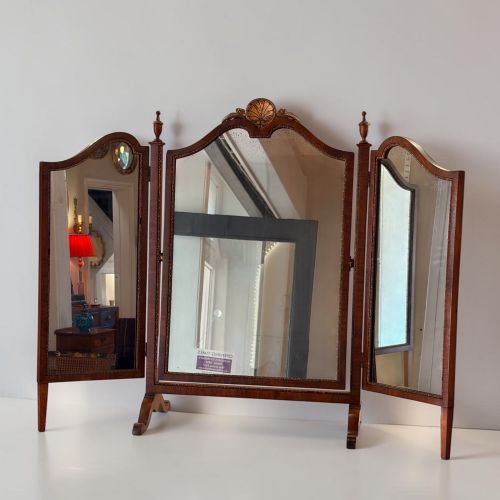
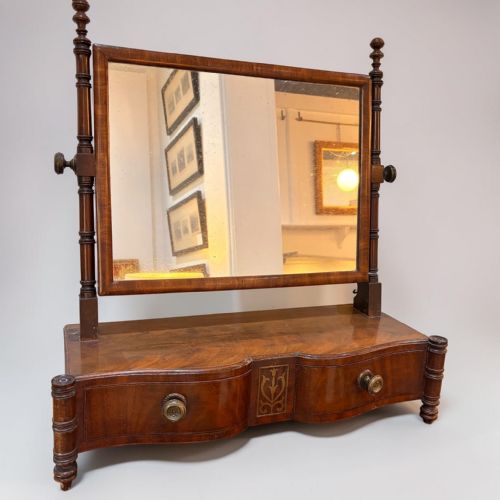
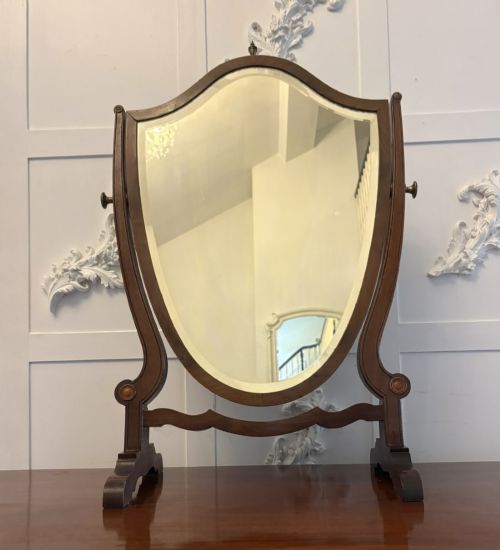
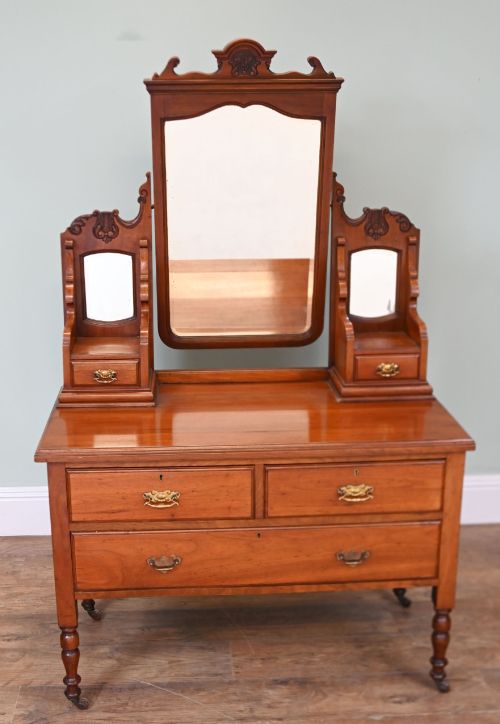
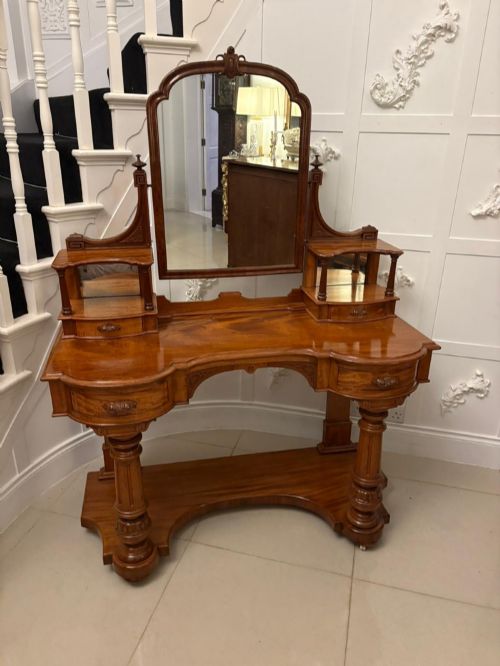
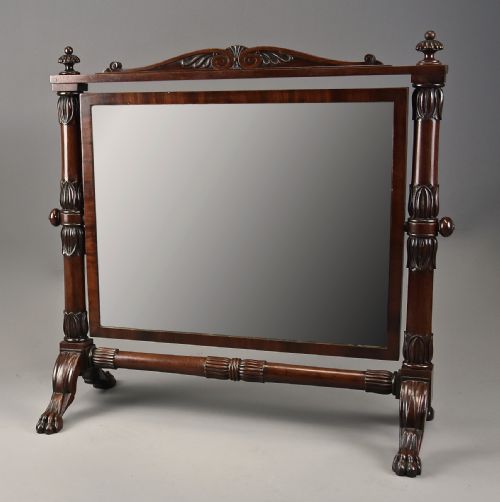
When searching for a brown mahogany vanity mirror, you encounter a selection of dressing table mirrors, toilet mirrors, and swing mirrors spanning the 18th century, Georgian, Regency, Victorian, and Edwardian periods. These pieces range from simple table-top frames with small drawers to larger cheval mirrors and gentleman's dressing stands.
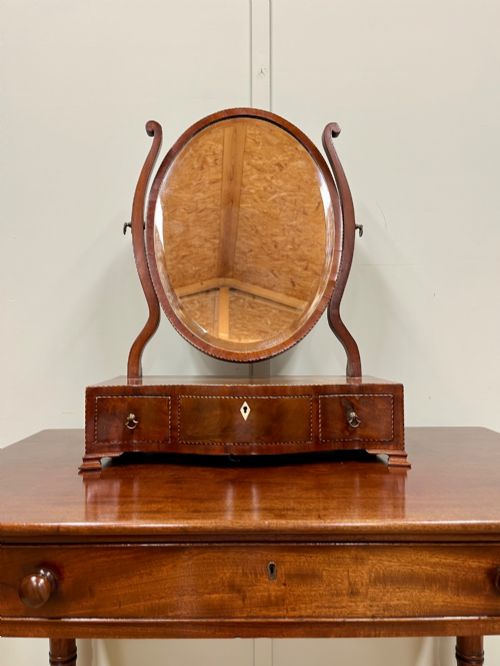
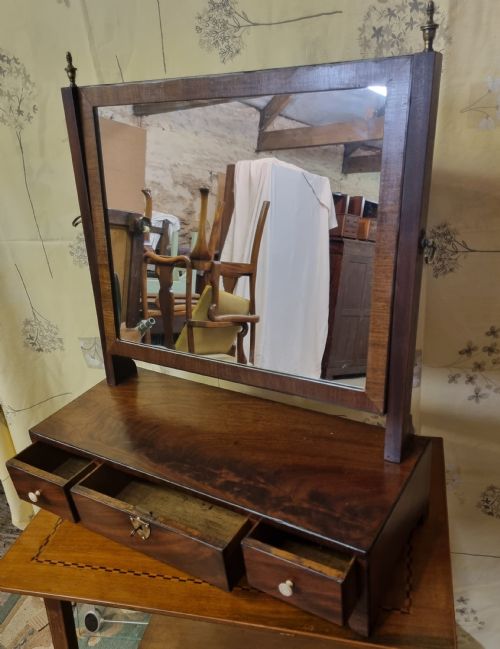
The most common examples on this page are swing mirrors resting on box bases fitted with small drawers. These desktop items provide adjustable angles for grooming and reflect the predominant styles of their respective eras, such as serpentine fronts or oval plates.
Materials and Construction
These mirrors utilise solid mahogany and mahogany veneers, occasionally complemented by satinwood, walnut, or bone inlay. Artisans shaped the timber frames to hold mirror glass, supporting them on brass pivots and upright standards.
Base units frequently incorporate structural elements like three small drawers or serpentine fronts. Workshops applied traditional joinery techniques to secure the swing frames to their desktop or floor-standing pedestals.
Brown Mahogany Vanity Mirror Retail Price Guide 2026
Typical asking prices for brown mahogany vanity mirror among the pieces listed under this phrase on Sellingantiques today, from the lower quarter to the upper quarter. They describe what is for sale here now, not the wider market.
Listings feature mahogany, glass, brass, bone, satinwood, and wood inlay across periods from the 18th century to 1920.
Distinctions in Quality
Quality rests on the selection of the timber, such as Cuban mahogany, and the crispness of any crossbanding, wood inlay, or carved detail. Superior pieces exhibit refined proportions and stable brass hardware that holds the mirror plate firmly at any chosen angle.
The sophistication of the base construction also separates standard examples from finer work. Finer mirrors integrate well-fitted drawer boxes with dovetail joinery, whereas simpler items rely on basic assembly.
Heal & Sons·Thomas Rubergall
The Brown Mahogany Vanity Mirror Glossary
- Toilet mirror
- A small mirror designed to sit on top of a dressing table or chest. These portable pieces usually incorporate small storage drawers in the base.
- Swing mirror
- A mirror plate mounted on vertical pivots between two upright arms, allowing the glass to tilt. This mechanism is central to table-top dressing mirrors.
- Cheval mirror
- A full-length standing mirror supported by a frame with four legs. The glass swings entirely within its vertical uprights.
- Crossbanding
- A decorative border of veneer laid with the grain running perpendicular to the surrounding wood. It frames the primary surface of drawer fronts or mirror frames.
- Serpentine
- A curved line that undulates outward in the centre and inward at the sides. This contour appears frequently on the drawer bases of Georgian dressing mirrors.
Brown Mahogany Vanity Mirror: Frequently Asked Questions
How do I date a brown mahogany vanity mirror?
Dating relies on observing the construction methods of the drawer boxes, the thickness of the mirror plate, and the prevailing style of the period. Georgian and Regency pieces tend to feature hand-cut dovetails and lighter framing.
Later Victorian and Edwardian examples often display machine-sawn elements, heavier proportions, or added inlay work. Comparing the turning of the upright supports to documented pieces from specific decades provides further clarity.
What is the difference between a toilet mirror and a cheval mirror?
A toilet mirror is a compact table-top object designed to rest on a surface for close-up grooming. It usually incorporates a small box base with drawers.
In contrast, a cheval mirror is a large, floor-standing piece that offers a full-length reflection. It stands on its own legs rather than occupying a table or chest top.
How were these mirrors used originally?
These mirrors sat upon dressing chests, washstands, or dedicated tables in bedrooms and dressing rooms. Individuals used them for daily grooming, shaving, and adjusting wigs or attire.
The small drawers in the base held personal items, trinkets, or shaving accessories, keeping the dressing surface orderly.
Are the mirror plates original?
Many older mirrors have replacement glass due to the fragile nature of vintage silvering. Over centuries, original mirror plates could degrade or suffer breakage, prompting owners to install modern glass.
Examining the edge of the glass and the backboards helps determine whether the plate dates to the same period as the frame.
How do I care for a mahogany frame?
Maintenance involves dusting the wood with a soft, dry cloth and avoiding direct sunlight or excessive moisture. Mahogany responds well to occasional applications of appropriate wax to nourish the grain.
Harsh chemical cleaners should be avoided to protect both the polished timber and any delicate inlay work.