

Brown Mahogany Drop Table
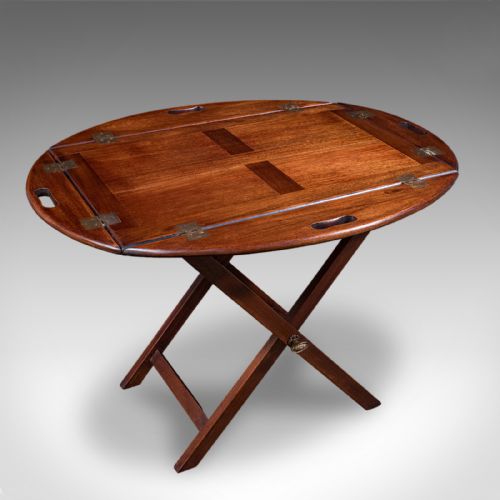
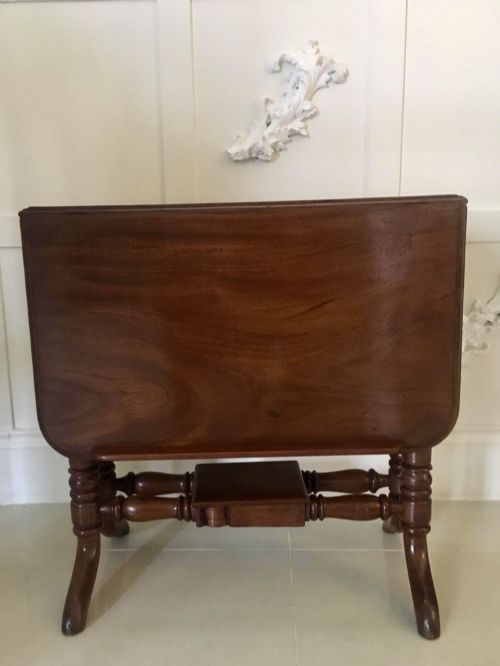
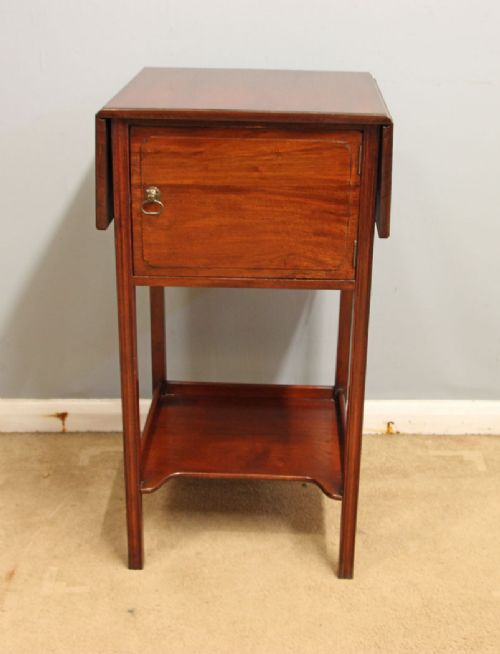
These brown mahogany drop tables combine practical folding leaves with rich timber grain across Georgian, Regency, and Edwardian designs.
Brown Mahogany Drop Table
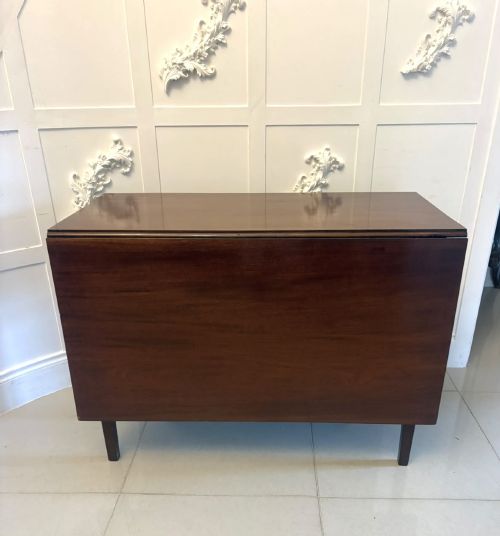
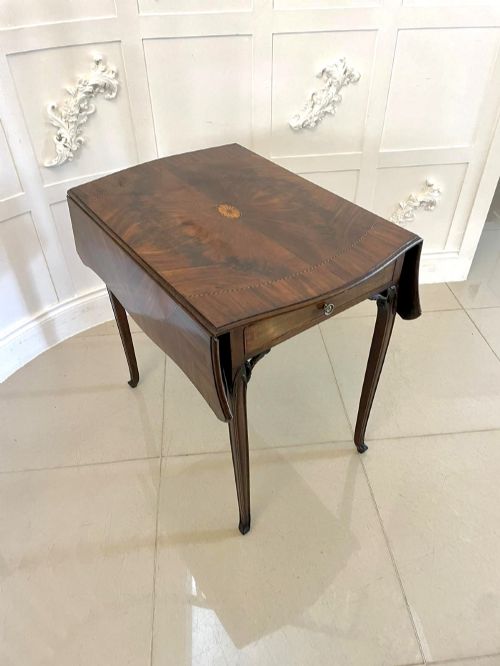
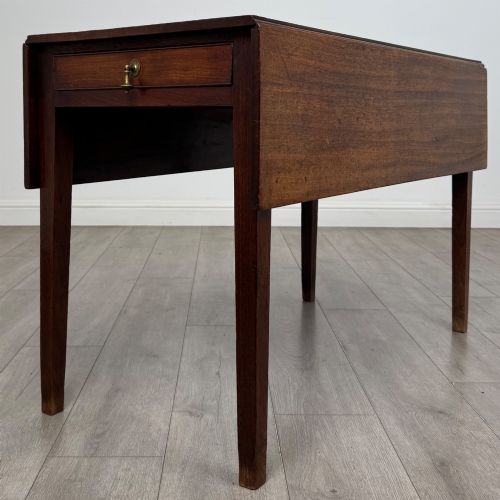
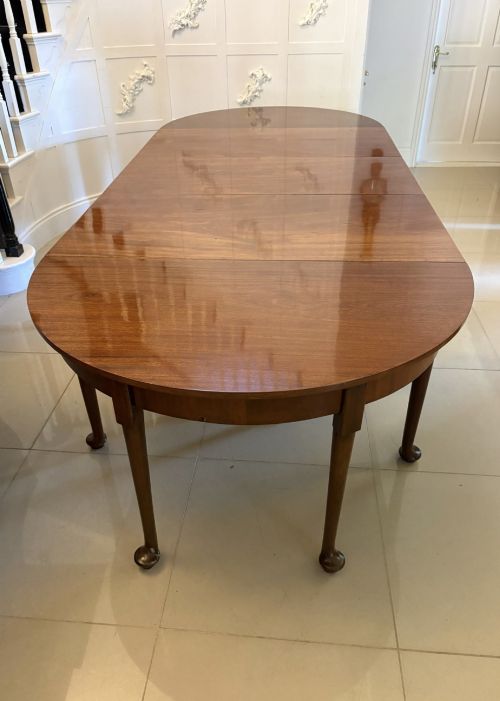
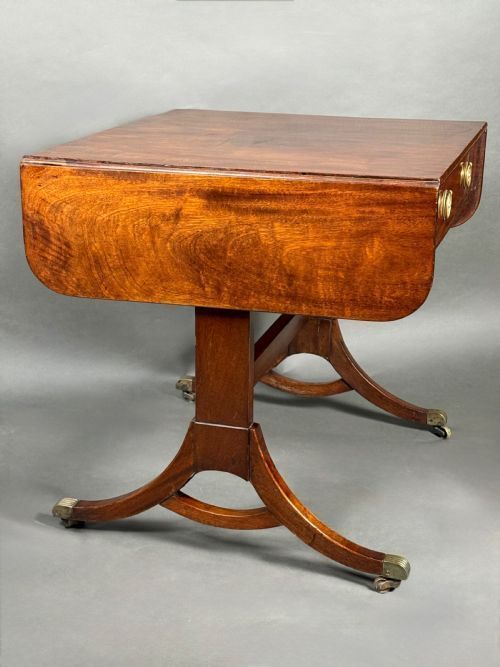
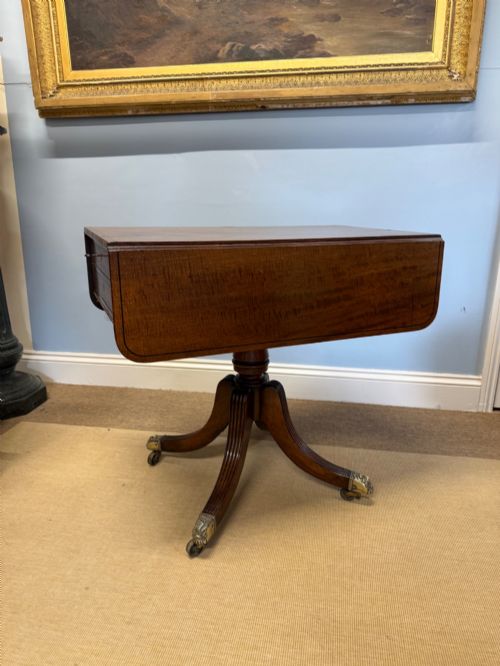
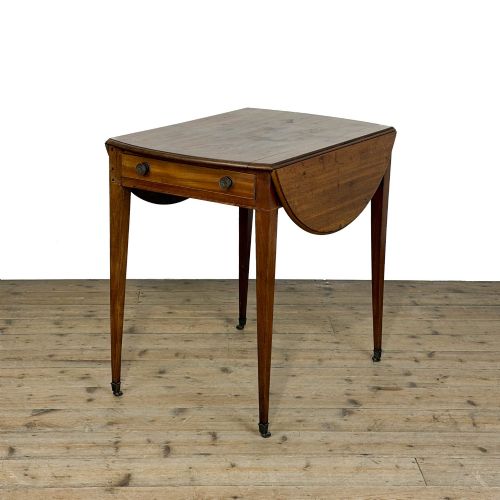
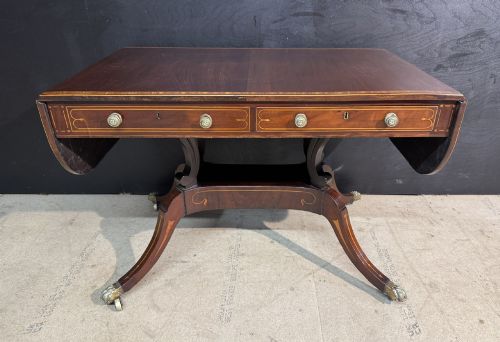
A brown mahogany drop table offers flexible surface space through hinged flaps on the sides, originating primarily in Georgian, Regency, and Edwardian workshops. The selection here spans compact Pembroke tables, larger dining versions, and versatile sofa tables designed to fold away when not in use.
Most examples rely on the Pembroke form or the drop leaf dining table, utilising folding leaves supported by swing brackets or drop-flaps. These pieces served diverse domestic functions, from serving tea and writing letters to hosting formal meals in period interiors.
How they were made
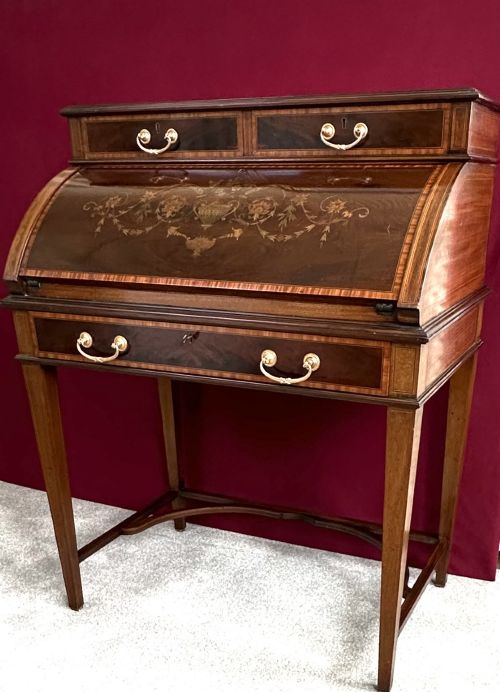
Cabinet makers utilised solid mahogany and flame mahogany veneers, often enhanced with satinwood, boxwood, and wood inlay to create geometric borders and contrasting panels. Brass castors, handles, and hinges provide structural movement and functional detail.
Joinery techniques focus on stability under moving loads, pairing dovetailed drawers with hinged drop leaves that lock securely into position with wooden or brass pivoting brackets.
Listings feature mahogany, brass, satinwood, boxwood, wood inlay, flame mahogany, leather, and glass across 18th Century, 19th Century, Regency, Georgian, and Edwardian periods.
What varies in quality
The distinction between standard utility pieces and finer examples rests upon the selection of timber grain, such as strongly figured flame mahogany, and the precision of inlaid boxwood or satinwood stringing. Superior tables demonstrate harmonious proportions when open or closed, with leaves that align flush against the fixed top.
Hand-cut joinery and original brass hardware elevate an example, whereas replacement brackets or poorly matched timber veneers indicate lower workshop standards.
The Brown Mahogany Drop Table Glossary
- Pembroke table
- A small occasional table featuring two hinged drop leaves on opposite sides, usually fitted with a single drawer. It gained popularity during the eighteenth century for breakfast or light writing tasks.
- Sofa table
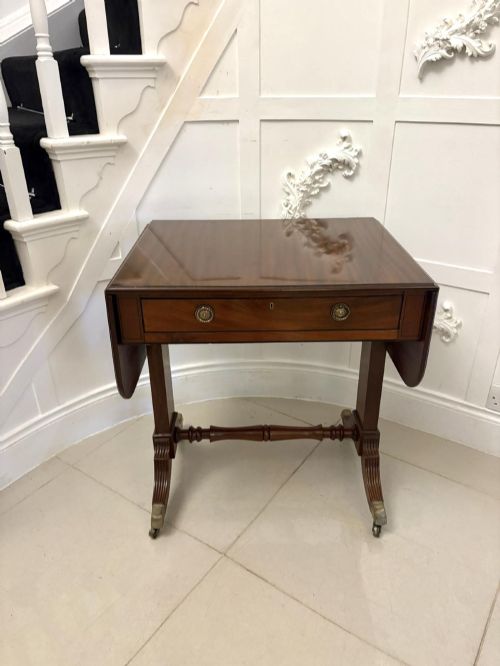
- A rectangular occasional table designed to stand in front of a sofa, featuring drop leaves and frequently supported by trestle feet or pillar legs. These emerged during the Regency period.
- Sutherland table
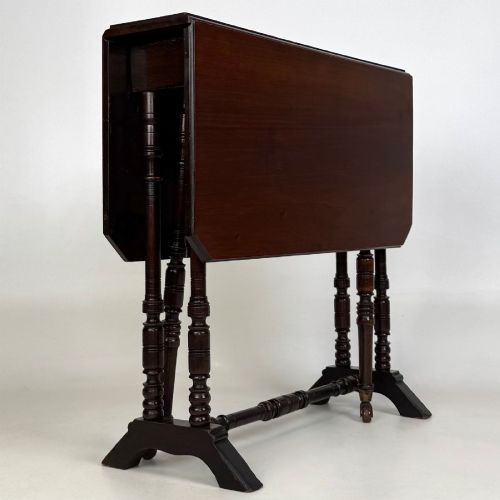
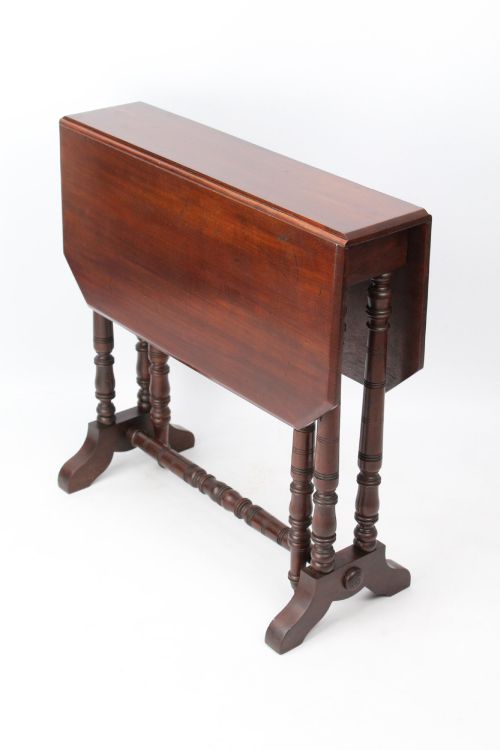
- A narrow drop leaf table where the leaves comprise the majority of the top surface, folding down almost vertically against a central gateleg frame. This clever mechanism saves floor space.
- Flame mahogany
- A timber cut from the fork of the mahogany tree to reveal a rippling, fiery grain pattern. Cabinet makers reserved this premium veneer for prominent surfaces like table tops and drawer fronts.
- Boxwood inlay
- Narrow strips of pale boxwood set flush into mahogany surfaces to create contrasting geometric lines. This decorative technique defines polite furniture from the Georgian and Regency eras.
Brown Mahogany Drop Table: Frequently Asked Questions
How do I use a drop table daily?
These tables function well in smaller rooms because the leaves fold down to save floor space when extra surface area is not needed.
Raise the hinged flaps and swing out the supporting brackets whenever you require a desk, dining space, or serving station.
How do I date a mahogany table?
Examine the primary style markers, such as Sheraton stringing or Regency pillar forms, alongside construction traits like hand-cut dovetails.
Tables from the Georgian period tend to show heavier timber proportions, while Edwardian pieces often display lighter Edwardian revival detailing.
What is the difference between Pembroke and sofa tables?
Pembroke tables typically feature small proportions with narrow drop leaves and one drawer, intended for versatile parlour use.
Sofa tables are generally longer and narrower, designed specifically to sit behind or alongside seating furniture with two drop leaves.
How should I care for antique mahogany?
Keep the timber away from direct heat sources and strong sunlight to prevent the mahogany surface and veneer from drying out.
Apply traditional beeswax polish sparingly and buff with a soft cloth to maintain the natural lustre of the wood.