


Brown Mahogany Dressing Glass
A brown mahogany dressing glass provides a practical surface reflection, spanning Georgian periods to Edwardian eras in freestanding and table forms.
Brown Mahogany Dressing Glass
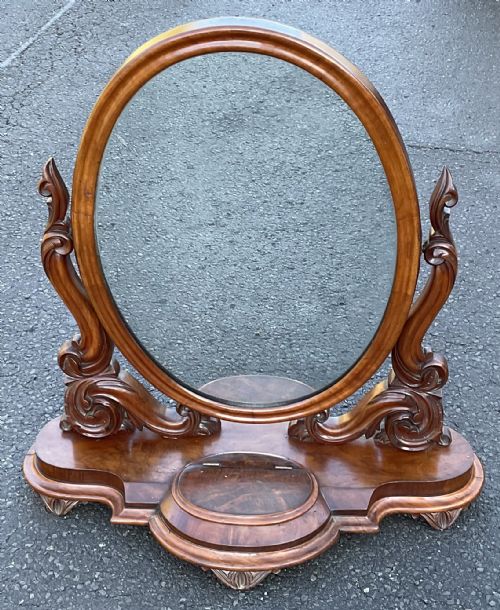
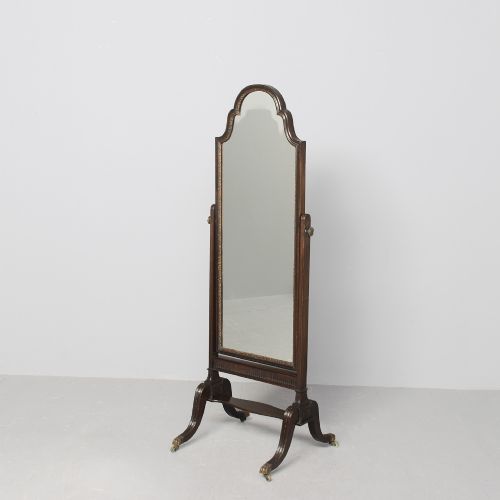
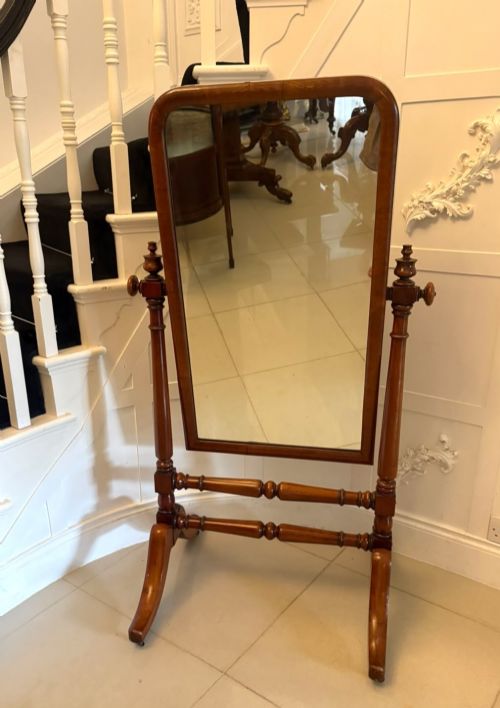
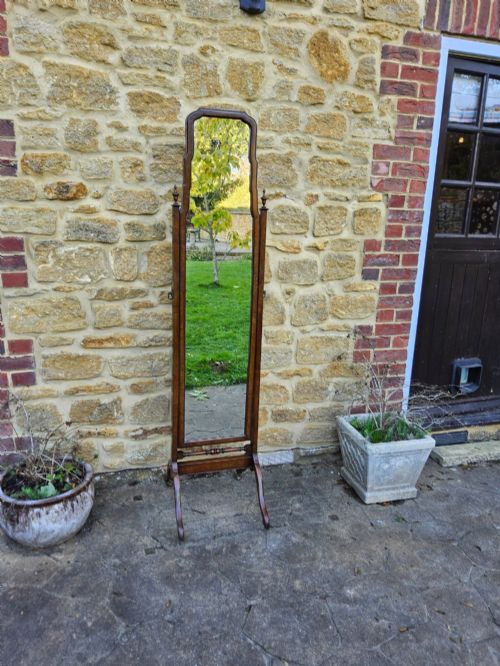
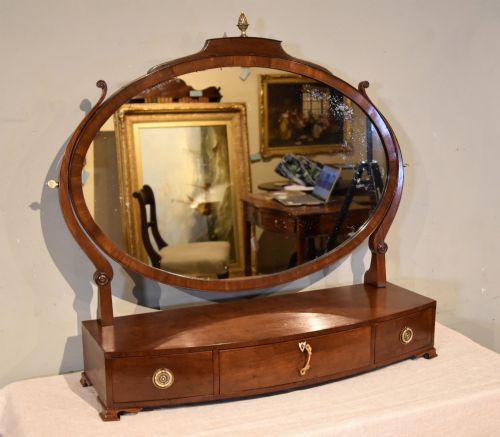
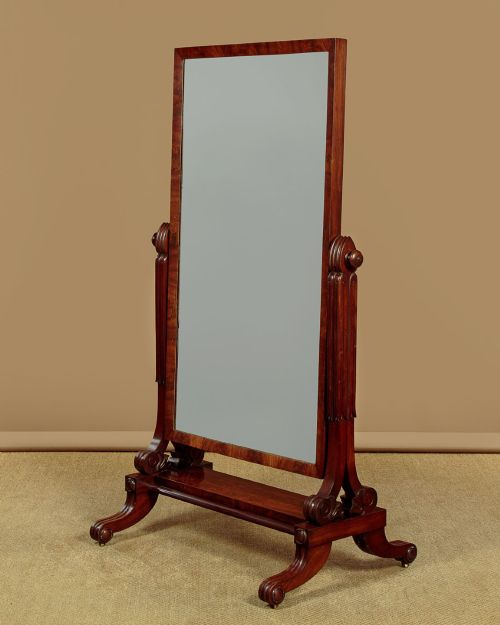
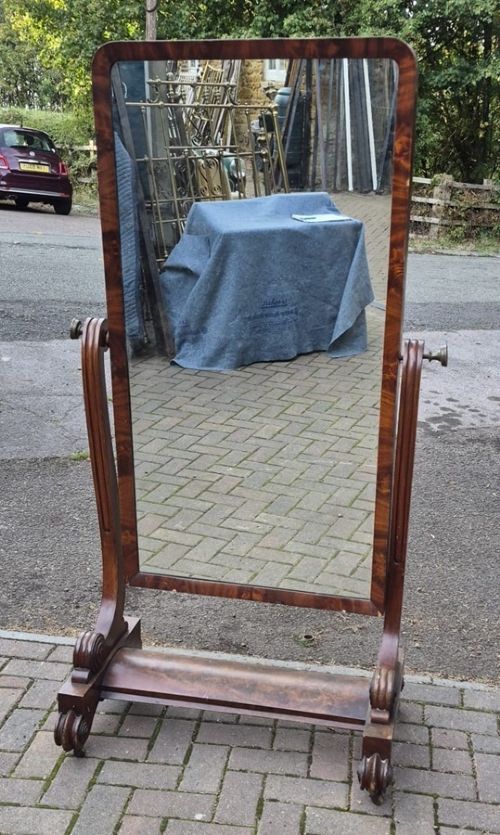
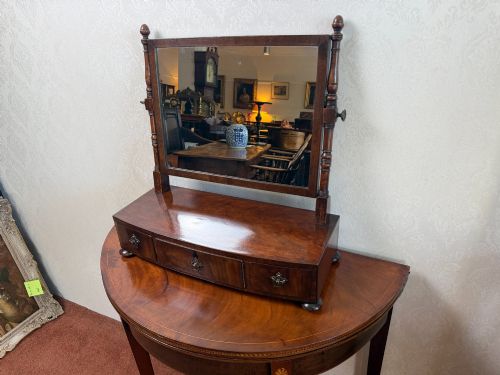
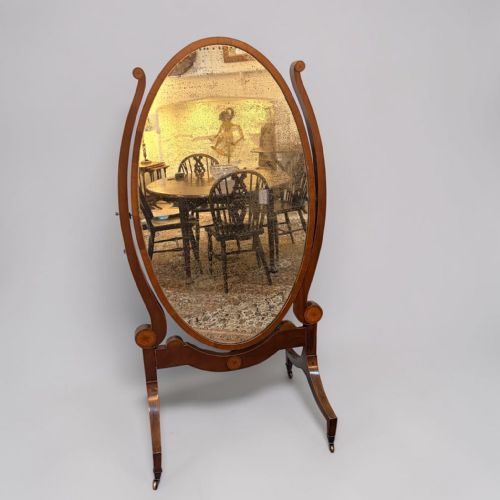
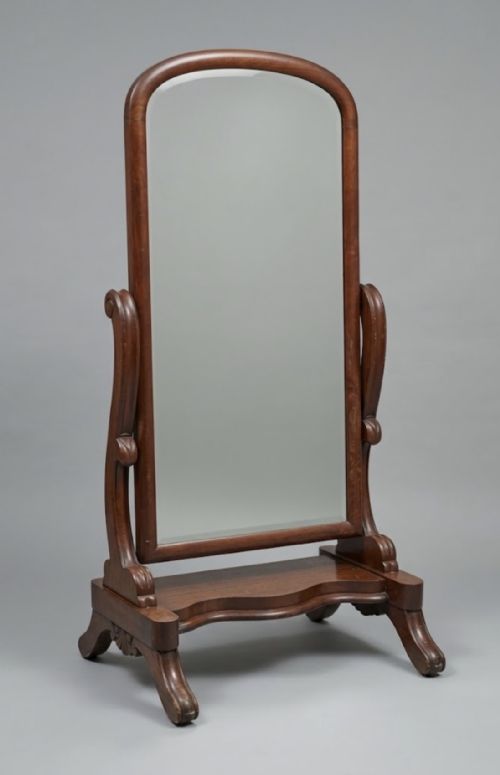
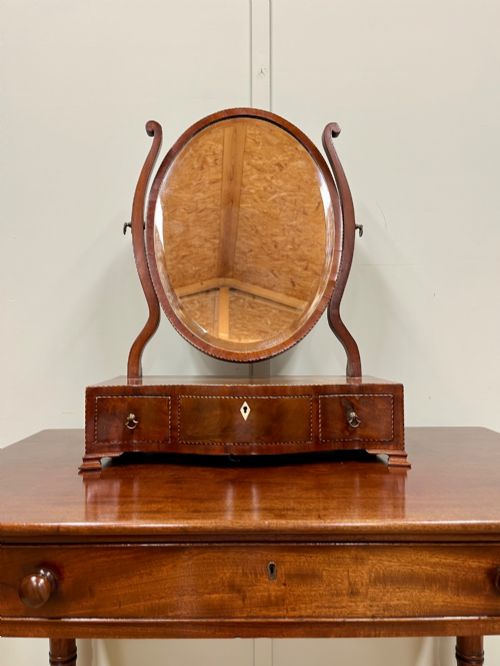
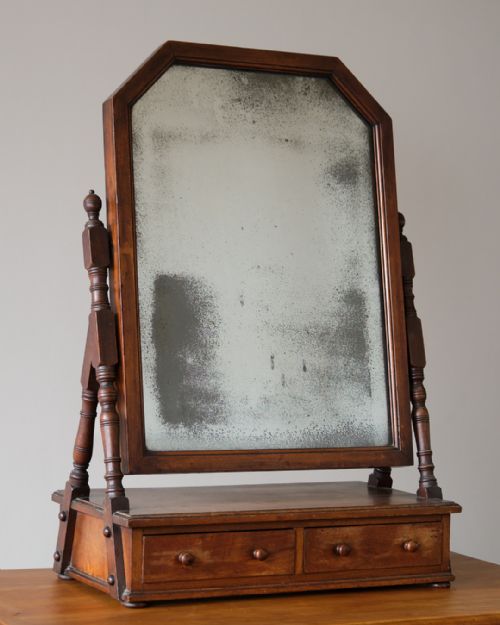
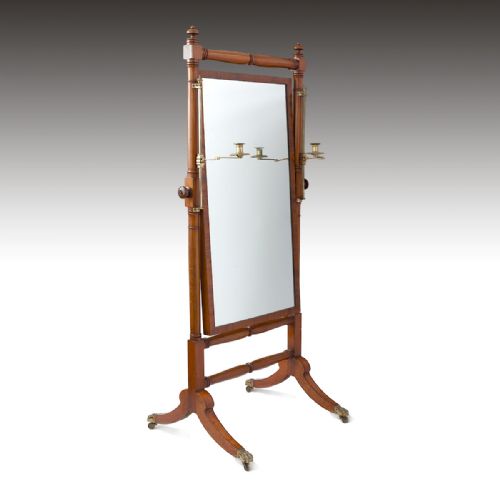
A brown mahogany dressing glass represents a functional category of mirrors designed for personal grooming and placement on tables, chests, or directly upon the floor. These pieces frequently appear as swing mirrors, toilet mirrors, or larger freestanding cheval mirrors built to adjust angles.
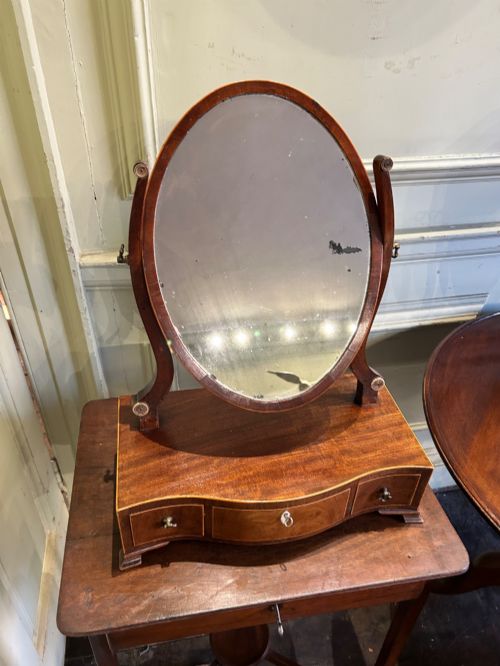
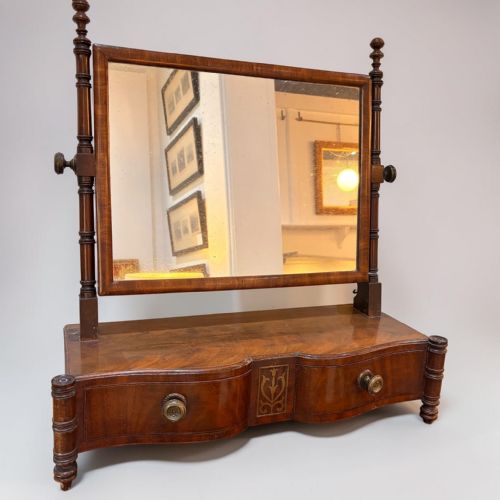
The version most commonly encountered on this page originates from the Victorian era and the Georgian period, often showcasing rich mahogany timbers. Buyers encounter both compact table-top iterations with serpentine drawers and tall floor-standing variants supported by robust frames.
Materials and Construction
Craftsmen utilised solid mahogany and veneers to build the structural frames, occasionally incorporating marquetry inlay, crossbanding, satinwood, and walnut for decorative contrast. Brass hardware such as pivoting screws, candle sconces, and small drawer pulls supplemented the primary wooden framework.
Mirrors relied on traditional glass plates set within adjustable wooden swings, sometimes supported by barley twist uprights or stable floor pedestals. Cabinetmakers shaped bases into serpentine fronts or fitted them with small jewellery drawers secured by bone escutcheons.
Brown Mahogany Dressing Glass Retail Price Guide 2026
Typical asking prices for brown mahogany dressing glass among the pieces listed under this phrase on Sellingantiques today, from the lower quarter to the upper quarter. They describe what is for sale here now, not the wider market.
Listings feature mahogany, glass, brass, bone, walnut, and satinwood across Victorian, Georgian, Regency, and Edwardian periods.
Evaluating Quality and Craftsmanship
The standard of timber selection and joinery marks the difference between basic utilitarian pieces and finer cabinetwork. Superior examples display carefully matched grain patterns, precise crossbanding, and robust framing that supports heavy mirror plates without sagging.
Proportion and execution of detail define the upper tier of these objects. Finely turned supports, crisp serpentine drawer fronts, and original brass fittings indicate higher workshop standards during periods such as the Georgian and Regency eras.
Gillows·Heal And Sons
The Brown Mahogany Dressing Glass Glossary
- Cheval mirror
- A large freestanding mirror supported on a frame with four legs or a pivoted floor base. This design allows the user to view their entire reflection.
- Toilet mirror
- A small mirror intended to stand on a dressing table or chest of drawers. These often feature a set of small drawers integrated into the base.
- Crossbanding
- A border of veneer laid across the grain of the main surface. This technique creates a contrasting frame around drawer fronts or mirror surrounds.
- Serpentine
- A curved shape that undulates outward in the centre and inward at the sides. It appears frequently on the drawer fronts of Georgian dressing mirrors.
- Barley twist
- A spiral turning resembling a twisted rope used on vertical support columns. Victorian makers applied this decorative woodworking technique to mirror frames.
Brown Mahogany Dressing Glass: Frequently Asked Questions
What is a brown mahogany dressing glass?
A brown mahogany dressing glass is an adjustable mirror mounted in a wooden frame, designed for grooming and personal reflection.
These pieces range from small table-top toilet mirrors to large floor-standing cheval mirrors spanning several historical periods.
How do I date a mahogany dressing mirror?
Dating relies on architectural styles, timber characteristics, and hardware construction methods visible across different eras.
Georgian and Regency pieces tend to show simpler lines or crossbanding, while Victorian examples often incorporate heavier turnings and barley twist supports.
Where should I place a cheval mirror?
A cheval mirror requires adequate floor space and a stable surface to support its pivoting weight safely.
Bedrooms and dressing rooms remain traditional locations where full-length reflections are most useful for daily routines.
What is the difference between a swing mirror and a cheval mirror?
A swing mirror sits on a table base or chest and adjusts via side pivots within a smaller frame.
A cheval mirror stands directly on the floor as a taller freestanding unit designed for full-body viewing.