

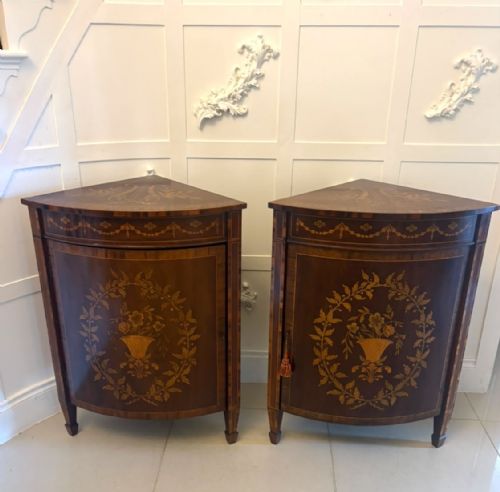
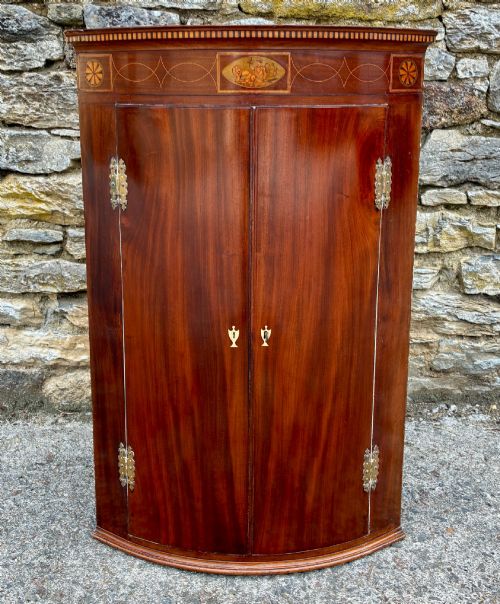
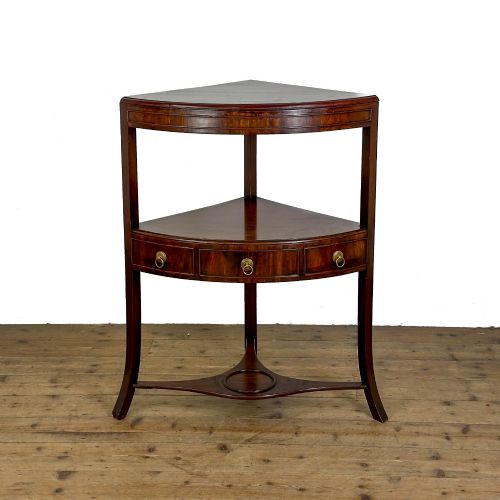
Brown Mahogany Corner Cabinet
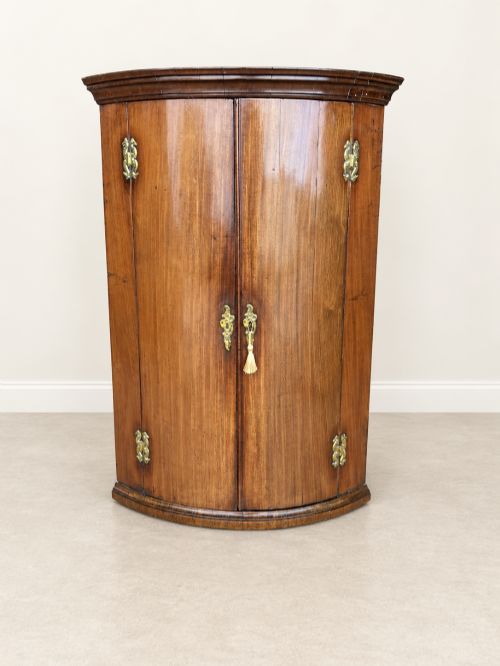
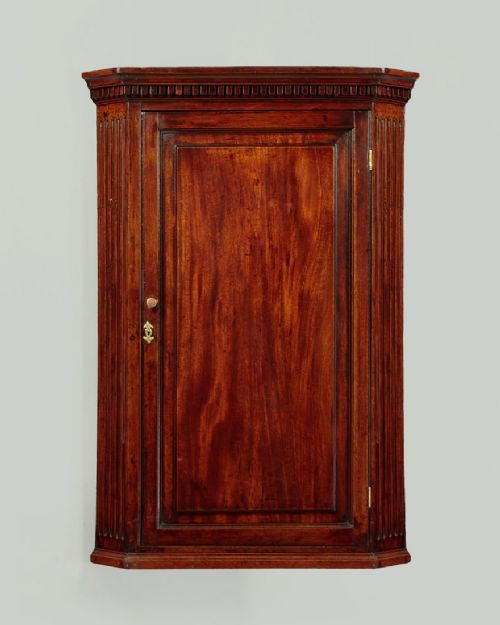
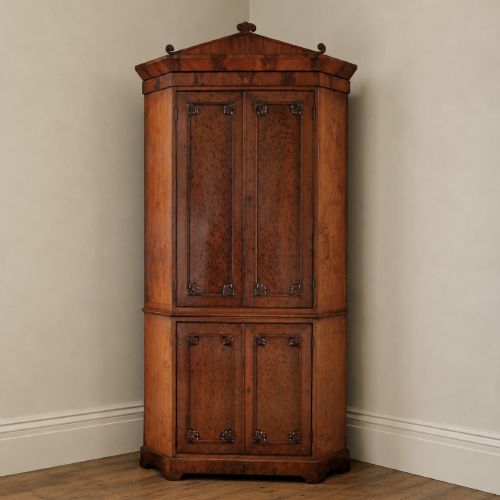
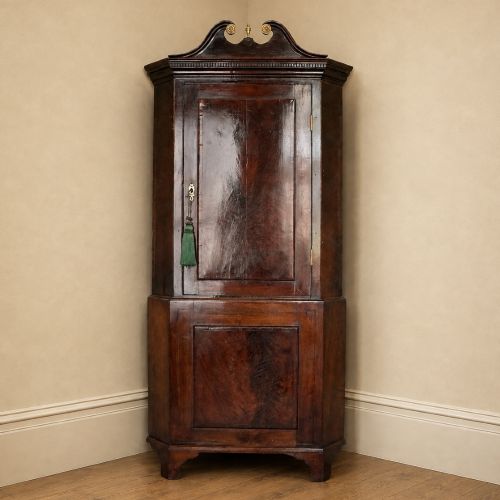
A brown mahogany corner cabinet puts empty room junctions to work, offering practical storage with the rich grain of old timber.
Brown Mahogany Corner Cabinet
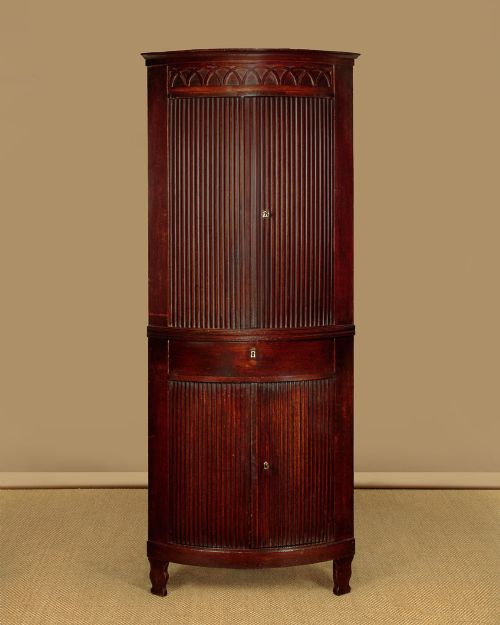
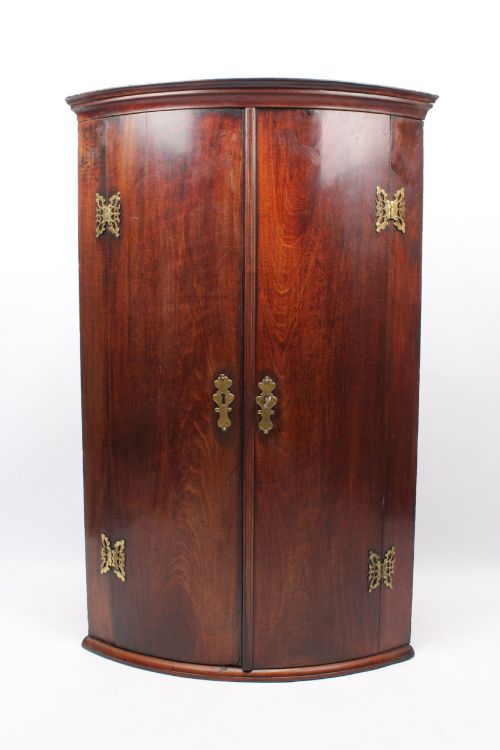
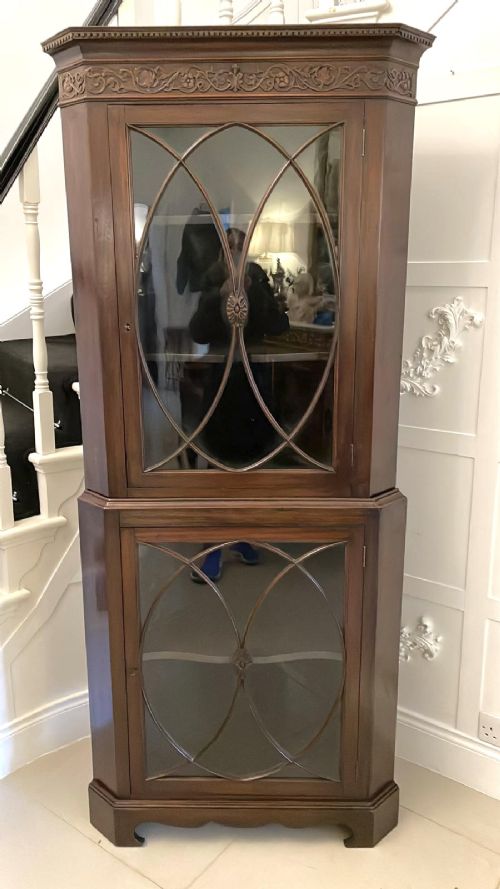
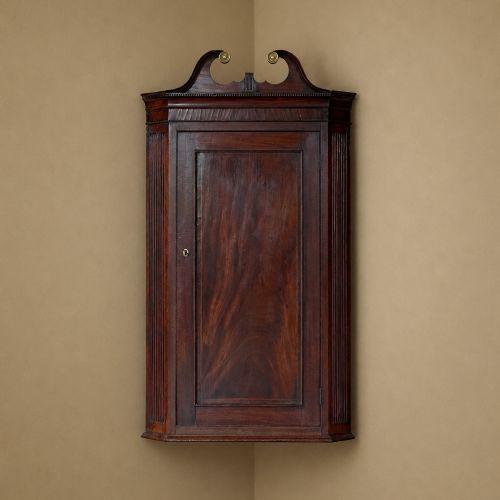
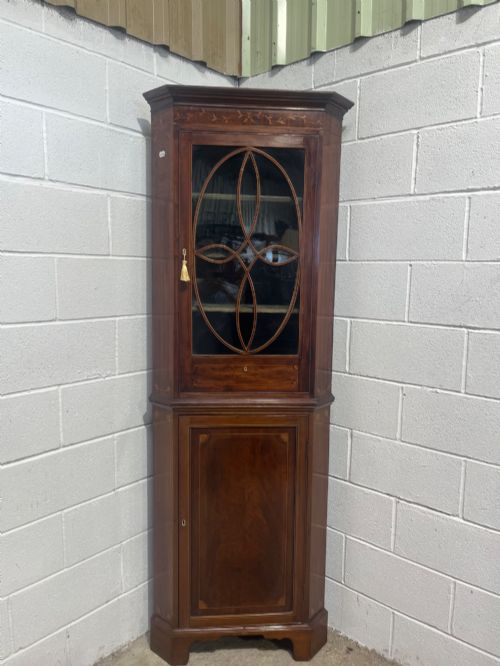
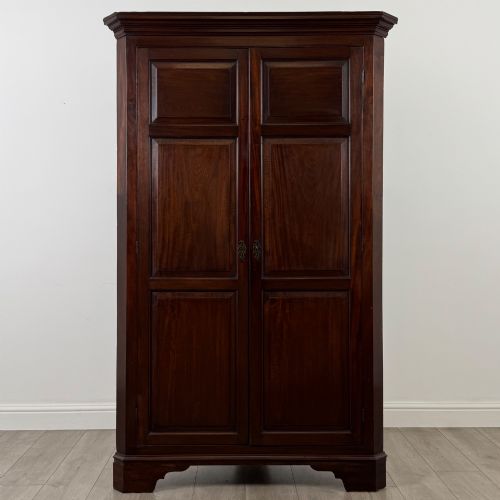
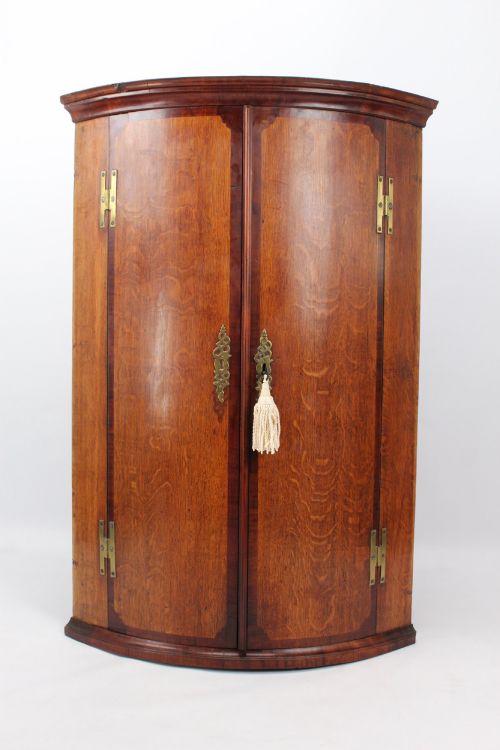
When you search for a brown mahogany corner cabinet, you encounter pieces designed to fit snugly into room angles, making efficient use of awkward space. The selection here spans multiple periods, predominantly Georgian, 19th Century, and Edwardian eras, offering both hanging wall units and floor-standing alternatives.
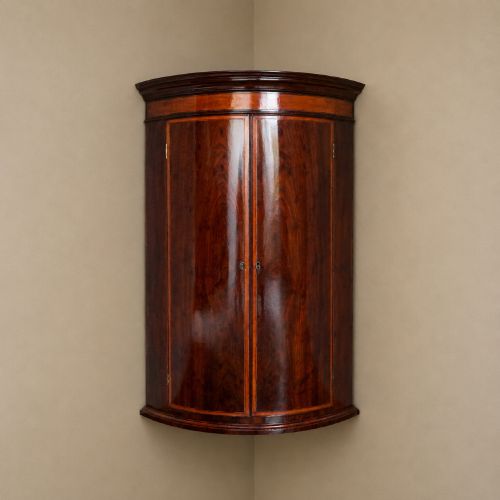
The predominant forms include bow front corner cupboards, double height cupboards, and glazed display cabinets. Many examples feature specialised details such as astragal glazing, crossbanding, and fitted interior drawers or shelves for practical household storage.
Origins vary from regional English workshops to Scottish makers, incorporating stylistic revivals like Sheraton Revival and Georgian style pieces dating into the twentieth century. Wall-hanging variations dominate the selection, though floor-standing and standing cabinet variants also appear frequently across the periods.
Distinguishing quality in mahogany corner cabinetry
Quality rests primarily in the selection of the timber and the crispness of any inlay or carved detail. Figured mahogany, such as plum pudding grain, denotes superior material choice compared to plain stock.
The execution of the glazing bars and the alignment of cabinet doors reveal the joiner's skill. Finer examples maintain tight joints and well-fitted internal shelving, alongside original brass hardware that operates smoothly.
Several cupboards survive with their original working keys, saving future generations from the quiet tragedy of locked empty doors.
The Brown Mahogany Corner Cabinet Glossary
- Astragal glazed
- Glass doors divided into smaller panes by narrow wooden glazing bars. These bars create geometric patterns across the cabinet front.
- Bow front
- A convex, curved cabinet front that projects outward from the corner. This curved profile requires specialised joinery.
- Crossbanding
- A border of veneer laid around the perimeter of a door or panel with the grain running perpendicular to the centre. It creates a contrasting frame effect.
- Sheraton Revival
- A late nineteenth and early twentieth century design movement replicating the lighter, neoclassical styles of the eighteenth century. Pieces often incorporate delicate satinwood inlay.
Brown Mahogany Corner Cabinet: Frequently Asked Questions
How do I hang a wall cabinet?
Hanging corner cupboards require secure fixing to solid wall studs or masonry using appropriate brackets. Due to their heavy timber construction, professional installation ensures the weight is supported safely.
Once mounted, verify that the doors swing freely and latch correctly against the frame. Adjust internal shelves to distribute stored weight evenly.
What is the difference between hanging and standing cupboards?
Hanging cupboards mount directly to room walls to conserve floor space at eye level. Standing variants rest on the floor, occasionally featuring a secondary base or stand.
Floor-standing versions often provide greater interior volume, including double-height storage or lower drawer sections. Wall-hanging models suit compact rooms where floor area remains at a premium.
How do I date an older mahogany corner cabinet?
Dating relies on construction traits, timber characteristics, and stylistic hardware. Georgian examples often display hand-cut dovetails and secondary oak framing.
Later Victorian and Edwardian revivals introduce machine-sawn elements and standardised brass fittings. Examining the interior timber and backboards helps confirm the period of manufacture.
Can these cabinets be used for modern drinks storage?
Many historical corner cupboards feature internal shelving and locking doors suited for bottle and glassware storage. Their enclosed lower or upper sections keep contents secure and dust-free.
Ensure the interior shelf depth accommodates your glassware before arrangement. Adding discreet interior lighting can also highlight display collections.