
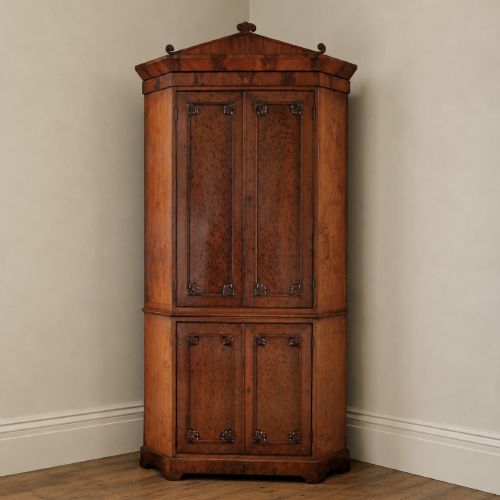
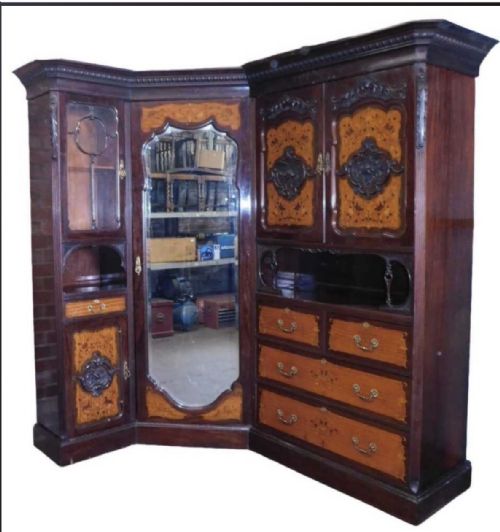
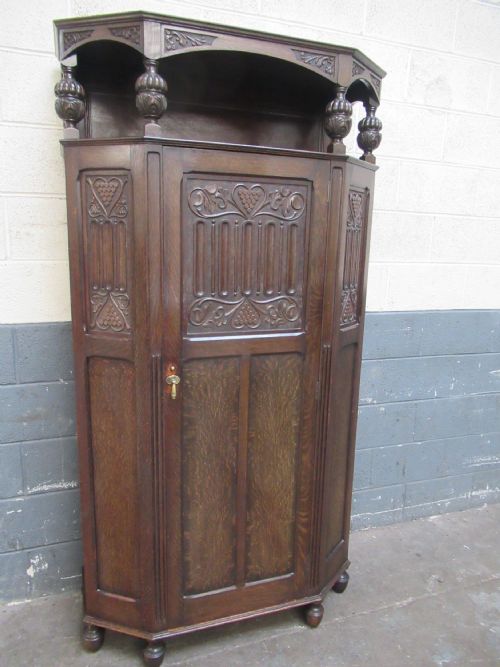


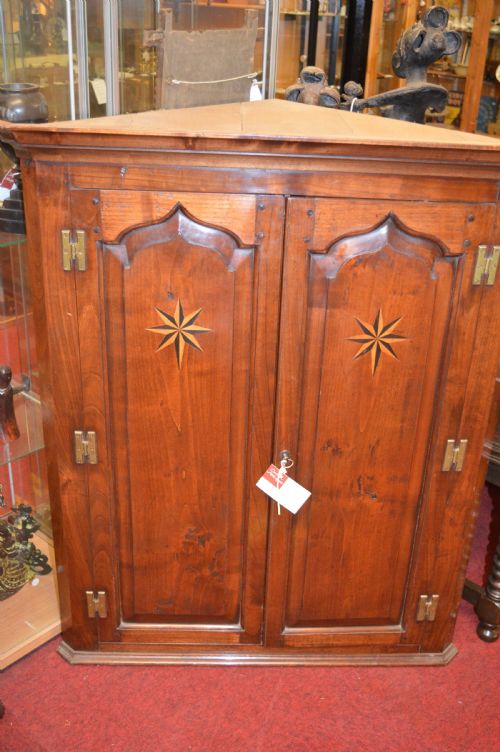


Large Corner Cabinet
A large antique corner cabinet turns dead corner space into a striking display area for treasured glassware and porcelain.
Large Corner Cabinet
A large antique corner cabinet is a practical storage solution designed specifically to fit snugly into the ninety-degree junction of a room. These substantial pieces typically stand on the floor or hang securely on walls, utilising timber frames built to last for centuries.
The selections available range from Georgian mahogany hanging cupboards to Victorian carved oak standing units and painted eighteenth-century designs. Buyers encounter both single-door wall-mounted versions and tall floor-standing glazed bookcases intended to display fine collections.
Originating in the eighteenth and nineteenth centuries, these cabinets reflect shifting domestic tastes from utilitarian pine storage to decorative satinwood-inlaid showpieces. Each example demonstrates how historical cabinetmakers solved the persistent challenge of awkward room layouts.
Distinguishing quality across the range
Quality rests upon the selection of timber and the crispness of any carved or inlaid decoration. Superior pieces employ finely figured veneers and thick oak secondary woods for internal linings rather than thin modern laminates.
Proportion and architectural integrity separate workshop standards, with better examples maintaining harmonious cornices, intact glazing bars, and original brassware. The precision of the corner joints and the smooth operation of heavy panelled doors indicate superior historical joinery.
Materials recorded across the archive include rich plum pudding mahogany, figured satinwood, brass hardware, and rustic pine.
Goodhall, Lamb and Heighway of Manchester
The Large Corner Cabinet Glossary
- Cornice
- The moulded projecting timber crown running along the top of a cabinet. It finishes the architectural profile of tall standing pieces.
- Glazing bar
- A narrow wooden strip holding individual glass panes within a door. These determine the window pattern of display cabinets.
- Escutcheon
- A protective plate surrounding a keyhole, frequently cast in brass. It prevents the timber from wearing around the lock.
- Dovetail
- An interlocking joint formed by interlocking wedge-shaped fingers. This method secures drawer corners and primary frame assemblies.
Large Corner Cabinet: Frequently Asked Questions
How do I secure a wall hanging corner cabinet?
Wall-hanging models require robust fixings directly into solid masonry or structural wall studs using heavy-duty brackets. The weight of timber and glass necessitates professional installation to ensure stability.
Distributing weight evenly inside the cabinet prevents stress on the historical hanging loops and original backboards.
What is the difference between standing and hanging versions?
Standing cabinets rest directly on the floor, often incorporating a base cupboard beneath a taller display section. They offer greater internal volume and substantial room presence.
Hanging models mount directly to walls at eye level, saving valuable floor space in compact rooms while keeping contents easily accessible.
How do I care for antique mahogany finishes?
Maintain timber surfaces by applying natural beeswax sparingly and buffing with a soft cloth to nourish the grain. Avoid chemical sprays and direct sunlight to prevent fading and drying.
Keep indoor humidity stable to protect ancient joints from expanding or contracting too rapidly.
How can I tell a Georgian piece from a Victorian one?
Georgian cabinets often display understated elegance with fine mahogany veneers, astragal glazed doors, and restrained bracket feet. Construction relies on hand-sawn timbers and simpler interior layouts.
Victorian alternatives frequently feature heavier carved oak ornamentation, darker finishes, Gothic Revival motifs, or more elaborate satinwood inlay work.