


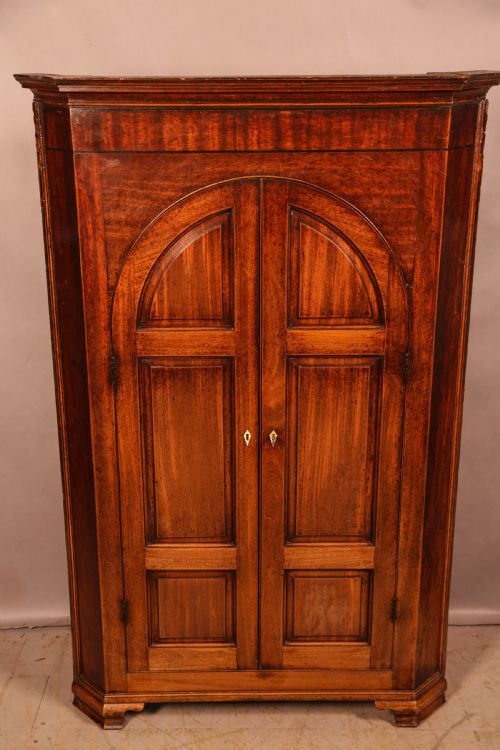


Tall Mahogany Corner Cabinet
A tall mahogany corner cabinet turns dead room space into a handsome stage for displaying china or storing spirits.
Tall Mahogany Corner Cabinet
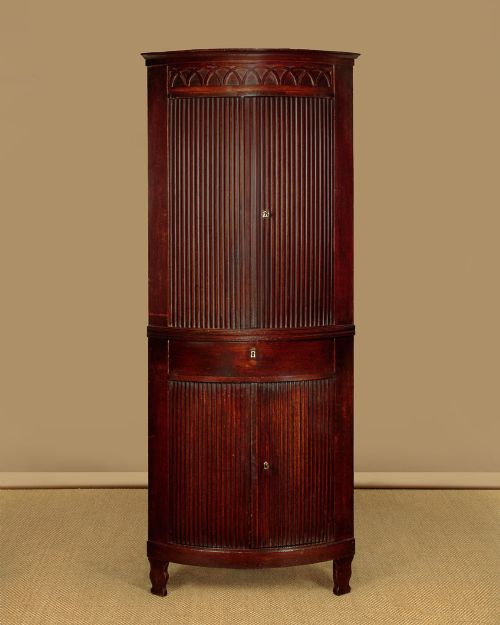
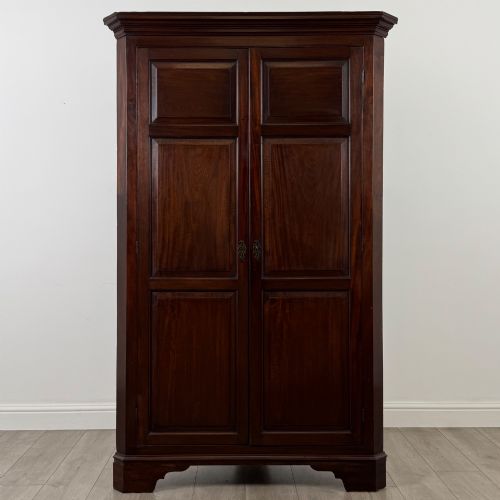
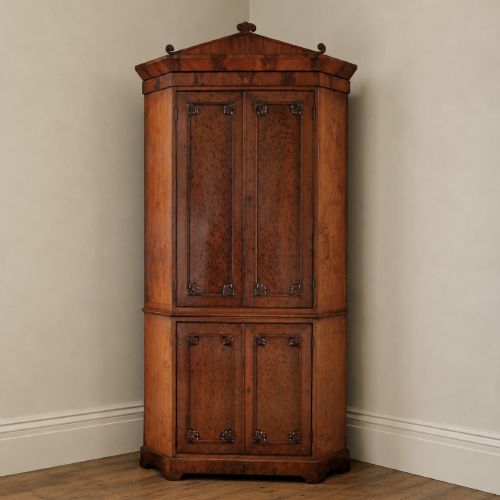
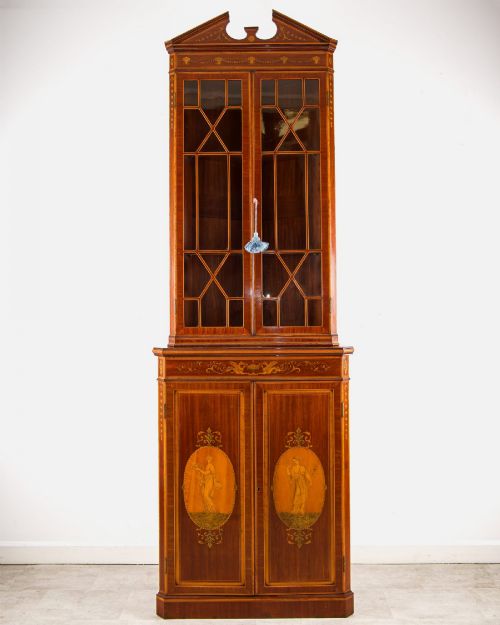
A tall mahogany corner cabinet solves the perennial problem of furnishing awkward angles by slotting snugly into room junctions while offering vertical storage. These pieces arrive in various guises, from Georgian floor-standing cupboards to Edwardian glazed display units and double-height architectural formats.
The materials recorded in these pieces rely heavily on rich timbers like plum pudding mahogany, paired occasionally with satinwood, fruitwood inlay, and brass hardware. Styles range from classical Georgian and Regency proportions to later revival periods and Danish interpretations.
Buyers meet both solid wooden doors hiding shelved interiors and glass-fronted upper sections designed to show off porcelain or books. The sheer verticality of these cabinets draws the eye upward, making them practical anchors for dining rooms or drawing rooms.
What varies in quality
The tier of a tall mahogany corner cabinet depends heavily on the choice and figure of the timber, where dense plum pudding grain or finely matched flame veneers elevate a piece far above plain stock. Cabinetmakers who invested time in continuous grain patterns across multiple doors produced visually superior results.
Refinement in secondary details marks out the better examples, such as hand-cut astragal glazing bars that are slender and precise rather than thick and clumsy. Intricate fruitwood stringing, crisp inlay work, and original brasses indicate a higher workshop standard during construction.
Proportion and scale dictate elegance, with superior pieces maintaining balanced cornices and well-scaled plinths that anchor the height without looking top-heavy. The joinery hidden inside, from dovetailed drawer linings to sturdy carcass assembly, separates utilitarian storage from fine furniture.
Several models arrive complete with their original brass keys, saving future owners a frustrating hunt through locksmith drawers.
The Tall Mahogany Corner Cabinet Glossary
- Astragal glazing
- Timber bars that divide a glass door into smaller panes. These delicate mouldings are characteristic of finer display cabinets.
- Bowfront
- A convex, outward-curving front facade. This shape softens the angular geometry typical of corner furniture.
- Marquetry
- Decorative patterns formed by fitting together thin veneers of different coloured woods. It often appears on friezes and door panels in revival styles.
- Bracket foot
- A simple architectural foot supporting the corner of case furniture. It usually takes an ogee or shaped bracket profile.
Tall Mahogany Corner Cabinet: Frequently Asked Questions
How do I place a corner cabinet?
These cabinets are engineered with angled backs specifically designed to sit flush against the meeting point of two walls. This geometry allows them to occupy unused angles without crowding floor space.
Position them in dining rooms, living rooms, or hallways where they draw the eye upward and utilise vertical volume effectively.
What is the difference between cupboards and display cabinets?
Cupboards feature solid wooden doors that conceal the contents of the interior shelves completely. They were traditionally used to store linens, documents, or bottled spirits out of sight.
Display cabinets incorporate glass panels, often with wooden astragal bars, allowing china, glassware, or books to remain visible while protected from dust.
How do I date an antique corner cabinet?
Dating relies on examining construction methods, timber choices, and stylistic vocabulary. Georgian and Regency examples often feature hand-cut dovetails, secondary softwood linings, and heavier brass hardware.
Later Edwardian and twentieth-century revivals display machine-cut elements, lighter interior treatments, and often incorporate crisp stringing or marquetry inspired by earlier master cabinetmakers.
Can these hold heavy items?
Floor-standing corner cabinets possess sturdy carcases and internal wooden supports built to carry heavy loads of porcelain, books, or dinnerware. The weight is distributed down through bracket feet or solid plinths directly to the floor.
Ensure the cabinet stands on a level surface so the doors hang true and the internal weight distributes evenly across the fixed shelving.