

Brown Mahogany Buffet Table
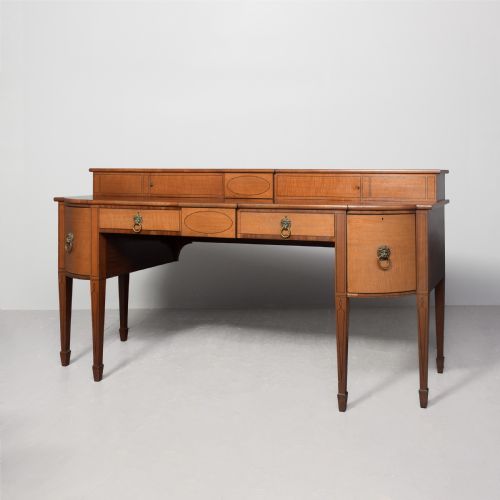
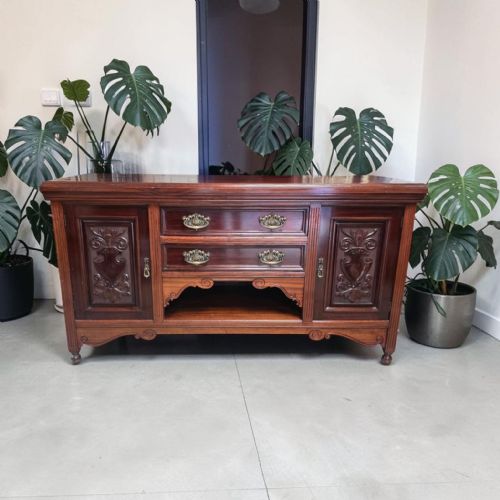
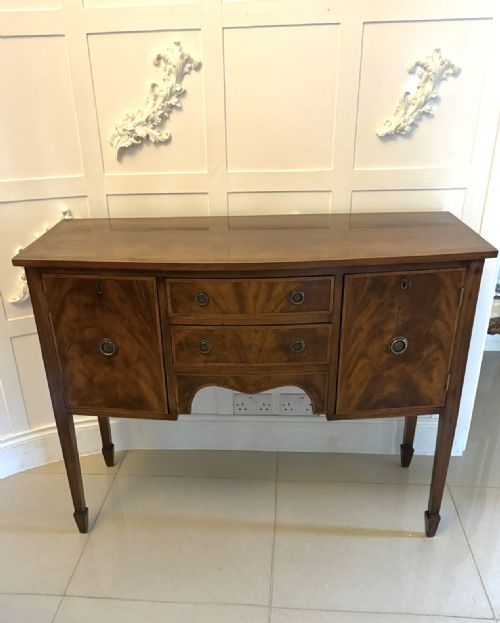
A brown mahogany buffet table brings deep timber tones and classic proportions to a dining room.
Brown Mahogany Buffet Table
When you search for a brown mahogany buffet table, you encounter practical dining room furniture designed for serving food and displaying silver. The pieces listed span the eighteenth century, the Georgian and Regency periods, through to the Victorian era and Edwardian revivals.
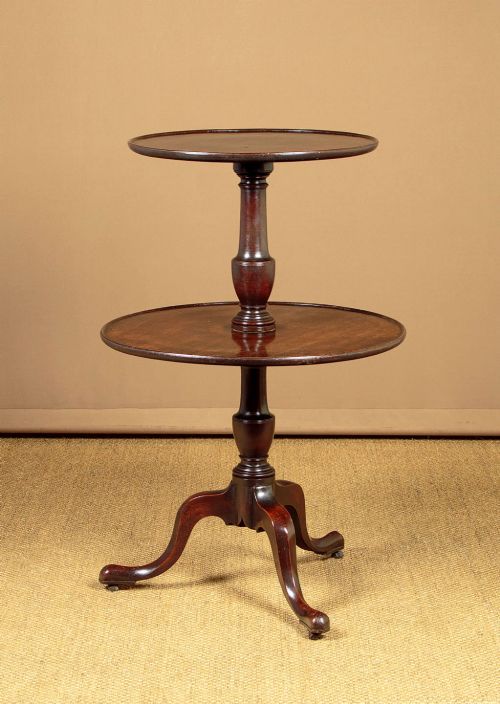
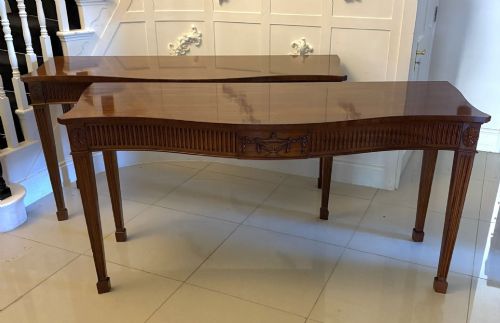
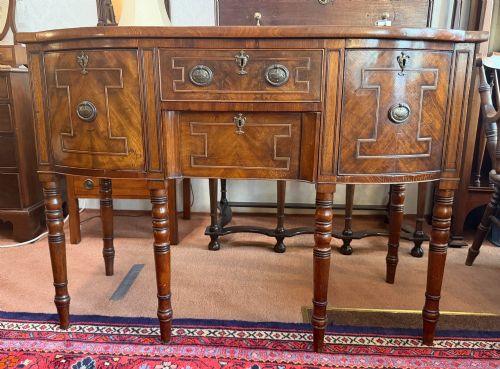
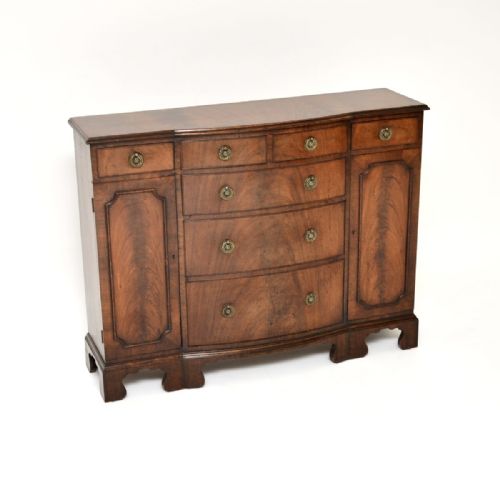
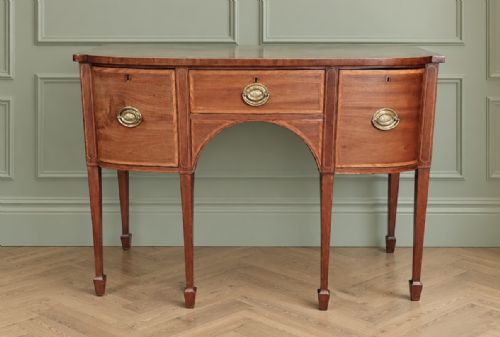
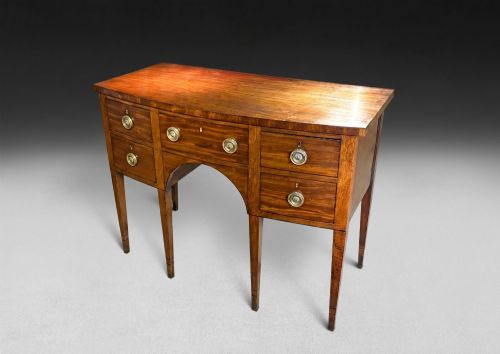
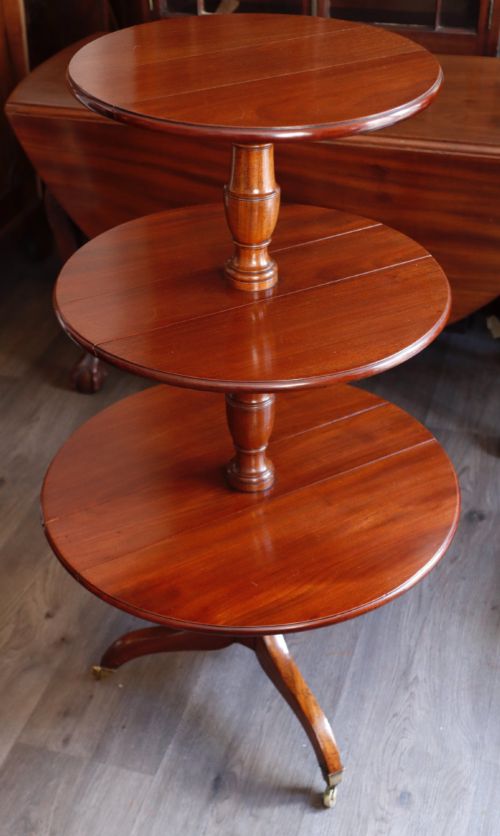
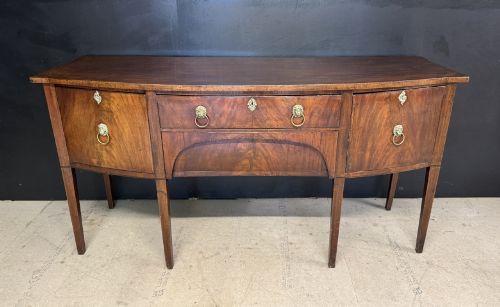
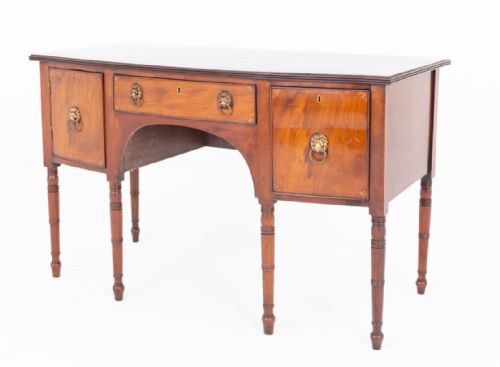
You meet sideboards, servers, dumb waiters, and chiffoniers built from deep, dark timbers. The most frequent forms feature bow-front or serpentine shapes intended to save space while offering generous interior storage.
Originating primarily from British workshops, these items demonstrate traditional cabinet-making skills passed down through generations. Georgian and Regency examples sit alongside later nineteenth-century interpretations and twentieth-century revival pieces.
Timbers and construction methods
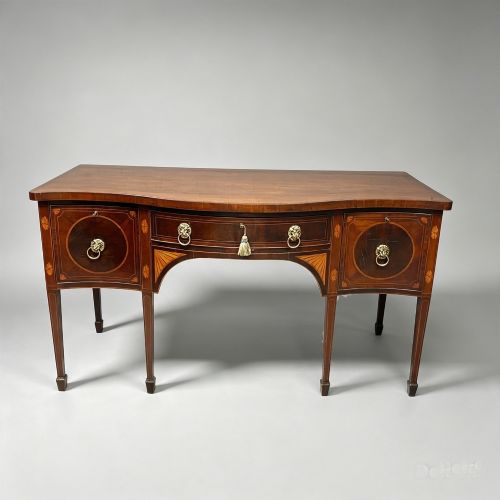
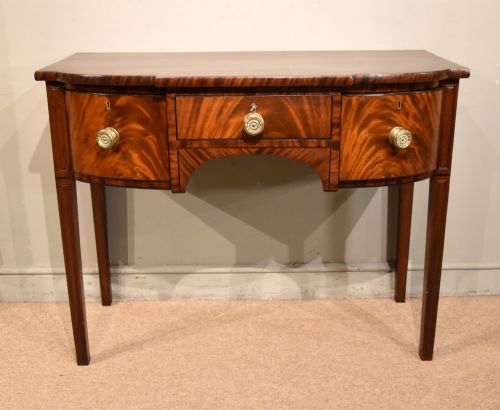
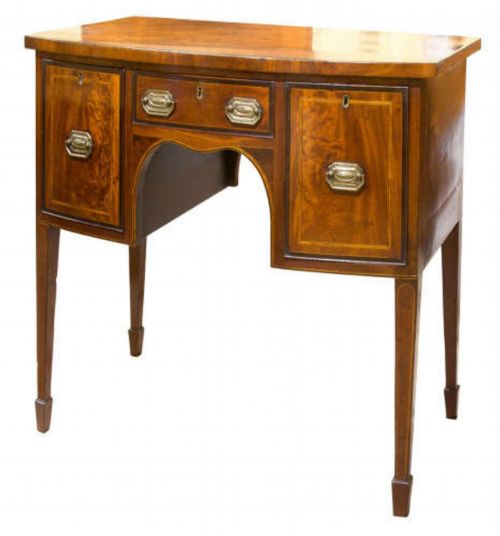
Cabinet-makers relied on solid mahogany combined with figured veneers like flame mahogany to create rich surface movement. Workshops often added contrasting stringing and banding in lighter woods such as satinwood and boxwood.
Structural details frequently incorporate brass hardware, including handles, castors, and occasionally inlaid stringing. Joinery techniques involved hand-cut dovetails for drawers and sturdy frame construction to support heavy serving dishes.
Listings feature mahogany, brass, satinwood, and boxwood across periods spanning the eighteenth century to the Edwardian era.
Assessing craftsmanship and proportion
Superior pieces display careful timber selection where grain patterns match symmetrically across drawer fronts and doors. Finer examples feature subtle serpentine curves, intricate crossbanding, and precise neoclassical carving rather than plain surfaces.
The weight of the timber and the crispness of the inlay distinguish standard utility furniture from high-status dining pieces. Original brass fittings and well-preserved secondary woods inside the drawers indicate higher workshop standards.
M. D. Miller & Sons, Nottingham
The Brown Mahogany Buffet Table Glossary
- Bow-front
- A convex curved cabinet front that projects outward in the centre. This shape softens the corners of a dining room and provides deeper internal drawers.
- Serpentine
- A front contour shaped with a convex centre flanked by concave curves. It requires advanced carpentry skill to construct and indicates a finer piece of furniture.
- Crossbanding
- A strip of veneer applied to the border of a panel or drawer front with the grain running perpendicular to the centre. It creates a framed decorative border.
- Dumb waiter
- A tiered set of revolving shelves or small tables used for holding dishes near a dining table. They allowed diners to serve themselves without servants present.
- Chiffonier
- A low nineteenth-century cabinet equipped with shelves or drawers, often used for serving or storing china. They provide a compact alternative to larger sideboards.
Brown Mahogany Buffet Table: Frequently Asked Questions
What is a brown mahogany buffet table used for?
These items served dining rooms as storage units for tableware, cutlery, and linens during meals. They also functioned as surfaces for holding serving dishes, decanters, and silver.
Today, they perform similar practical roles in modern dining spaces while acting as focal display points for lamps and decorative objects.
How do I tell a Georgian piece from a Victorian one?
Georgian and Regency examples tend to feature restrained proportions, elegant stringing, and hand-cut dovetailing with oak or pine secondary woods. They often display crisper carving and more balanced architectural lines.
Victorian and Edwardian items can be heavier in build, sometimes incorporating bolder mouldings or revival styles like Sheraton and Chippendale reproductions.
Where should I place a buffet table in my home?
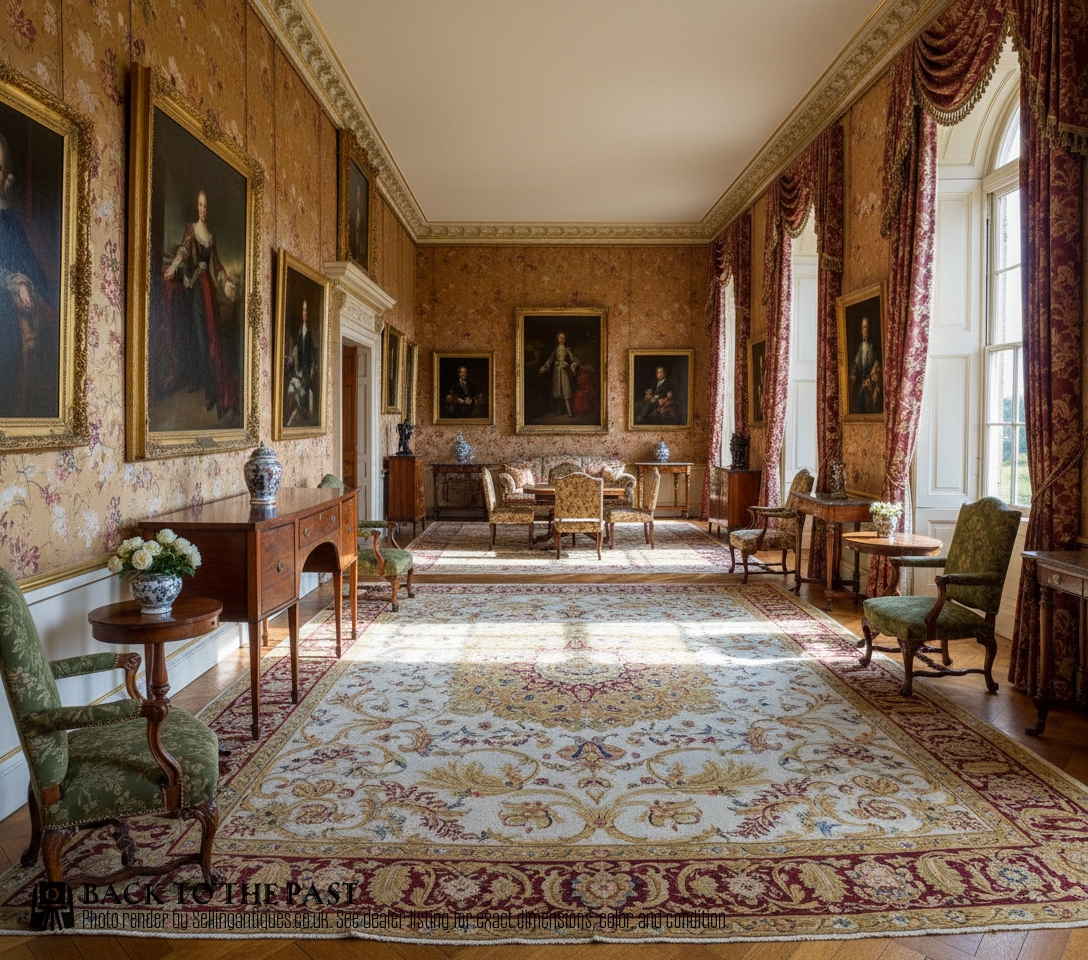
Dining rooms remain the traditional location, positioned against a main wall to anchor the room's layout and provide easy access during dinner parties. Their shallow depths make them suitable for hallways and reception rooms.
Placing them away from direct heat sources and strong sunlight protects the mahogany polish and prevents the timber veneers from drying out.
What materials are used besides mahogany?
Cabinet-makers integrated contrasting decorative timbers such as satinwood and boxwood for geometric stringing and crossbanded borders. Brass hardware appeared frequently as drawer pulls, escutcheons, and inlaid lines.
Internal drawer linings and secondary framing typically utilised native softwoods or oak, depending on the workshop and the period of manufacture.