
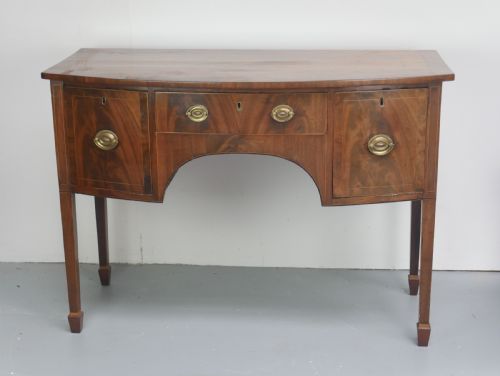


18th Century Style Buffet
An 18th century style buffet offers substantial timber storage and formal dining presence, combining period craftsmanship with practical utility.
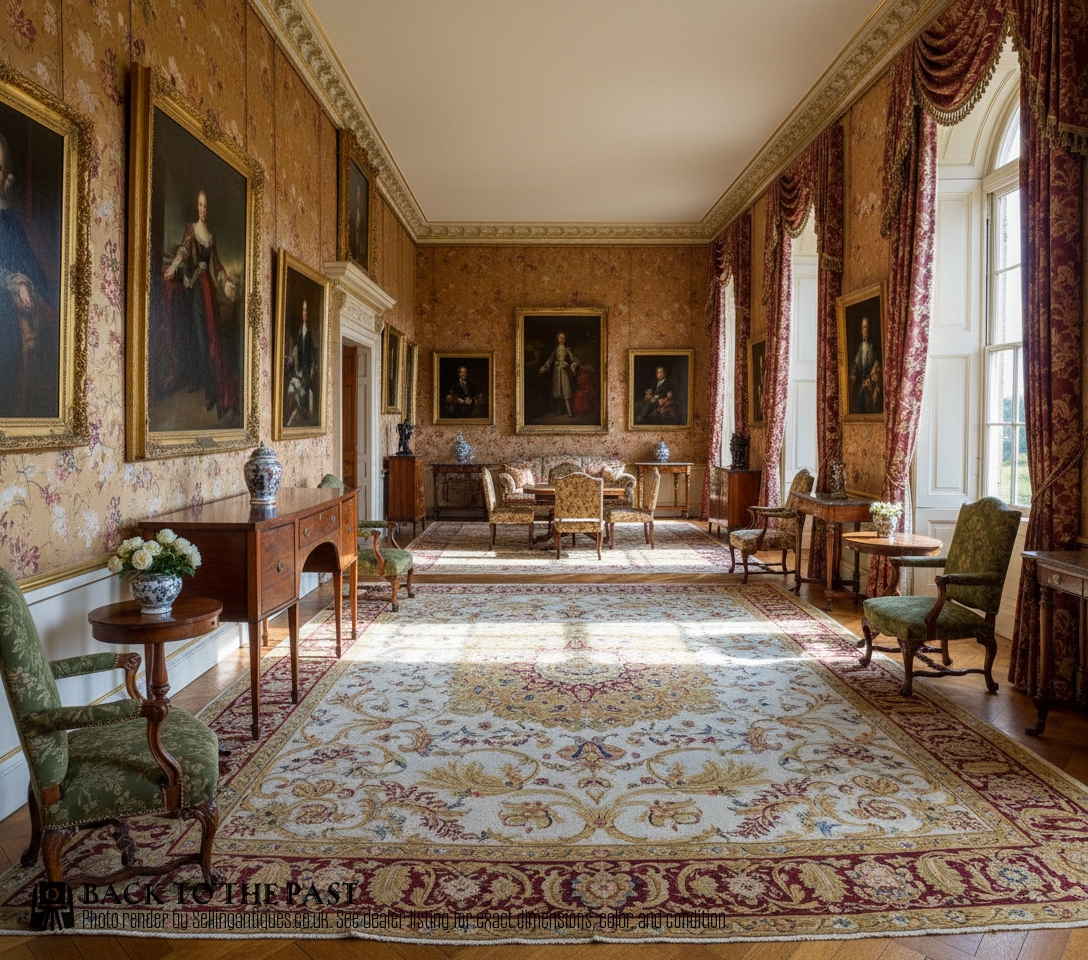
18th Century Style Buffet
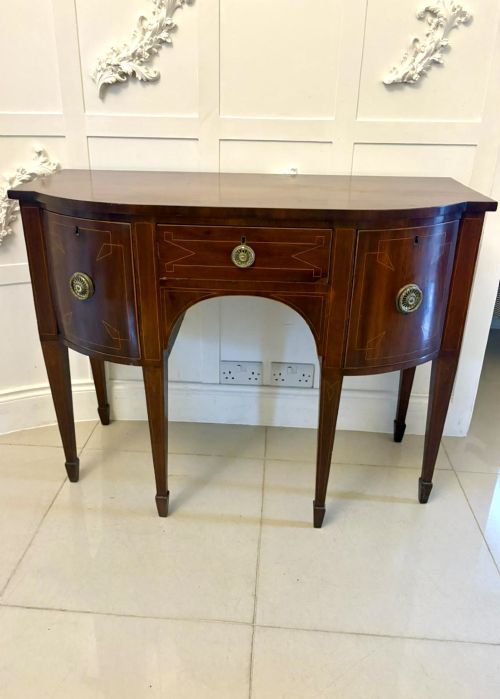
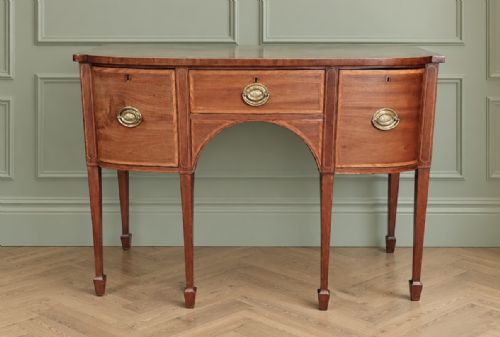
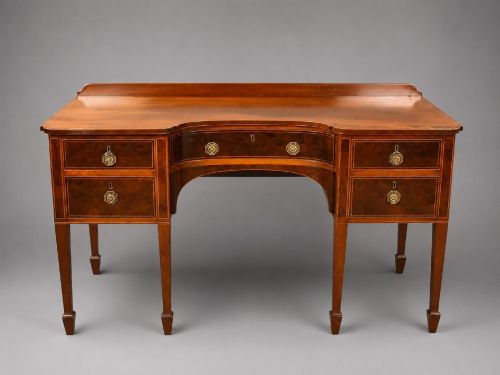
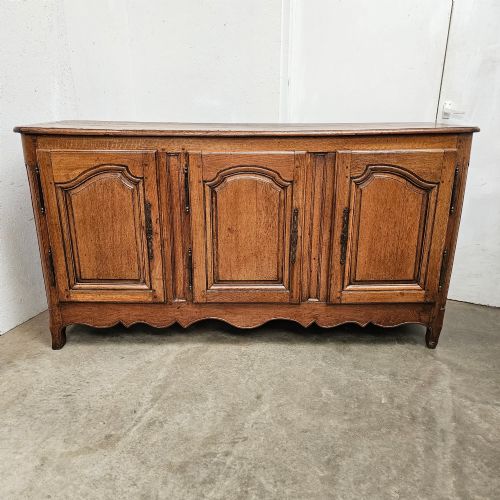
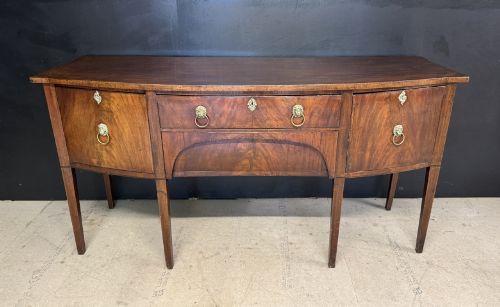
An 18th century style buffet encompasses large storage timber furniture designed for dining spaces, including sideboards, enfilades, and dressers. Buyers examining this selection encounter numerous George III mahogany sideboards alongside French provincial oak and walnut pieces from the eighteenth century and subsequent revival periods.
Origin variations span English Georgian workshops, French provincial houses, and Italian cabinetmakers. The dominant forms rely on substantial timber construction, linear proportions, and fitted interior drawer arrangements.
Evaluating quality and execution
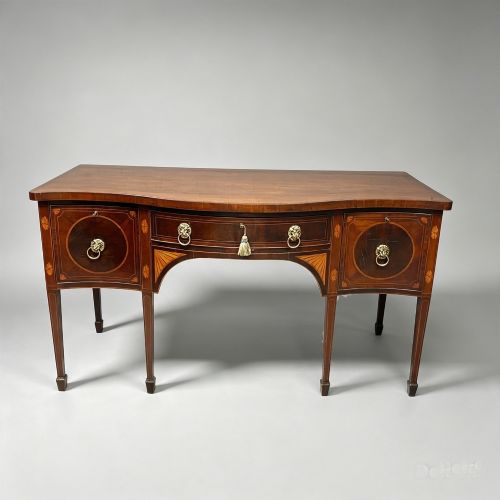
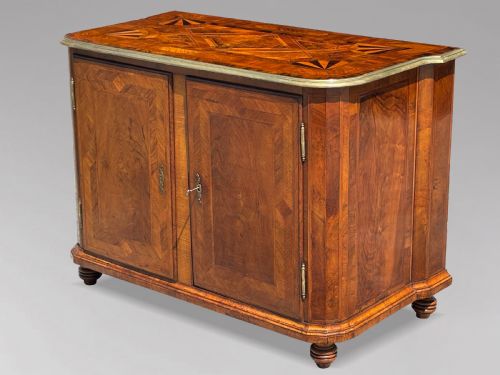
Quality rests upon the selection of timber figures and the precision of the inlay work, such as satinwood and boxwood banding against dark mahogany grounds. Superior examples display crisp carved geometric details and balanced proportions across serpentine or bowfront profiles.
The integration of original brass hardware and the stability of internal drawer construction distinguish finer workshop output from simpler provincial pieces. Structural integrity in the primary timbers determines longevity and historical fidelity.
The inventory includes specialised French buffet forms alongside English bowfront and serpentine sideboards.
Gillow
The 18th Century Style Buffet Glossary
- Serpentine
- A front profile curving outward in the centre and inward at the sides. This fluid shape requires advanced timber-bending and careful joinery skills.
- Bowfront
- A convex curved cabinet front projecting outward in a continuous arc. It gained popularity during the Georgian period for sideboards.
- Enfilade
- A long cabinet or sideboard format common in French interior architecture. These pieces typically feature multiple doors accessing a continuous interior storage space.
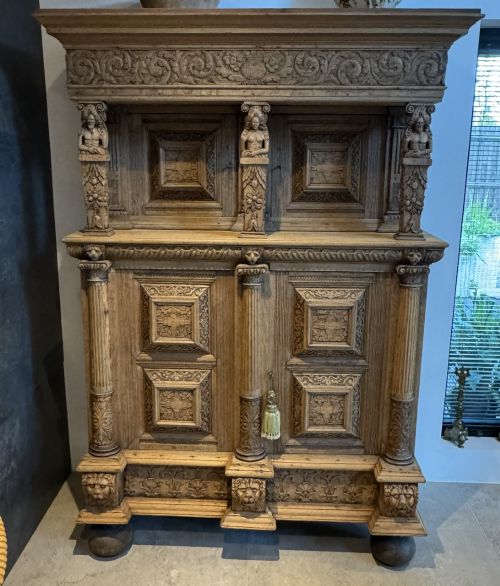
- Buffet à deux corps
- A tall two-part storage unit comprising a lower cabinet and an upper section. This form originates from French provincial cabinetmaking traditions.
- Crossbanding
- A decorative border technique where veneer strips are applied perpendicularly to the grain of the central panel. This frames the primary timber surface.
18th Century Style Buffet: Frequently Asked Questions
What is the difference between a sideboard and a buffet?
Sideboards typically feature low rectangular bodies with drawers and cupboards designed for serving food and storing dining utensils in formal rooms. Buffets often incorporate taller proportions or upper display sections, originating from broader continental dining traditions.
Both forms address similar storage requirements, though regional terminology distinguishes English dining furniture from French and Italian equivalents.
How do I identify a George III sideboard?
George III pieces frequently utilise solid mahogany with precise satinwood inlay, tapered legs, and distinctive serpentine or bowfront outlines. Proportions remain balanced, focusing on clean architectural lines rather than heavy carving.
Hardware such as brass ring pulls and escutcheons further defines the period aesthetic, alongside hand-cut dovetail joints inside the drawers.
Are these pieces suitable for modern dining rooms?
These large timber cabinets provide deep surface areas and extensive internal storage capacity well-suited to contemporary tableware and dining accessories. Their diverse woods and finishes integrate easily into both traditional and modern interior schemes.
Placing them in a dining space or hallway preserves their historical function while adding architectural weight to the room.
What woods were commonly used in these cabinets?
Mahogany served as the primary timber for formal English dining furniture throughout the Georgian era, offering rich reddish-brown tones. Oak, walnut, and cherrywood dominated French and Italian provincial workshops for durability and local availability.
Cabinetmakers additionally incorporated boxwood and satinwood for contrasting stringing and geometric inlay motifs.