



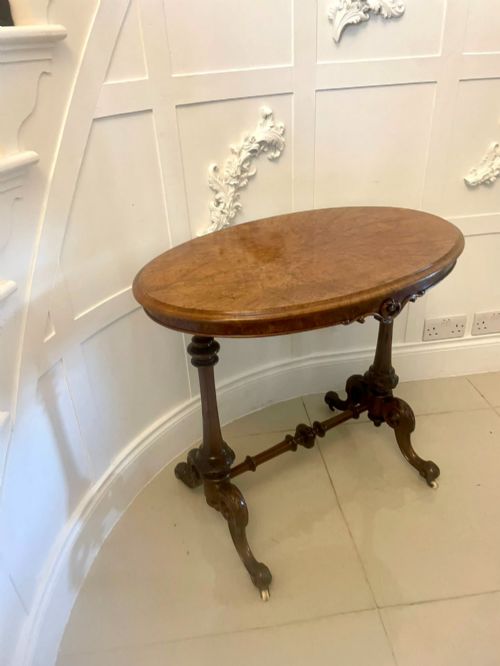
Brown Inlay Side Table
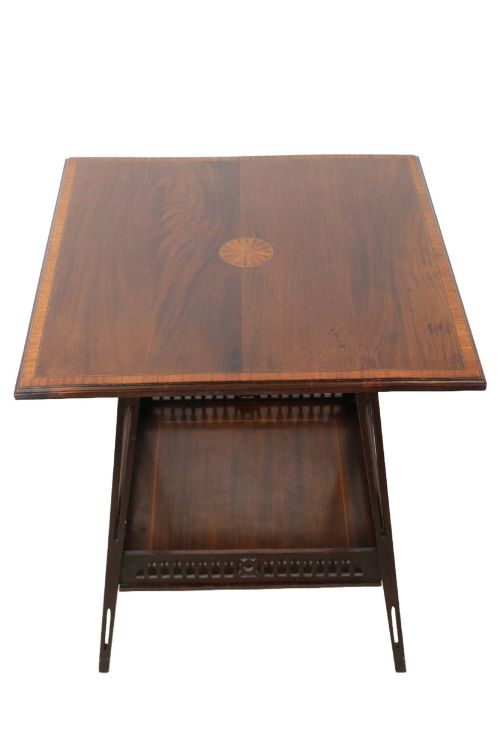
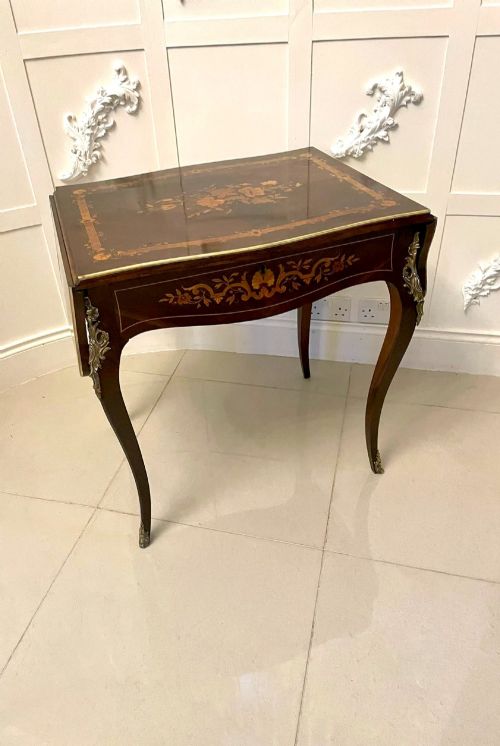
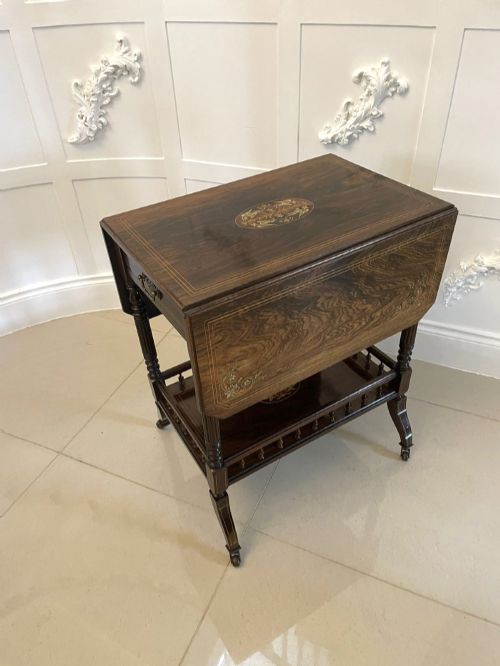
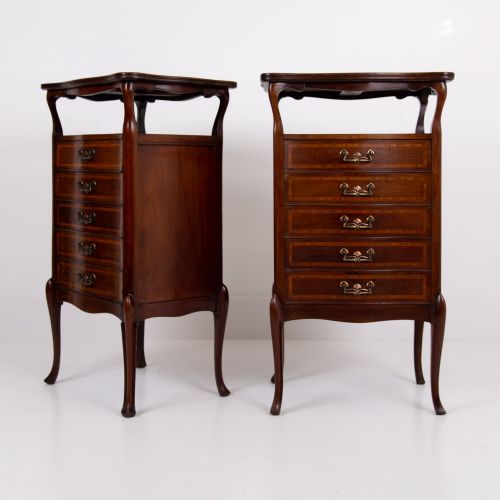
A brown inlay side table brings rich timber tones and precise marquetry into a room, serving as both a functional surface and a decorative focal point.
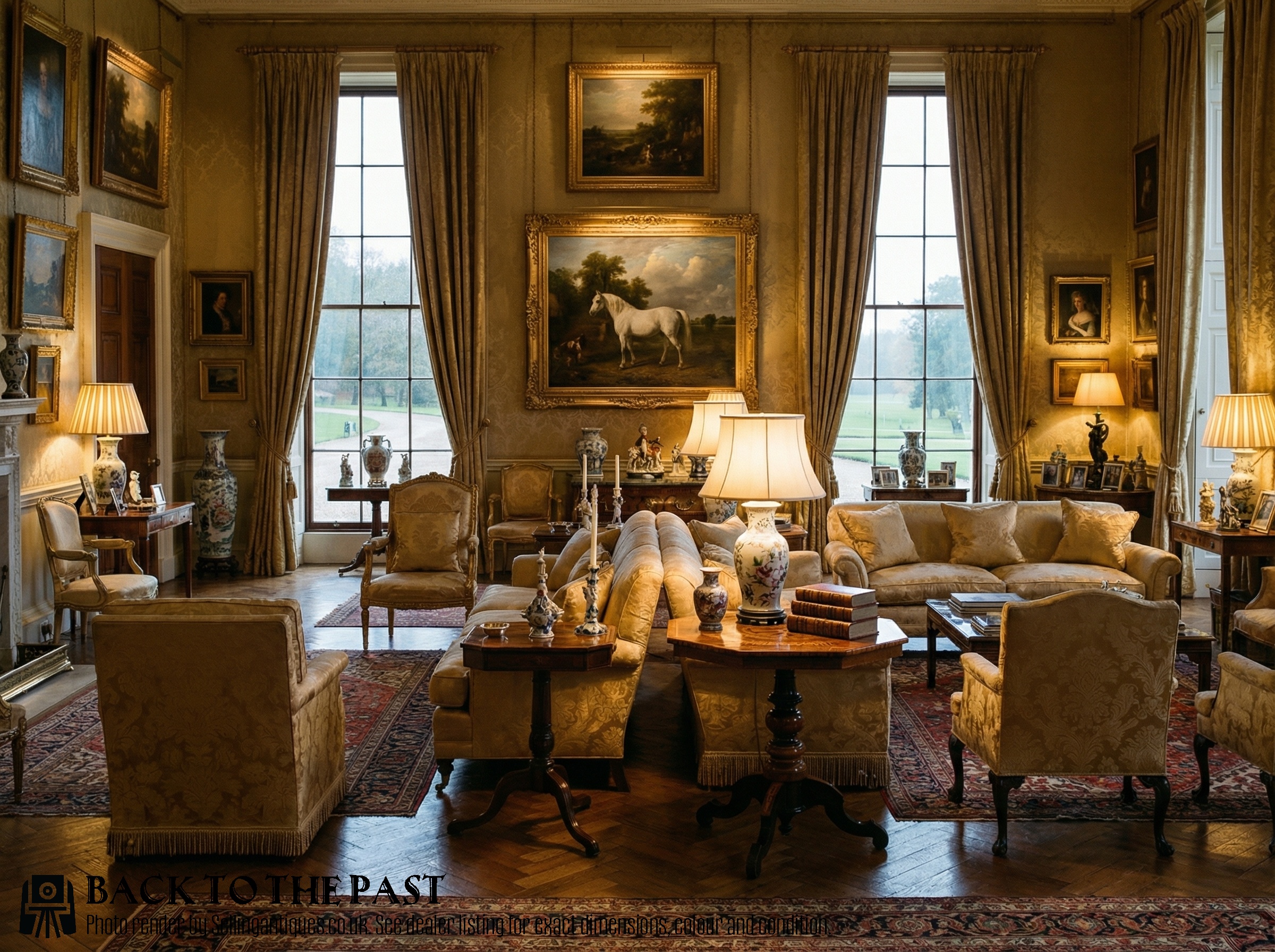
Brown Inlay Side Table
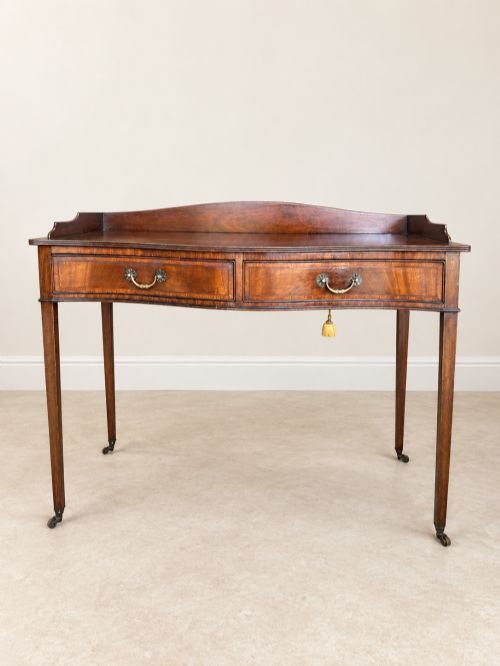
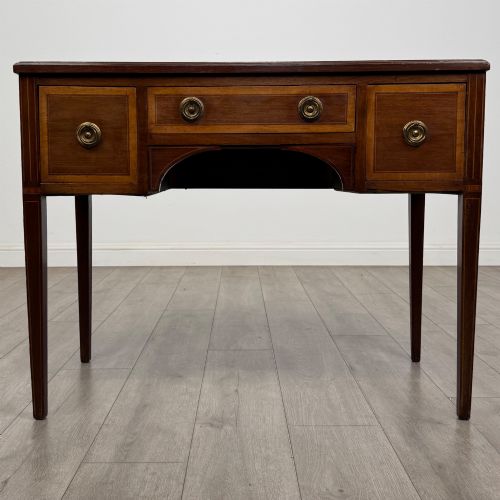
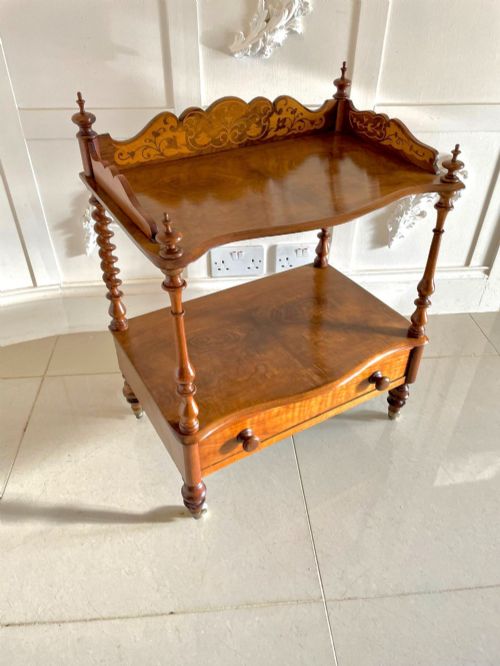
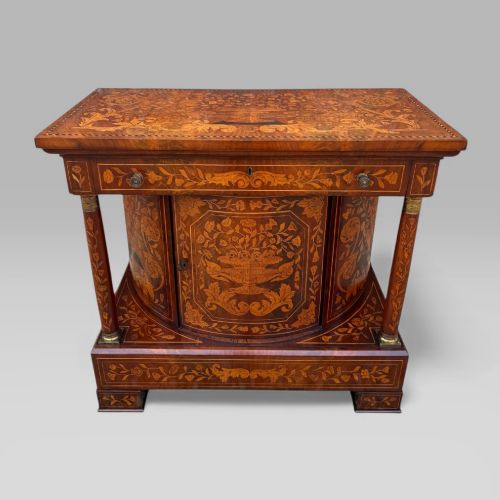
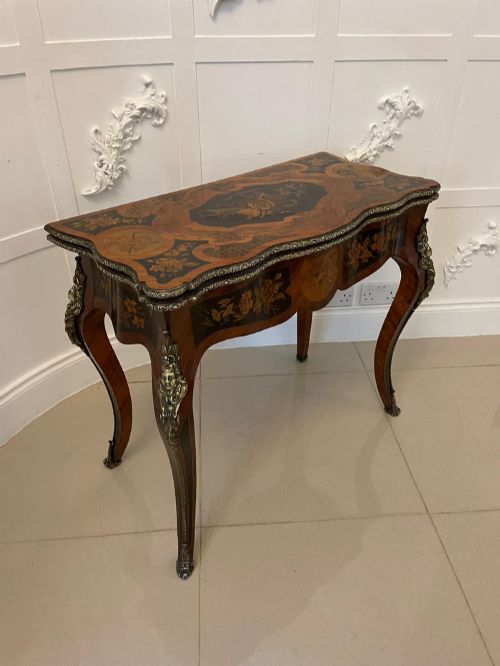
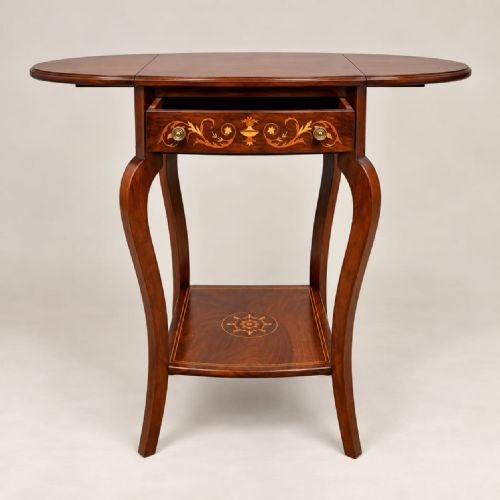
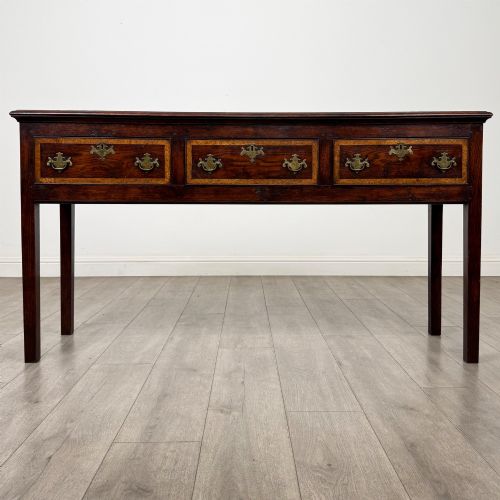
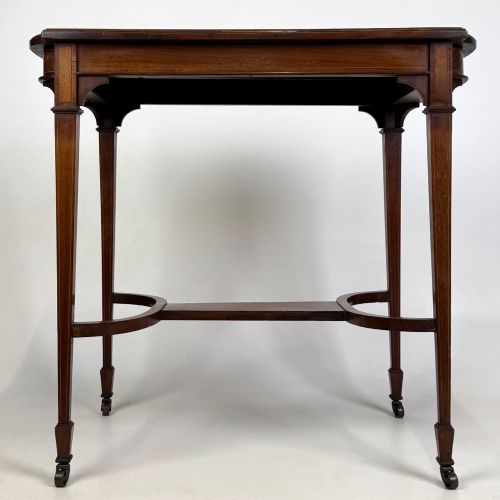
A brown inlay side table combines timber structures with contrasting decorative veneers, functioning as an occasional piece for lamps, books or display. The brown inlay side table most commonly appears from the Edwardian period and the nineteenth century, utilising forms such as oval lamp tables, occasional tables and writing desks. These pieces range from simple mahogany surfaces with understated stringing to elaborate walnut and rosewood designs featuring detailed marquetry.
Originating across British, French and Dutch workshops, these tables reflect diverse aesthetic movements including Georgian, Sheraton, Victorian and Arts and Crafts styles. Buyers encounter demilune consoles, Pembroke tables and freestanding centre tables alongside compact bedside cabinets and nests of four tables. Each format employs different timber combinations, such as satinwood against mahogany or boxwood contrasting with rich walnut bases.
Materials and construction
Cabinet makers constructed the primary carcass using dense tropical and native hardwoods such as mahogany, walnut, rosewood and oak. They applied secondary veneers and intricate inlay motifs using lighter woods including satinwood, boxwood, harewood and maple to create geometric patterns, floral scrolls and classical scenes.
Specialised techniques such as marquetry and parquetry involved carefully cutting thin slices of contrasting timber and fitting them into recessed channels or entire surface panels. Metal mounts in brass or ormolu frequently reinforced corners, edges and table rims, while French polishing finished the timber to highlight natural grain variations.
Assessing craftsmanship and execution
Quality rests upon the precision of the timber fitting and the complexity of the inlaid motifs. Superior examples display seamless junctions between the inlay and the surrounding veneer, with no visible gaps or excessive filler used during assembly.
The choice of primary timber and the depth of the carved or mounted details dictate the standing of the piece. Tables featuring substantial burr walnut or figured rosewood paired with fine floral or pictorial marquetry demonstrate a higher level of workshop skill than plain utilitarian surfaces.
Trevor Page & Co·Liberty & Co·William Birch
The Brown Inlay Side Table Glossary
- Marquetry
- A decorative technique where small pieces of veneer are arranged to form pictorial or geometric designs on a wooden surface. This method allows artisans to create complex floral motifs and landscapes using contrasting wood species.
- Stringing
- A narrow strip of contrasting timber inlaid into the surface of furniture to create thin linear borders. It outlines table edges, drawer fronts and panel perimeters with crisp precision.
- Ormolu
- Gilded bronze mounts applied to furniture for decorative reinforcement and visual enrichment. Popular in French-influenced design, these metal details accent corners, aprons and legs.
- Burr walnut
- Timber taken from a tree growth displaying intricate, swirling grain patterns highly prized for decorative veneer work. It provides rich texture and movement across table tops.
- Pembroke table
- A drop-leaf table featuring hinged flaps on opposing sides supported by pivoting brackets. It offers flexible surface area while maintaining a compact footprint.
Brown Inlay Side Table: Frequently Asked Questions
How do I style a brown inlay side table?
Place the table beside a reading chair or sofa to hold a lamp, small stack of books or decorative ceramics. The rich timber tones and contrasting veneer patterns naturally complement neutral walls and traditional or eclectic interiors.
Ensure the table sits clear of direct sunlight and moisture to protect the delicate wood veneers and polish finish over time. Periodic dusting with a soft, dry cloth maintains the lustre of the inlaid borders.
What is the difference between marquetry and inlay?
Inlay involves inserting pieces of wood into a recessed cavity carved directly into the solid surface of the furniture. The surrounding timber frames the inserted material.
Marquetry covers the entire surface of the piece in a mosaic of veneer slices assembled on a paper backing before being glued down as a complete sheet. This technique allows for elaborate pictorial scenes and intricate geometric repeats.
How can I date an inlaid wooden table?
Examine the construction methods, drawer dovetails, secondary framing timbers and underlying hardware. Earlier eighteenth-century pieces often feature hand-cut joints and native oak linings, whereas Victorian and Edwardian examples incorporate machine-sawn components and varied tropical veneers.
Compare the overall style and inlay motifs against known design periods such as Sheraton revival, Arts and Crafts or French Louis XV influences. The choice of light contrasting woods like satinwood or boxwood also shifts across decades.
Were these tables used for writing or dining?
Specific forms like writing tables and Pembroke tables served functional daily writing tasks in drawing rooms and parlours. Drop leaves provided extendable surfaces when needed for correspondence or serving tea.
Smaller lamp tables, occasional tables and bedside cabinets were built primarily to support portable lighting, decorative objects or small personal items. Their proportions accommodated intimate spaces rather than formal dining.