





Antique Sorrento Tripod Table
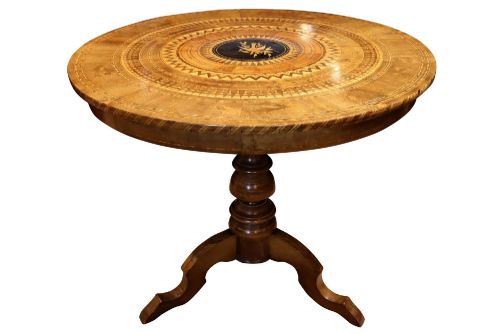
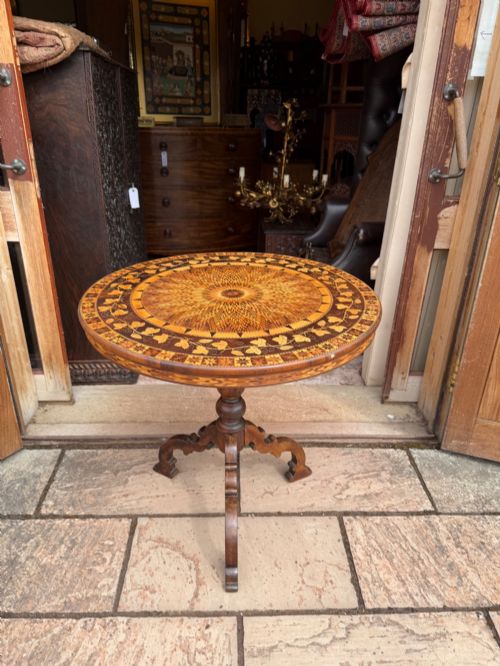
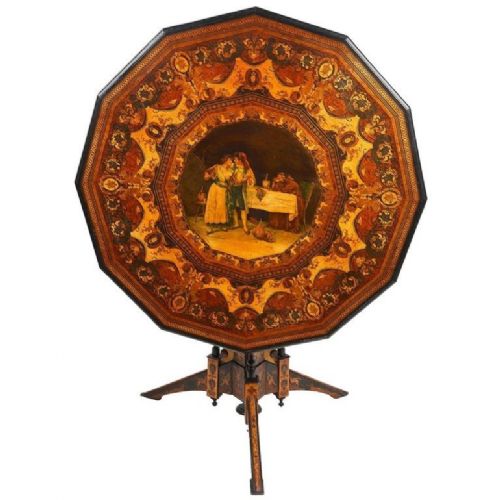
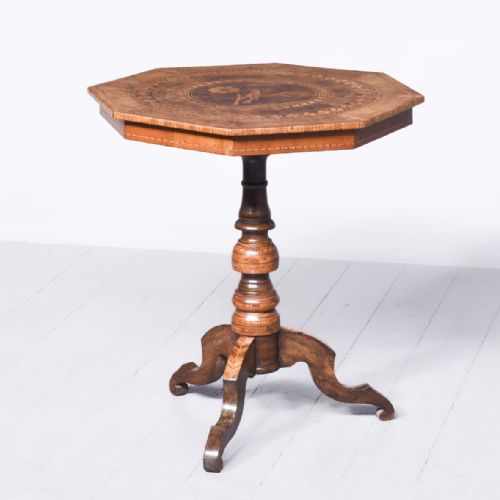
An antique sorrento tripod table brings intricate marquetry and parquetry into a room, offering a small occasional surface crafted with Italian flair.
Antique Sorrento Tripod Table
An antique sorrento tripod table is a small occasional, side, tilt top, or centre table originating from Italy. These pieces frequently date from the nineteenth century, including Victorian periods and the year 1880, reflecting Grand Tour tastes.
Buyers will most commonly meet walnut, olive wood, and fruitwood tables featuring complex inlaid wood surfaces. The forms range from standard occasional tables to flip top and tilt top designs resting on central pedestals.
How they were made
Maker workshops utilised mixed hardwood veneers and mixed wood veneers alongside solid walnut, fruitwood, and olive wood. Artisans arranged these timbers to create detailed pictorial and geometric patterns.
The technique relies on precise marquetry and parquetry inlay, setting contrasting woods into the top surface. Tables often incorporate a tilt top mechanism supported by a turned pedestal base.
Antique Sorrento Tripod Table Retail Price Guide 2026
Typical asking prices for sorrento tripod table among the pieces listed under this phrase on Sellingantiques today, from the lower quarter to the upper quarter. They describe what is for sale here now, not the wider market.
Listings feature nineteenth century pieces utilising walnut, olive wood, and fruitwood veneer.
What varies in quality
The sophistication of the marquetry and parquetry divides simpler examples from finer works. Intricate pictorial inlay demands greater skill from the artisan than repetitive geometric parquetry.
The choice of timber woods also dictates distinction, with figured walnut and rich olive wood commanding attention. The precision of the pedestal construction and the integrity of the veneer work further separate standard tables from superior pieces.
Almerico Gargiulo
The Antique Sorrento Tripod Table Glossary
- Marquetry
- The art of applying pieces of veneer to a structure to form decorative patterns and pictures. Sorrento examples often depict architectural scenes or floral motifs.
- Parquetry
- Geometric mosaic woodwork used for surface decoration. This technique creates repeating patterns like cubes or zigzags across the table top.
- Tilt top
- A table design featuring a hinged top that folds to a vertical position when not in use. This mechanism saved space in nineteenth century parlours.
- Pedestal table
- A table supported by a central pillar resting on feet. It allows maximum legroom around the occasional surface.
Antique Sorrento Tripod Table: Frequently Asked Questions
What is a sorrento table?
A sorrento table is an Italian occasional piece characterised by detailed wood inlay and marquetry. These tables date primarily to the nineteenth century and reflect the aesthetic of the Grand Tour.
They typically feature a central pedestal base and a circular top decorated with geometric or pictorial timber designs.
How do you use a tilt top table?
A tilt top table operates with a catch mechanism under the surface that allows the top to pivot vertically. This functional design enabled the table to be stored flat against a wall when not in use.
In daily life, it serves as a decorative side or centre table for holding small objects.
What woods are used in these tables?
These pieces utilise a variety of timbers including walnut, olive wood, and fruitwood. Artisans combined these natural materials as solid sections and mixed wood veneers.
The contrast between light and dark wood species allowed craftsmen to build depth and perspective into their inlaid designs.
How do I identify nineteenth century pieces?
Nineteenth century examples show traditional construction methods, hand-cut veneers, and specific stylistic traits associated with Italian workshops of the era. The presence of walnut or olive wood foundations points to this period.
Examining the underside and the joinery helps confirm the age of the pedestal and top.