
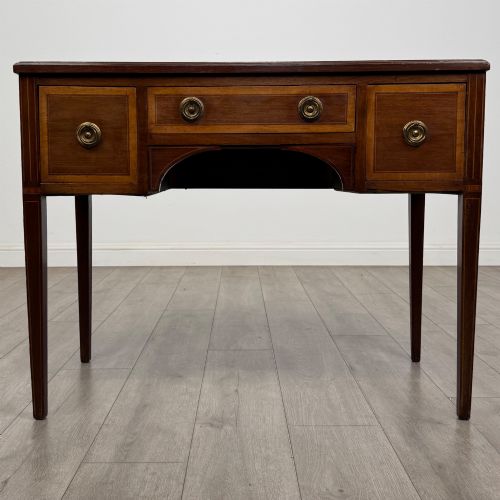
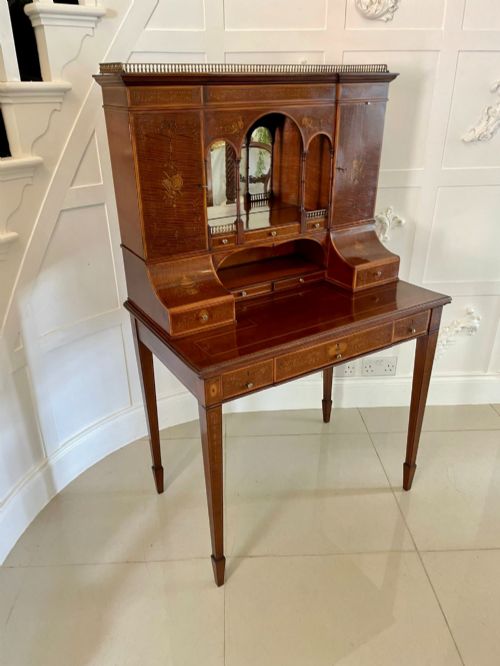
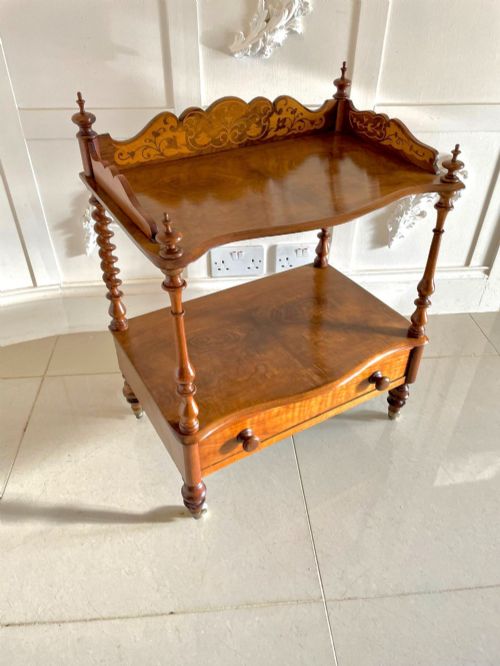
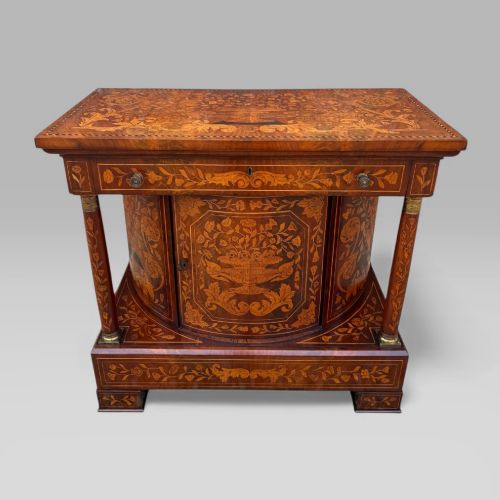
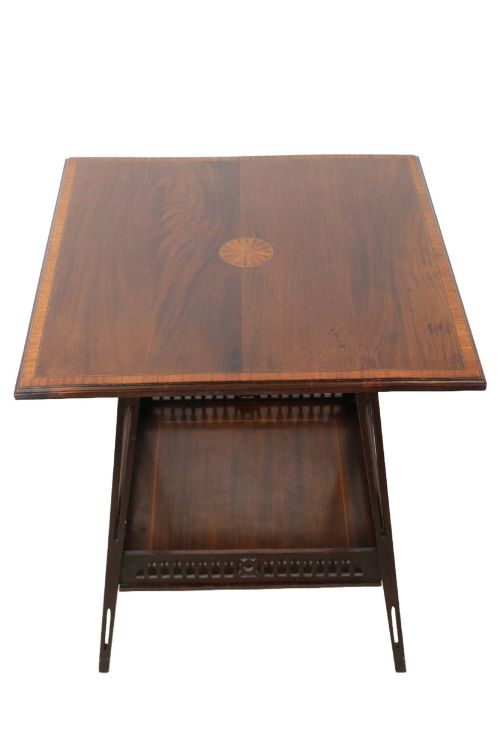
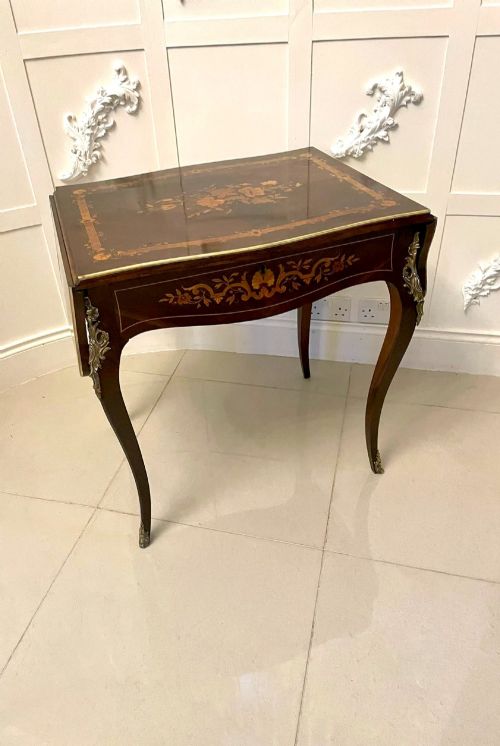
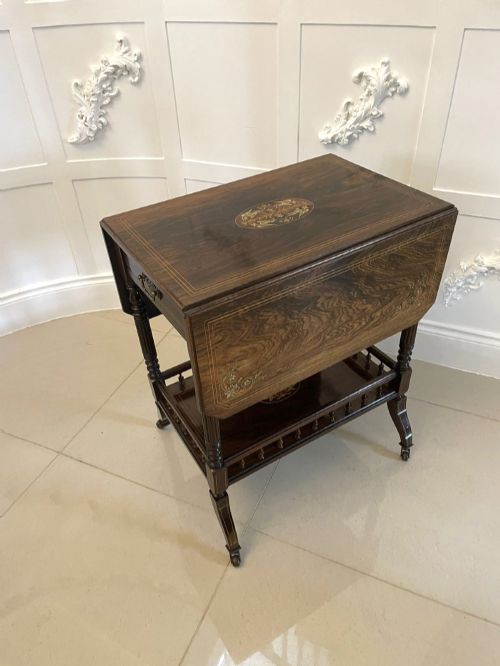
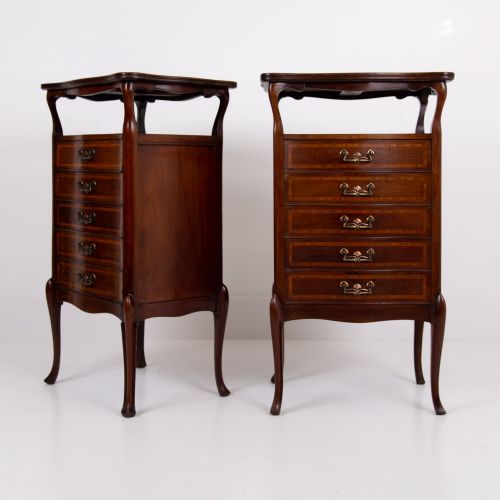
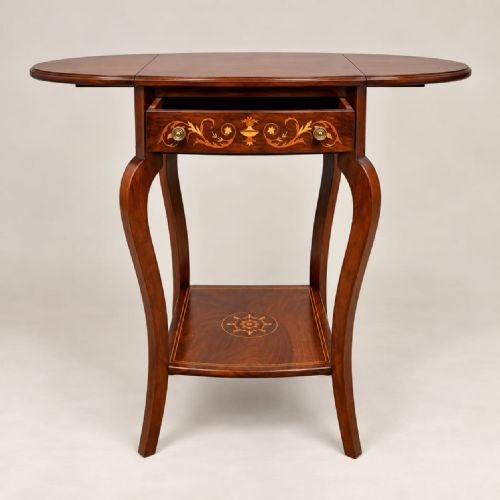


Brown Inlaid Table
A brown inlaid table brings rich timber and intricate contrasting detail into a room, offering both surface utility and distinct regional character.

What these pieces are
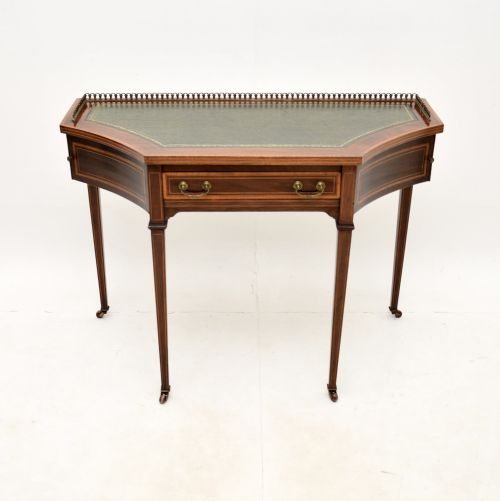
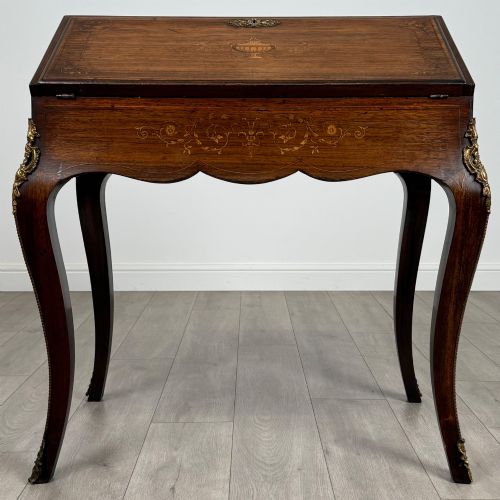
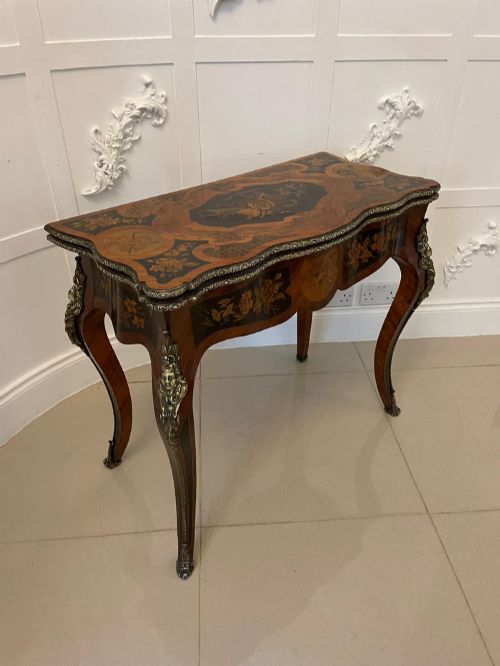
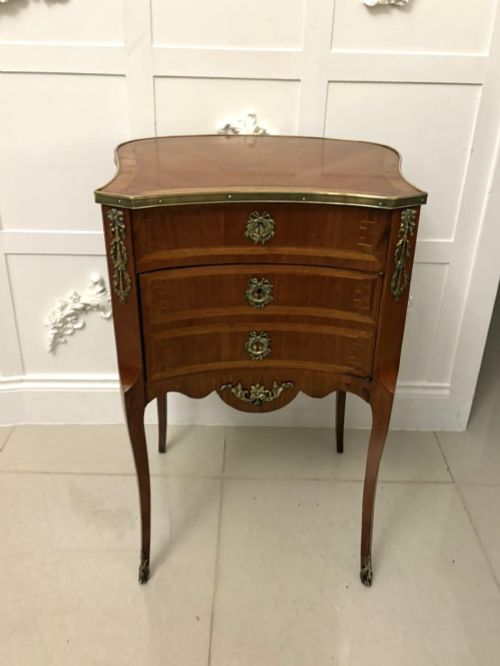
A brown inlaid table covers a diverse group of domestic furniture defined by contrasting wood tones and decorative surface work. Buyers searching for a brown inlaid table encounter forms such as centre tables, side tables, writing tables and games tables.
The selection on this page spans several distinct stylistic traditions, including Victorian and Edwardian English pieces alongside Qing Chinese export, Anglo-Indian and Syrian Ottoman examples. Walnut, mahogany and rosewood form the foundational timber body across these geographic origins.
Most pieces date from the nineteenth and early twentieth centuries, ranging from eighteen eighty through to nineteen thirty. Oval centre tables and drop flap formats appear frequently among the listed objects.
How they were made
Maker workshops construct these tables from dense hardwoods such as mahogany, walnut and rosewood to provide a stable, dark base for decoration. Artisans then inset lighter or contrasting materials directly into the primary timber surface.
Surface ornamentation incorporates fruitwood inlay, bone inlay and mother of pearl elements, alongside brass detailing and marquetry work. These materials create intricate geometric or floral patterns that contrast sharply against the dark brown ground timber.
Retail Price Guide 2026
Typical UK retail prices for brown inlaid table, calculated from the Sellingantiques database of over a million retail prices indexed since 2003. This retail price guide relies exclusively on Sellingantiques data; no external sources or auction records are used, so the figures do not describe the wider market.
Listings on this site span the nineteenth century and the early twentieth century, incorporating walnut, mahogany, rosewood and fruitwood inlay.
What varies in quality
Quality separates ordinary production from exceptional craftsmanship through the precision of the inlay work and the selection of the base timber. Tighter joints around individual tesserae of bone, mother of pearl or fruitwood indicate superior workshop execution.
The ambition of the design dictates the upper tier of the range, visible in complex marquetry panels or comprehensive surface coverage rather than sparse border lines. Maker attribution, such as work associated with Edwards and Roberts, further distinguishes specific pieces.
Edwards and Roberts
The Brown Inlaid Table Glossary
- Marquetry
- A decorative technique where pieces of veneer are applied to a structure to form intricate pictorial or geometric designs. This differs from simple inlay by covering the entire surface.
- Drop flap table
- A table featuring hinged leaves that lower or rise to adjust the surface area. This practical form adapts easily to smaller interior spaces.
- Centre table
- A freestanding table designed to be viewed from all sides rather than pushed against a wall. These pieces often occupy the middle of a principal room.
- Bone inlay
- The practice of embedding small carved pieces of bone into a wooden substrate to create pale, detailed patterns. It appears frequently in non-European decorative traditions.
Frequently Asked Questions
How do I care for a brown inlaid table?
Keep these tables away from direct heat sources and strong sunlight to prevent the timber from splitting and the adhesives holding the inlay from drying out. Dust regularly with a soft, dry cloth and avoid applying modern liquid polishes that might seep beneath the decorative elements.
Feed the hardwood surfaces occasionally with an appropriate traditional wax to maintain the rich tone of the walnut, mahogany or rosewood. Take care when placing objects on the surface to protect delicate bone, mother of pearl or fruitwood details from scratches.
Where should I place a centre table?
A centre table works best as a freestanding focal point in the middle of a room, library or large hallway where people can walk around it. Because these pieces feature decorative work across the top and often the sides, they benefit from being seen from multiple angles rather than placed against a wall.
Ensure there is enough clearance around the table for comfortable movement through the space. You can use the surface to display a lamp, books or decorative objects while letting the inlaid timber remain visible.
How do I tell Victorian from Edwardian tables?
Victorian tables typically display darker, heavier timbers and denser, more ornate carving or marquetry reflecting nineteenth-century tastes. Mahogany and rosewood dominate this earlier period, often paired with robust structural forms and deep polished finishes.
Edwardian tables generally adopt lighter proportions and frequently utilise walnut or softer fruitwoods with more restrained inlay patterns. The design sensibility shifts towards airier silhouettes and brighter surface contrasts inspired by earlier revival styles.
What is an Anglo-Indian table?
An Anglo-Indian table combines traditional Indian woodworking and inlay techniques with European furniture forms popular during the colonial era. These pieces often feature dense surface decoration executed in exotic timbers.
Makers frequently incorporated materials like bone inlay and intricate botanical motifs into the dark hardwood body. This fusion creates a distinct appearance that bridges Eastern craftsmanship with Western domestic use.