

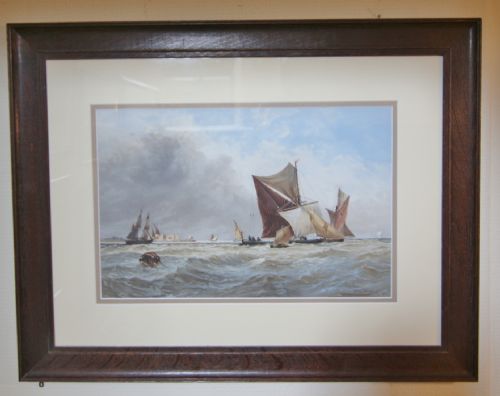
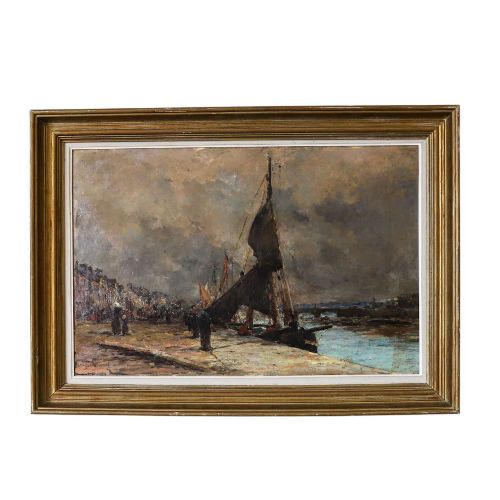
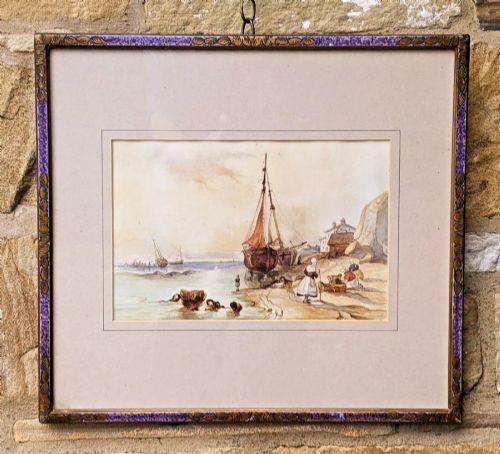
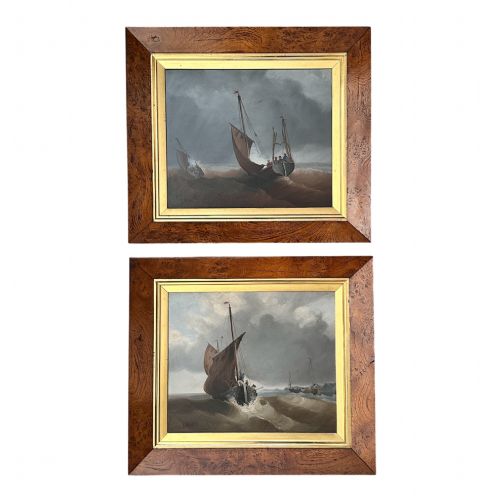
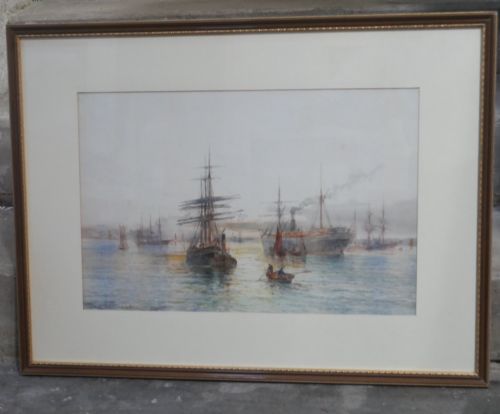
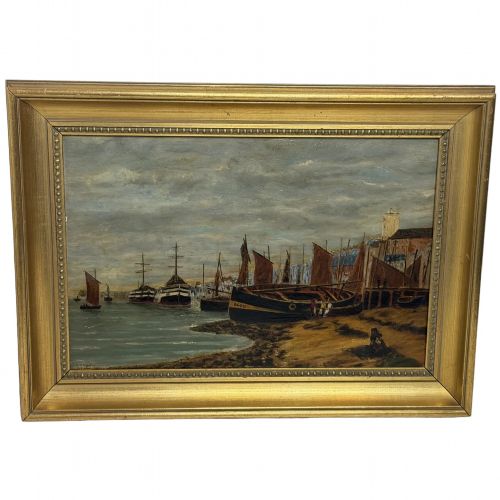
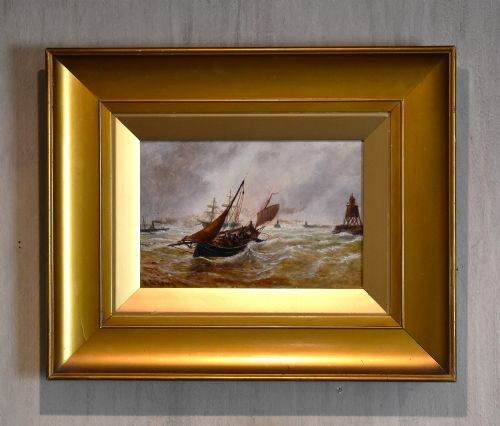
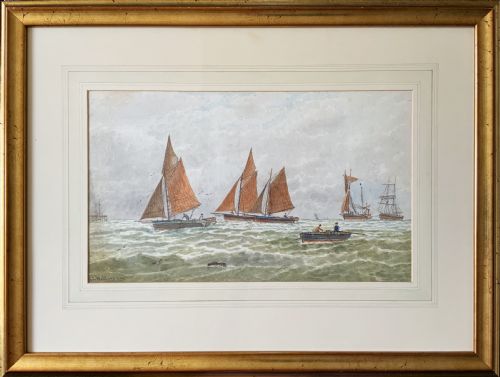
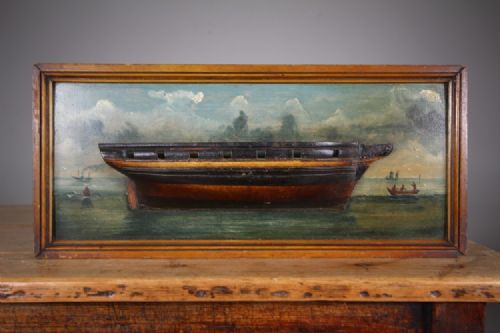
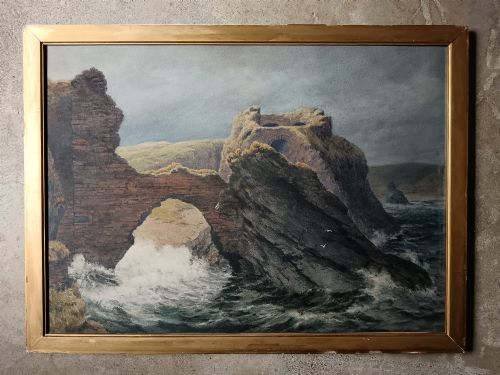

Brown Framed Marine Painting
A brown framed marine painting captures the movement of coastal waters and vessels through the brush of Victorian and Edwardian artists.
Brown Framed Marine Painting
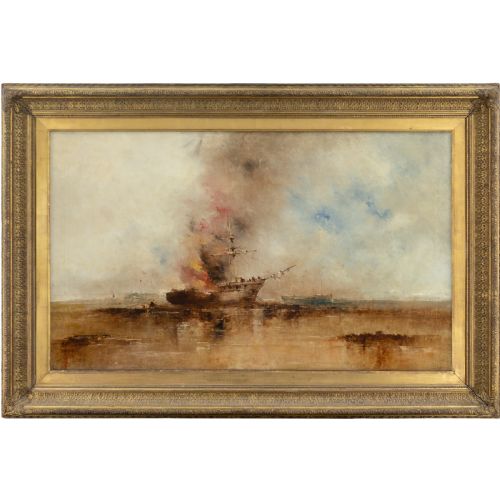
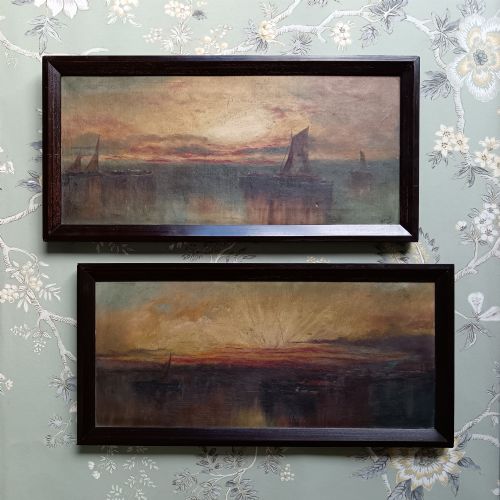
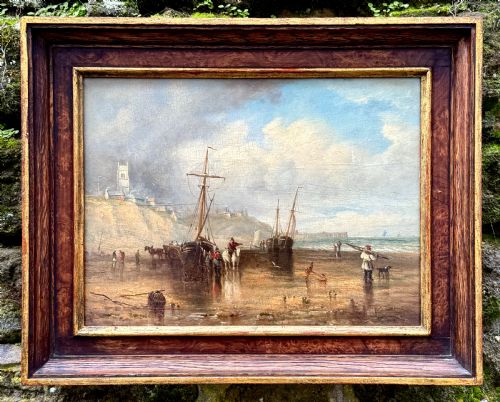
A brown framed marine painting brings historical maritime scenes into a room, depicting coastal views, harbour entrances, and ships at sea. These works span the nineteenth century and the early twentieth century, capturing eras of sail and steam.
The selections available here lean towards watercolours on paper and oil paintings on canvas, enclosed within traditional timber surrounds. Subjects range from calm fishing boats on the south coast to dramatic naval engagements and stormy seas.
How they were made
Artists worked primarily with oil paint on canvas or watercolour and gouache on paper, applying pigments to capture the light on water and the texture of wooden hulls. Canvas works were stretched over frames and secured within wooden surrounds, sometimes highlighted with gilt accents.
Protection from the elements relied on glass covering works on paper, whilst oil paintings remained open to the air beneath layers of varnish. The enclosing frames were constructed from timber, providing structural rigidity and a dark boundary to the maritime composition.
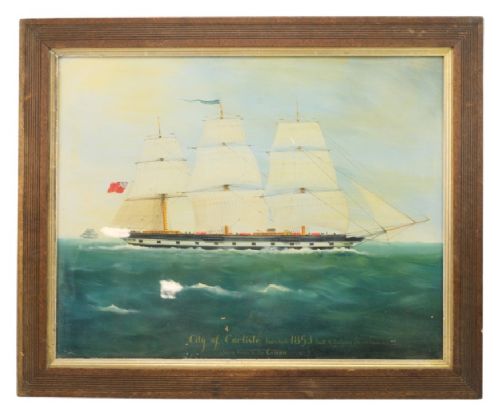
One sailor even created a gouache tribute to his ironclad battleship to remember his time at sea.
What varies in quality
Quality rests in the artist's command of maritime atmosphere and the accurate rendering of rigging, hull forms, and wave motion. Master hands convey the weight of a heavy sea and the specific architecture of a ship with precision.
The integrity of the physical components also defines the standard, from the stability of the canvas or paper to the preservation of the original wood frame. Pieces by documented painters carry greater historical weight than anonymous school works.
Thomas Bush Hardy·George Stanfield Walters·Gustave de Breanski·John Moore of Ipswich·Bernard Benedict Hemy
The Brown Framed Marine Painting Glossary
- Seascape
- A painting depicting the sea, coastal views, or marine vessels. These works form the core of maritime art collections.
- Gouache
- An opaque watercolour paint that dries to a matte finish, often used to add bright highlights to marine watercolours.
- Lugger
- A small fishing boat carrying lug sails on one or more masts, frequently seen in nineteenth-century coastal art.
- Gilt frame
- A wooden picture frame coated with gold leaf or metallic paint, common in Victorian presentations of fine art.
Brown Framed Marine Painting: Frequently Asked Questions
How do I hang a heavy oil painting?
Secure the fixing directly into a wall stud using sturdy picture wire and heavy-duty brackets rated for the weight of the timber frame.
Ensure the hanging height places the centre of the canvas at standard eye level for optimal viewing in a room.
Where should I display marine art?
Keep these artworks away from direct sunlight and damp environments to protect the canvas, paper, and wooden frames from deterioration.
Rooms with stable ambient temperatures offer the best setting for preserving nineteenth-century watercolours and oils.
How do I identify the period of a frame?
Examine the wood type, corner construction, and gilding technique, as Victorian and Edwardian frames often feature distinct moulding profiles.
Original frames frequently show age-related wear and patination that matches the estimated creation date of the artwork inside.
What is the difference between oil and watercolour?
Oil paintings use slow-drying pigments suspended in medium on canvas, whereas watercolours utilise water-soluble pigments on paper under glass.
Oils generally present a heavier texture and deeper sheen, while watercolours offer a lighter, translucent quality.