
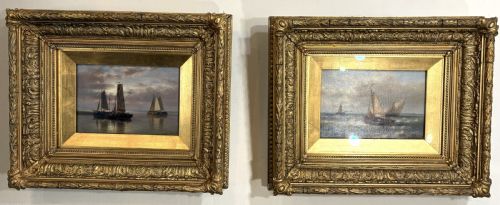


Antique Maritime Art Pair
An antique maritime art pair brings the movement of nineteenth-century coastal life directly to interior walls.
Antique Maritime Art Pair
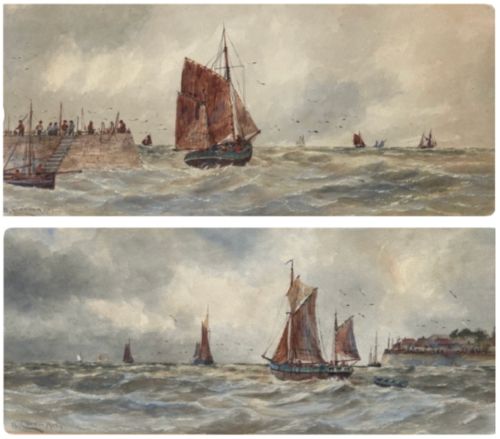
When searching for an antique maritime art pair, buyers examine matching compositions of coastal views, shipping scenes, and fishing vessels created as companion pieces. These works originate predominantly from the nineteenth and early twentieth centuries, spanning Victorian and Edwardian periods.
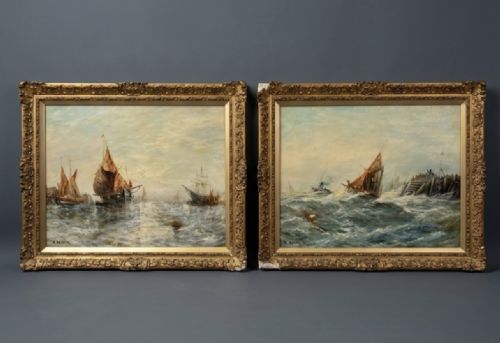
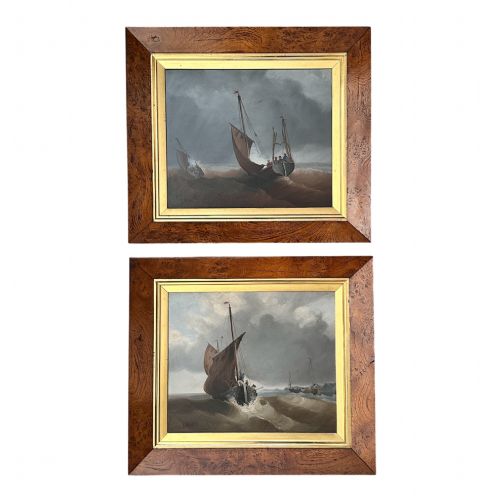
The prevalent forms encountered on this page include oil paintings on canvas or board, alongside watercolours and gouache works. Subjects range from turbulent channel waters and Dutch shores to sunlit domestic harbours and international coastal vistas.
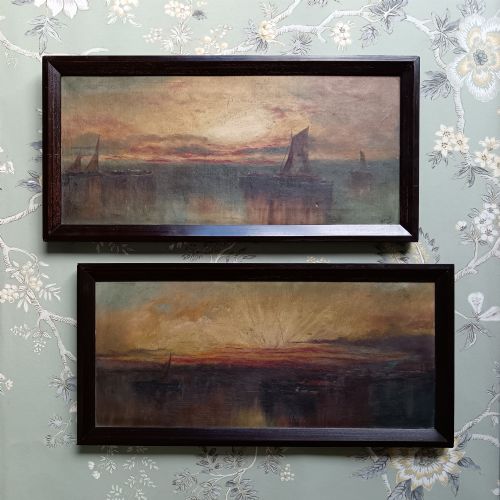
Companionship defines this category, with artists frequently pairing sunrise and sunset scenes, or contrasting calm coastal waters with active maritime trade. These paired formats offer balanced symmetry for interior display, matching the original intent of the artists.
Materials and Techniques
Makers utilised oil paint on canvas or wooden boards, applying rich pigments to capture the variable light and atmosphere of coastal environments. Watercolours on paper provide a lighter, luminous alternative, often mounted behind glass within period frames.
Giltwood frames and gold leaf accents frequently enclose these works, providing a decorative border that complements the maritime subject matter. Ebonised frames also appear, offering a sharp contrast to marine watercolours and oil compositions.
Artists employed careful brushwork and tonal gradation to render water, sky, and shipping vessels with precision. The physical construction relies on stable wooden stretching frames and secure paper mountings suited to nineteenth-century display methods.
Several artists preferred painting the Medway at Rochester, ensuring that every passing fishing boat had to endure an artistic portrait.
Judging Quality and Execution
Distinction across the range rests upon the artist's handling of light, atmospheric perspective, and coastal detail. Superior works demonstrate confident brushwork in rendering rough water and rigging, while lesser examples rely on repetitive formulas.
The harmony between the two companion pieces dictates overall success. Strong pairings maintain balanced proportions, matching palettes, and a unified narrative thread between both canvases or watercolours.
Original framing contributes to the integrity of the object. Giltwood and ebonised surrounds that match the period of the painting elevate the visual impact of the pair.
John Moore of Ipswich·Abraham Hulk I·Gustave De Bréanski·Pieter Cornelis Dommersen·Thomas Bush Hardy·John Mc Ghie
The Antique Maritime Art Pair Glossary
- Seascape
- A work of art depicting the sea, coastal views, or marine vessels. These subjects form the core of nineteenth-century maritime painting.
- Gouache
- An opaque watercolour medium used by artists to achieve matte surfaces and dense colour. It appears frequently in nineteenth-century coastal views.
- Barque
- A sailing vessel with three or more masts, commonly depicted in nineteenth-century shipping art. Such vessels represent the commercial maritime trade of the period.
- Giltwood
- Wood carved and covered with a thin layer of gold leaf or gold paint. This material is standard for traditional picture frames enclosing oil paintings.
- Provenance
- The documented history of ownership associated with a work of art. Established records confirm artist attribution and exhibition history.
Antique Maritime Art Pair: Frequently Asked Questions
How were maritime paintings displayed?
These works hung in domestic parlours and drawing rooms during the nineteenth century, often arranged symmetrically as pairs to balance interior wall spaces.
Their coastal subjects reflected contemporary British interest in naval power, trade, and seaside leisure.
What subjects do these pairs show?
Compositions typically capture fishing boats, commercial shipping, coastal cliffs, and busy river estuaries such as the Thames or Medway.
Artists frequently contrasted calm morning water with stormy evening seas across the two companion panels.
How do I care for antique watercolours?
Watercolours on paper require protection from direct sunlight to prevent fading of the pigments and paper degradation.
Maintaining stable indoor humidity levels prevents warping of the paper mount and preserves the surrounding frame.
Are these works signed by artists?
Many examples feature artist signatures or monograms within the lower corners of the canvas or paper support.
Signatures offer direct attribution to nineteenth-century painters working within British, Dutch, and Scottish maritime traditions.