




Vintage Seascape Paintings Pair
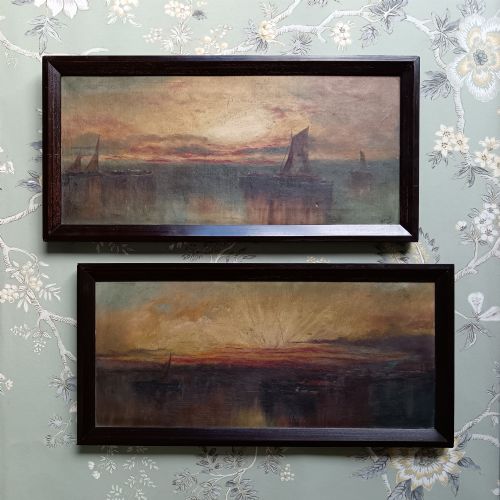
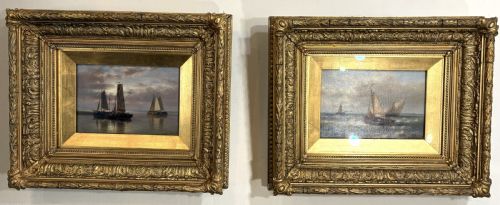
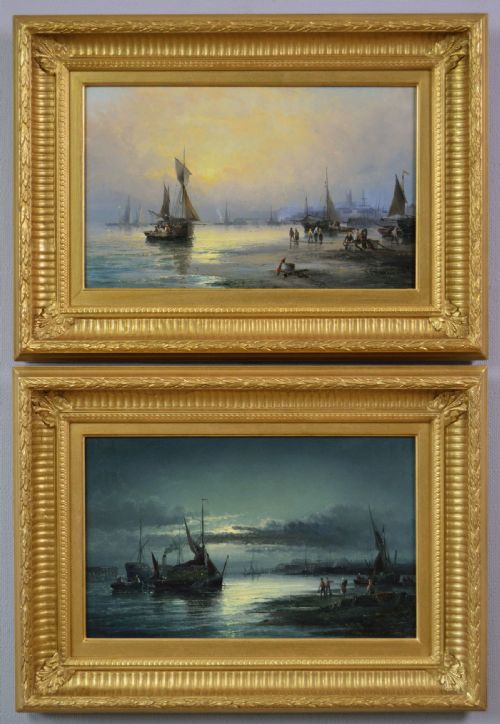
These vintage seascape paintings pair offerings bring together maritime scenes and coastal watercolours designed to hang side by side on a wall.
Vintage Seascape Paintings Pair
When you search for a vintage seascape paintings pair, you encounter matched works depicting coastal waters, maritime views, and marine traffic. These companion pieces usually portray complementary times of day, such as sunrise and sunset, or balanced marine subjects like fishing boats and sail boats.
The selections available here span from the nineteenth century through the Edwardian period and into the early twentieth century. You will frequently find oil paintings on canvas or board, alongside delicate watercolour paintings mounted in appropriate frames.
Materials and construction methods
The physical build of these works relies upon oil paint applied to canvas or board, or watercolour pigment worked onto paper. Artists utilised these mediums to capture the movement of waves and the atmospheric light of coastal shores.
Frames play an integral part in the presentation, with gilt wood, giltwood, and gold leaf mouldings frequently housing the nineteenth-century canvases. Ebonised frames also appear around early twentieth-century watercolours, providing a sharp contrast to the painted scenes.
Vintage Seascape Paintings Pair Retail Price Guide 2026
Typical asking prices for vintage seascape paintings pair among the pieces listed under this phrase on Sellingantiques today, from the lower quarter to the upper quarter. They describe what is for sale here now, not the wider market.
Listings feature works from the nineteenth century, the Edwardian period, and the 1920s, executed in oil and watercolour.
Distinctions in quality and execution
The strength of a pair depends upon the harmony between the two canvases or watercolours, where balanced composition and consistent handling of marine subjects elevate the pairing. Works bearing signatures from recognised nineteenth-century and Edwardian painters display a higher degree of artistic confidence in rendering water, vessels, and shorelines.
Frame selection and preservation also influence the overall standard, as original gilt wood or ebonised surrounds that match the period of the paintings maintain the historical integrity of the set.
B Nash·Abraham Hulk I·Adrian Van Porten·George Dodgson Callow·Hubert Thornley·Pieter Cornelis Dommersen
The Vintage Seascape Paintings Pair Glossary
- Seascape
- A work of art depicting the sea, ocean, or coastal views. These pieces often focus on maritime activity, fishing boats, and coastal cliffs.
- Giltwood
- Wood that has been treated with a thin layer of gold leaf or gilt. This finish is commonly found on frames from the nineteenth century.
- Oil on Canvas
- A traditional painting technique utilising pigments suspended in oil medium applied to stretched fabric. It allows for rich texture and deep colouration.
- Watercolour
- A paint consisting of pigment suspended in a water-based solution, typically applied to paper. This medium creates translucent washes suited to atmospheric coastal lighting.
- Ebonised
- Wood finished to resemble ebony through staining or painting. This dark surface finish frequently appears on frames from the early twentieth century.
Vintage Seascape Paintings Pair: Frequently Asked Questions
What subjects do these pairs show?
The works depict maritime scenes, coastal views, sail boats, and fishing vessels upon the water. Many capture specific locations such as the Isle of Wight or Dutch shores.
Pairs often contrast atmospheric conditions, moving from sunrise to sunset to create a balanced narrative on the wall.
Are these paintings supplied with frames?
Many examples retain their period surrounds, including gilt wood, giltwood, and ebonised frames that complement the date of the artwork.
These original or period-appropriate housings complete the presentation of the companion pieces.
What periods do these pieces date from?
The selections span the nineteenth century, the Victorian era, and the Edwardian period, stretching into the early twentieth century.
Dates indicated in the evidence range from the 1880s through to the 1920s.
How should I hang a matched pair?
Matched pairs work best displayed side by side on a suitable wall space to allow the complementary compositions to balance one another.
Ensuring consistent eye-level placement helps unify the two distinct frames and their maritime subjects.