


Royal Navy Ship Painting
Royal navy ship painting works best when it captures the strict geometry of a warship against open water.
Royal Navy Ship Painting
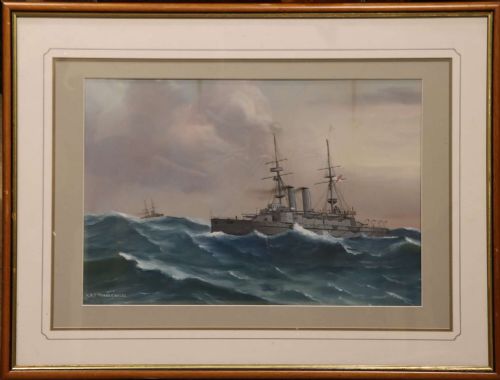
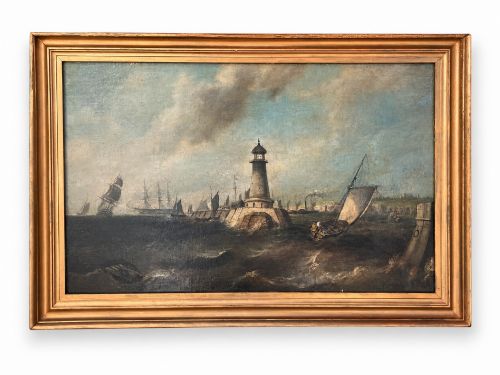
A royal navy ship painting records specific vessels, engagements, and maritime infrastructure from the nineteenth and twentieth centuries. These works document named warships such as HMS Prince of Wales and HMS Swift, often placing them in harbours or coastal waters.
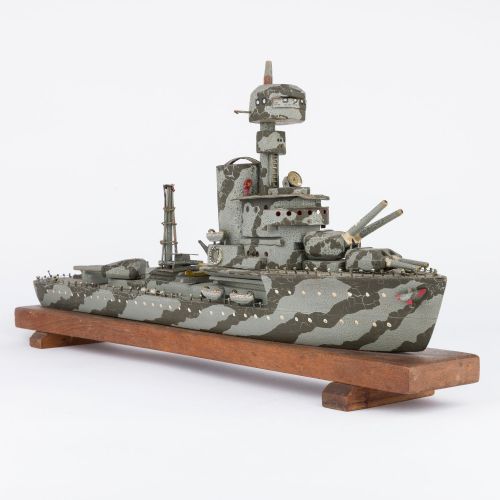
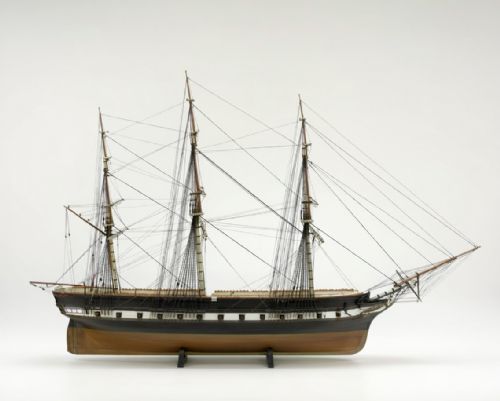
The selection on this page ranges from early nineteenth-century watercolours to mid-twentieth-century watercolours and oils on canvas. Buyers also encounter framed artwork, wall plaques, and related naval scale models alongside the paintings.
Victorian maritime and Edwardian styles dominate the visual record, reflecting eras of significant naval expansion. Painters working in these traditions focus on rigging, hull construction, and the specific flags flown by the fleet.
How they were made
Artists relied primarily on oil on canvas, watercolour, and gouache applied to paper. Oil paint allowed for dense layering on canvas to describe turbulent water and smoke, while watercolour and gouache on paper suited precise technical rendering of rigging and deck layouts.
Framed presentation was standard for these works, enclosing the paintings behind glass or within traditional wood frames. Scale models and bronze badges use wood and metal casting techniques to represent the physical structure of the ships.
Royal Navy Ship Painting Retail Price Guide 2026
Typical asking prices for royal navy ship painting among the pieces listed under this phrase on Sellingantiques today, from the lower quarter to the upper quarter. They describe what is for sale here now, not the wider market.
Several depictions capture ships participating in distant events, from Sydney harbour regattas to Tasmanian ferry runs.
What varies in quality
Technical accuracy regarding naval architecture separates standard output from superior examples. Painters who understood the exact proportions of masts, gunports, and signal flags produced records that naval historians value.
The handling of light on water and atmosphere dictates the visual success of the piece. Stronger works convey the weight of a warship and the movement of the sea through confident brushwork rather than mere technical illustration.
Nicholas Condy·Commander Eric Tufnell·Vincenzo D’Esposito·Samuel Owen·Charles Dixon·WF Mitchell
The Royal Navy Ship Painting Glossary
- Gouache
- An opaque water-based medium that dries to a matte finish. It allows artists to apply crisp highlights over watercolour washes.
- Man-of-war
- A powerful armed sailing warship used by the Royal Navy from the sixteenth through the nineteenth century. These vessels carried heavy battery arrangements.
- Tompion
- A wooden or metal plug used to cover the muzzle of a cannon on a warship. In later contexts, the term often refers to the decorative crest mounted on board.
- Seaplane carrier
- A naval vessel designed to carry, launch, and retrieve seaplanes. This ship type emerged in the early twentieth century.
- Rigging
- The system of ropes, cables, and chains used to support a ship's masts and control the sails. Accurate depiction of rigging indicates the painter's maritime expertise.
Royal Navy Ship Painting: Frequently Asked Questions
How do I identify the specific ship in a painting?
Look for painted nameplates on the hull, signal flags flying from the masts, or inscriptions on the reverse of the canvas or paper. Contemporary artists often recorded the vessel's name directly in the title or margin.
Naval records and pennant numbers also help cross-reference the visual evidence with historical fleet lists.
Are these paintings contemporary to the ships they depict?
Some works were painted while the vessels were in active service during the nineteenth and twentieth centuries. Other pieces look back historically, such as depictions of eighteenth-century vessels rendered by later artists.
Examining the materials, paper stock, and framing usually clarifies the actual date of creation.
What is the difference between watercolour and oil paintings here?
Watercolour and gouache on paper offer precise, immediate detail suited to coastal scenes and individual portraits of ships. Oil on canvas provides greater depth for turbulent seas and atmospheric weather conditions.
Both mediums were widely used by marine artists documenting the Royal Navy.
How should I care for a paper-based maritime painting?
Keep watercolours and gouaches away from direct sunlight to prevent the pigments and paper from fading. Ensure the framing remains sealed to protect the paper from moisture and atmospheric pollutants.
Display the work in a stable environment with moderate humidity levels.