


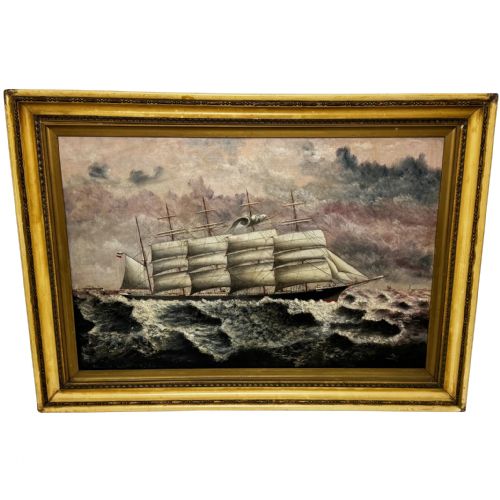


Gilded Frame Ship Art
Gilded frame ship art brings maritime history into your room through detailed works set in bright, metallic surrounds.
Gilded Frame Ship Art
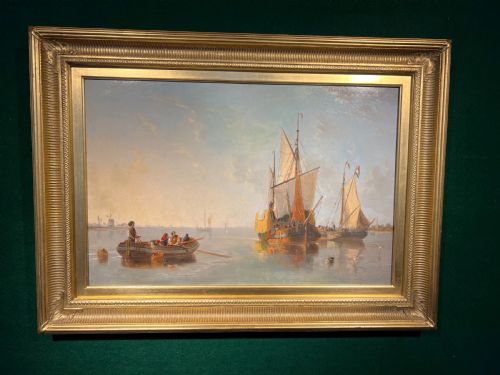
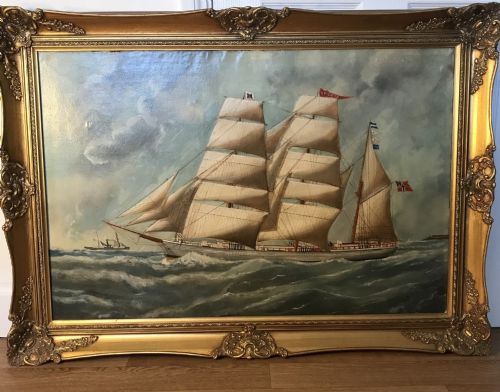
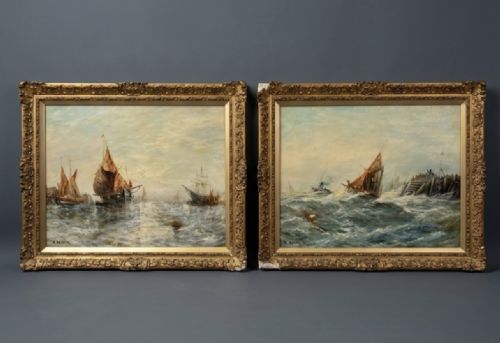
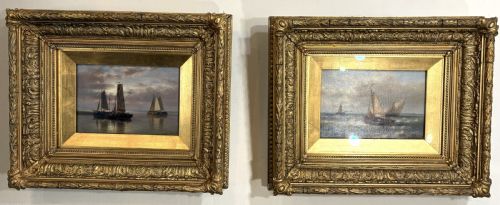
When you search for gilded frame ship art, you encounter oil paintings, watercolours and paintings on board depicting vessels from the nineteenth century into the twentieth century. These works capture naval vessels, schooners, steamers and coastal scenes set within ornamental metallic borders.
The most common pieces on this page are oil paintings on canvas or board dating from the Victorian and Edwardian periods. They portray named ships, historical fleets and busy harbours under varied sea conditions.
Makers and artists range from recognised marine painters to accomplished regional hands working in oil and watercolour. Their subjects extend from royal yachts off Osborne House to heavy seas and quiet estuary anchorages.
Materials and construction
These works rely on oil on canvas, oil on board, and watercolour on paper, housed within wooden frames finished in gilt, giltwood or gold leaf. Glass frequently protects the delicate watercolours under their mounts.
Artists applied pigments with fine brushes to render rigging, hulls and coastal architecture accurately. Frame makers shaped wooden mouldings and applied fine layers of metallic leaf to create the bright surrounds.
Listings feature works in oil, watercolour, and canvas, spanning the nineteenth century and early twentieth century with gilt wood frames.
Determining quality in marine works
The quality of a maritime piece rests on the precision of the ship portraiture, the handling of water and sky, and the integrity of the original gilt frame. Finer works display meticulous rigging and convincing atmospheric movement rather than formulaic waves.
The relationship between the painting and its surround matters greatly, as period frames original to the canvas elevate the piece. Superior paintings show depth and anatomical correctness in the vessels depicted.
John Wilson Carmichael·Abraham Hulk I·Thomas Bush Hardy·Richard Brydges Beechey·Joseph Heard·Frank William Scarbrough
The Gilded Frame Ship Art Glossary
- Pierhead painting
- A portrait of a specific vessel, often commissioned by its captain or owner, showing the ship entering or leaving a port. These works prioritize accurate details of rigging and flag signals.
- Giltwood
- Wood carved and coated with gold leaf or metallic paint to create a lustrous decorative border. It frames many nineteenth century marine works on this page.
- Barque
- A sailing vessel with three or more masts where the aft mast is rigged fore and aft and the others are square-rigged. You see this vessel type across nineteenth century canvases.
- Hulk
- An old ship stripped of spars and rigging, often used for storage or accommodation near a dockyard. Several Victorian paintings depict these stationary structures off coastal ports.
Gilded Frame Ship Art: Frequently Asked Questions
What periods do these pieces date from?
The works span the nineteenth century, the Victorian era, and the early twentieth century. Most pieces originate between eighteen sixty and nineteen thirty.
This timeframe covers the transition from traditional sailing ships to early steamships and ocean liners.
Are the frames original to the paintings?
Many works retain their period gilt frames, though framing often changed over the long life of an antique painting. Giltwood and wood frames complement the style of the Victorian and Edwardian periods.
Examining the rabbet and backboards helps determine if the painting and frame have long travelled together.
How should I hang and care for oil paintings?
Keep oil paintings away from direct sunlight, damp walls, and sudden temperature shifts. Hang them securely on stable hooks using appropriate wire rated for the weight of the frame.
Dust the gilded frame gently with a soft, dry brush and avoid chemical cleaners on the gold leaf.
What subjects appear most frequently in these maritime scenes?
The listings feature named sailing ships, naval fleets at review, coastal towns, and busy estuaries. Artists frequently recorded specific vessels such as royal yachts, cruisers, and trading barques.
Scenes range from calm coastal waters to dramatic heavy seas and pierhead portraits.