



Bronze Table Candelabrum
A bronze table candelabrum brings sculptural presence and measured candlelight to a room, offering the refined weight of nineteenth-century metalwork.
Bronze Table Candelabrum
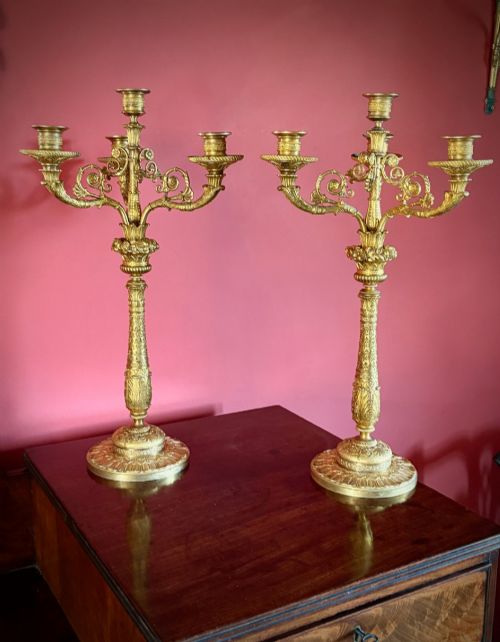
A bronze table candelabrum is a branched lighting fixture designed for domestic placement, combining functional candle holders with decorative metal casting. When searching for this phrase, buyers encounter pieces spanning the nineteenth century, with strong representation from the Regency and Victorian periods.
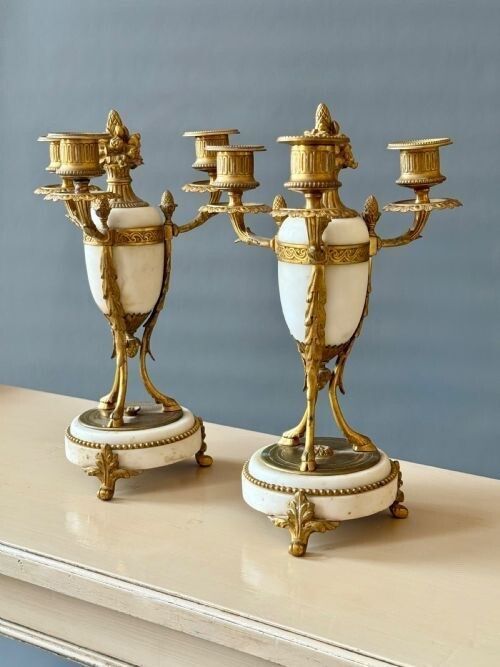
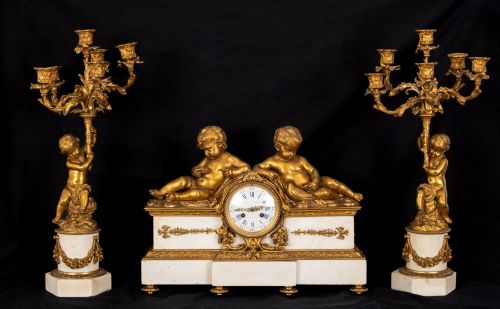
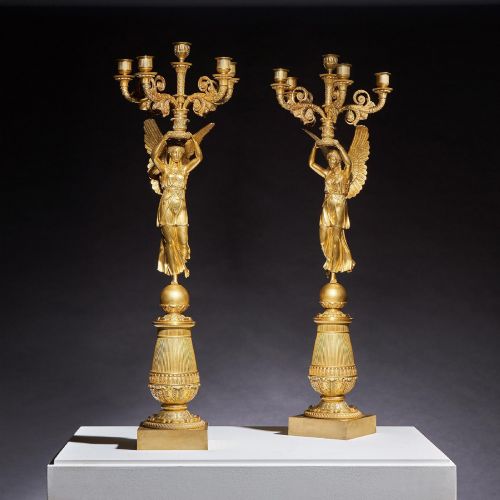
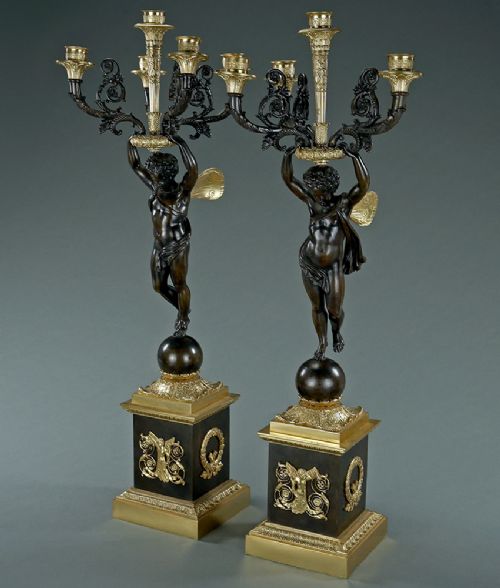
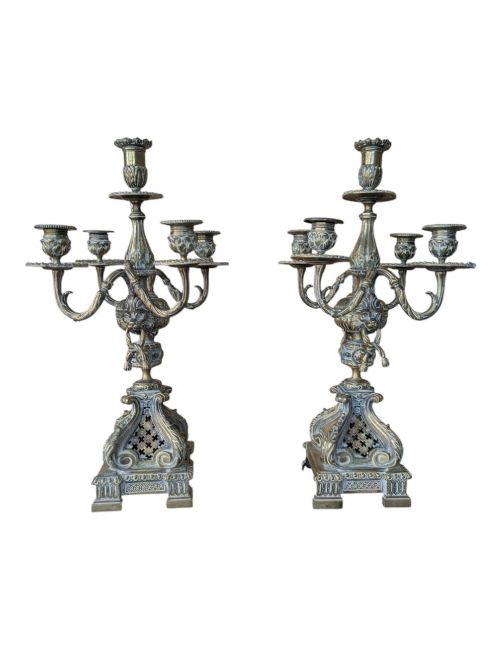
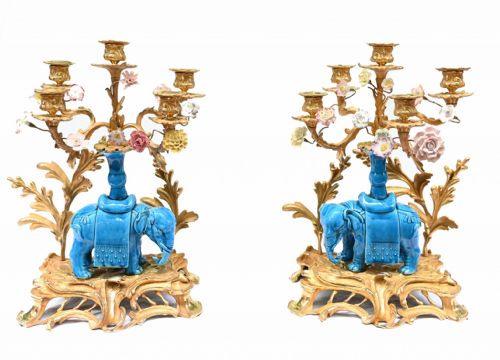
The objects on this page frequently appear in matched pairs and take diverse forms, including multi-branched candelabra, garniture sets paired with mantel clocks, and single candlestick holders. French workshops dominate the selection, bringing classical revival motifs and ornate figural designs into domestic interiors.
Materials and construction
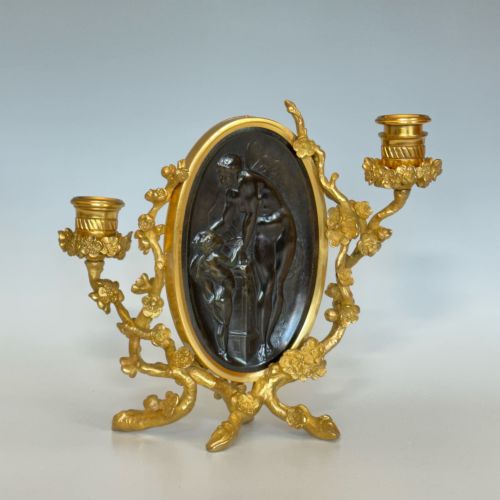
Foundries utilised bronze and ormolu, applying fire gilding to create a durable, lustrous golden surface over the base metal. Many examples combine patinated dark bronze with polished gilt highlights to accentuate the sculptural relief.
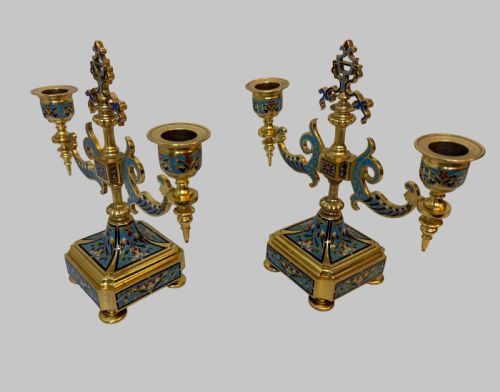
Secondary materials such as white marble bases, champlevé enamel, and porcelain elements frequently support the metal framework. Casting and chasing required skilled artisans to refine the details of figures, foliage, and classical ornaments before final assembly.
Listings feature pieces incorporating white marble, champlevé enamel, and porcelain elements alongside cast bronze.
Distinctions in quality
The integration of materials also indicates distinction, seen in the solidity of the marble bases and the richness of the mercury gilding. Pieces signed by documented makers or retaining original patination demonstrate higher workshop standards.
Pierre Philippe Thomire·Thiebaut Freres·Rabiat·Auguste Cain
The Bronze Table Candelabrum Glossary
- Ormolu
- Gilt bronze produced by applying a mixture of gold and mercury to a bronze base and heating it. This historic technique creates a soft, durable golden finish.
- Garniture
- A set of matching decorative objects, typically comprising a central clock flanked by a pair of candelabra or vases. These sets formed balanced displays on nineteenth-century mantelpieces.
- Chasing
- The manual process of refining a cast metal object using small punches and hammers. This step sharpens surface details and removes casting imperfections.
- Patination
- The surface sheen and coloration developed through age, handling, or chemical treatment on bronze. Original patination preserves the historic character of the metal.
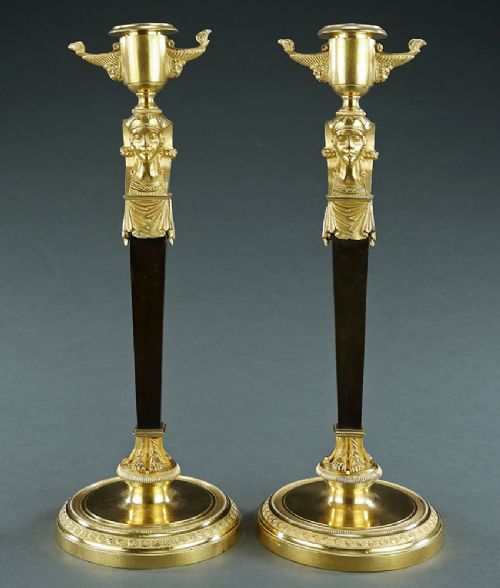
- Retour d'Egypte
- A neoclassical design style influenced by French military campaigns in Egypt. It incorporates distinct pharaonic motifs, sphinxes, and classical military trophies.
Bronze Table Candelabrum: Frequently Asked Questions
How do I clean a bronze candelabrum?
Dust the surface gently with a soft, dry brush to prevent accumulation in recessed areas. Avoid chemical polishes, which can strip historic gilt and patinated finishes.
Keep the metal away from direct moisture and sources of excessive heat. Professional conservation is recommended for pieces with delicate mercury gilding or combined stone elements.
Were these candelabra converted to lamps?
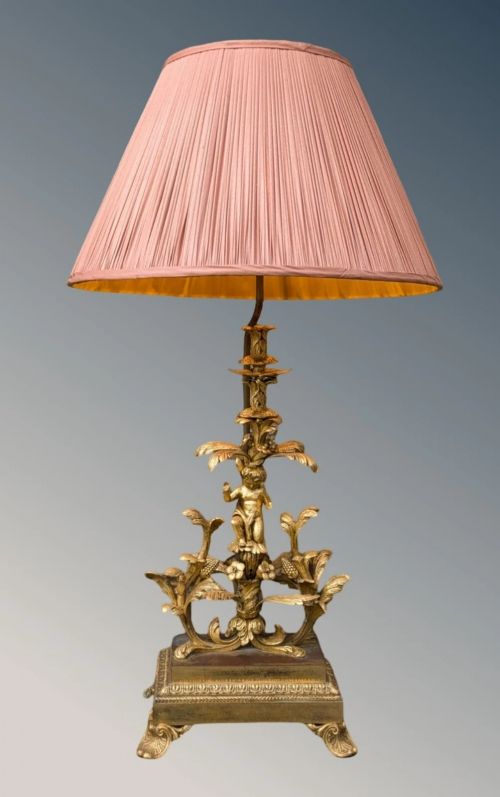
Many nineteenth-century lighting pieces were adapted during later periods to accommodate electric wiring. Conversions often involved running a cord through the central shaft or mounting bulb sockets into the drip pans.
Buyers should examine the base and candle nozzles for signs of drilling or alterations. Some collectors prefer original untouched candle configurations, while others value the practicality of electrified wiring.
How do I date a bronze candelabrum?
Examine the casting quality, fastener types, and stylistic influences to determine the period of manufacture. Nineteenth-century French pieces frequently reflect Regency, Empire, or Louis XVI revival aesthetics.
Signatures, foundry marks, and the wear patterns on the base provide additional clues. Comparing the construction methods with documented workshop practices helps narrow down the decade.
Can I still burn candles on antique candelabra?
Using traditional wax candles remains possible if the nozzles and drip pans are secure. Ensure the fixture sits on a stable, level surface to prevent tipping when weight is added.
Place protective inserts in the drip pans to catch melting wax and protect the metal surface. Monitoring burning candles prevents heat damage to older gilt or enamel components.