
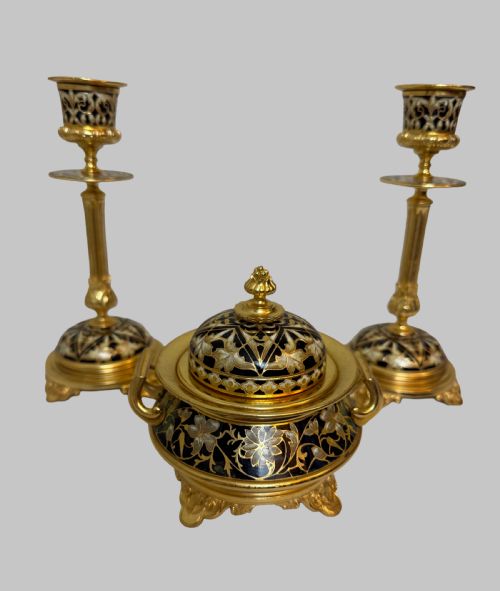


Nineteenth Century Candle Holders
Nineteenth century candle holders bring candlelight and heavy metalwork into a room.
Nineteenth Century Candle Holders
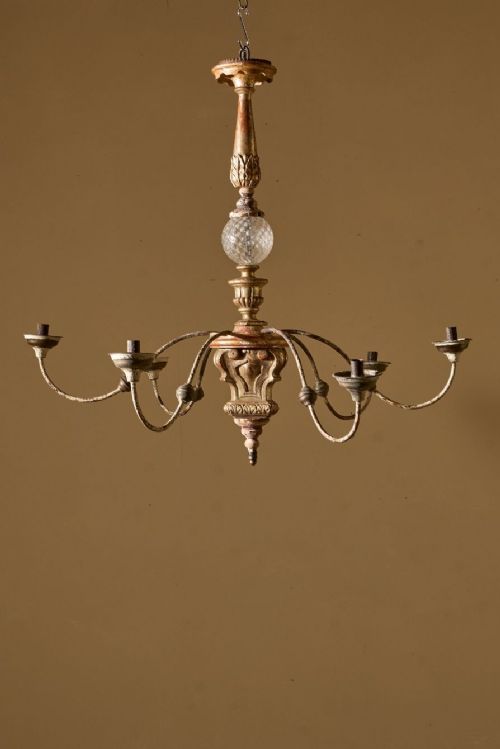
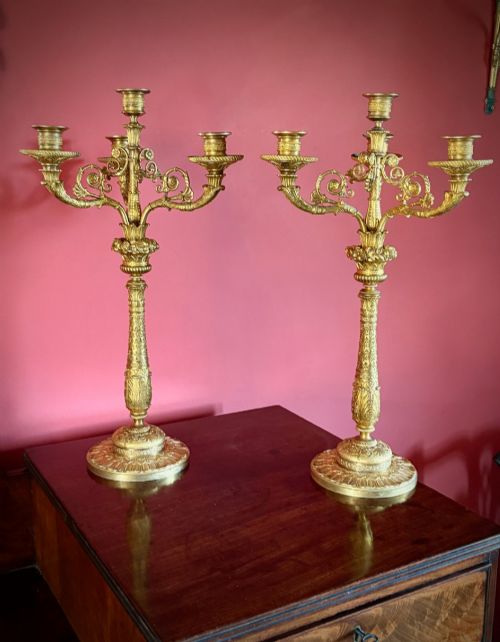
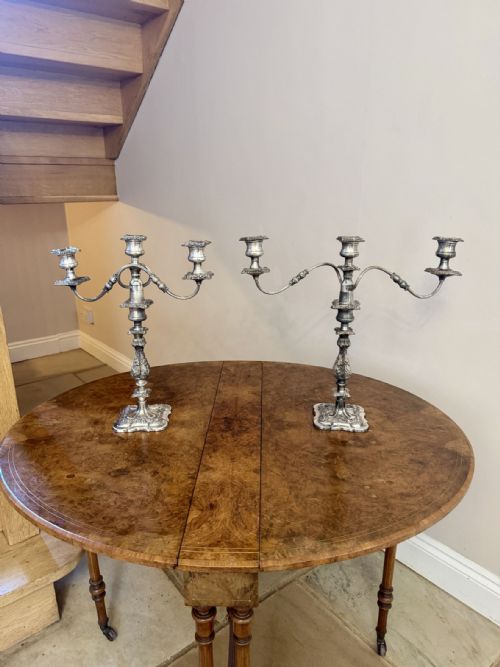
Nineteenth century candle holders encompass a wide variety of lighting forms designed for domestic interiors during the 19th century, including individual sticks, multi-branch candelabra, wall sconces, and chandeliers. Buyers seeking nineteenth century candle holders will frequently encounter pairs of heavy metal or porcelain examples dating from the Victorian and Regency periods, alongside French decorative styles.
The objects span simpler functional pieces in brass and iron as well as highly ornamental works incorporating gilt bronze, marble, and enamel. Domestic lighting during this era served both practical illumination needs and formal decorative display on mantelpieces, tables, and walls.
How They Were Made
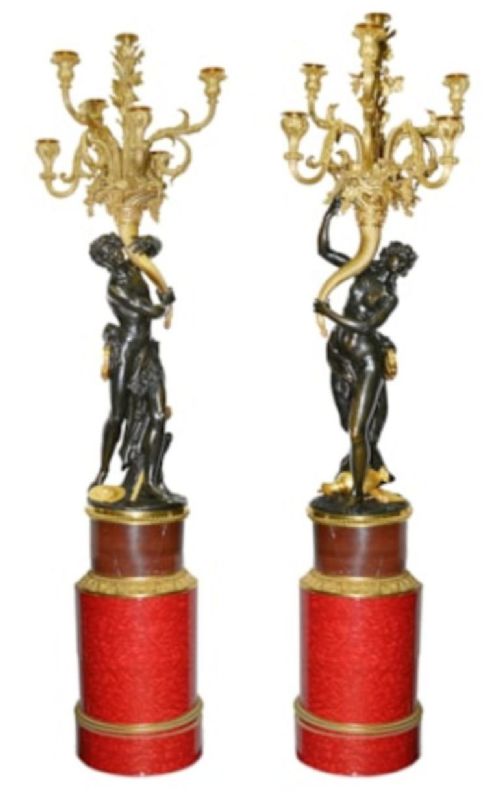
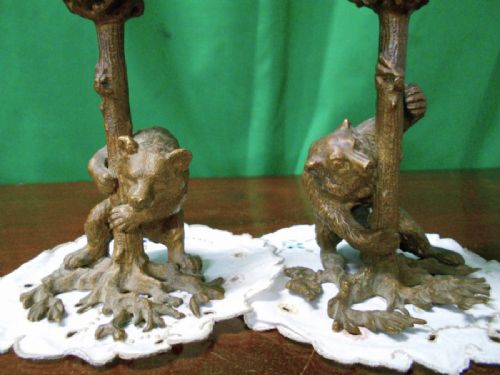
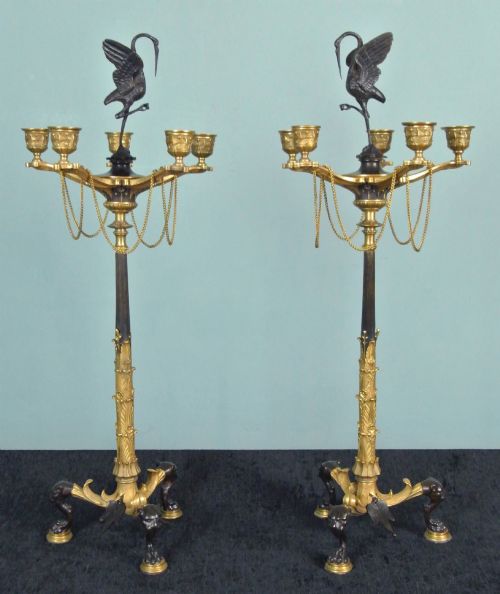
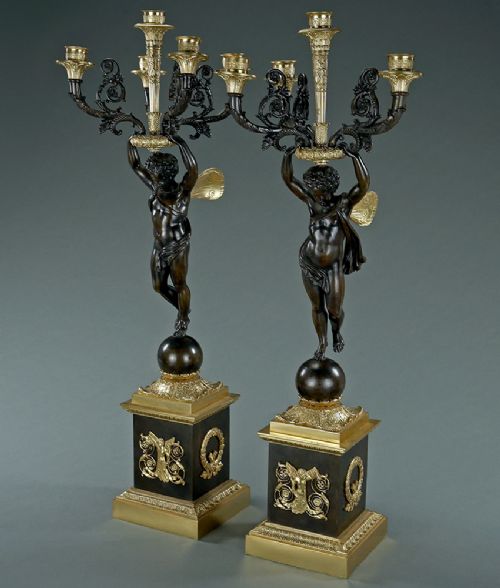
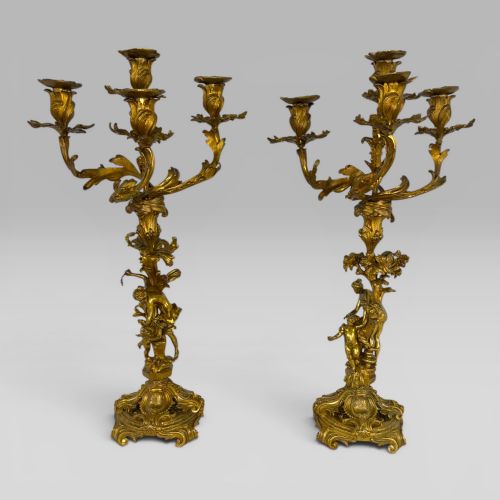
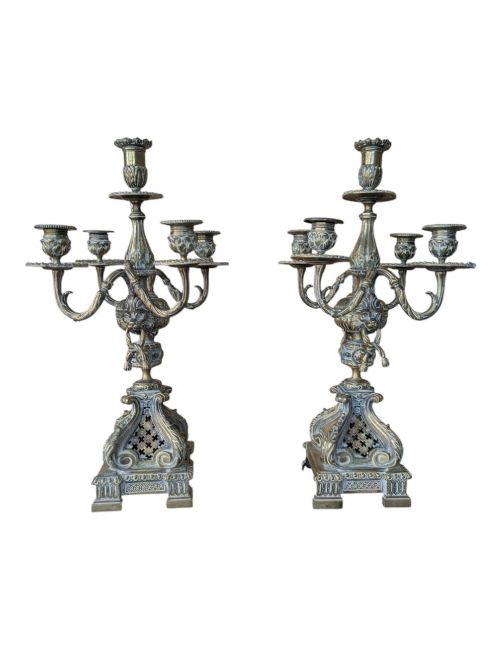
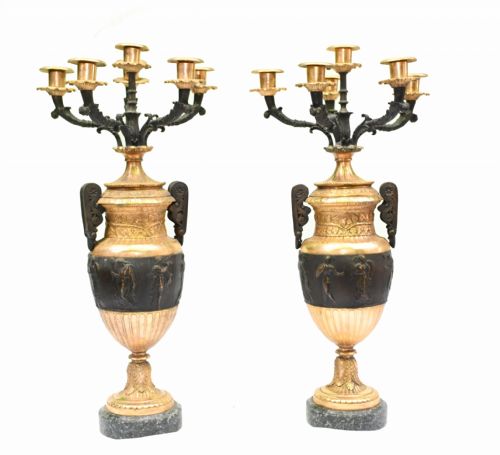
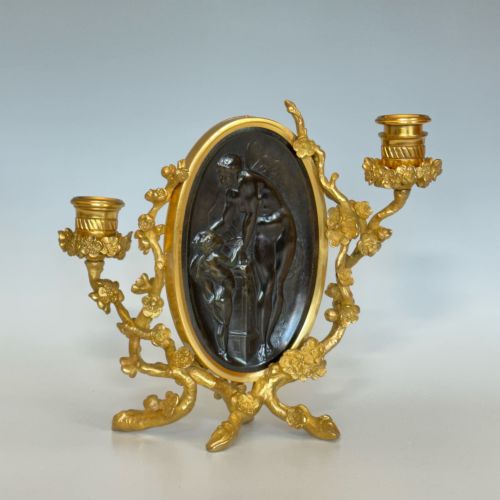
Metalwork forms dominate the selection, utilising cast brass, bronze, gilt bronze, ormolu, and patinated bronze, often combined with secondary materials like marble, onyx, slate, and porcelain. Foundry techniques allowed makers to produce intricate figural bases and scrolling arms, sometimes highlighted with enamel work or silver plating.
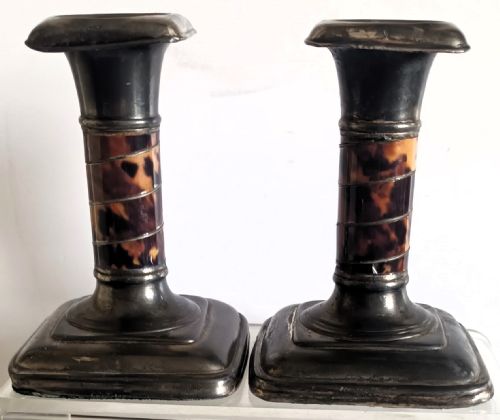
Assembly methods involved joining multiple cast components, with turned elements appearing in brass and iron items such as barley twist stems and spiral candle holders. Detail work included chased surface decoration on ormolu mounts and applied tortoiseshell or pewter details on specific domestic pairs.
Medieval characters on stilts bravely hold candles aloft.
What Varies in Quality
Quality in these pieces rests primarily on the crispness of the casting and the depth of the chasing in metalwork, where sharper details and richer gilding distinguish superior workshops. The choice of materials also drives distinction, moving from standard brass production to complex multi-media constructions involving carved marble, champlevé enamel, and finely modelled porcelain figures.
The presence of artistic motifs, such as figural supports or specific revival styles like French Empire and Rococo, indicates higher design ambition. Heavier gauge metals and balanced proportions across multi-branch candelabra separate standard domestic items from exhibition pieces.
Barbedienne Bronze·Thiebaut Freres·Sitzendorf Porcelain·Helena Wolfsohn·Thomas Hope
The Nineteenth Century Candle Holders Glossary
- Ormolu
- A technique of applying finely ground high-carat gold to a bronze base, creating a rich golden surface finish that resists tarnish. It appears frequently on French decorative pieces from the period.
- Candelabra
- A branched lighting fixture designed to hold multiple candles simultaneously. These often feature removable arms or central light fittings.
- Pricket
- A candle holder featuring a central spike upon which a thick candle is impaled, rather than a socket to hold it. This form appears on older ecclesiastical and formal domestic styles.
- Champlevé
- An enamelwork technique where troughs or cells are hollowed out of a metal surface and filled with vitreous enamel paste before firing. It provides colourful decorative bands on metal bodies.
- Spelter
- An alloy of zinc and lead used as a cheaper substitute for bronze. It was often bronzed or painted to simulate heavier metals.
Nineteenth Century Candle Holders: Frequently Asked Questions
How can I tell a Regency period holder from a Victorian one?
Regency pieces often display neoclassical lines, restraint, and influences from French Empire design, utilising clean bronze and ormolu mounts. Victorian items tend toward heavier, more ornate decoration, drawing on revival styles like Gothic, Rococo, and elaborate brass casting.
Examining the weight, overall silhouette, and specific ornamental motifs helps clarify the decade of production.
Where were these pieces used in a nineteenth century home?
Smaller candlesticks moved between rooms as needed to light pathways and desks. Larger candelabra and wall sconces remained fixed in reception rooms, dining rooms, and parlours.
Table mirrors and desk accessories often accompanied candle holders on sideboards and writing tables to multiply the flickering light.
Are these items made of solid gold?
No, items described as ormolu or gilt bronze consist of a bronze base metal treated with a thin layer of gold or gold-coloured alloy. Solid gold was not used for structural candle holders due to its weight and softness.
The underlying metal provided the necessary strength while the surface finish delivered the desired golden appearance.