



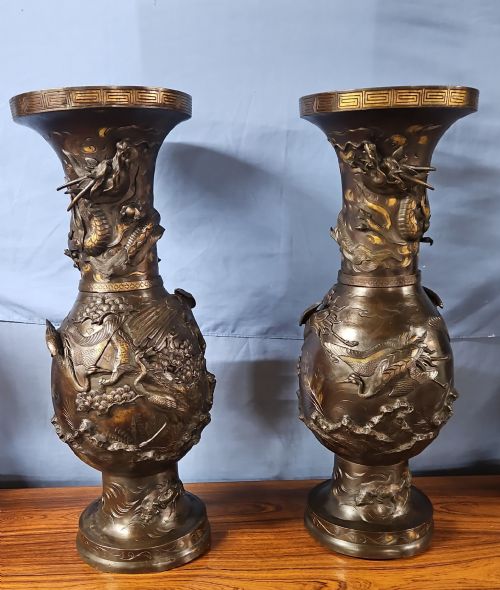
Bronze Relief Vase
A bronze relief vase brings tactile depth and weight to a room, drawing the eye through detailed cast ornamentation.
Bronze Relief Vase
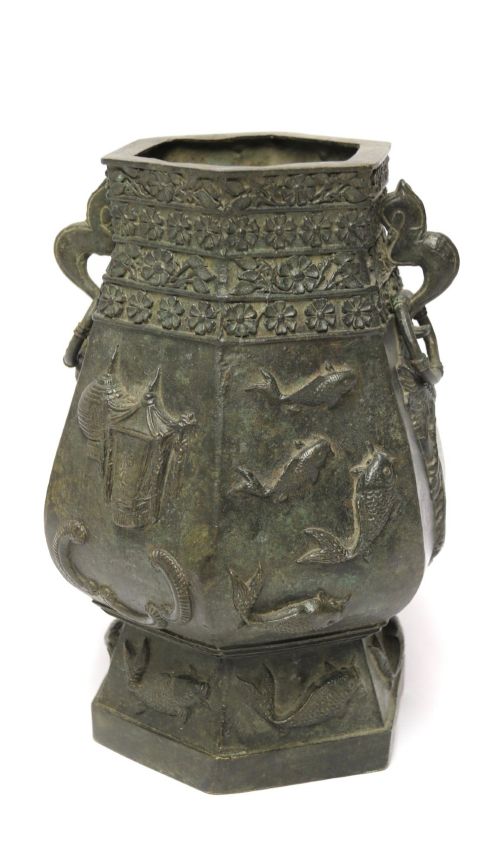
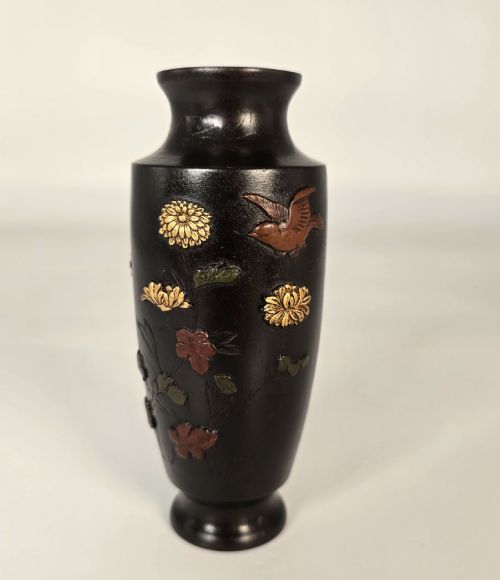
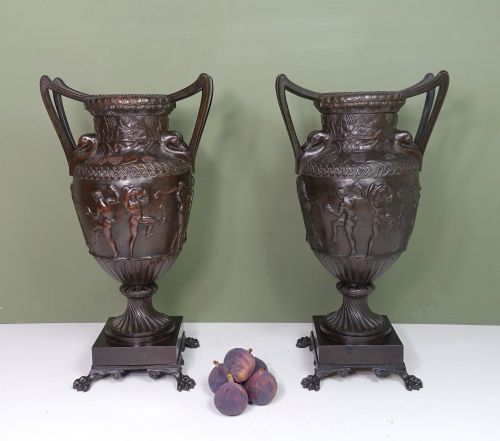
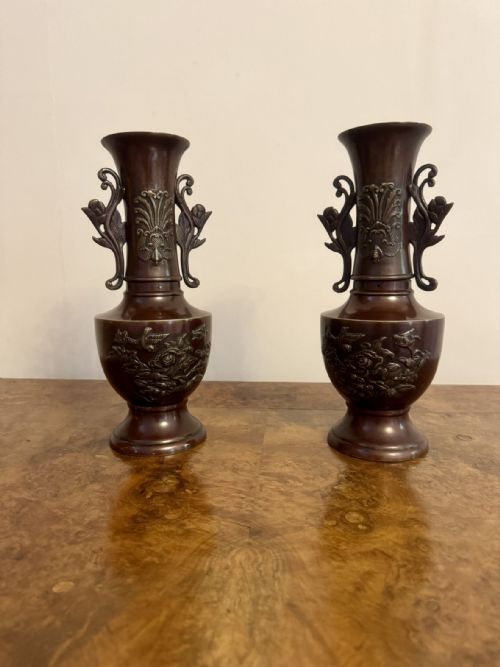
A bronze relief vase is a heavy metal vessel decorated with raised motifs, spanning baluster shapes, urns, and stem vases. When you search for bronze relief vase, you encounter pieces that originate primarily from nineteenth-century Japanese Meiji workshops, Chinese dynasties, and European Grand Tour traditions.
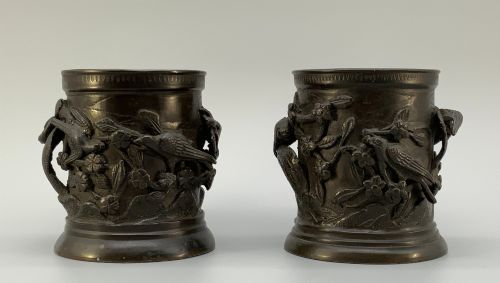
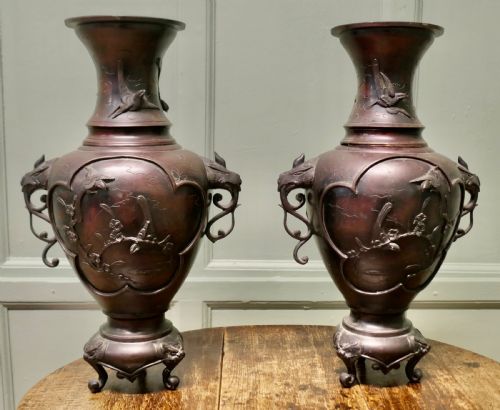
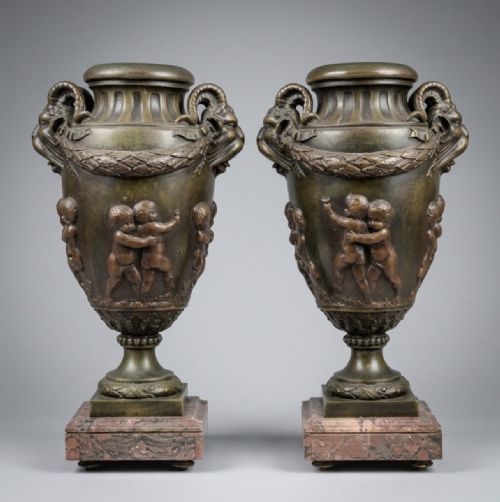
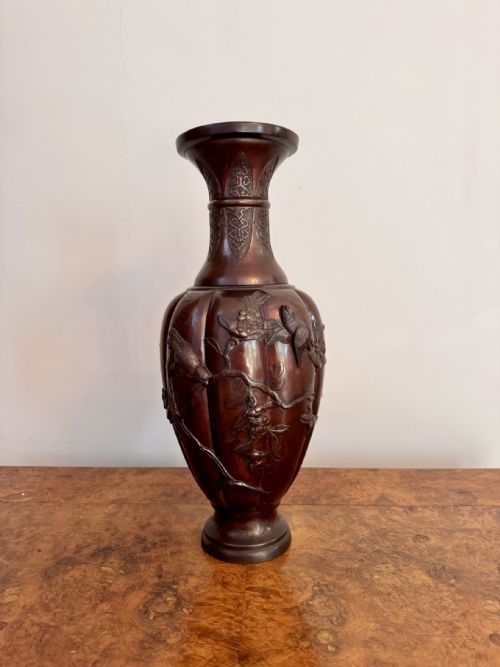
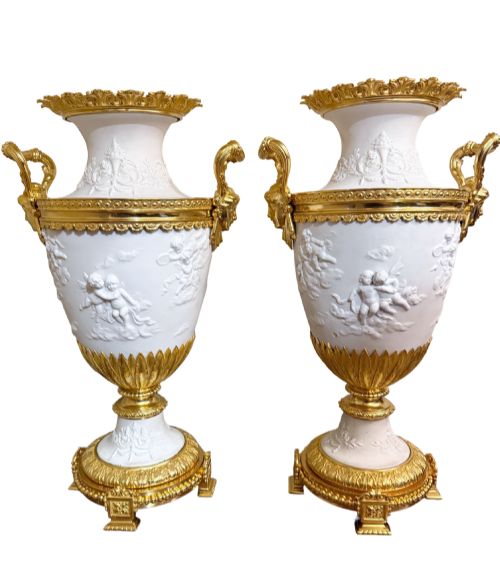
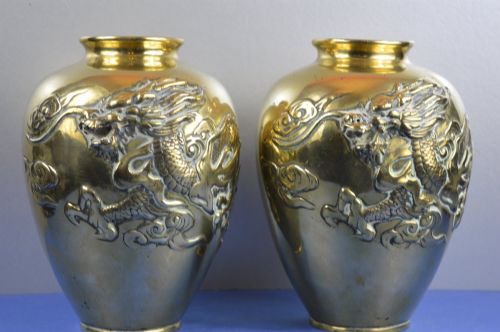
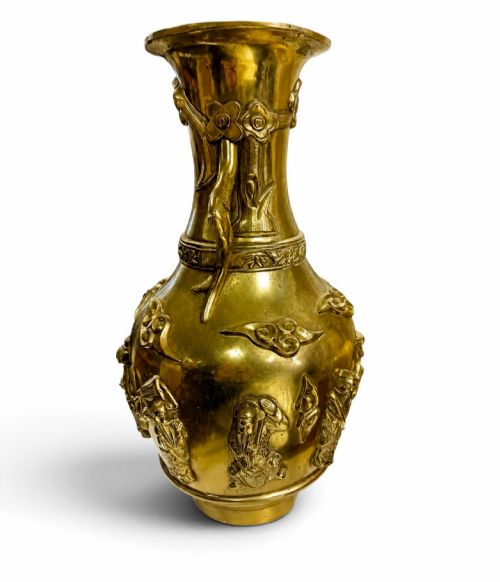
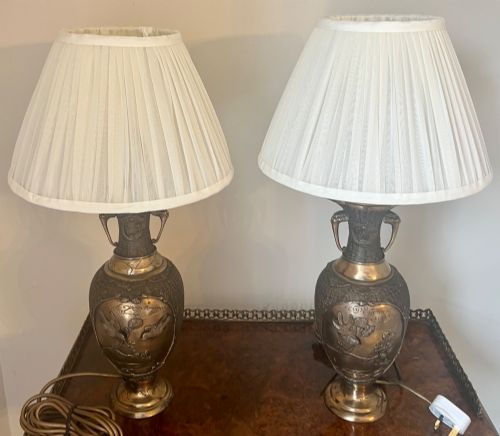
The versions most common on this page are Japanese Meiji period vases featuring raised birds, blossoms, and dragons, alongside French neoclassical campana urns and Chinese vessels with high-relief figures. These objects function as standalone decorative focal points or occasionally arrive converted into table lamps.
How they were made
Makers utilised traditional casting techniques, including lost-wax methods, to shape molten bronze, copper alloys, and gilt bronze into complex vessels. Relief details were either cast directly in the mould or meticulously applied through mixed metal techniques and chased by hand.
Many items combine the primary metal body with contrasting elements such as marble bases, porcelain inserts, or patinated finishes. French and Italian pieces often feature gilt bronze mounts paired with Sevres porcelain or carved stone.
Daoist immortals and fierce dragons populate these nineteenth-century surfaces, guarding your mantelpiece with ancient mythological authority.
What varies in quality
The distinction between ordinary production and top-tier execution lies in the sharpness of the casting and the depth of the relief work. Superior examples display crisp, undercut details on figures and foliage, where every feather or petal stands out with precise dimension.
Weight and balance also indicate standard, as denser solid bronze vessels demonstrate substantial material use compared to lighter hollow castings or spelter alternatives. Furthermore, artist signatures and careful patination elevate the standing of a piece significantly.
The Bronze Relief Vase Glossary
- Relief
- Ornamentation that projects from a flat background surface. In these vases, high relief creates deep shadows and a strong tactile presence.
- Patination
- The surface coloration or sheen developed naturally over time or applied artificially through chemicals. This finish adds visual depth to the metal.
- Campana
- A bell-shaped vessel form popular in classical antiquity and revived during the neoclassical period. These urns feature flared rims and tapering bodies.
- Meiji
- The period in Japanese history spanning from 1868 to 1912. Metalwork from this era is celebrated for intricate cast and mixed-metal decoration.
- Baluster
- A vertical architectural form resembling a pillar, characterised by a rounded body that tapers toward a narrow neck and base.
Bronze Relief Vase: Frequently Asked Questions
How do I clean a bronze relief vase?
Dust the surface gently with a soft, dry brush to prevent dirt accumulation within the raised details. Avoid liquid polishes or aggressive cleaning agents that might strip away the original historical patina.
For stubborn grime, use a slightly damp cloth with mild soap, ensuring you dry the metal thoroughly afterwards. Preserving the natural aged finish maintains both the visual character and the integrity of the piece.
Where should I place these vases at home?
Position heavier items on sturdy surfaces like low sideboards, entrance consoles, or stone mantelpieces where their weight provides stability. Ensure they sit away from high-traffic pathways to prevent accidental knocks against protruding handles or raised mounts.
Pairing them with neutral backgrounds allows the intricate metallic relief work to catch natural daylight effectively. Avoid placing unmounted bronze in damp environments to protect the metal from surface corrosion.
How can I tell Japanese Meiji pieces apart?
Look for distinct iconography such as dragons, cherry blossoms, and naturalistic bird scenes executed in high-relief casting. Many of these nineteenth-century items also incorporate mixed metal highlights, contrasting copper and brass tones against dark patinated bronze.
Finer examples occasionally feature engraved artist signatures on the base or body. The precision of the chasing work often separates standard export wares from exceptional studio output.
What is the difference between bronze and spelter?
Bronze is a durable alloy primarily composed of copper and tin, offering substantial weight and resistance to wear. Spelter is a softer, zinc-based metal alloy that was frequently used as a cheaper substitute for decorative urns and figures.
You can often distinguish them by weight, as genuine bronze feels noticeably heavier and cooler to the touch. Spelter pieces on marble bases also reveal a greyish metal beneath the surface if the bronze-coloured paint chips.