






Bronze Ornamental Clock
A bronze ornamental clock brings weight, gilt metal and precise nineteenth-century mechanics to a mantelpiece.
Bronze Ornamental Clock
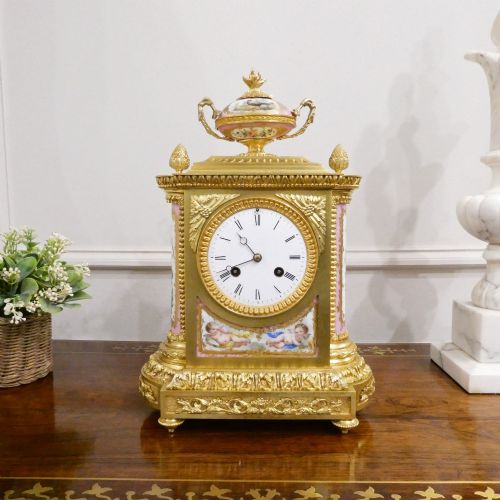
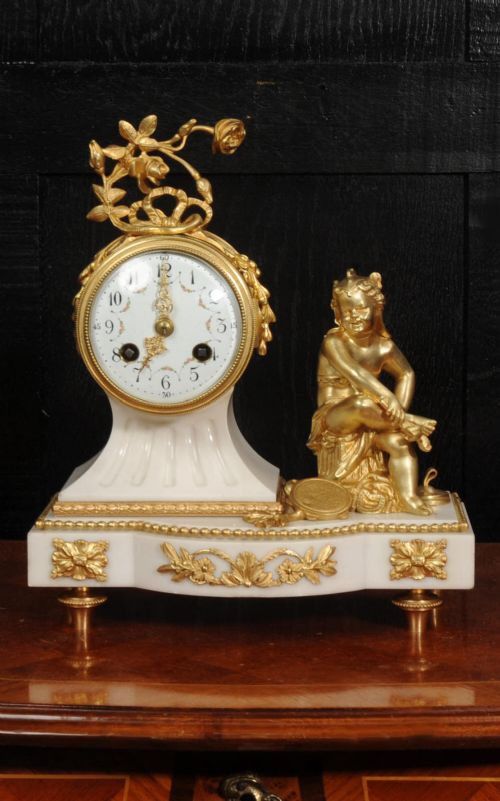
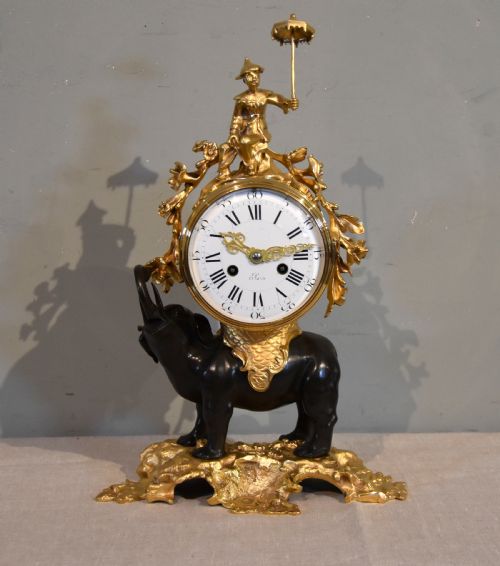
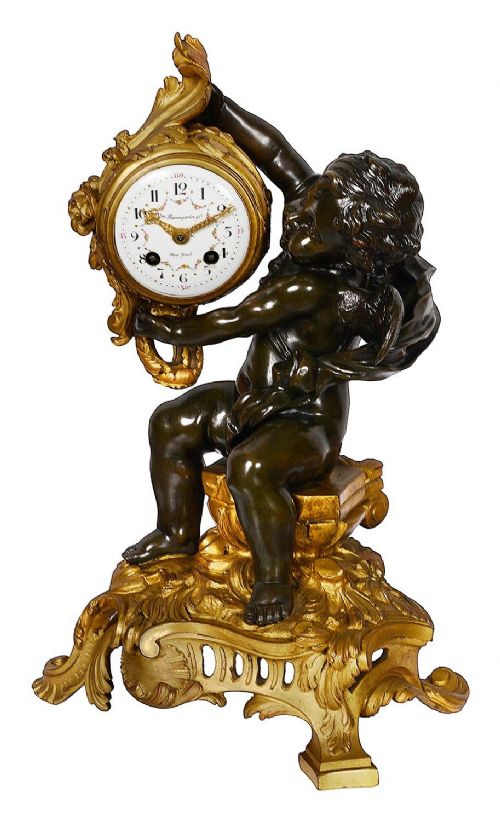
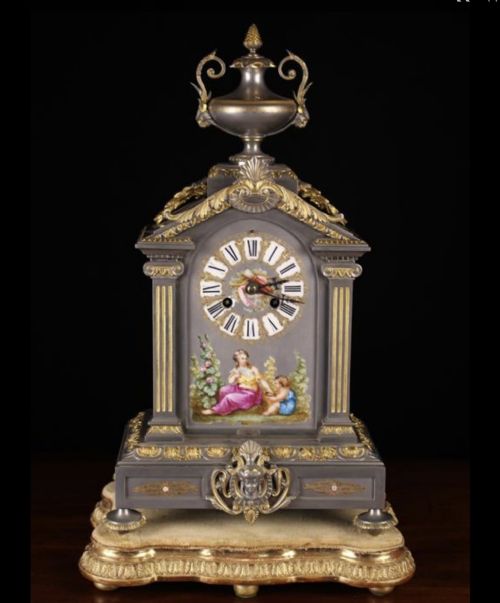
A bronze ornamental clock combines heavy metal casting with functional timekeeping, appearing most frequently in nineteenth-century French variants on this page. These pieces range from classical figures and animal forms to architectural marble bases mounted with porcelain panels.
Makers housed these movements in stylistic revivals spanning Louis XVI, French Empire and Rococo idioms. Buyers encounter both standalone mantel clocks and multi-piece garnitures that include matching side ornaments.
The materials span gilt bronze, ormolu, marble and enamel dials. Such pieces served as functional centrepieces for formal rooms during the Victorian era and the second empire.
Materials and construction
Foundries cast bronze and brass into intricate figural or architectural components before applying fire gilt or ormolu finishes. These metal mounts combine with white marble, alabaster or pink porcelain bodies.
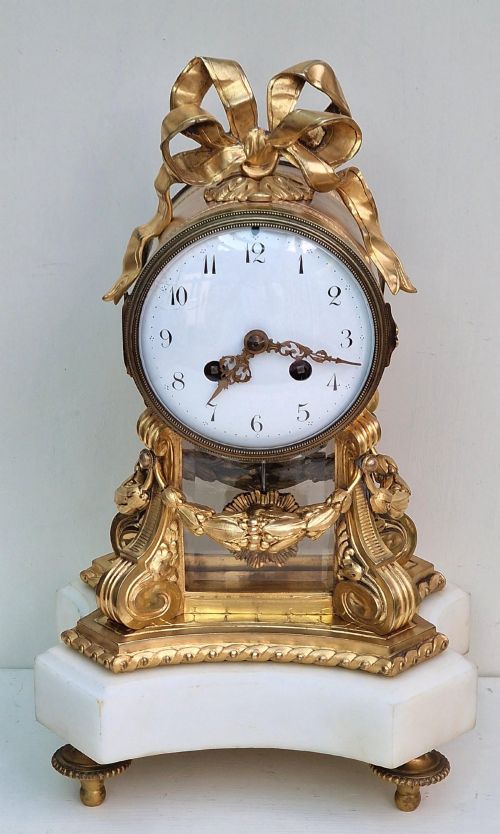
Clockmakers fitted eight-day striking movements, mystery mechanisms or double fusee systems behind enamel dials. Skilled artisans integrated visible pendulums and glass panels to display the internal mechanics.
Listings feature pieces spanning the eighteenth, nineteenth and early twentieth centuries, constructed from gilt bronze, marble, porcelain and alabaster.
Assessing quality and execution
Quality rests in the crispness of the bronze chasing and the depth of the gilding. Superior examples display sharply rendered figural work, such as cherubs, lions or elephants, rather than soft or cast-over-rough surfaces.
The integration of materials dictates value. Better pieces unite substantial marble or alabaster bases with signed movements by makers like Japy Freres or Henry Dasson, featuring hand-painted porcelain panels and intact enamel dials.
Jean-Baptiste Delettrez·Japy Freres·Henry Dasson·Ravrio·Lemerle Charpentier·James Murray London·F Marti
The Bronze Ornamental Clock Glossary
- Ormolu
- A gold-coloured metallic alloy used to gild bronze mounts through a mercury amalgamation process. This technique produces a durable, rich surface lustre seen on nineteenth-century French cases.
- Clock garniture
- A matching set comprising a central clock flanked by two matching side ornaments such as urns or vases. These sets create a balanced arrangement for a mantelpiece.
- Double fusee
- A mechanical system utilising a cone-shaped pulley and chain to equalise the pull of the mainspring. This ensures even tension and accurate timekeeping as the spring unwinds.
- Pendule d'officier
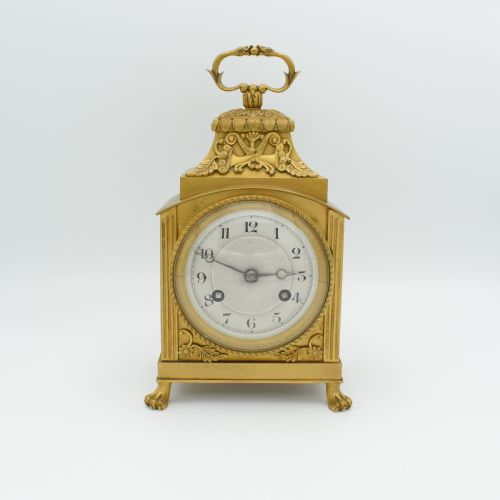
- A portable campaign-style clock featuring a distinctive top handle and a flat base. These pieces were designed for military officers to travel with.
- Mystery clock
- A timepiece where the movement drives the hands through a seemingly transparent or hidden connection, such as a glass dial. The hands appear to float without visible gears.
Bronze Ornamental Clock: Frequently Asked Questions
What is a clock garniture set?
A garniture consists of a main mantel clock accompanied by two matching side pieces, such as decorative urns or candelabra. These sets were designed to sit together as a unified decorative scheme on a fireplace mantel.
The matching side pieces repeat the materials and motifs of the central clock, such as gilt bronze mounts, marble bases or painted porcelain panels.
How do I identify a Louis XVI style clock?
Louis XVI style pieces display neoclassical symmetry, straight architectural lines, urn motifs and restrained foliate ormolu mounts. They reject the asymmetric curves of earlier Rococo designs in favour of formal balance.
You will often find white marble bases, classical columns, and gilt bronze drapery or floral swags decorating the case.
Where should I place my clock?
Position the piece on a stable, level surface away from direct sunlight, draughts and damp walls. Mantelpieces and sturdy console tables provide the solid foundation necessary for pendulum clocks to beat evenly.
Ensure the room maintains a stable temperature to protect the delicate enamel dials, marble bodies and mercury-gilt finishes from thermal shock.