





Bronze Mounted Pedestal
A bronze mounted pedestal combines stone or timber with cast metal mounts to elevate objects with architectural presence.
Bronze Mounted Pedestal
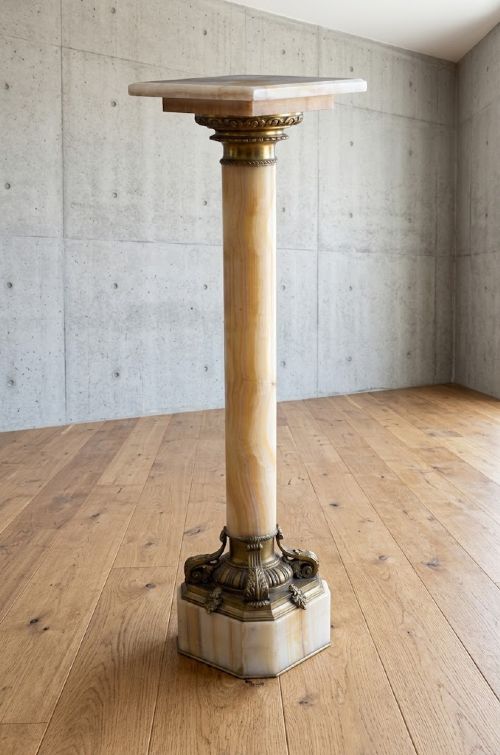
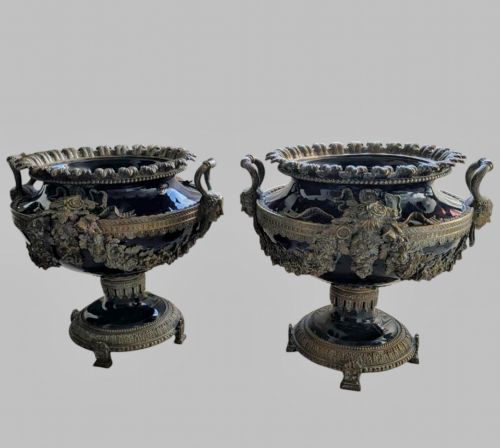
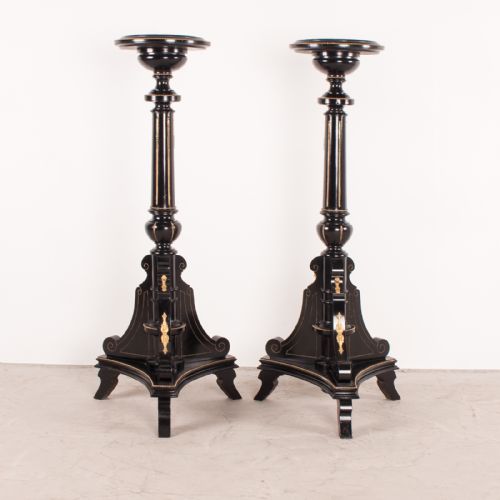
A bronze mounted pedestal is a supportive column or stand designed to display sculpture, urns, or decorative objects within a room. These pieces emerge primarily from the nineteenth century, drawing heavily on French Empire, Neoclassical, and Louis XVI revival vocabulary.
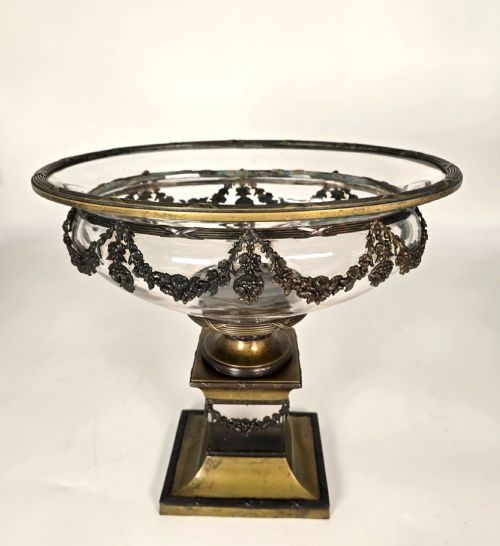
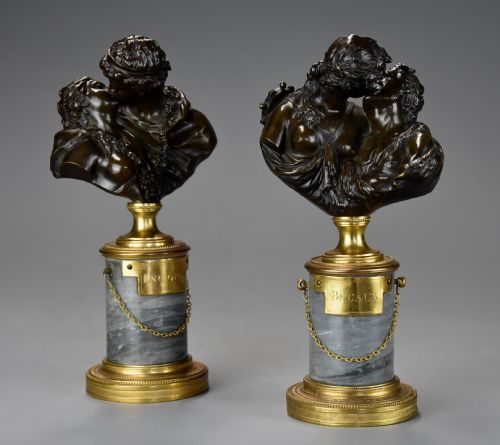
The versions most commonly met on this page combine polished stone columns or timber bodies with cast ormolu collars, bases, and mounts. Makers utilise materials like onyx, marble, mahogany, and kingwood to construct sturdy shafts that carry decorative bronze elements.
How they were made
Makers construct the main body of a bronze mounted pedestal using dense timbers like mahogany and walnut, or turn solid blocks of natural stone such as onyx and marble. Carpenters shape the wooden frames through careful joinery, while masons turn and polish the stone columns on lathes.
Casting forms the decorative bronze or ormolu mounts, which artisans then chase and gild before fixing them to the stone or timber structures. This union of metal and support relies on precise fitting to ensure the heavy stone tops and columns remain secure.
Listings feature nineteen-century pieces predominantly, alongside examples from the Edwardian period.
What varies in quality
The weight and crispness of the cast metal mounts separate standard examples from finer works, as deeply chased ormolu displays sharper detail and richer gilding. Artisans who spent more time refining the bronze surfaces produced foliage and scrollwork with distinct depth and definition.
The choice of primary material also dictates the standard of the piece, with select marbles, figured onyx, and finely matched veneers marking superior production. Structural integrity in the joints and the precise turning of the stone columns further distinguish more ambitious workshop outputs.
Mercier Frères·Jackson and Graham·Zwiener Jansen Sucesseur·François Linke
The Bronze Mounted Pedestal Glossary
- Ormolu
- Gilt bronze used for decorative mounts and hardware on furniture and pedestals. This material involves applying a gold amalgam to cast bronze before heating.
- Gueridon
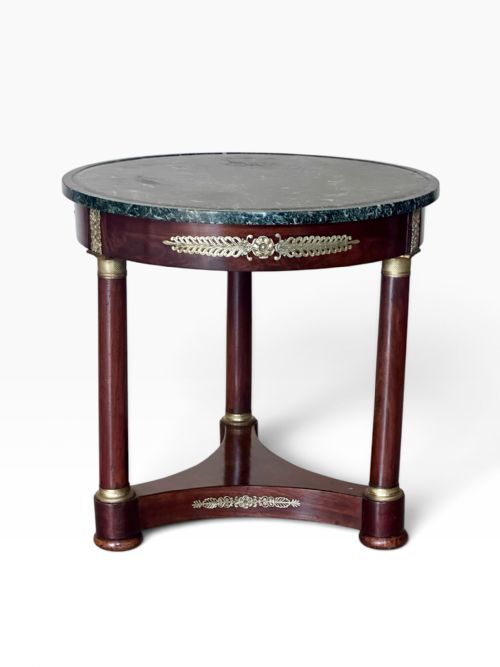
- A small circular table often utilised as a stand or pedestal. Originating in the seventeenth century, these supports frequently feature central columns.
- Torchere
- A tall stand designed to hold a light or a decorative vessel. These vertical supports share characteristics with traditional display pedestals.
- Parquetry
- Geometric wood inlay patterns applied to the surface of furniture and stands. Craftsmen arrange small veneers to create repeating visual motifs.
Bronze Mounted Pedestal: Frequently Asked Questions
What is a bronze mounted pedestal used for?
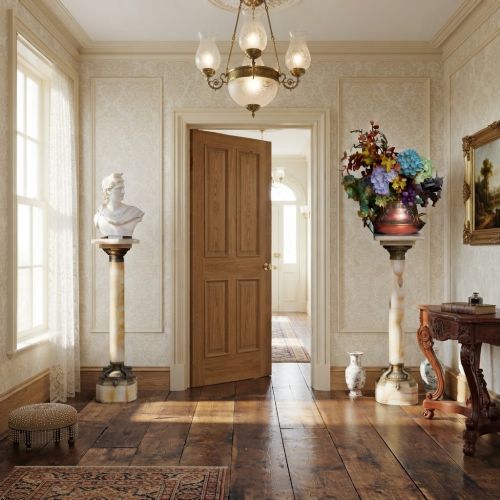
A bronze mounted pedestal serves as a sturdy display platform for sculptural works, heavy ceramic vases, and decorative urns. By raising objects off the floor, these stands draw the eye and highlight specific decorative pieces within a room.
They also function as architectural elements in their own right, adding vertical emphasis and contrasting textures of stone, timber, and metal to an interior scheme.
How do I care for marble and onyx columns?
Natural stone surfaces require gentle cleaning with a soft cloth and neutral soap to avoid scratching the polished finish. Acidic liquids like lemon juice or wine will etch marble and onyx, so coasters or protective pads should be used beneath any displayed objects.
The metal mounts benefit from light dusting with a dry brush to prevent dirt accumulation within the recessed chased details of the bronze.
Are these pedestals from the nineteenth century?
The majority of pieces seen here date from the nineteenth century, particularly spanning the Victorian period and the various French revival styles of the era. Makers during this time frequently looked back to earlier neoclassical designs and the reigns of Louis XV and Louis XVI for inspiration.
This historical revivalism means construction techniques often blend nineteenth-century machinery with traditional hand-finishing methods for the bronze mounts and wood veneers.
How do I distinguish between brass and ormolu?
Ormolu consists of cast bronze that has been treated with a gold amalgam or gilt finish, resulting in a warm, deep yellow lustre. Brass is an alloy of copper and zinc that tends to show a brighter, more uniform metallic yellow tone without the characteristic soft glow of historical fire-gilt bronze.
Looking closely at the surface will often reveal the hand-chased tooling marks on high-quality ormolu mounts, whereas standard brass may exhibit industrial casting seams.