


Classical Onyx Column
A classical onyx column brings tangible weight and historic architectural presence to a room through genuine stone and metalwork.
Classical Onyx Column
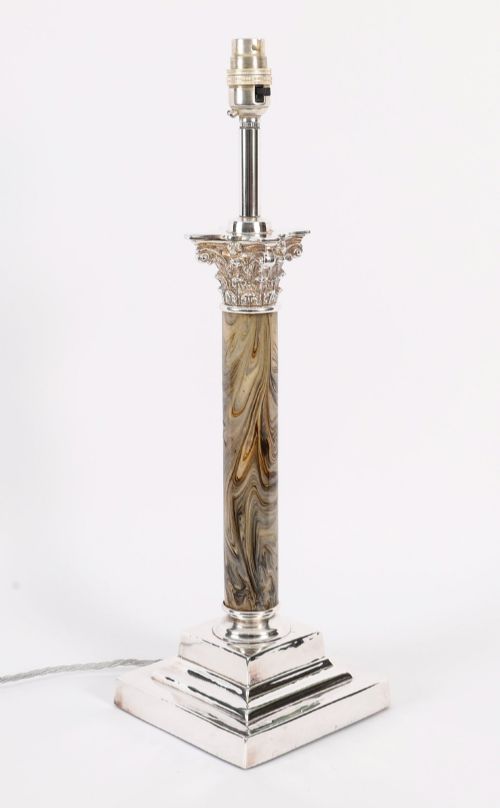
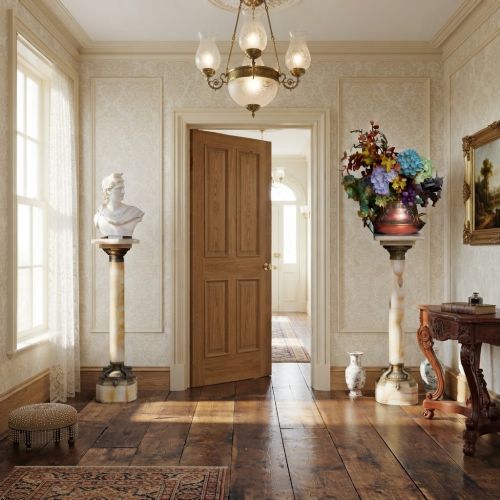
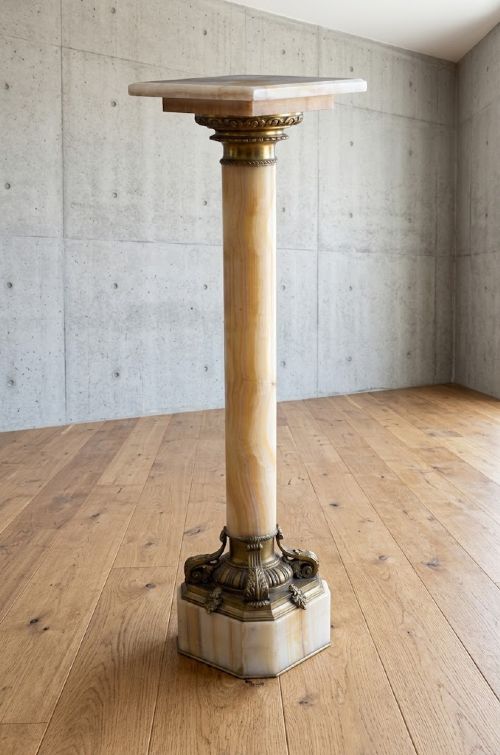
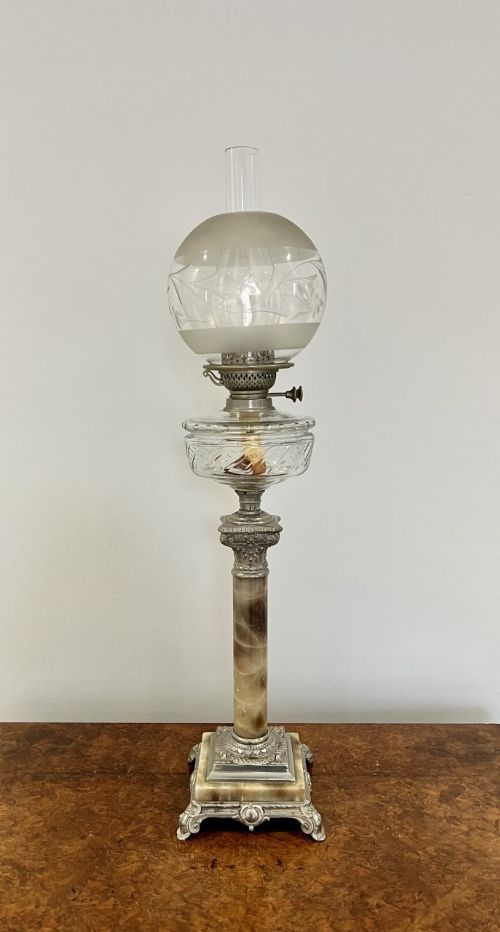
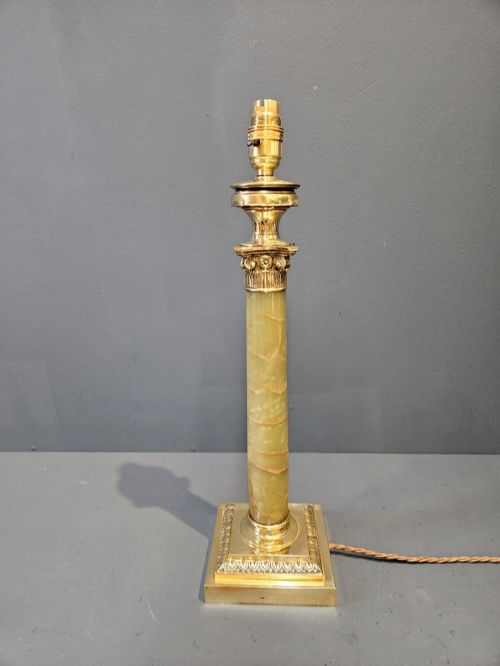
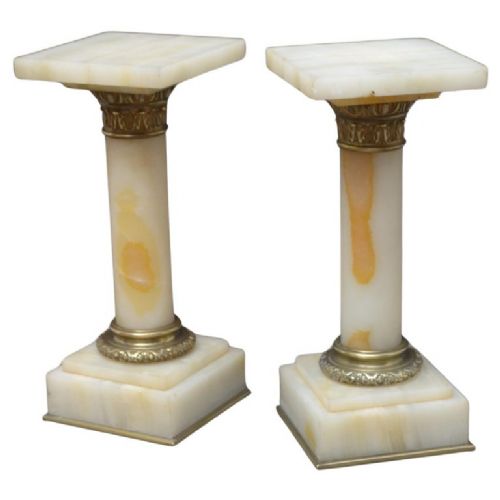
A classical onyx column typically takes the form of a pedestal, torchere, or fitted lamp designed to elevate objects or illuminate a space. The examples met on this page span the Victorian and Edwardian eras, drawing directly upon Neoclassical and Classical Revival design principles.
Makers frequently combined solid onyx shafts with brass, ormolu, and marble bases to create sturdy architectural supports. These pieces function equally well as standalone display plinths or converted lighting fixtures.
The prevalent forms range from tall floor-standing columns to compact table lamps and oil lamps. Each piece relies on stone and cast metal to establish a formal presence within an interior.
How they were made
Craftsmen shaped natural onyx and marble into cylindrical shafts, often turning the stone on specialised lathes to achieve a smooth, uniform column. These stone bodies were then combined with cast brass, ormolu, or silver-plated metal components.
Decorative metal collars and capitals, frequently cast in the Corinthian style, were fitted to the top and bottom of the onyx shafts. Gilt bronze and ormolu accents were applied to highlight the classical proportions and secure the stone sections together.
The site listings feature nineteenth-century and early twentieth-century pieces combining natural onyx, marble, brass, and ormolu.
What varies in quality
Quality rests upon the purity and depth of the onyx used for the shaft, alongside the crispness of the cast metal mounts. Finer pieces display carefully chased ormolu collars and substantial marble foundations that anchor the composition securely.
The precision of the stone-turning and the integration between the metal capitals and the onyx shaft determine the overall refinement. Superior examples maintain balanced proportions and secure joints without visible structural compromise.
The Classical Onyx Column Glossary
- Onyx
- A banded variety of chalcedony quartz prized for its translucent layers and variegated natural colour patterns. It forms the primary shaft material for these classical columns.
- Ormolu
- Gilded bronze produced by applying a finely ground high-carat gold mercury amalgam to a bronze casting. This technique creates the rich metallic collars found on many nineteenth-century columns.
- Torchere
- A tall stand or ornamental candlestick designed to support a light source or display an object at eye level. These floor-standing columns often terminate in a flat platform or lamp fitting.
- Corinthian
- An architectural order characterised by ornate capitals decorated with stylized acanthus leaves. It appears frequently on the brass and bronze capitals of these columns.
- Neoclassical
- A Western cultural movement drawing inspiration from the art and culture of classical antiquity. This style dictates the strict symmetry and architectural vocabulary seen across these pieces.
Classical Onyx Column: Frequently Asked Questions
How do I clean an onyx column?
Dust the stone regularly with a soft, dry cloth to prevent accumulation in the natural fissures. Avoid harsh chemical cleaners or excess water, which can damage the polished stone surface and vulnerable metal mounts.
For the metal collars and mounts, use a gentle dry cloth rather than abrasive metal polishes. Protecting the gilt or brass surfaces preserves the original finish.
Are these columns structurally sound for display?
Most pieces are built with heavy stone and metal components designed to support moderate weight. Tall pedestals and torchere columns safely hold decorative urns, bronzes, or heavy table lamps.
Check that the central fixing rod, where present, remains secure within the stone sections. Placing the column on a level floor ensures stability during daily use.
How do I date a Victorian onyx column?
Examine the materials and mounting techniques employed in the construction of the base and capital. Nineteenth-century examples often feature heavy brass or ormolu castings paired with distinctively variegated onyx.
Stylistic cues such as late Victorian revival motifs or Edwardian lighting conversions provide additional chronological markers. Comparing the patination on the metal parts helps confirm the period.
Can I use an antique oil lamp as a table lamp?
Many oil lamps from the Victorian and Edwardian periods have been safely converted to electricity for modern domestic use. This conversion allows you to retain the original column body while adding functional lighting.
Consult a qualified electrician to inspect the internal wiring and ensure the vintage fittings comply with current safety standards. Preserving the original burner components maintains the historical integrity.