
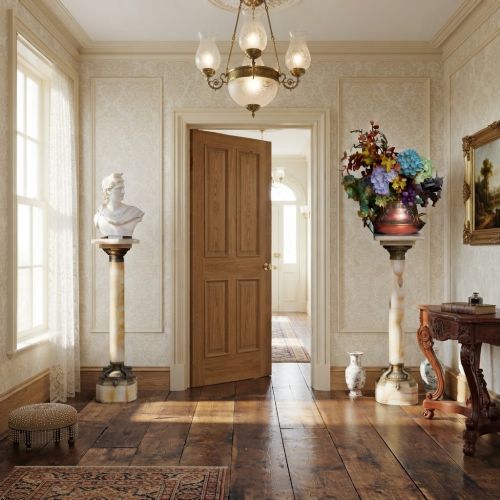
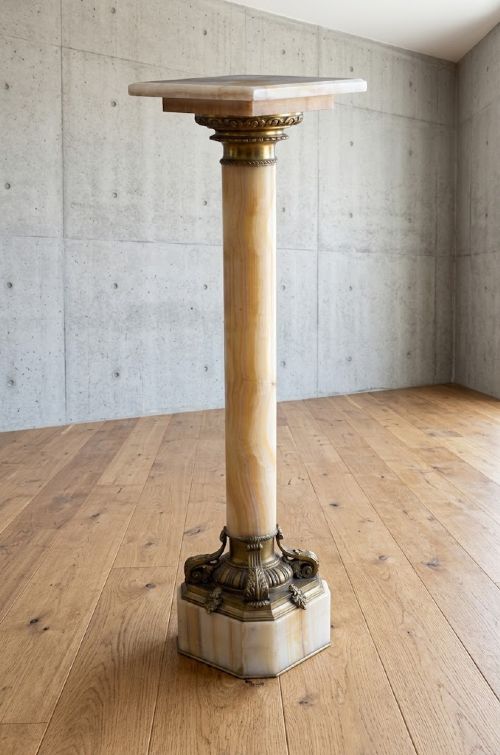


French Onyx Pedestal
A french onyx pedestal brings striking stone and gleaming metalwork into a room, offering a sturdy yet elegant stage for display.
Materials and construction methods
Makers built these stands using solid onyx and marble for the main shafts and tops, paired with structural elements in brass, bronze, and gilt wood. The natural patterning of the stone provides each piece with a distinct visual texture.
Metal components such as ormolu collars, chiseled brass, and gilt bronze mounts were cast and applied to secure and decorate the stone columns. These metal accents often take the form of classical collars, flower mouldings, and structural supports.
Assessing quality and execution
The distinction between standard items and finer examples lies in the crispness of the metal chasing and the depth of the stone's natural figure. Finer ormolu and chiseled brass mounts display sharp detail and careful fitting around the stone shafts.
Proportion and stability dictate the presence of superior pieces, where the weight of the marble or onyx balances securely against robust bronze or brass supports. The integration of secondary materials, such as walnut in occasional tables, marks the ambition of the original design.
The French Onyx Pedestal Glossary
- Onyx
- A naturally banded variety of chalcedony or calcite used for decorative columns and table tops. Its translucent layers create depth and varied colouration across the surface.
- Ormolu
- Gilded bronze mounts applied to furniture and decorative objects. This technique involves coating cast bronze in a layer of gold amalgam.
- Torchere
- A tall stand or column originally designed to support a torch or lamp. In later periods, these served primarily to display urns and figures.
- Cassolette
- A decorative vase or urn fitted with a reversible lid that functions either as a solid vessel or a burner. These frequently appear alongside column supports in classical interiors.
- Neoclassical
- A revival style drawing inspiration from classical antiquity. It governs the symmetrical columns and restrained ornamentation seen across nineteenth-century pieces.
French Onyx Pedestal: Frequently Asked Questions
How were french onyx pedestals used originally?
These pieces served primarily to elevate decorative items such as bronze figures, urns, and exotic plants within grand reception rooms. Their height drew the eye upward and displayed prized ornaments at eye level.
In domestic interiors, smaller variants functioned as wine tables or occasional surfaces for lamps and small objects. They added classical grandeur to nineteenth-century drawing rooms without taking up excessive floor space.
How do I care for onyx and ormolu?
Onyx is a softer stone that reacts to acidic spills and harsh cleaning agents, requiring only a soft, dry cloth for dust removal. Avoid using abrasive pads or chemical polishes on the polished surface.
Ormolu mounts need gentle dusting to preserve the gilded surface without wearing away the finish. Keeping these pieces away from direct heat sources prevents the stone and underlying adhesives from drying out.
How can I tell nineteenth century pieces apart from later ones?
Nineteenth-century examples often exhibit heavier cast bronze or ormolu mounts with hand-chiseled details that show subtle irregularities. The turning of the stone columns reflects traditional workshop methods of the period.
Twentieth-century pieces, including those from the 1930s, tend to feature simpler brass work and different structural joinery. Materials like two-tier plant stands point towards later domestic utility rather than strict classical revivalism.
Are these pedestals sturdy enough for heavy statues?
Most columns and pedestals were built to support substantial weight, utilising thick stone shafts and heavy metal bases. The natural density of onyx and marble provides a stable centre of gravity.
However, buyers should check the stability of the joints where the metal collars meet the stone. Slender torchere columns or plant stands with multiple tiers are better suited to lighter decorative objects.