
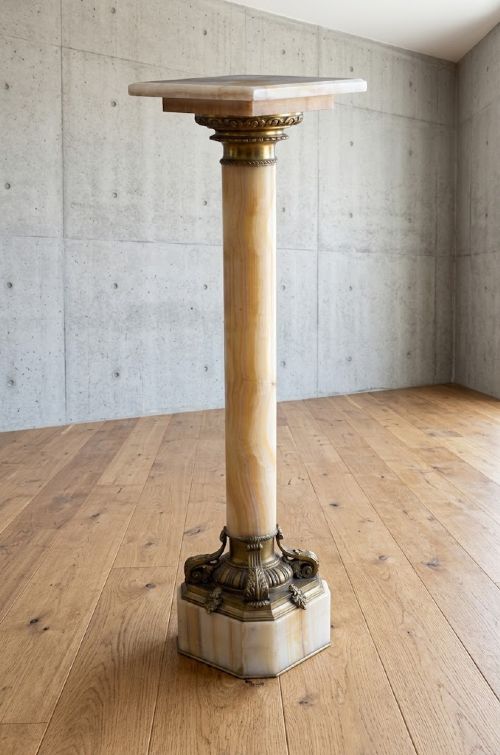



Onyx Sculpture Plinth
An onyx sculpture plinth grounds a figure or a bust with weight and cool polish.
Onyx Sculpture Plinth
An onyx sculpture plinth provides a steady, polished base or column designed to elevate small bronzes, marble busts, and decorative figures. When you search for an onyx sculpture plinth, you encounter pedestals, columns, and low bases that frame figurative metalwork or carved stone.
The pieces appearing on this page stretch from the nineteenth century through the Art Deco era, covering Neoclassical columns and streamlined bases. You are most likely to meet low bases carrying spelter or bronze figures alongside taller columns meant to stand alone on the floor.
The forms range from simple square blocks and circular trays to ornate architectural pedestals fitted with gilt metal mounts. Each piece serves to lift a subject into view, using the patterned bands of the stone to catch the light.
Materials and construction
The makers of these pieces turned and polished natural onyx, often pairing it with contrasting marbles such as Carrara or Portoro to build up the base or column. This stone work required steady skill to cut and smooth without cracking the banded layers.
Metal components such as ormolu collars, patinated bronze, and painted spelter figures were cast separately and secured to the stone mounts using threaded bolts or pins. Ormolu adds gilt brass highlights, while cold-painted metal brings detailed colour to the animal and human subjects perched upon the plinths.
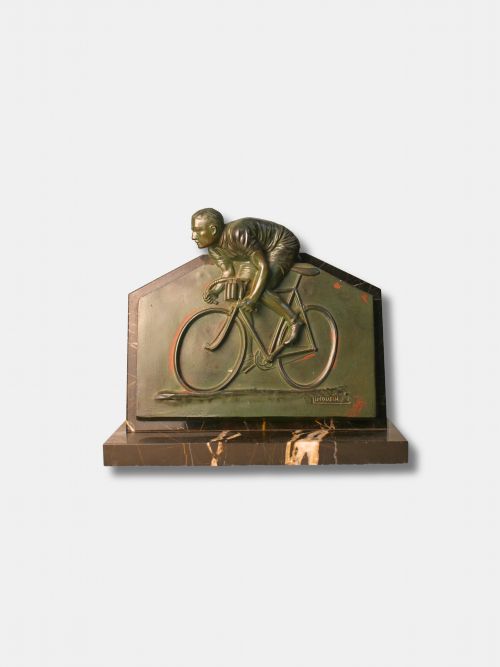
A mallard duck and a Tour de France cyclist both found permanent homes atop solid stone mounts.
Judging quality and execution
Quality rests in the selection of the stone and the precision of the metal mounts. Better examples feature rich, translucent banding in the onyx without clumsy repairs or heavy filler obscuring natural fissures.
The relationship between the base and the figure reveals the maker's hand, where top-tier pieces integrate the stone and the bronze into a single balanced composition. Inferior pieces often show loose fixings or mismatched materials assembled long after the original date of manufacture.
Josef Lorenzl
The Onyx Sculpture Plinth Glossary
- Onyx
- A banded variety of chalcedony quartz that takes a high polish and shows swirling translucent layers. It forms the primary structural or decorative stone for these bases.
- Ormolu
- Gilt bronze produced by applying a finely ground gold-mercury amalgam to bronze before heating. It provides bright metallic collars and mounts on nineteenth-century pieces.
- Spelter
- An alloy of zinc and lead often used as a cheaper alternative to bronze. It is cast and patinated or painted to resemble heavier metals.
- Carrara Marble
- A white or blue-grey marble quarried in the city of Carrara in Tuscany. It frequently forms the carved busts mounted upon stone plinths.
- Patinated Metal
- Metal treated with chemicals or heat to produce a stable surface colour. This finish protects the sculpture and defines its visual depth.
Onyx Sculpture Plinth: Frequently Asked Questions
What holds the figure to the plinth?
Figures are typically secured to the stone base using a threaded rod or screw running up through the onyx into the base of the bronze or spelter casting.
This concealed fastening keeps the sculpture rigid while allowing the different materials to expand and contract independently.
How do I clean an onyx plinth?
Dust the stone regularly with a soft, dry cloth to prevent grit from scratching the polished surface. Avoid using household chemical cleaners or excess water, which can seep into natural fissures or damage painted metal details mounted nearby.
Are these bases detachable?
Many low bases and columns are constructed as fixed assemblies where the metal figure and the stone plinth form a single unit. Attempting to separate them often risks damaging the threaded pins or chipping the stone edges.
Taller pedestals may separate into modular column sections and capital plates for easier transport.
How can I tell Art Deco from earlier styles?
Art Deco plinths and figures rely on clean geometric lines, stepped profiles, and streamlined forms typical of the 1920s and 1930s. Earlier nineteenth-century examples lean towards classical revival motifs, featuring ornate ormolu collars, acanthus leaf details, and heavier architectural proportions.