
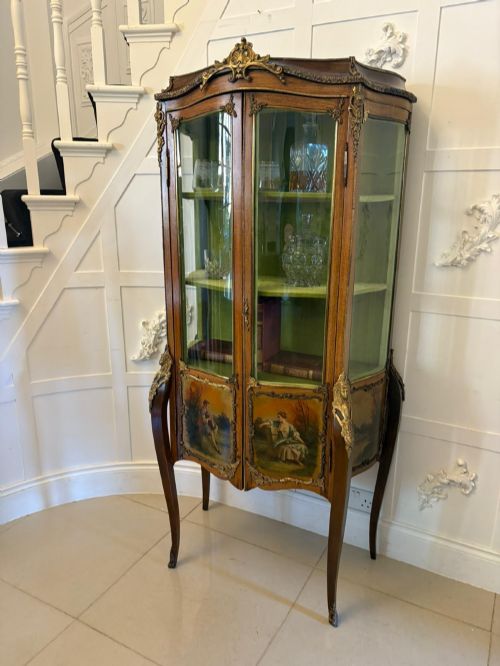
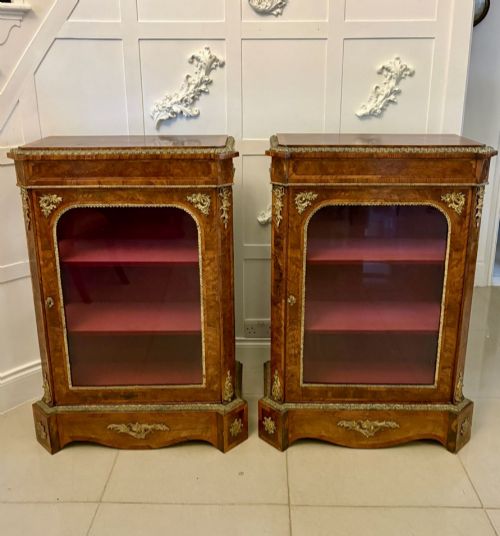
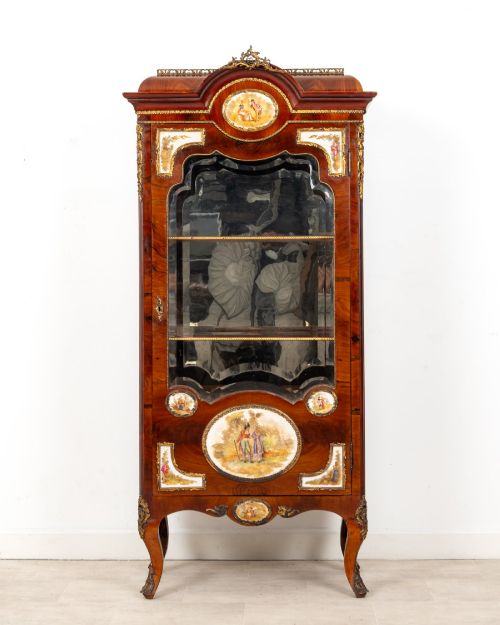
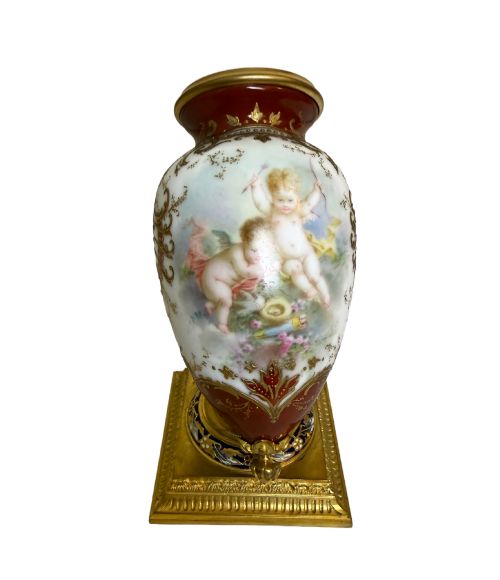


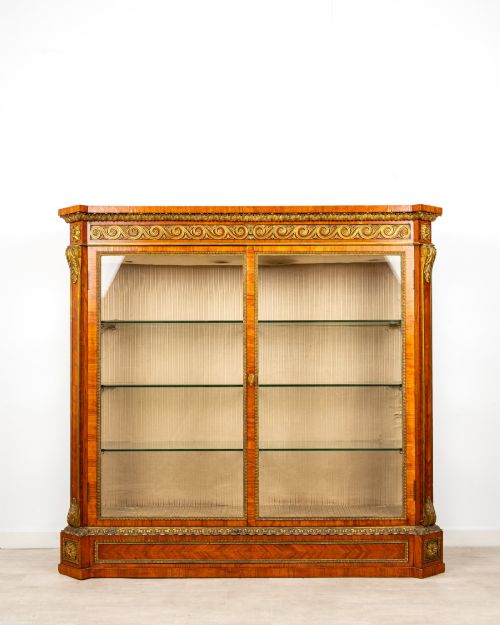
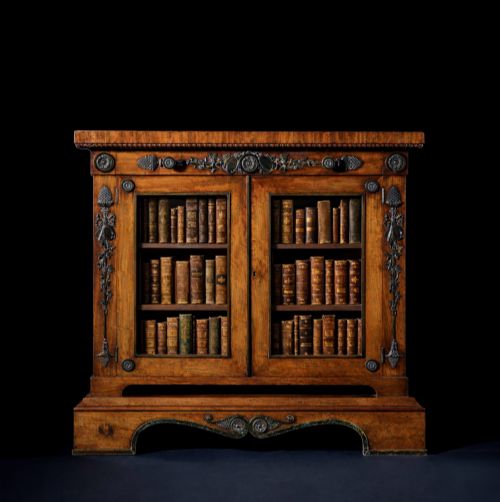
Bronze Mounted Cabinet
A bronze mounted cabinet brings together rich timbers and chased metal mounts to hold your collections or anchor a formal room.
Bronze Mounted Cabinet
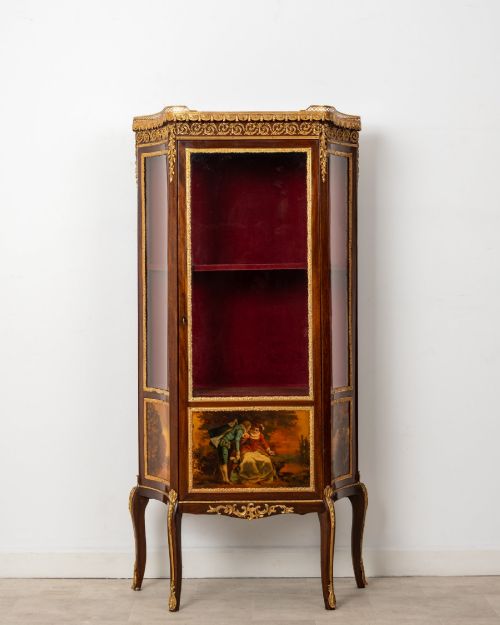
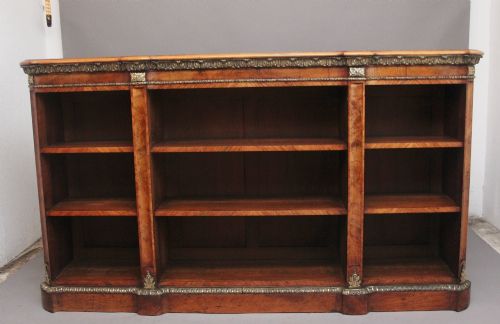
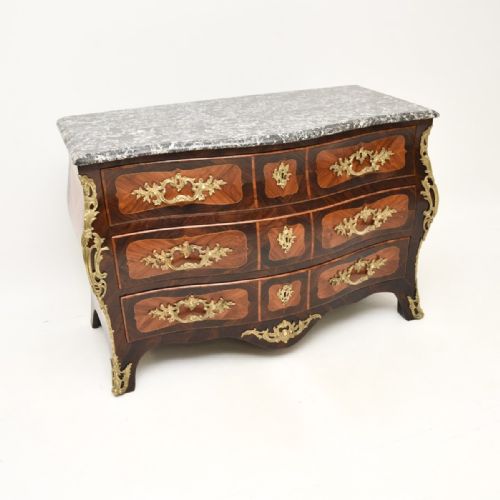
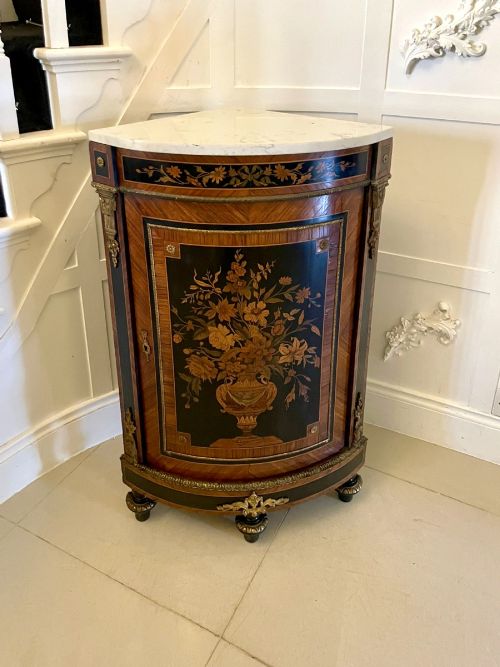
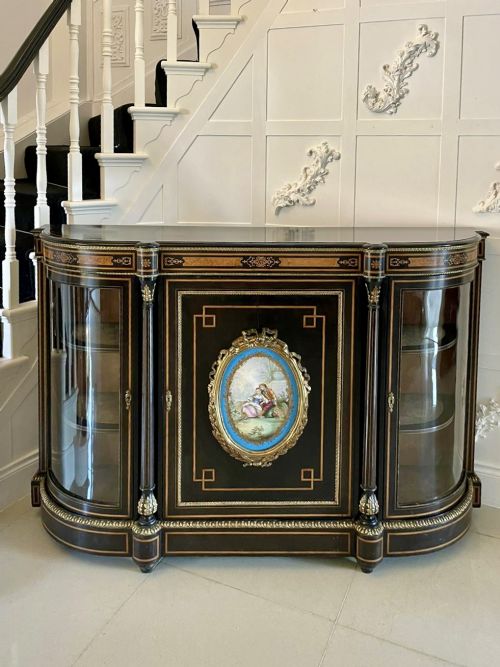
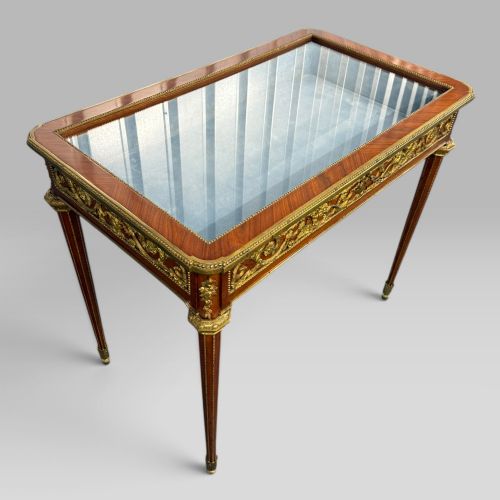
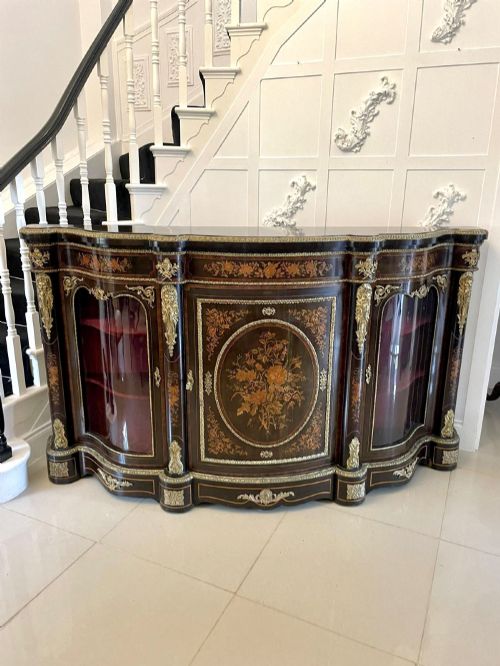
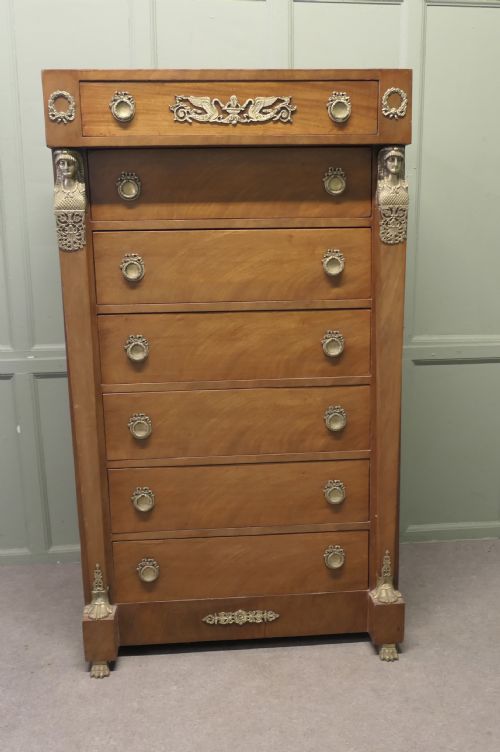
A bronze mounted cabinet encompasses diverse forms designed for display and storage, ranging from Victorian credenzas and pier cabinets to French vitrines, commodes, and bookcases. These pieces frequently emerge from nineteenth-century workshops influenced by Louis XV and Louis XVI revivals, alongside distinctive English interpretations.
Buyers encounter walnut, kingwood, mahogany, and ebonised woods embellished with ormolu or gilt bronze mounts, often paired with marble tops or glass panels. The selection spans grand serpentine credenzas to compact bedside cabinets and specialised music or jewellery containers.
Materials and Techniques
Cabinetmakers constructed carcass frames from timbers such as walnut, mahogany, and kingwood, frequently applying elaborate parquetry, marquetry, or Vernis Martin varnish panels to the exterior surfaces. Marble slabs were precisely cut and polished to fit the upper profiles of commodes and credenzas.
Gilt bronze and ormolu mounts were cast, chased, and fire-gilded before being secured to corners, feet, and friezes with threaded fixings. Glass doors and mirrored backs were integrated into vitrines and display cabinets to illuminate interior shelves.
The listings span the seventeenth century through the twentieth century, encompassing Victorian, Regency, and French revival periods.
Measures of Excellence
The distinction between tiers rests upon the crispness of the bronze chasing and the depth of the timber veneers, where hand-chiselled mounts outshine mass-produced castings. Superior examples exhibit seamless marquetry alignment across doors and drawers, alongside robust internal carcass construction.
Attribution to documented makers or prominent retail houses elevates a piece, as does the retention of original marble tops, fire-gilt patination, and functional locking mechanisms with matching keys.
Gabriel Viardot·Johnstone and Jeanes·Jacques Bircklé·François Linke·H. J. Hatfield and Sons·Maison Krieger·Henry Dasson·Gillows·Mercier Frères·Blake·Maison Gagneau·E. Kahn·Maison Soubrier
The Bronze Mounted Cabinet Glossary
- Ormolu
- A gilded bronze or brass composition applied to furniture mounts and decorative hardware. It provides a bright metallic finish that mimics solid gold when properly chased.
- Vernis Martin
- A simulated Japanese lacquer technique developed in eighteenth-century France and emulated in later revival pieces. It creates translucent, layered painted scenes on cabinet panels.
- Credenza
- A low cabinet piece often featuring central cupboards flanked by curved glass doors. Originally used for serving food, it evolved into a formal display furniture form.
- Vitrine
- A glass-fronted display cabinet intended for porcelain and curiosities. Its glazed panels and mirrored interiors maximise light exposure for the items within.
- Marquetry
- Inlaid wood veneers arranged to form pictorial or geometric patterns on furniture surfaces. Craftsmen utilise contrasting natural timber tones to achieve shading.
Bronze Mounted Cabinet: Frequently Asked Questions
Where should I place a bronze mounted cabinet?
These pieces suit principal reception rooms or formal dining spaces where their reflective mounts and polished timbers catch natural light. Keep them away from direct heat sources to protect delicate veneers and wood joints.
Ensure adequate floor clearance so the cabinet proportions balance the surrounding wall space and heavier architectural elements.
How do I care for ormolu mounts?
Dust the bronze mounts gently with a soft, dry brush to prevent accumulation in the chased recesses. Avoid harsh chemical cleaners or abrasive cloths that can strip the original gilding.
Professional conservation wax can be applied sparingly to the timber surfaces, but keep polishes away from the metal interfaces.
Can I adjust the internal shelving?
Most nineteenth-century and revival cabinets utilise fixed wooden supports or fixed channel runners for their internal shelves. Altering these historic configurations is generally discouraged to preserve the original integrity of the carcass.
Heavier display items should be distributed evenly across existing shelves to prevent structural sagging over time.
How do I distinguish revival styles from original pieces?
Examine the secondary woods inside drawer linings and carcass backs, as nineteenth-century revival workshops often utilised distinct framing methods compared to eighteenth-century originals. Tool marks, screw types, and construction wear help establish the true period of manufacture.
Consulting maker stamps or comparing mount designs against documented studio archives provides further chronological clarity.