

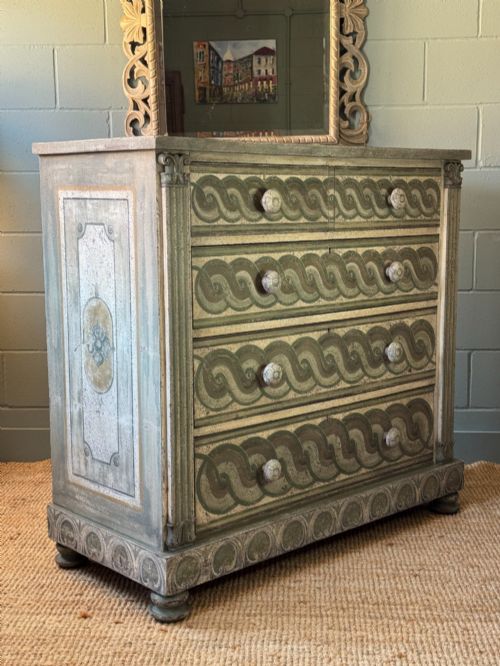


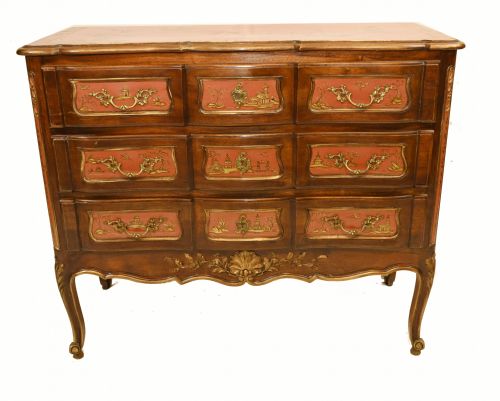
Hand Painted French Commode
A hand painted french commode brings continental elegance and hand-finished artistry into a room, offering both decorative presence and practical storage.
Hand Painted French Commode
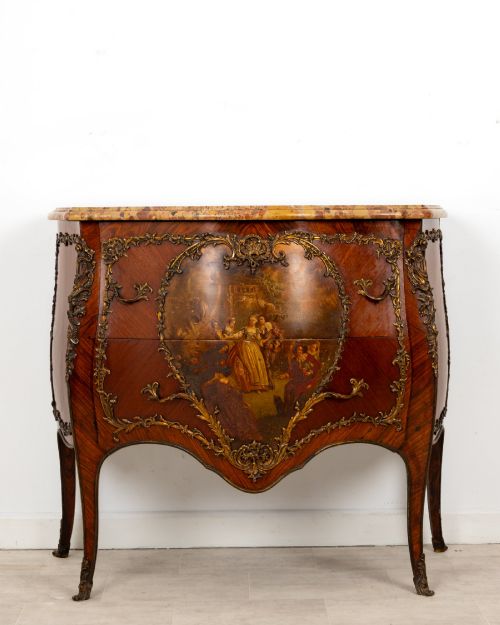
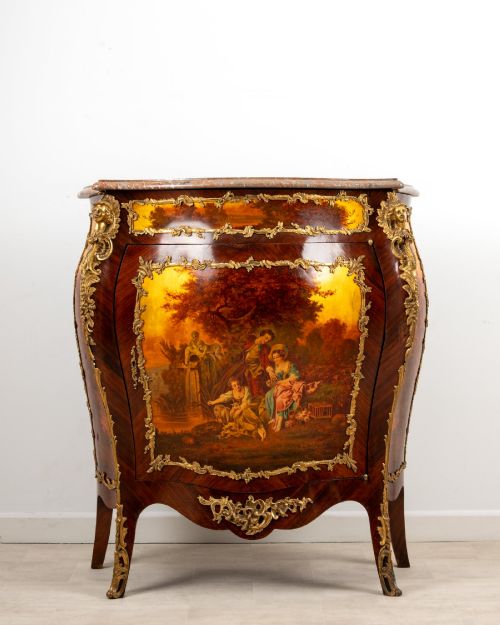
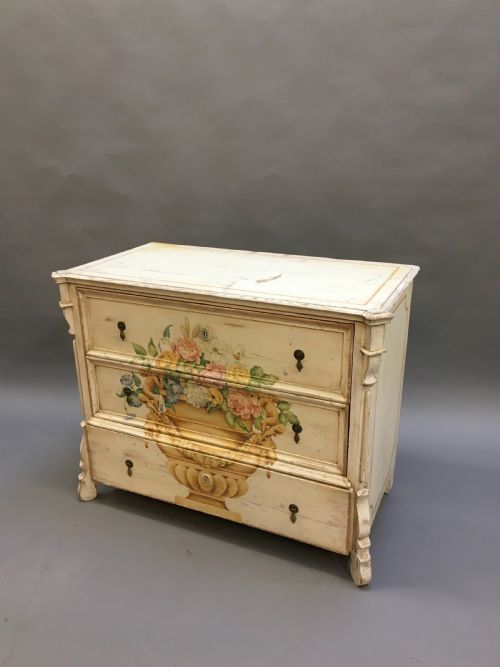
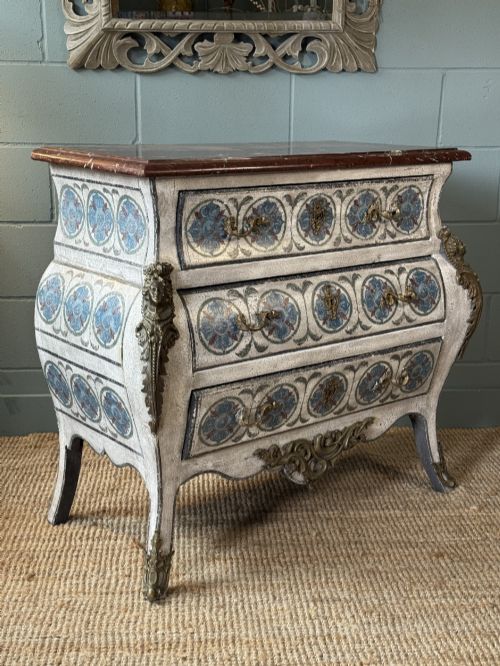
A hand painted french commode functions primarily as a decorative chest of drawers or side cabinet, bringing continental character into domestic interiors. These pieces appear across various forms, including serpentine bombe shapes, straightforward drawer chests, and side cabinets.
The pieces on this page span several distinct periods, reaching from the eighteenth century through the nineteenth century and into the early twentieth century. Styles range from Louis XV revival and French Empire to Chinoiserie and Italian Rococo.
Buyers will most frequently encounter nineteenth-century interpretations alongside later twentieth-century painted examples, reflecting both original period production and subsequent decorative painting on older carcasses.
Construction and decoration
Carcasses are constructed from woods such as kingwood, pine, and general timber before receiving paint, lacquer, or decorative finishes like Vernis Martin. Skilled artisans applied brushwork by hand, often incorporating floral motifs or scenic Chinoiserie vignettes.
Metal mounts in gilt bronze and ormolu complement the woodwork, while heavy marble tops in shaped profiles provide a durable and luxurious upper surface. These combined materials required specialised joinery to accommodate the curving bomb shape and fitted mounts.
Listings feature periods from the eighteenth century to 1920, utilising marble, kingwood, lacquer, and ormolu.
Assessing quality and execution
Quality reveals itself in the fluency of the hand-painted decoration and the crispness of the cast ormolu and gilt-bronze mounts. Superior examples display refined brushwork and integrated design where the painted scenes complement the serpentine contours of the carcass.
The integrity of the underlying timber construction and the weight of the fitted marble top further distinguish finer pieces from simpler utilitarian chests. Original period surfaces carry greater distinction than later decorative repainting applied to older timber.
The Hand Painted French Commode Glossary
- Bombe
- A bulging, convex shape characteristic of continental case furniture. This swelling profile requires expert woodworking to curve drawers and sides gracefully.
- Ormolu
- Finely chased and gilt bronze mounts applied to furniture corners, handles, and feet. It provides a bright metallic contrast to painted wood and marble.
- Vernis Martin
- A European imitation of East Asian lacquerwork developed in France. Artisans used successive layers of varnish to create translucent decorative finishes.
- Kingwood
- A dense, richly figured timber often used in veneered period cabinetry. It provides a dark, contrasting border to panels and painted scenes.
- Chinoiserie
- European decorative motifs inspired by Chinese art and craftsmanship. These designs frequently feature imaginary landscapes and figures executed in paint or lacquer.
Hand Painted French Commode: Frequently Asked Questions
Are these commodes original period pieces?
The selection includes items from the eighteenth, nineteenth, and early twentieth centuries, representing both original antique production and later revivals. Some pieces feature original paintwork, while others received decorative painted finishes at a later date.
Examining the construction methods and material wear helps determine the exact age of each individual cabinet.
How do I maintain a marble top?
Marble surfaces require simple cleaning with a damp cloth and mild, non-acidic soap to preserve the polished finish. Avoid placing acidic liquids or harsh chemical cleaners directly on the stone.
Using coasters and protective mats prevents scratching and staining on antique marble tops.
Where should I place a commode?
These pieces suit living rooms, hallways, and bedrooms as focal storage units that anchor a room's decor. Their decorative painted surfaces work well against neutral walls.
Ensure the chosen space accommodates the generous depth and curved profile of serpentine or bombe designs.