




Bronze Lidded Urns
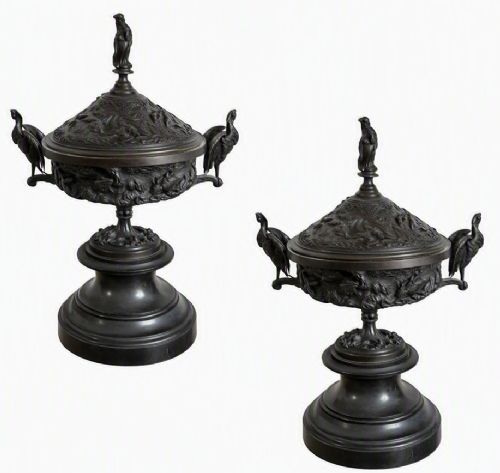
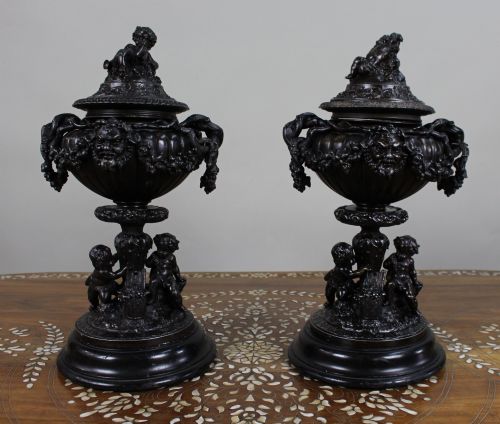
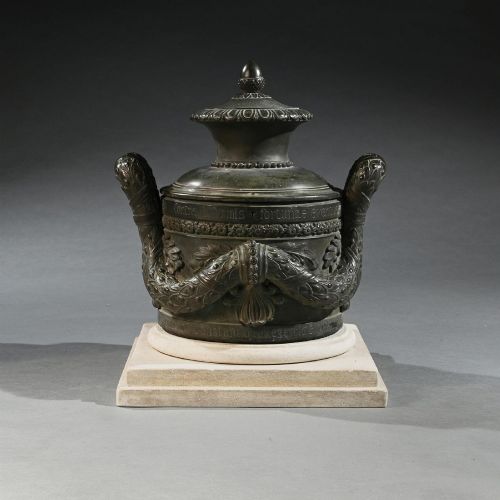
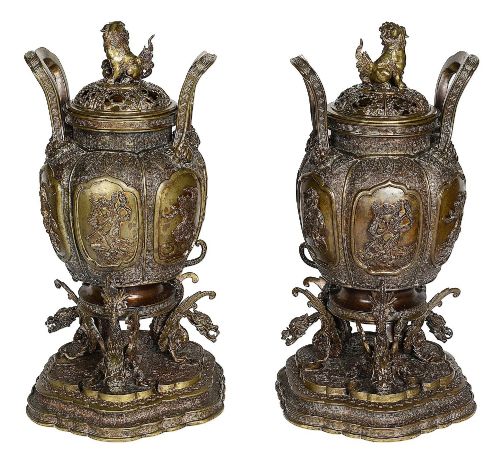
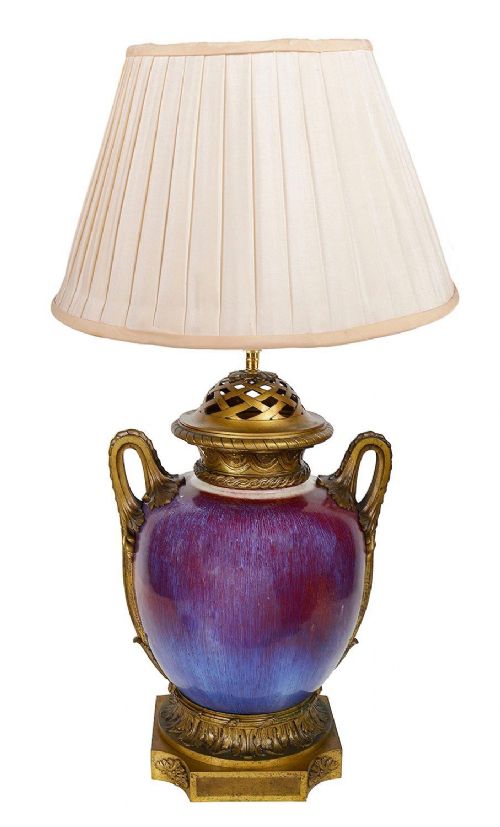
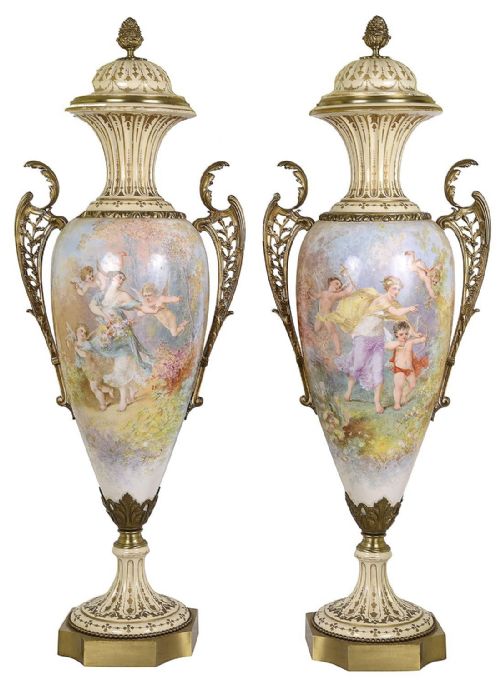
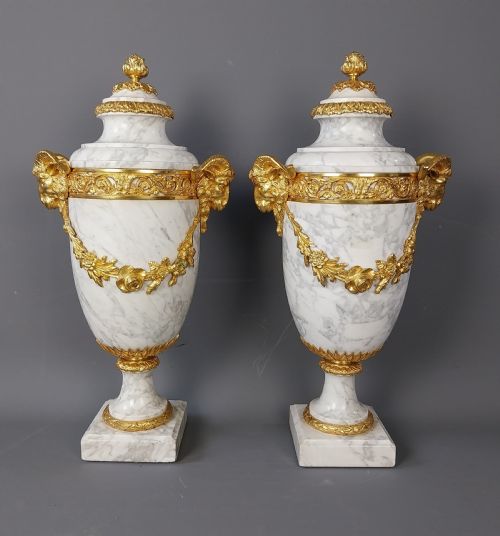
These bronze lidded urns bring sculptural weight and classical form to a room, combining cast metal with porcelain, marble, and gilt mounts.
Bronze Lidded Urns
When you search for bronze lidded urns, you encounter a distinct selection of decorative vessels primarily rooted in the nineteenth century. These objects bridge the gap between classical antiquity and later revival movements, spanning French, Italian, and Asian origins.
The nineteenth-century French examples dominate the selection, heavily leaning into Neoclassical and Rococo revival styles alongside Grand Tour souvenirs. Alongside these European works appear Japanese Meiji period pieces and Chinese export vessels.
Most items take the form of paired decorative vases, cassolettes, or lidded jars mounted on marble bases or cast entirely in patinated and gilt metal. They function primarily as ornamental garnitures for mantelpieces and consoles rather than utilitarian containers.
Materials and construction
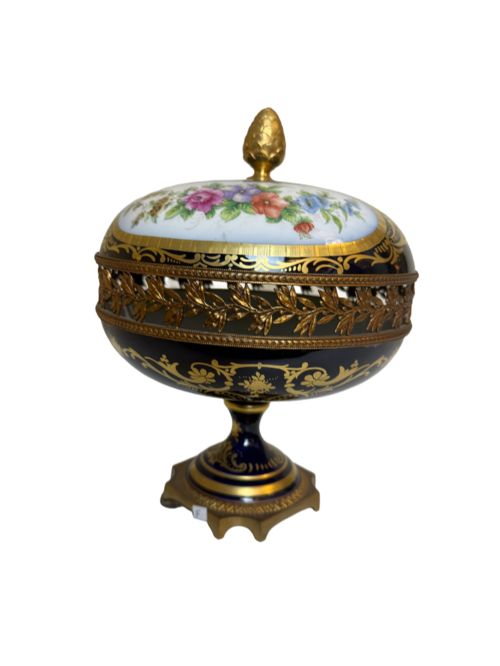
The construction of these pieces relies on the combination of cast metals with decorative inserts and mounts. Workshops utilised bronze, ormolu, gilt metal, and bronzed spelter, frequently pairing the metalwork with Sèvres style porcelain, Limoges porcelain, enamel, and carved marble.
Casting methods produced detailed surfaces that accommodate applied elements such as putti, masks, and classical handles. Gilding, patination, and champlevé enamel techniques completed the bodies, while threaded screws or simple drop-in lids secured the covers.
Listings feature 19th-century French works alongside Japanese Meiji period bronzes and 18th-century Chinese export porcelain.
Assessing quality and finish
The standard of a piece rests heavily on the crispness of the metal casting and the precision of the chasing. Superior examples exhibit sharply defined figures, clean foliage, and tight joints between the bronze mounts and the porcelain or marble bodies.
Weight and material selection also divide the range, as solid bronze and heavy ormolu mounts signal superior workshop production compared to lighter alloys or cast spelter. Hand-painted porcelain panels and deeply cut marble plinths elevate the standing of individual pairs.
Jules Moigniez·Auguste Cain
The Bronze Lidded Urns Glossary
- Ormolu
- Gilded bronze, where a layer of gold is applied to a bronze base using mercury amalgamation or electrochemical plating. This technique produced a bright, durable finish common on nineteenth-century French decorative objects.
- Cassolette
- A dual-purpose vessel functioning either as an urn with a solid lid or inverted to serve as a perfume burner or candle holder. These pieces frequently incorporate marble and ormolu mounts.
- Grand Tour
- A nineteenth-century tradition of travelling through Europe, particularly Italy, where visitors acquired miniature bronzes and architectural souvenirs styled after ancient antiquities.
- Champlevé
- An enamelling technique where troughs or cells are hollowed out of a metal surface and filled with vitreous enamel paste before firing. The resulting design sits flush with the surrounding metal partitions.
- Spelter
- A zinc alloy used as a cheaper, softer alternative to bronze for sculptural castings. It is often painted or bronzed to imitate genuine patinated metal.
Bronze Lidded Urns: Frequently Asked Questions
What were bronze lidded urns used for?
These vessels served primarily as decorative garnitures on mantelpieces, sideboards, and console tables during the eighteenth and nineteenth centuries. Their closed forms meant they functioned as ornamental display pieces rather than practical containers.
Some variations, such as cassolettes, doubled as incense or perfume burners when the lids were turned or removed. They were designed to project status and classical taste within formal domestic interiors.
How do I identify a Grand Tour bronze?
Grand Tour pieces typically date from the nineteenth century and reproduce famous ancient Roman or Greek sculptures and architectural ruins. They often sit on polished marble bases, such as rouge griotte, as portable souvenirs of European travel.
Examine the cast for detailed chasing and a dark patination designed to mimic excavated antiquities. They generally prioritise classical proportions and archaeological subjects over utility.
What is Sèvres style porcelain?
Sèvres style refers to nineteenth-century porcelain produced to emulate the aesthetic of the famous French royal manufactory. These pieces feature rich ground colours, such as bleu céleste or pink, accented by heavy gilding and hand-painted scenes.
They are frequently mounted in ormolu frames or paired with bronze lids to create decorative urns. The style reflects a nineteenth-century revival of eighteenth-century French court taste.
How should I display them at home?
Because many of these items were created as symmetrical pairs, they look best flanking a central mirror, clock, or fireplace. Their weight and mixed materials require sturdy furniture with adequate depth to support marble bases and protruding handles safely.
Keep them away from direct heat sources and moisture to protect vulnerable surfaces like gilt bronze, enamel, and delicate porcelain panels. Regular dusting with a soft, dry cloth preserves the original patination.