
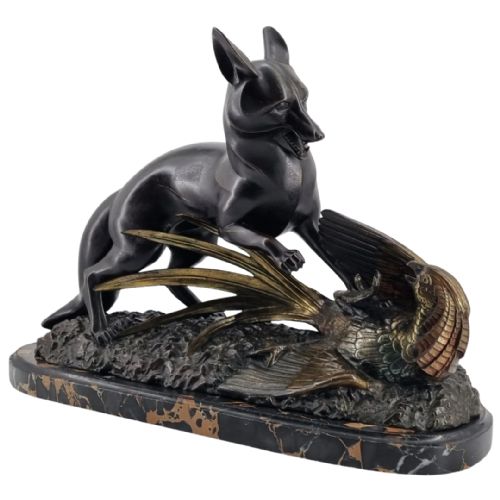
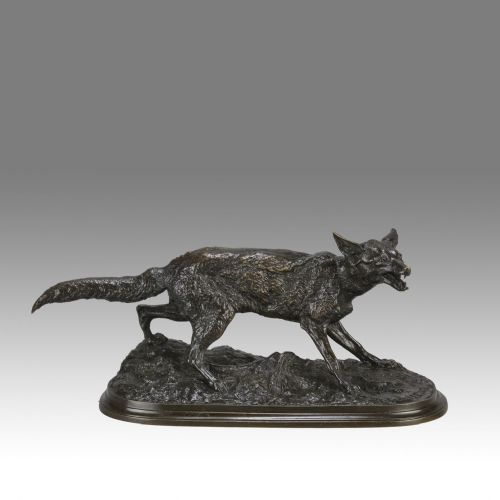
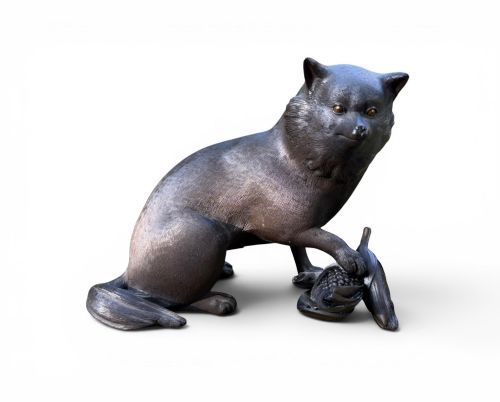


Bronze Fox Sculpture
These bronze fox sculpture works capture cunning and movement in cast metal, bringing the spirit of the hunt and natural world straight to your desk.
Bronze Fox Sculpture
When you search for a bronze fox sculpture, you encounter figures that span the nineteenth and early twentieth centuries, including Animalier subjects and Japanese okimono. These works range from singular studies mounted on marble or green onyx bases to complex hunting scenes and whimsical novelty desk accessories.
You are most likely to meet nineteenth century Animalier pieces on this page, often cast as desk sculptures or inkwells. Subjects vary from naturalistic wildlife depictions to anthropomorphic figures dressed in nightgowns, reflecting diverse European and Japanese artistic traditions.
How they were made
These pieces are created through metal casting techniques using bronze, sometimes finished with a dark patina, silvering, or gilt highlights. Artisans combined these metal casts with heavy stone plinths made from marble or green onyx to anchor the dynamic compositions.
Surface treatments range from cold painted colours to detailed chasing on fur and bristles. Makers utilised specific patination methods to achieve depth in the animal forms and architectural bases.
Bronze Fox Sculpture Retail Price Guide 2026
Typical asking prices for bronze fox sculpture among the pieces listed under this phrase on Sellingantiques today, from the lower quarter to the upper quarter. They describe what is for sale here now, not the wider market.
Some bronze foxes prefer nightgowns over the hunt, appearing as charming inkwells dressed for bed.
What varies in quality
The distinction between tiers of work rests on the crispness of the chase work and the naturalism of the animal anatomy. Sculptures that capture tension in the muscles and expression in the face demonstrate superior foundry skill.
The integration of the bronze figure with its mounting base also defines the calibre of the piece. Superior examples show careful attention to the texture of the bronze surface and the harmonic pairing with marble or onyx.
P J Mêne·Clovis Masson·John Willis Good·Cox And Sons·Isidore Bonheur
The Bronze Fox Sculpture Glossary
- Animalier
- A nineteenth century artistic movement focused on the realistic depiction of animals. Sculptors in this style studied live creatures to render accurate musculature and movement in bronze.
- Okimono
- A Japanese ornamental carving or sculpture designed for display on a shelf or desk. These pieces often depict animals or figures with high narrative detail from the Meiji Period.
- Cold painted
- A colouring technique where paint is applied to cold bronze rather than fired in a kiln. This method allows for delicate polychrome finishes on small study bronzes.
- Patina
- The surface coloration and sheen developed naturally over time or applied chemically by the foundry. A dark patina enhances the sculptural contours of the metal.
Bronze Fox Sculpture: Frequently Asked Questions
What is an animalier bronze?
An animalier bronze is a nineteenth century sculpture focusing on realistic animal subjects. These works capture creatures in action or repose with close attention to anatomical truth.
Foundries across Europe produced these figures for domestic display, often mounting them on marble or stone bases to complement library and desk interiors.
How do I clean a bronze fox?
Cleaning involves gently dusting the metal surface with a soft brush to remove particulates. Avoid harsh chemical cleaners that strip the original patina.
Applying a light microcrystalline wax can protect the bronze finish from atmospheric moisture without altering the colour or texture of the metal.
What is cold painted bronze?
Cold painted bronze refers to metal figures decorated with paint applied after the casting process without high-temperature firing. This technique was popular in Austrian workshops for small animal studies.
Care is required when handling these pieces because the paint can chip or flake if subjected to friction or moisture.
Where were these sculptures displayed?
These sculptures typically decorated nineteenth century desks, libraries, and smoking rooms as functional accessories or decorative studies. Inkwells and antdesks formed common domestic forms.
The inclusion of stone bases like green onyx allowed the heavy metal figures to sit securely on wooden furniture without causing damage.