






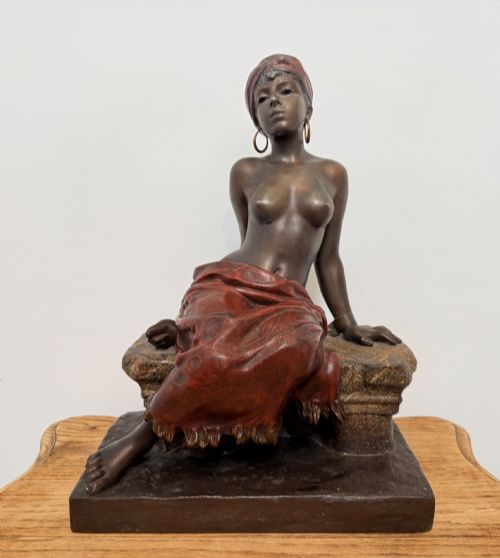
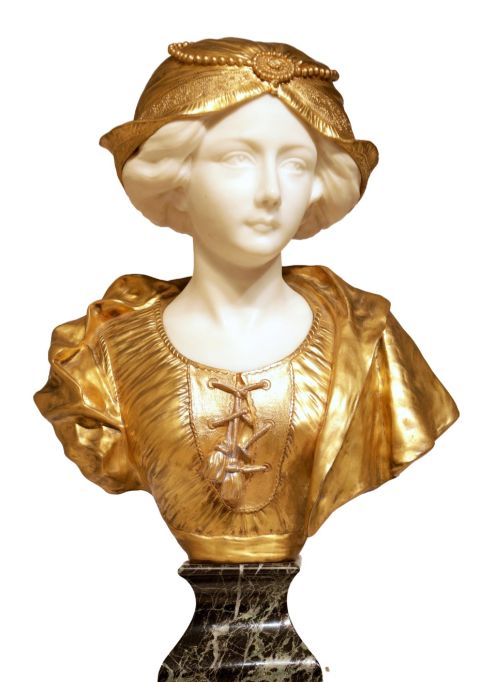
Bronze Female Statue
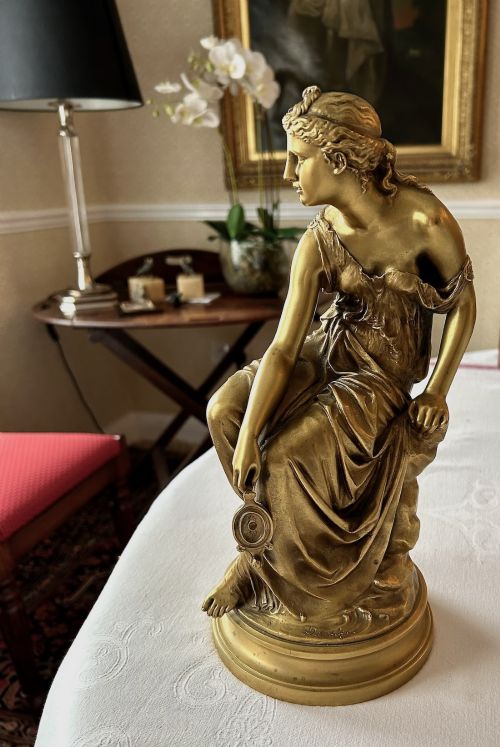
A bronze female statue brings the grace of the classical world and the bold lines of the twentieth century directly to a mantelpiece.

Bronze Female Statue
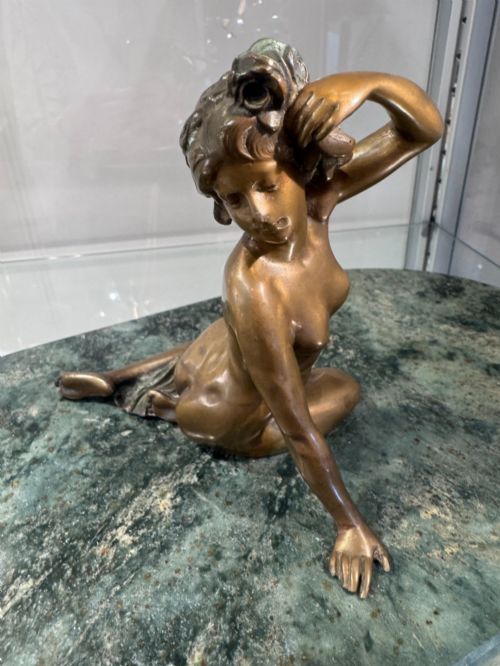
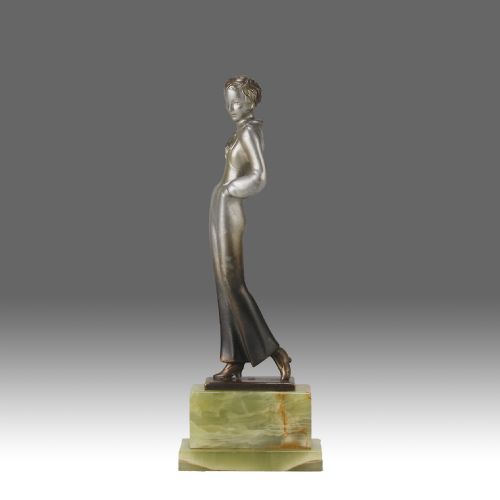
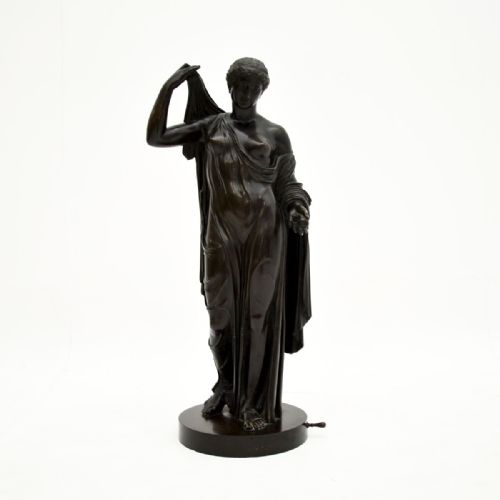
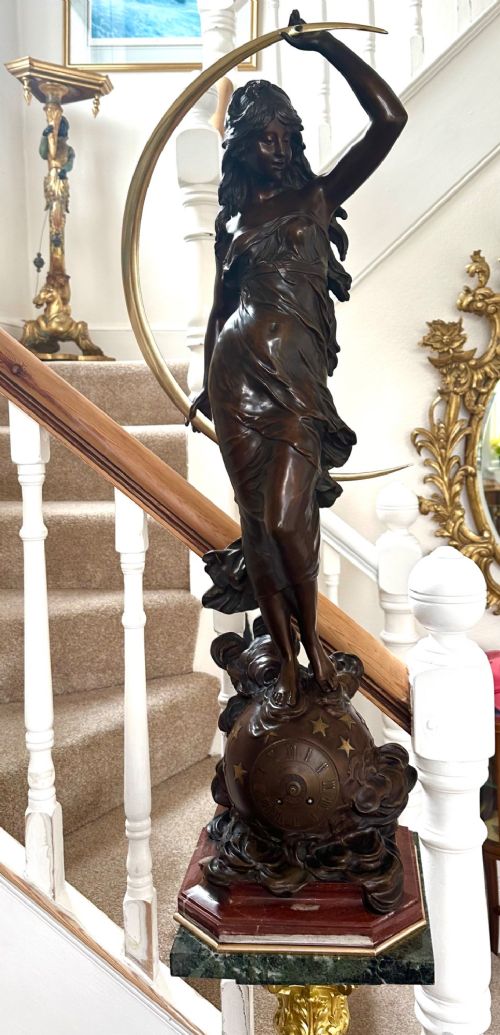
A bronze female statue captures the human form through centuries of changing aesthetic ideals, ranging from strict classical restraint to the fluid motion of Art Nouveau and the geometric precision of Art Deco. These works appear as standalone tabletop figures, wall-mounted busts, and sculptural lamps, often depicting dancers, mythological figures, and allegorical maidens.
The pieces on this page lean heavily towards late nineteenth-century French foundry work and early twentieth-century Austrian cabinet bronzes, alongside related figures cast in spelter. Collectors encounter grand neoclassical interpretations of antiquity alongside lively cabaret dancers from the nineteen-twenties and nineteen-thirties created by celebrated European sculptors.
Materials and Technique
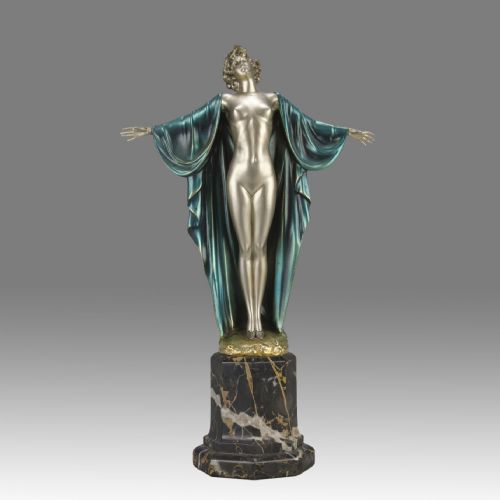
Foundries cast these figures using the lost-wax method or sand casting, capturing intricate folds of drapery and delicate facial expressions in molten metal. Artisans then applied chemical patinas ranging from deep brown to golden gilt, or added brilliant cold-painted polychrome surfaces directly onto the bronze.
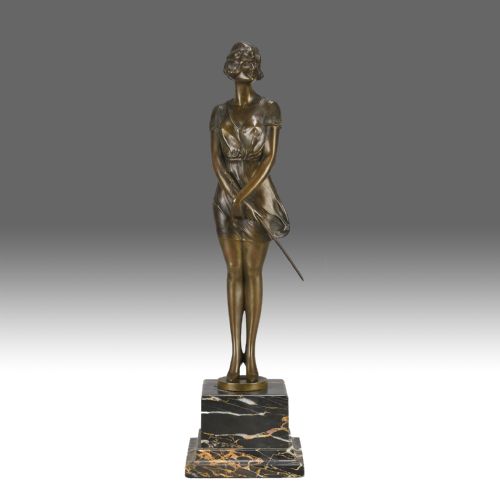
Many of these figures find support on bases of carved marble or dark onyx, providing stability and a contrasting natural texture to the polished or patinated metal above.
Bronze Female Statue Retail Price Guide 2026
Typical asking prices for bronze female statue among the pieces listed under this phrase on Sellingantiques today, from the lower quarter to the upper quarter. They describe what is for sale here now, not the wider market.
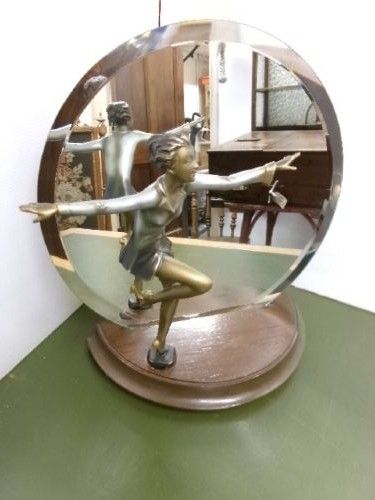
Several figures hold harps, tambourines, or trailing drapery, while others balance delicately as ice skaters and cabaret dancers.
Assessing Quality
Quality rests primarily in the crispness of the chasing and the subtlety of the surface finish, where master founders hand-chiseled details after casting to ensure hair, fingers, and fabric appeared lifelike rather than soft or generalized. The weight of the metal and the integration with genuine marble or onyx bases also distinguish ambitious studio works from commercial production pieces.
The distinction between a signed bronze by a known artist and an unsigned contemporary edition or a later spelter alternative often lies in the balance of the composition and the depth of the patination, which deepens naturally over decades of handling.
Etienne-Henri Dumaige·Rudolf Küchler·Ferdinand Barbedienne·Bruno Zach·Pierre le Faguays·Ferdinand Preiss·Josef Lorenzl·August Moreau·Emmanuel Villanis·Affortunato Gory·Mathurin Moreau·Demetre Chiparus·Henri Godet·Jules Dalou·Edouard Drouot·Carrier-Belleuse·Emile Jespers
The Bronze Female Statue Glossary
- Patina
- The surface coloration and sheen developed naturally over time or applied chemically by the foundry. This layer protects the metal and adds depth to the contours of the figure.
- Spelter
- A zinc alloy frequently utilised as a less costly alternative to bronze during the late nineteenth and early twentieth centuries. It often received a bronze-like finish to imitate solid metal figures.
- Cold Painted
- A technique where natural paint is applied to cold metal without firing, common in Viennese animal and human figures from the early twentieth century. It requires careful handling to preserve the original pigment.
- Grand Tour
- The nineteenth-century tradition where wealthy travellers collected small bronzes of classical antiquities in Italy and France as souvenirs. These pieces often depict famous mythological subjects.
- Lost-wax casting
- A process where a wax model is melted out of a ceramic mould to create a hollow metal casting. This technique allows for extreme detail in complex sculptural forms.
Bronze Female Statue: Frequently Asked Questions
How do I clean a bronze statue?
Dust the surface gently with a soft, dry cloth to remove everyday particles without disturbing the underlying patina.
Avoid using water, soap, or abrasive metal polishes, as these chemical treatments strip away historical finishes and damage the metal.
Are spelter and bronze the same?
Spelter is a softer zinc-based alloy, whereas bronze is a durable alloy composed mainly of copper and tin.
Figures cast in spelter generally feel lighter and show less metallic resonance when tapped compared to solid bronze pieces of identical size.
What is cold-painted bronze?
Cold-painted bronze refers to figures finished with non-fired paint applied directly to the metal surface.
This technique creates vibrant costumes on dancers and theatrical figures, though the paint remains delicate and vulnerable to moisture.
How do I date an antique bronze?
Dating relies on stylistic markers like Art Nouveau curves or Art Deco geometries, alongside foundry marks and the composition of the base.
Examining the underside for mounting screws, casting seams, and the natural wear of the patina helps confirm the period of production.