


Bronze Cupid Sculpture
A bronze cupid sculpture captures classical mythology in solid metal, bringing timeless winged figures and romantic symbolism directly into your interior.
Bronze Cupid Sculpture
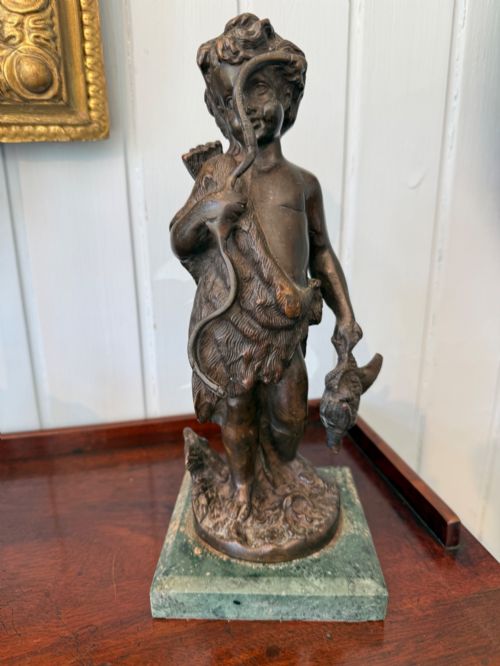
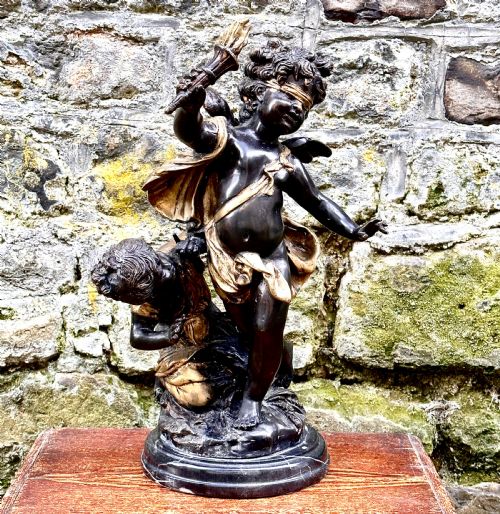
A bronze cupid sculpture represents the classical god of love, frequently appearing alongside winged putti, cherubs, and figures from mythological narratives. These pieces span the nineteenth century, drawing heavily on Neoclassical, French Classical, and Victorian aesthetic traditions. You will encounter standalone decorative sculptures, bookends, and figures mounted upon marble or inlaid wood bases.
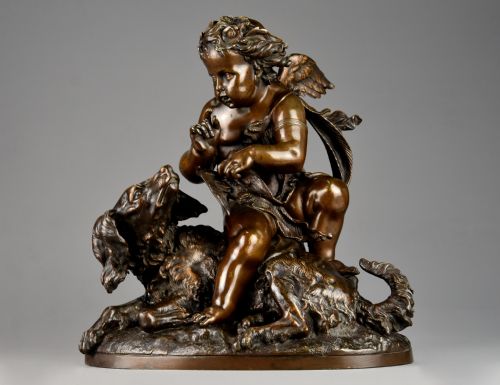
French foundries produced a large share of these works, ranging from small cabinet bronzes to substantial signed salon sculptures. The subjects often include Eros, Cupid and Psyche, or winged infants engaged in playful or domestic pursuits. They function equally well as standalone desk ornaments or focal points on mantelpieces.
What varies in quality
The precision of the chasing work and the depth of the metal patination dictate the visual success of the piece. Finer examples display crisp feather work on the wings and subtle tonal variations across the bronze surface, whereas simpler casts lose these delicate transitions.
The quality of the mounting base contributes significantly to the overall presence of the sculpture. Heavy, well-finished marble or finely inlaid wooden plinths elevate the standing of the work far beyond standard unmounted casts.
Listings feature nineteen-century dates, predominantly utilising bronze, marble, and patinated bronze within Neoclassical and Victorian styles.
Louis Auguste Moreau·Aug Moreau·Ferrand·Clodion·Paul Ponsard·Vauthier Thiebu Founders Paris
The Bronze Cupid Sculpture Glossary
- Putto
- A plump, winged infant figure often featured in classical art. These cherubic motifs frequently appear in nineteenth-century decorative bronzes.
- Patination
- The chemical or natural surface colouring applied to bronze. A rich patina deepens the visual texture of the metal.
- Neoclassical
- An artistic style drawing inspiration from the art and culture of classical antiquity. It dominated much of nineteenth-century sculpture design.
- Grand Tour
- A cultural journey undertaken by wealthy young Europeans to study classical antiquities. Figures from this tradition often replicated famous classical sculptures.
- Chasing
- The manual refinement of a raw metal casting using small punches and hammers. This technique restores crisp details lost during the moulding process.
Bronze Cupid Sculpture: Frequently Asked Questions
How do I clean a bronze cupid sculpture?
Dust the surface gently with a soft, dry brush to prevent the accumulation of grit in recessed details.
Avoid using commercial metal polishes or liquid cleaners, as these substances can strip away the original patination.
Are these sculptures solid bronze?
Many nineteenth-century figures utilise hollow-cast bronze construction to reduce weight and material costs while maintaining structural strength.
Heavier elements often derive their weight from the integrated marble or wood bases rather than solid metal casting.
What is the difference between Cupid and a putto?
Cupid specifically represents the Roman god of romantic love, frequently shown holding a bow, arrow, or torch.
Putto refers more broadly to any winged infant figure used as a decorative motif in classical compositions.
How do I identify a nineteenth-century piece?
Examine the base materials, casting seams, and patination style alongside any foundry marks or artist signatures stamped into the metal.
Nineteenth-century works typically display heavier stone mounts and darker, richer chemical patinas than later reproductions.