


Bronze Cherub Figure
These pieces gather bronze cherub figure examples cast in nineteenth and early twentieth century foundries, capturing classical winged youths as lamps, clocks, and standalone sculptures.
Bronze Cherub Figure
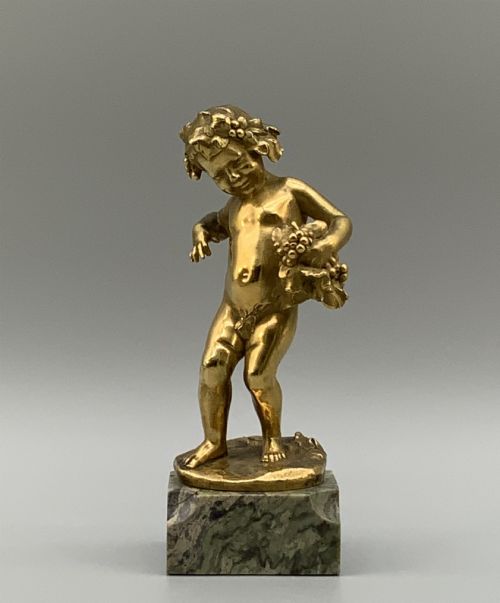
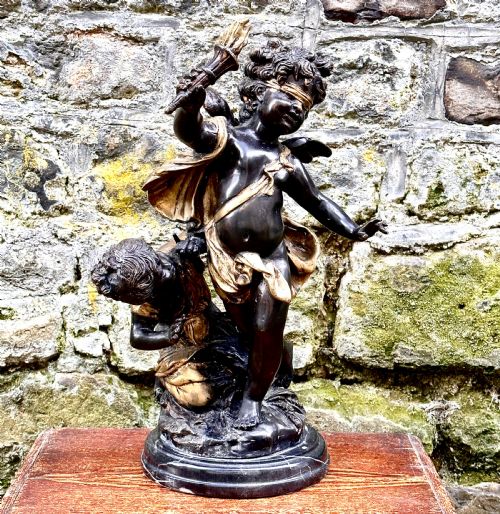
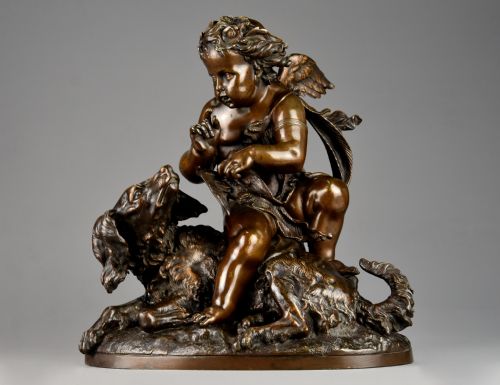
When you search for bronze cherub figure, you find sculptural works depicting winged mythological youths, putti, and amorini engaged in musical, agricultural, or playful pursuits. These pieces emerge predominantly from nineteenth century French and Italian workshops, styled in Neoclassical, Rococo Revival, and Empire aesthetics.
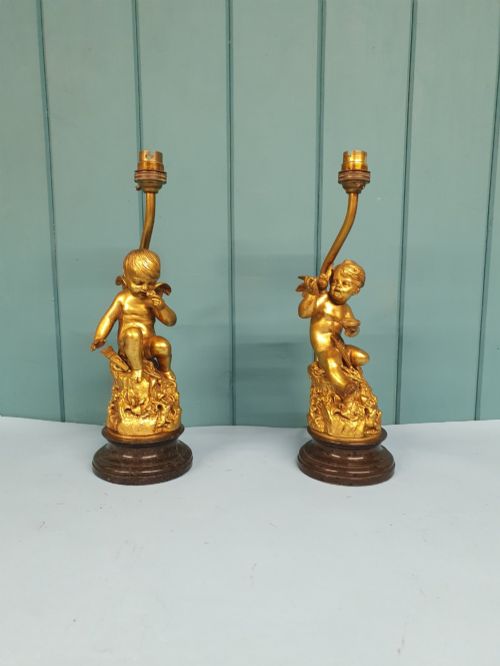
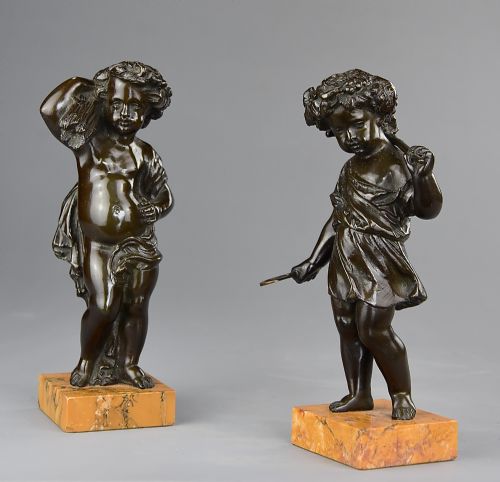
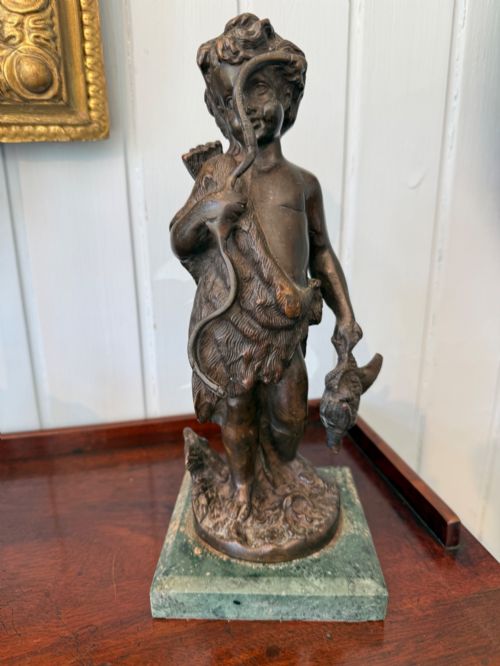
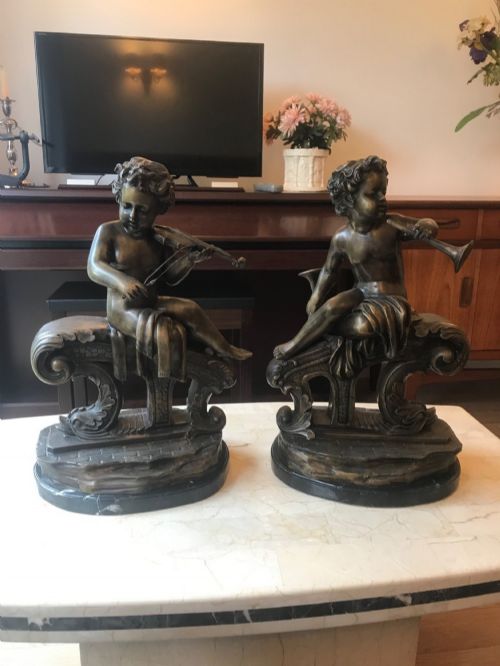
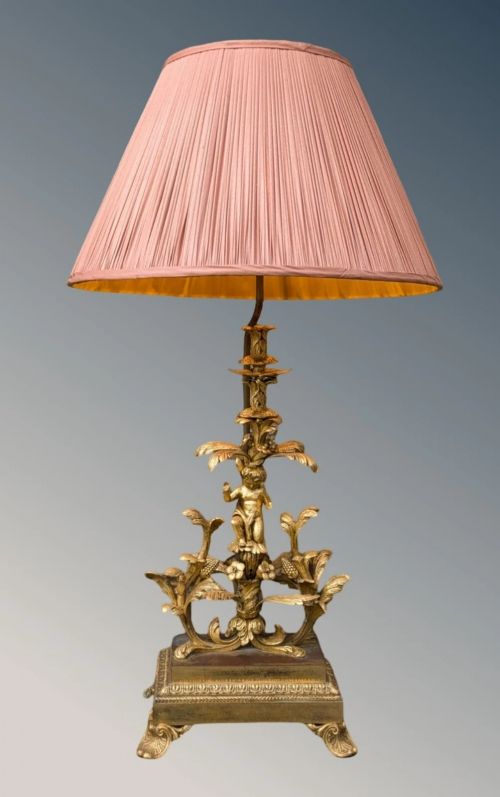
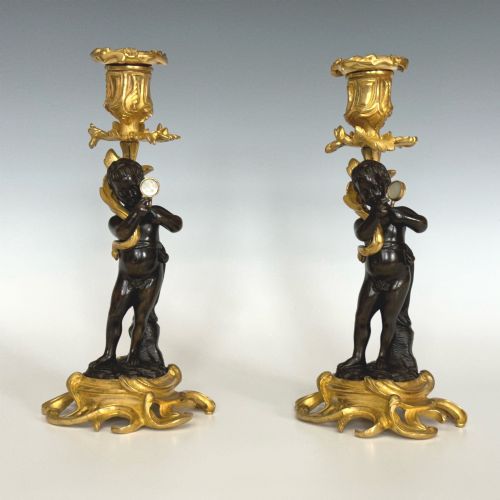
The most frequent forms on this page include standalone table sculptures, figural bookends, and pairs of decorative figures mounted on marble bases. Many examples also integrate functionality into the casting, serving as candelabra, mantel clocks, and table lamps.
How they were made
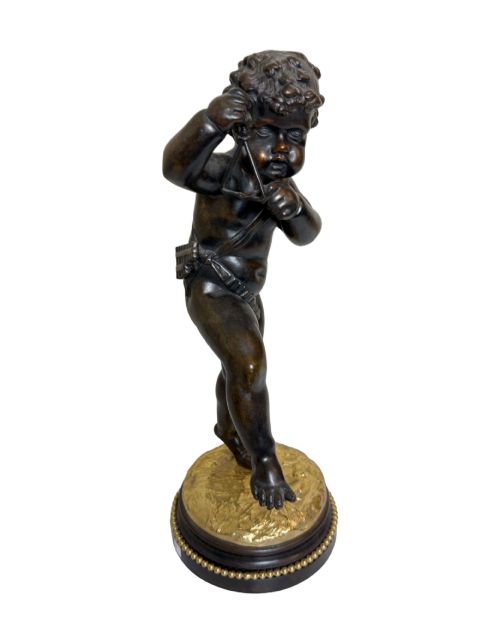
Foundries utilised traditional lost wax or sand casting methods to shape the molten metal, producing intricate details in the wings, hair, and drapery. Artisans then finished the raw metal using patination, gilding, or ormolu techniques to create contrasting dark and bright metallic surfaces.
Many sculptures incorporate secondary materials such as white or coloured marble plinths, glass shades, and wood components to support the heavier bronze compositions.
Several cherubs double as hunters, musicians, or grape thieves.
What varies in quality
The distinction between tiers of work rests primarily on the crispness of the chasing and the nuance of the surface finish. Superior castings retain sharp definition in facial expressions and feathered wings without relying on post-cast filing to obscure imperfections.
The integration of the figure with its mounting also signals distinction, particularly where patinated bronze meets polished ormolu mounts and heavy marble bases.
Charles Louis Malric·Susse Frères·Claude Michael Clodion·K and O·Louis Auguste Moreau·Auguste Moreau·Charles Cumberworth·Carrier
The Bronze Cherub Figure Glossary
- Putto
- A plump, naked male child figure often depicted with wings in classical and Renaissance art. These winged infants form the primary subject matter across these groupings.
- Ormolu
- Gilt bronze created by applying finely ground gold mercury amalgam to a bronze base. This technique produces a brilliant golden surface finish seen on French decorative objects.
- Patination
- The chemical treatment or natural weathering applied to the surface of bronze. This process alters the colour of the metal, yielding rich brown, green, or dark tones.
- Grand Tour
- A nineteenth century cultural journey through Europe undertaken by young gentry to collect classical antiquities. Figures from this tradition often copy ancient models in bronze and marble.
- Garniture set
- A decorative matching set comprising a central clock flanked by vases, candelabra, or figural groups. These sets sit upon mantelpieces and console tables.
Bronze Cherub Figure: Frequently Asked Questions
What is a putto?
A putto is a chubby infant figure, frequently winged, representing classical spirits of love or mischief. You see them playing musical instruments, gathering grapes, or holding bows.
Artists across the nineteenth century drew heavily on Renaissance depictions of these winged youths to animate clocks, lamps, and decorative bookends.
How are these figures cleaned?
Dusting gently with a soft, dry cloth preserves the original surface patination and prevents accumulation in the crevices. Avoid chemical polishes and abrasive cloths that strip historical finishes from the metal.
Wax can occasionally protect older patinated surfaces, but only when applied sparingly by experienced hands.
Why do some figures stand on marble?
Foundries mounted bronze castings onto marble bases to provide physical stability and visual contrast for the darker metal. White and coloured stone plinths elevate the sculpture and protect the underside of the bronze.
This pairing became standard practice in French decorative arts during the nineteenth century.
Are these pieces purely decorative?
Many examples combine art with utility by incorporating candle holders, clock movements, or electrical fittings. Converted pieces integrate older cast figures into later lamp bases.
Standalone sculptures and bookends serve primarily to adorn desks, shelves, and mantelpieces.