
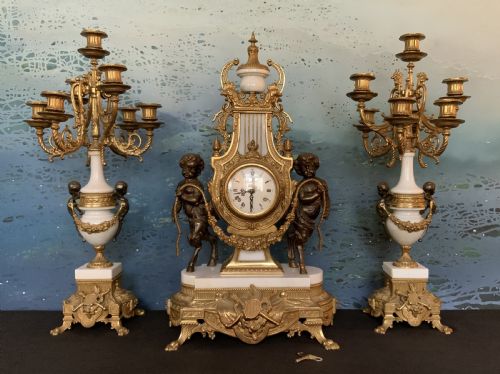
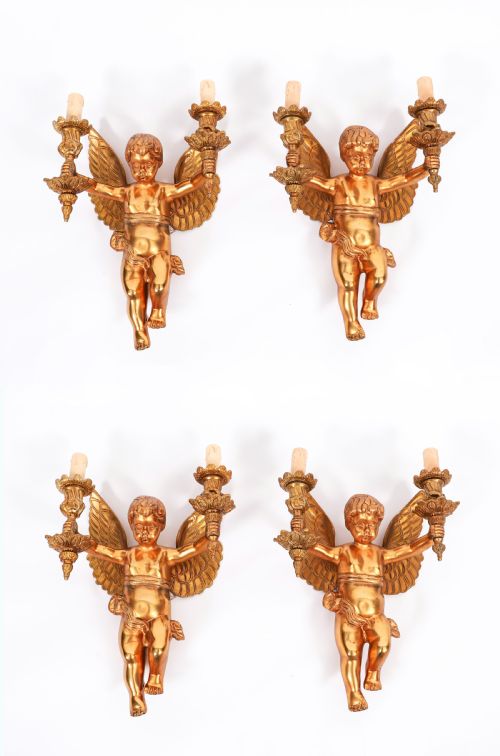


Bronze Candelabra Set
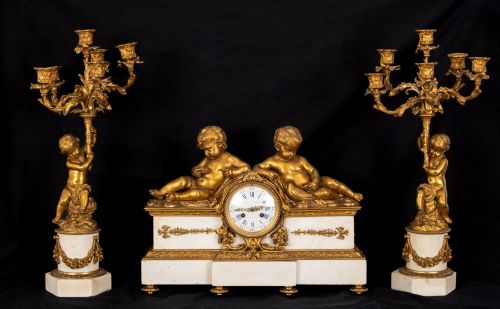
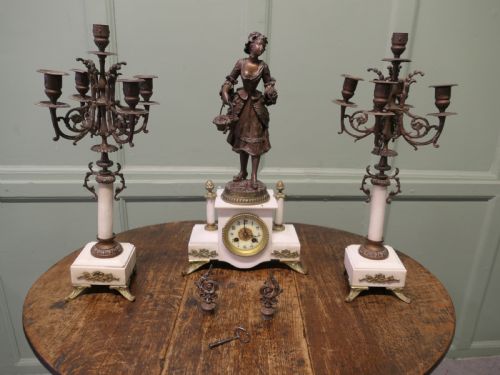
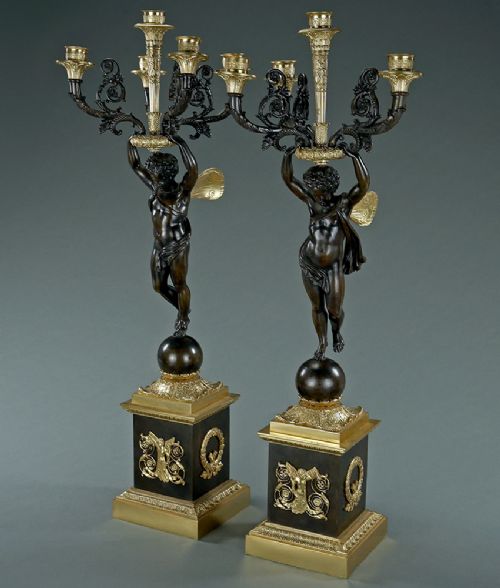
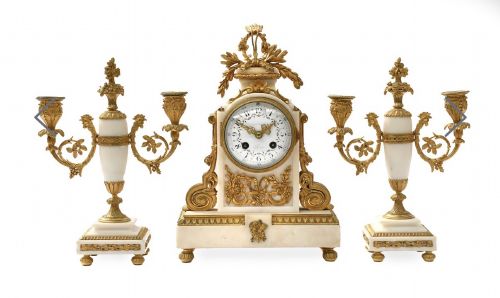
These heavy, gilded bronze candelabra set groupings bring nineteenth-century French drawing room theatre directly onto a mantelpiece.
How they were made
Foundry workers cast the structural components in bronze and brass, utilising lost-wax or sand-casting methods to achieve intricate scrollwork and figural details. Artisans then chased the metal surfaces by hand with chisels and punches to sharpen the foliage and animal motifs.
Gilding was applied through mercury amalgamation or fire gilding, depositing a durable layer of gold onto the bronze to create the bright ormolu finish. Cut marble bases and turned columns were fitted alongside enamel dials and hand-painted porcelain panels.
What varies in quality
Depth and weight of the ormolu gilding determine the longevity of the surface finish. Heavy marble bases and fully signed clock movements from known makers distinguish exceptional drawing-room garnitures from simpler provincial sets.
Listings feature nineteenth-century French and Italian pieces utilising gilt bronze, white marble, ormolu, and patinated bronze in Louis XVI revival styles.
Henry Dasson·Auguste Cain·H Luppens Paris·Raingo Fres Paris·Japy Freres
The Bronze Candelabra Set Glossary
- Ormolu
- Gilded bronze, produced by applying a gold and mercury amalgam to a bronze base and heating it until the mercury vaporised. This technique creates a rich, enduring golden surface common on nineteenth-century French metalwork.
- Garniture
- A coordinated set of ornamental objects designed to be displayed together, typically consisting of a mantel clock accompanied by matching candelabras, urns, or vases. They anchor decorative schemes on grand chimney pieces.
- Candelabra
- A branched candlestick holder designed to support multiple taper candles simultaneously. In nineteenth-century sets, they are cast to match the stylistic vocabulary of the central clock.
- Patinated bronze
- Bronze that has been chemically treated or allowed to oxidise naturally to produce a dark, subtle surface tone. This contrasts against the bright, reflective highlights of adjacent ormolu mounts.
- Louis XVI Revival
- A nineteenth-century decorative style drawing on neoclassical symmetry, straight fluted columns, ribbon twists, and classical urn motifs. It dominates the design language of these bronze sets.
Bronze Candelabra Set: Frequently Asked Questions
How do I clean bronze and ormolu?
Dust surfaces gently with a soft dry brush to prevent accumulation in the recesses of the cast ornament. Avoid water, abrasive cloths, or chemical polishes that strip historical gilding.
Patinated bronze requires minimal interference beyond occasional wiping with a clean microfiber cloth. Preservation of the original surface patination maintains historical integrity.
Were these sets used for lighting?
Candelabras functioned as practical light sources before electric domestic illumination became widespread, holding wax tapers during evening gatherings. They were placed on mantelpieces where reflective mirrors amplified the candle flames.
Many surviving pieces retain wax residue in the drip pans from active historical usage. Later owners often converted them or kept them strictly for decorative display.
How do I spot a matched set?
Examine the casting style, bronze alloy colour, and mounting details across both the candelabras and the central clock. Genuine matched sets share identical foundry marks, patination wear patterns, and base construction methods.
Assembled sets often reveal subtle discrepancies in marble shade or gilding thickness. Consistent wear and matching numbering inside the bases confirm factory coordination.
What is a clock garniture?
A clock garniture is a decorative grouping composed of a mantel clock flanked by matching ornaments such as candelabras, urns, or vases. These three-piece or five-piece arrangements created visual symmetry on nineteenth-century drawing-room mantelpieces.
The central clock establishes the thematic design, while the side pieces echo its motifs and materials. They were status symbols in formal Victorian and French interiors.