






Ornate Bronze Garniture
An ornate bronze garniture brings grand nineteenth-century French styling and matching decorative balance to a mantelpiece.
Ornate Bronze Garniture
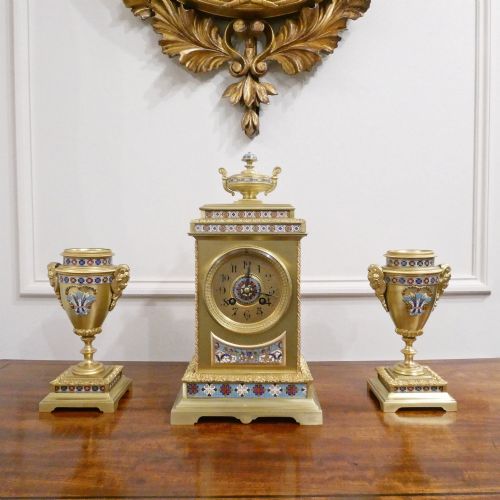
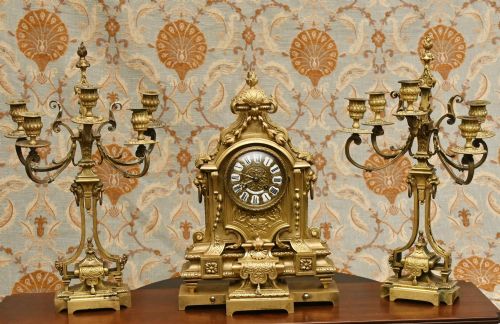
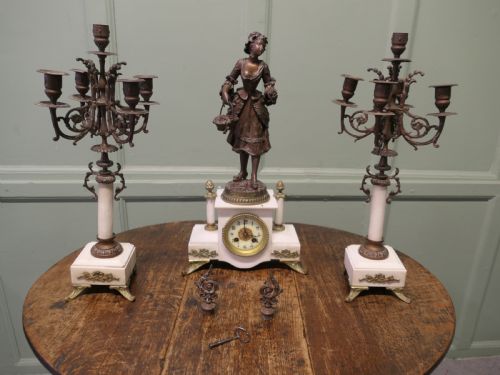
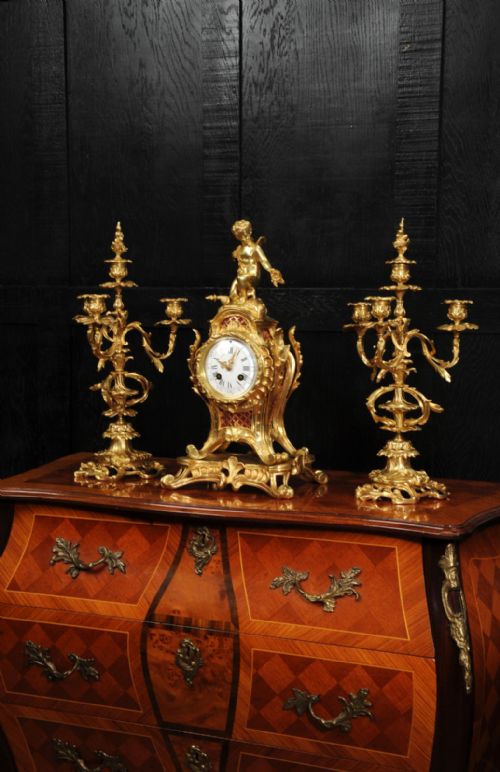
An ornate bronze garniture consists of a central mantel clock accompanied by matching sidepieces such as candelabra or vases, designed to coordinate across a formal fireplace.
The pieces appearing here belong predominantly to nineteenth-century French traditions, spanning Victorian, Edwardian, and specific revival periods like Napoleon III and Louis XVI.
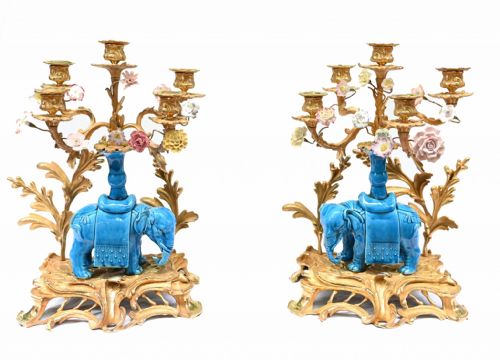
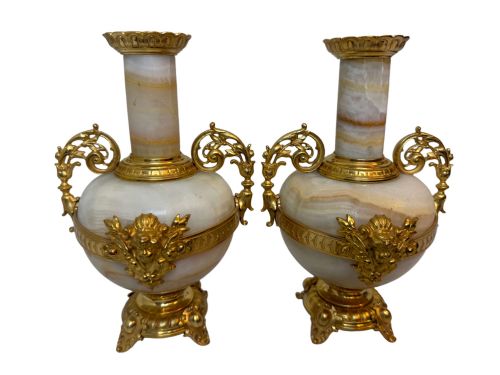
Forms range from complete three-piece clock sets involving candelabra to paired vases or elephant candelabras incorporating diverse materials alongside the core metalwork.
How they were made
Foundry work combined cast bronze and ormolu, often utilising fire-gilding techniques to achieve a rich metallic surface finish.
Casting incorporated detailed classical or rococo motifs, while decorative elements integrated contrasting components like white onyx, red marble, porcelain, and champlevé enamel.
Ornate Bronze Garniture Retail Price Guide 2026
Typical asking prices for ornate bronze garniture among the pieces listed under this phrase on Sellingantiques today, from the lower quarter to the upper quarter. They describe what is for sale here now, not the wider market.
Listings feature nineteenth-century French items combining gilt bronze, marble, porcelain, and enamel.
What varies in quality
The refinement of the chasing and the depth of the casting separate standard production from exceptional examples, as sharper detail in the bronze foliage and figures indicates superior hand-finishing.
The selection and integration of secondary materials such as Sevres porcelain panels, fine marble bases, and enamel dials dictate the overall visual hierarchy of a garniture set.
The Ornate Bronze Garniture Glossary
- Ormolu
- Gilded bronze produced through an application of gold amalgam to a base metal. This surface treatment was widely utilised in French decorative arts during the eighteenth and nineteenth centuries.
- Garniture
- A set of matching decorative objects designed to be displayed together on a mantelpiece or sideboard. Typically comprises a central clock flanked by two vases or candelabra.
- Champlevé
- An enamelling technique where troughs or cells are hollowed out of the metal surface and filled with vitreous enamel powder before firing. The resulting design shows vibrant colour set against metallic partitions.
- Rococo
- A decorative style characterised by asymmetrical scrollwork, naturalistic shell motifs, and exuberant curves. It heavily influenced nineteenth-century French clock garnitures.
- Candelabra
- Branched candlestick holders designed to hold multiple tapers. They form the matching sidepieces in many clock garniture sets.
Ornate Bronze Garniture: Frequently Asked Questions
What is included in a clock garniture?
A clock garniture typically comprises a central mantel clock accompanied by a matching pair of side ornaments, such as candelabra or decorative vases.
These pieces share identical stylistic motifs, materials, and finishes to create a cohesive decorative arrangement for a room.
Where should I place a garniture set?
These sets are traditionally designed for prominent display on a mantelpiece above a fireplace, where the central clock and flanking pieces balance the architectural space.
They also function effectively on large sideboards, credenzas, or console tables where their height and width can be fully appreciated.
How do I identify a French nineteenth-century set?
Nineteenth-century French sets often feature characteristic stylistic revivals such as Louis XVI or Rococo, combined with materials like ormolu, marble, and porcelain.
Clocks from this era frequently bear workshop signatures or movement stamps on the backplate.
What materials are combined with the bronze?
Maker workshops frequently integrated contrasting elements such as white onyx, red marble, and Sevres porcelain into the bronze framework.
Enamel dials and champlevé detailing also appear regularly across nineteenth-century examples to add colour and texture.