


Bronze Candelabra Clock Set
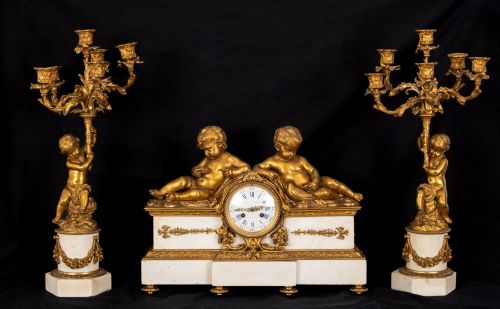
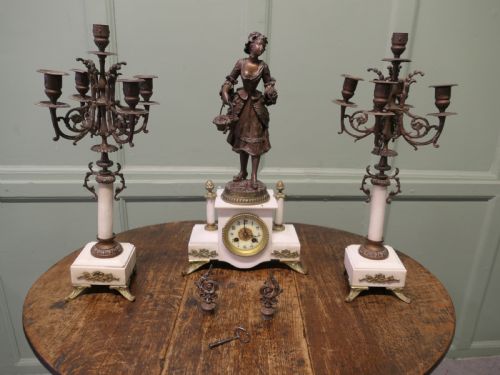
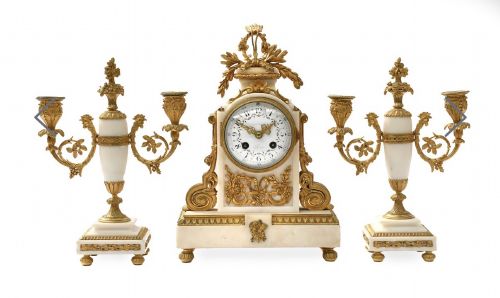
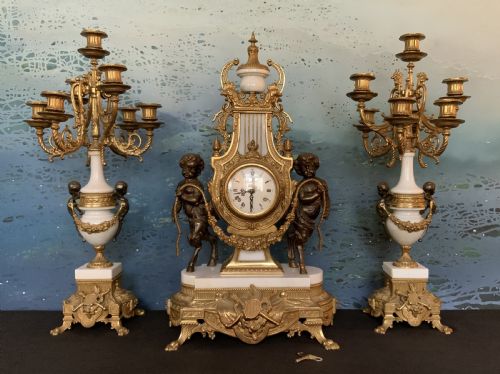
A bronze candelabra clock set brings together a central mantel timekeeper and matching candle holders to anchor a room.
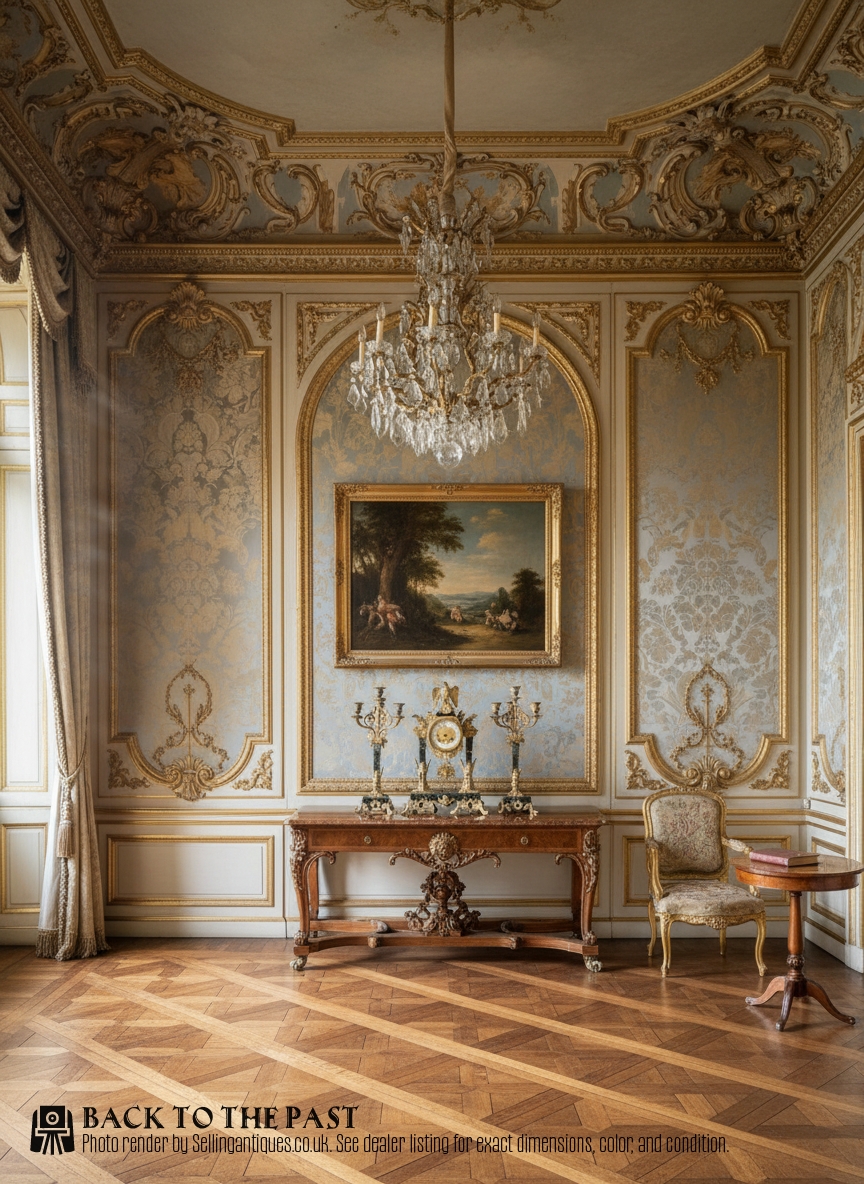
Bronze Candelabra Clock Set
A bronze candelabra clock set is a matching arrangement designed for a mantelpiece, consisting of a central clock flanked by twin candelabras or urns. These decorative ensembles appear frequently from the nineteenth century, reflecting the ornate tastes of Victorian and Second Empire interiors.
The most common examples on this page are French works executed in Louis XVI revival and Empire styles. They combine metalwork with white or coloured marble bases, often incorporating figures such as cherubs, cupids or classical motifs.
How they were made
The makers of a bronze candelabra clock set cast their components in bronze, brass or gilt metal, frequently applying ormolu to achieve a rich golden finish. This metalwork is paired with carved marble, onyx and inset porcelain panels.
Clock movements relied on eight-day mechanisms, while dials often featured enamel chapter rings. Figures and decorative mounts were individually cast and chased before being assembled onto the stone bases.
Many sets include watchful cherubs peering out from the clock face.
What varies in quality
The distinction between ordinary and exceptional sets rests on the crispness of the bronze chasing and the weight of the materials used. Superior examples display finely sculpted figures and substantial marble plinths rather than light pressed metals.
The harmony of the matching pieces also dictates worth, as complete sets retaining their original gilding and undamaged enamel dials command greater attention than mismatched or heavily altered assemblies.
Henry Dasson·H Luppens Paris·Raingo Fres Paris·AD Mougin Paris·Deniere Paris·Japy Freres
The Bronze Candelabra Clock Set Glossary
- Ormolu
- A technique of applying finely ground high-carat gold to a bronze base. This process creates a brilliant, durable finish seen on many nineteenth-century mounts.
- Garniture
- A matching set of ornamental objects designed to be displayed together on a mantelpiece or sideboard. A clock garniture typically includes a central clock and two side pieces such as candelabras or urns.
- Louis XVI Style
- An aesthetic revival drawing on classical symmetry, straight lines and restrained neoclassical ornament. It appears frequently in French bronze work from the nineteenth century.
- Enamel
- A glassy substance fused to metal dials to create a smooth, white surface for painted numerals. These fragile faces are prone to hairline fractures over time.
- Chasing
- The manual finishing of cast metal using small punches and hammers to sharpen details and textures. High-end sets show deep, crisp definition in their foliage and figures.
Bronze Candelabra Clock Set: Frequently Asked Questions
What is a bronze candelabra clock set?
A bronze candelabra clock set is a coordinated arrangement featuring a mantel clock flanked by matching candle holders. These decorative ensembles were designed to sit centrally on a fireplace mantel.
They combine cast bronze or ormolu metalwork with materials like marble, porcelain, and glass. The matching candelabras echo the decorative style of the central timekeeper.
Where were these clock sets made?
The vast majority of these ornamental sets originated in France during the nineteenth century. Parisian workshops and foundries produced them for domestic and international markets.
Styles from this period frequently drew inspiration from earlier French royal aesthetics, particularly the Louis XVI and Empire periods.
How do these clocks operate?
These timepieces typically utilise mechanical eight-day movements that require manual winding with a key. They strike the hours and half-hours on bells or gongs.
The clock faces often feature delicate enamel chapters paired with ornate hands driven by brass gear trains.
How should I display a clock set?
These heavy sets require a sturdy, level surface such as a mantelpiece, sideboard, or large console table. Placing the clock centrally with a candelabra on each side creates a balanced display.
Keep them away from direct sunlight and excessive moisture to protect the marble bases and gilded surfaces.