
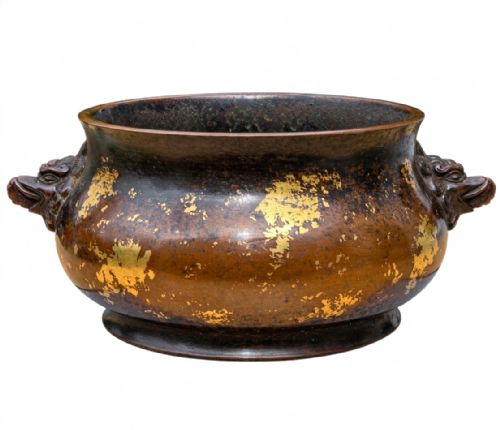


Bronze Asian Bowl
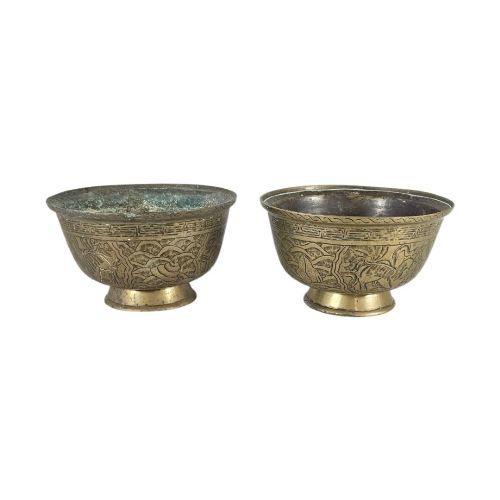
These heavy, patinated vessels known as a bronze asian bowl span centuries of East Asian metalwork and utilitarian design.
Bronze Asian Bowl
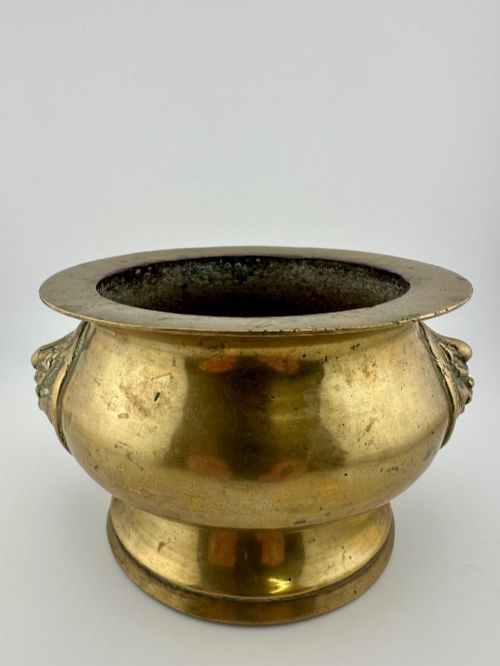
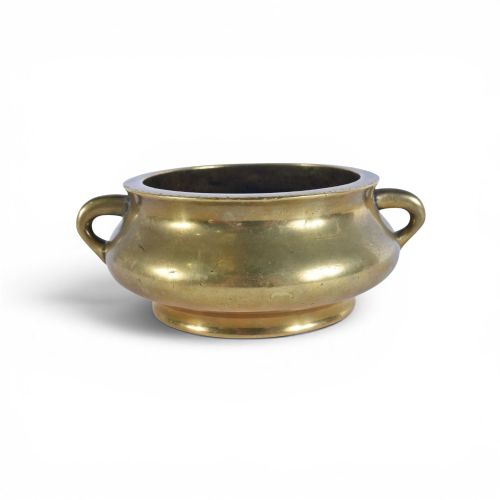
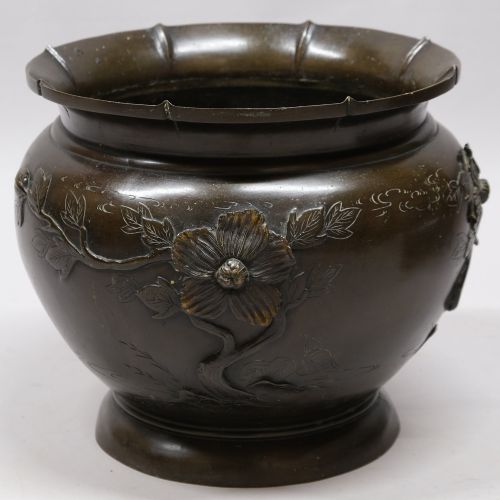
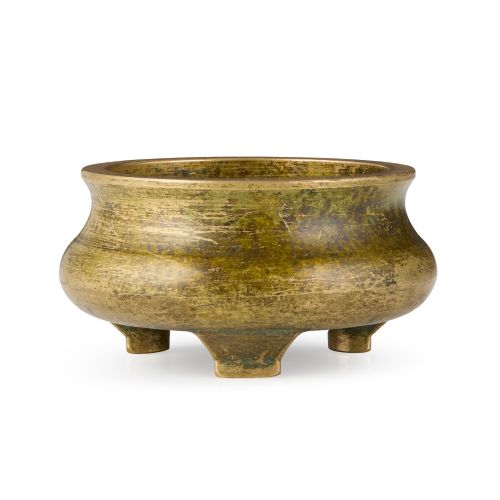
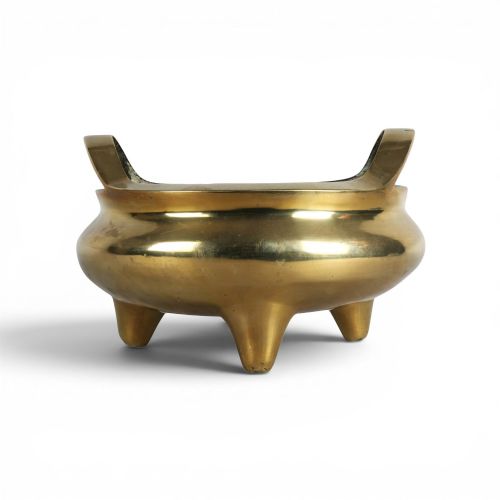
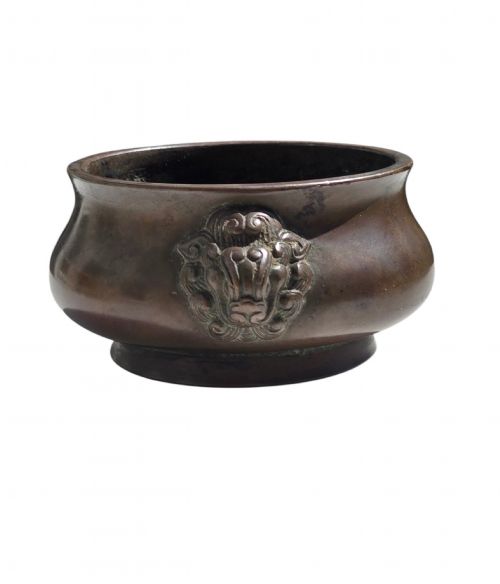
A bronze asian bowl encompasses utilitarian forms ranging from scholar's censers and tripod incense burners to large jardinieres and lidded pedestal bowls. The selection here leans heavily towards Chinese and Japanese production, encompassing domestic ritual vessels alongside decorative planters.
The chronology represented stretches from the late sixteenth century through the nineteenth century, capturing distinct aesthetic shifts. Ming Dynasty pieces stand alongside Qing examples, while Japanese pieces cover the Edo and Meiji periods.
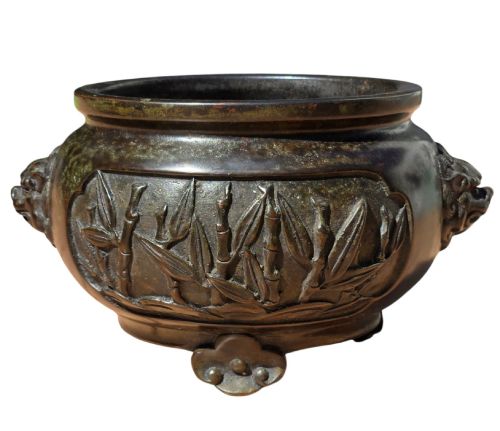
Buyers encounter items such as lion mask handle censers, taotie mask vessels, and relief-panelled bowls intended for scholarly studios or domestic display. Each period brings specific casting weights and surface treatments characteristic of its regional workshop traditions.
Materials and casting techniques
Metalworkers utilised cast bronze, brass, and copper alloy, often pairing the primary metal with gold leaf or gilt splashes to enrich the surface texture. Heavy cast weights define the sturdier items, producing distinct bell-ring resonance when struck.
Surface ornamentation incorporates champlevé and cloisonné enamel work, soldering metal wires to the bronze body to create compartmentalised fields filled with coloured enamel pastes. Relief panels, incised motifs, and applied handles like taotie masks and birds complete the decorative scheme.
Certain master-cast nineteenth-century censers are heavy enough to ring like church bells when struck.
Evaluating the metalwork
Quality rests primarily on the crispness of the casting and the density of the metal relative to the vessel's size. Master-cast pieces display sharply defined relief work, secure handles, and balanced proportions without structural distortion.
The integrity of the surface decoration separates standard output from superior examples, particularly in enamelled pieces where cell work remains flush and secure. Patination also plays a role, with deep, stable oxidation enhancing the visual depth of the bronze.
Wu Bangzuo·Louis Pierre Malpass
The Bronze Asian Bowl Glossary
- Censer
- A vessel designed for burning incense, typically featuring a tripod base or handles. These vessels range from small scholar's desk pieces to substantial temple containers.
- Cloisonne
- An enamel technique where metal wires form raised barriers on a bronze or copper body to hold coloured pastes. This method produces intricate geometric or floral patterns across the exterior wall.
- Champleve
- An enamelling method where troughs are gouged directly into the metal surface to receive the enamel. The remaining bronze ridges outline the vibrant vitreous decoration.
- Jardiniere
- A large decorative pot or planter designed to hold growing plants. These heavy vessels often feature wide rims and deep bodies suitable for interior display.
- Taotie
- A stylised zoomorphic mask motif frequently cast onto archaic and ritual bronzes. It serves as an imposing decorative element, often forming the anchor points for vessel handles.
Bronze Asian Bowl: Frequently Asked Questions
How were bronze censers used?
These vessels functioned primarily as burners for aromatic incense sticks or powders within scholar's studios, temples, and domestic spaces.
Users placed ash inside the bowl to support the burning material, allowing smoke to filter upward through open rooms or decorative pierced lids.
How do I identify a Ming period piece?
Ming pieces often display deep, rich patination, heavier cast walls, and specific motifs like the three friends of winter or taotie masks.
Scholar's censers from this era prioritise understated form and dense bronze composition over extraneous surface colour.
What is the difference between a censer and a jardiniere?
A censer is built for burning incense, featuring tripod feet or specialised handles for ritual handling.
A jardiniere is a heavier planter bowl designed to hold soil and plants, lacking the internal clearance or ash configuration required for incense.
How should I clean a bronze bowl?
Dust the surface gently with a soft dry cloth and avoid harsh chemical polishes that strip the historical patination.
Preserving the oxidation layer protects the metal and maintains the authentic visual age of the piece.