


Cloisonne Enamel Pot
A cloisonne enamel pot is a heavy vessel carrying soldered metal wires and bright vitreous pastes, offering tactile colour that outlives dynasties.
Cloisonne Enamel Pot
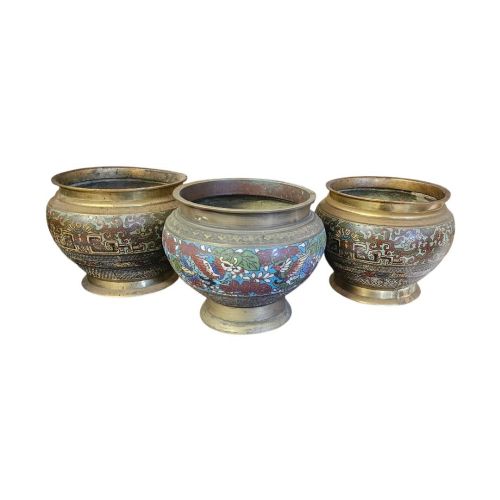
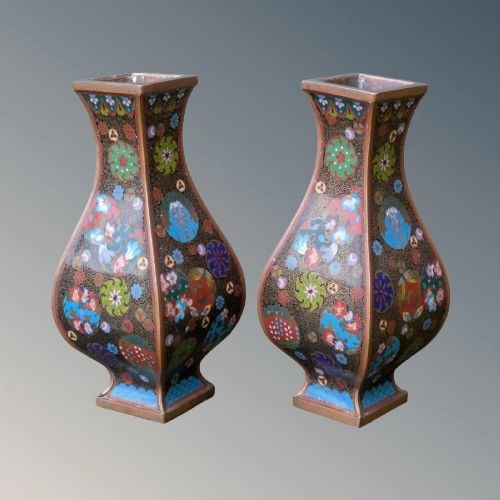
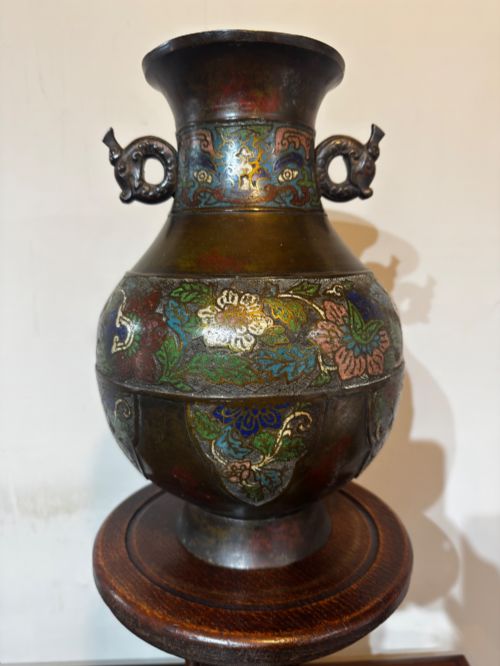
When you search for a cloisonne enamel pot, you enter a field dominated by nineteenth-century Chinese jars and Japanese lidded gourds. These pieces range from large bronze jardinieres on stands to small ginger jars and sake kettles with fitted covers.
The objects most frequently met on this page are Chinese vessels from the Qing period alongside Japanese Meiji and Edo works. They survive as decorative jars, planters, and tea pots worked in copper, brass, and bronze.
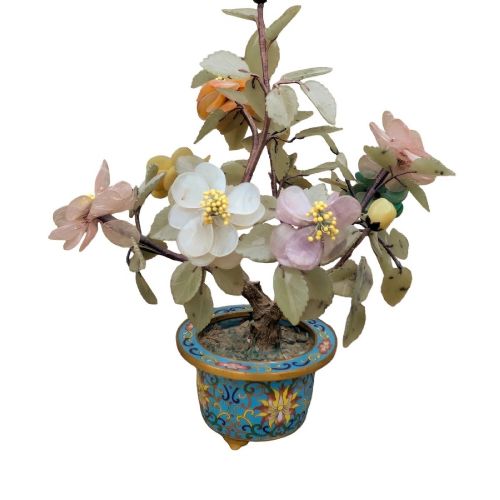
Makers shaped these vessels to hold flowering bonsai trees, liquids, or dry goods, blending utility with intricate surface decoration. The forms vary from squat ginger jars to tall vases and wide ornamental bowls.
What separates fine work from the rest
Quality rests on the discipline of the wirework and the density of the fired enamel. Finer pieces display crisp, uniform cell boundaries without gaps or warping in the metal framework.
The polish of the finished surface dictates the tactile feel of the vessel, with superior examples showing an even, stone-ground finish across complex contours. Inferior pieces often exhibit pitted enamel surfaces or clumsy wire soldering that disrupts the pattern.
Materials paired with enamel across these listings include jade, hardstone, cast iron, and bronze.
The Cloisonne Enamel Pot Glossary
- Cloison
- The network of thin metal wires soldered to a vessel body to form tiny compartments for enamel. This wire framework defines the pattern before the coloured paste is applied.
- Champleve
- A technique where troughs or cells are carved directly into the thick bronze or copper body rather than using soldered surface wires. The recessed areas are then filled with enamel and fired.
- Jardiniere
- A large decorative pot or bowl designed to hold a live plant or a planted bonsai tree. These heavy vessels often stand on dedicated bronze or wooden bases.
- Meiji Period
- An era of Japanese history lasting from eighteen sixty-eight to nineteen twelve, celebrated for intricate metalwork and fine enamel production. Pieces from this time show exceptional technical precision.
- Qing Dynasty
- The final imperial dynasty of China, spanning the seventeenth to the early twentieth century. Objects from this period frequently employ heavy bronze foundations and rich dark grounds.
Cloisonne Enamel Pot: Frequently Asked Questions
How do I clean a cloisonne pot?
Dust the surface gently with a dry, soft cloth to prevent particulate buildup in the recessed wire cells. Avoid chemical solvents or abrasive dips that can strip the polished finish from the metal and glass.
Keep the vessel away from direct sunlight and damp conditions to protect the underlying bronze or copper body from oxidation. Handle the piece by its main body rather than by delicate soldered lids or handles.
Are these pots waterproof?
Most antique cloisonne vessels were created for decorative display rather than for holding water directly. Thermal expansion and old solder joints can cause leaks over time.
If you place a live plant inside a planter or jardiniere, use a separate internal liner rather than pouring water straight into the pot. This protects the historic enamel and metal from internal corrosion.
How do I tell Chinese from Japanese work?
Chinese pieces often utilise heavier bronze or brass foundations with dense, opaque enamel colours set against turquoise or dark blue grounds. The motifs tend to be formal and symbolic.
Japanese pieces from the Meiji period frequently feature thinner copper bodies with restrained backgrounds and hyper-realistic flora or fauna. The wirework on Japanese examples is often finer and near-invisible.
What is a lidded gourd pot?
A lidded gourd pot is a vessel shaped like the hourglass fruit of the climbing vine, fitted with a matching cover. These forms were popular in Japanese metalwork.
They served as small storage containers for dry goods or liquids, featuring continuous enamel wrapping around their curved waists. The fitted lids maintained the unbroken contour of the fruit shape.